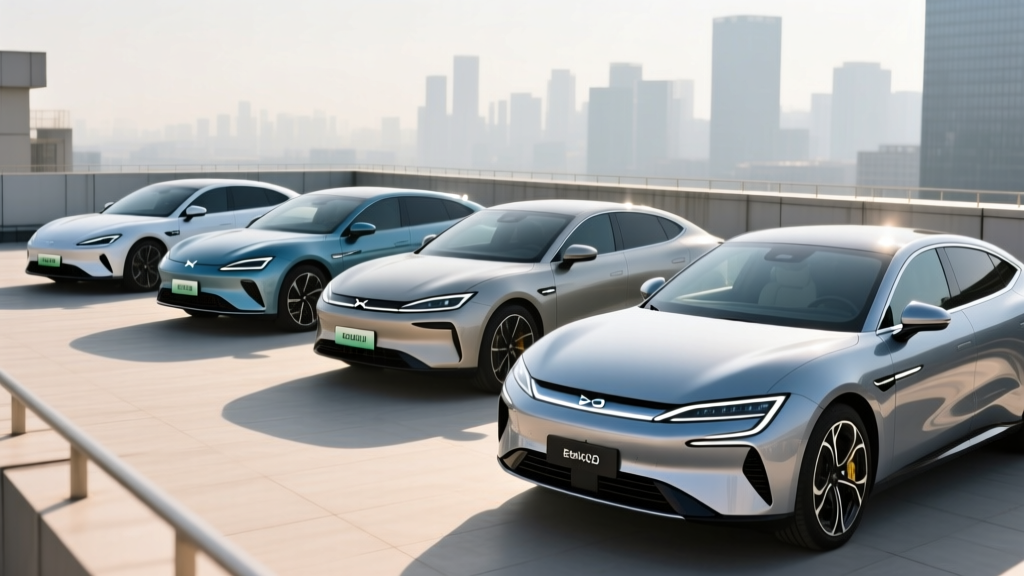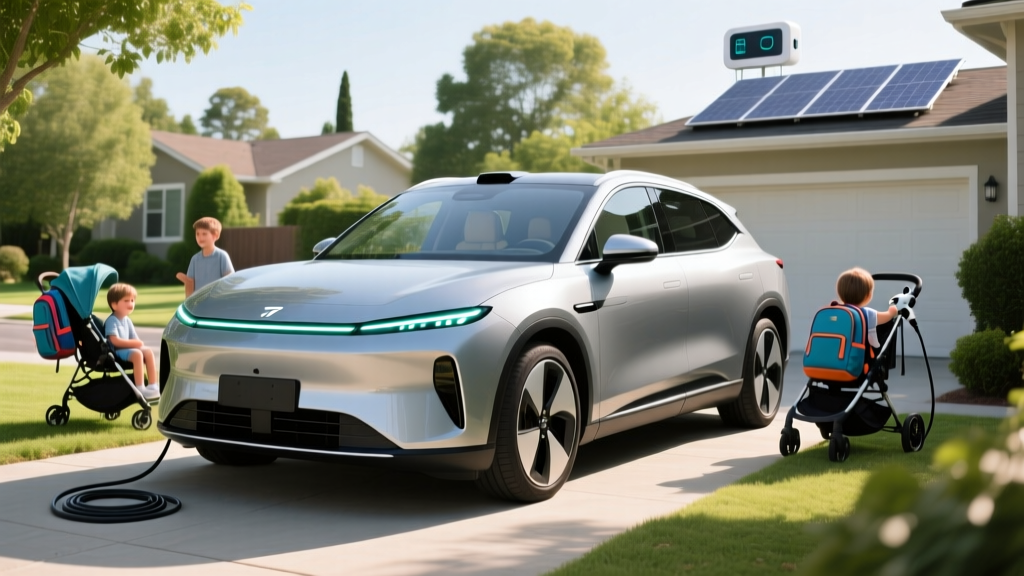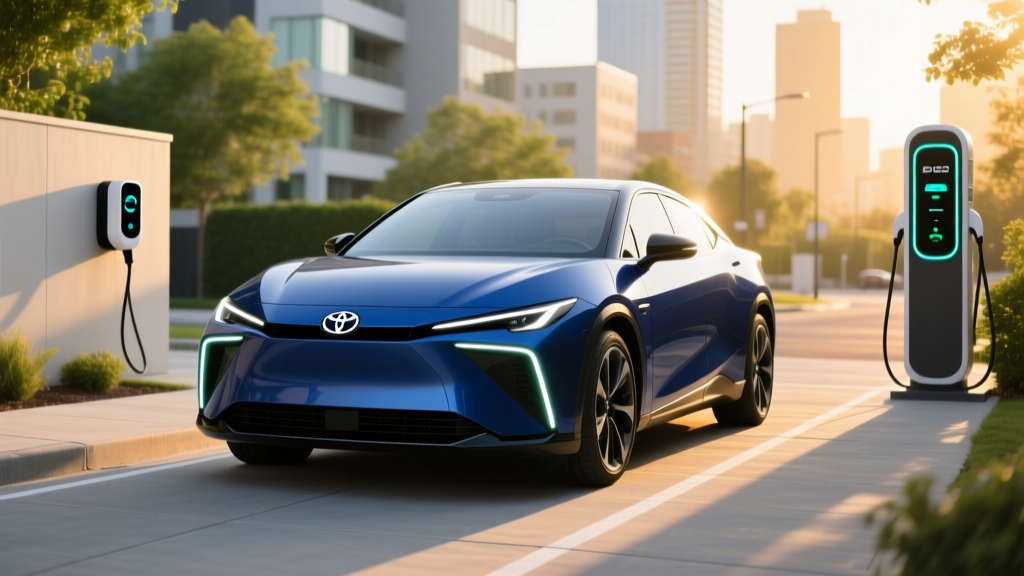
The 2026 Toyota bZ Limited represents the top-tier trim of Toyota's refreshed bZ electric crossover lineup, aiming to blend Toyota's legendary reliability reputation with competitive EV specs in a segment dominated by the Hyundai Ioniq 5, Ford Mustang Mach-E, and Tesla Model Y. After examining EPA data, manufacturer specifications, and real-world driving dynamics, here is everything buyers need to know before signing the paperwork.
2026 Toyota bZ Limited: Quick Verdict
The bZ Limited is a comfortable, well-built electric crossover that prioritizes daily usability over headline-grabbing performance. Its 252-mile EPA range and 150 kW peak DC fast-charging rate place it squarely in the middle of the pack — adequate for commuting and moderate road trips, but trailing rivals like the Ioniq 5 (310+ miles, 240 kW charging) and Model Y (320+ miles, 250 kW). Where Toyota wins: standard Toyota Safety Sense 3.0, a smooth ride, strong build quality, and a competitive starting price that — with the federal tax credit — drops into compelling territory.
| Spec | 2026 Toyota bZ Limited (AWD) |
|---|---|
| EPA Range | 252 miles |
| Battery (Usable) | 71.4 kWh, Lithium-Ion (NMC chemistry) |
| Drivetrain | Dual-Motor AWD |
| Horsepower | 214 hp (combined) |
| 0-60 mph | 6.5 seconds |
| Max DC Fast Charge | 150 kW (peak) |
| 10-80% DC Charge Time | ~32 minutes |
| Level 2 Home Charging | 7.2 kW (~25 mi/hr) |
| EPA Efficiency | 112 MPGe combined / 30 kWh/100 mi |
| Cargo Volume | 27.7 cu ft (rear seats up) / 56.9 cu ft (folded) |
| Base MSRP | $46,050 |
| Battery Warranty | 8 years / 100,000 miles |
Real-World Range: What the EPA Sticker Doesn't Tell You
The EPA rates the 2026 Toyota bZ Limited AWD at 252 miles of combined range. That number is measured under controlled laboratory conditions and serves as a useful baseline — but real-world results depend heavily on how, where, and when you drive.
EPA Estimate: 252 miles combined
Real-World Expectations:
- City/suburban driving (moderate speeds, regen-heavy): 245-260 miles — stop-and-go traffic favors EV efficiency thanks to regenerative braking.
- Highway cruising (70-75 mph, sustained): 210-230 miles — aerodynamic drag cuts into range significantly at interstate speeds.
- Cold weather (below 32°F, cabin heat on): 175-200 miles — lithium-ion batteries lose efficiency in cold temps, and resistive cabin heating draws heavily from the pack. The bZ Limited includes a heat pump, which mitigates some of this loss compared to resistive-only systems.
- Mountainous terrain / heavy cargo: Expect 10-15% range reduction from the EPA figure depending on grade and load.
For context, the average American drives roughly 37 miles per day according to FHWA data. Even with cold-weather degradation, the bZ Limited comfortably covers a full week of commuting on a single charge for most drivers. Road trippers will need to plan DC fast-charging stops every 2-2.5 hours at highway speeds.
Charging Speed: DC Fast, Level 2, and the Curve Reality
Charging speed remains one of the most consequential specs for EV ownership satisfaction. The 2026 bZ Limited uses a CCS1 connector for DC fast charging (with NACS adapter availability expanding through Toyota's partnership network).
| Charging Level | Power | Speed / Notes |
|---|---|---|
| Level 1 (120V household) | ~1.2 kW | ~4 miles per hour — emergency/trickle only |
| Level 2 (240V home/public) | 7.2 kW | ~25 miles per hour; full 0-100% in ~10.5 hours |
| DC Fast Charge (CCS1) | 150 kW peak | 10-80% in ~32 minutes; 80-100% tapers sharply |
Understanding the charge curve: The 150 kW figure is a peak rate, not a sustained one. Like all EVs, the bZ Limited's battery management system progressively reduces charge speed as the battery fills — protecting cell health and managing heat. Expect to see 150 kW only between roughly 10-40% state of charge (SoC). From 40-80%, the rate drops to 80-100 kW, and above 80%, it falls below 50 kW. This is why manufacturers quote 10-80% times rather than 0-100%.
For home charging, a Level 2 wallbox on a 40-amp circuit (requiring a 50-amp breaker) will fully replenish the 71.4 kWh battery overnight. Installation costs typically range from $500-$2,000 depending on your electrical panel capacity and run distance — a licensed electrician should evaluate your panel before purchase.
According to fueleconomy.gov, the bZ Limited consumes approximately 30 kWh per 100 miles of driving. At the national average electricity rate of $0.16/kWh, that translates to roughly $0.048 per mile — compared to $0.12-$0.15 per mile for a comparable 28 MPG gas crossover at $3.50/gallon.
Performance, Ride, and Drivetrain
The bZ Limited's dual-motor all-wheel-drive powertrain produces 214 combined horsepower and propels the crossover from 0-60 mph in approximately 6.5 seconds. That's respectable for daily driving — merging onto highways and passing slower traffic is confident — but it trails sportier rivals like the Mach-E GT (3.5 sec) and Model Y Performance (3.5 sec).
Toyota tuned the suspension for comfort over aggression. The ride quality is composed over rough pavement, with well-damped responses to potholes and expansion joints. Road noise insulation is a step above the previous-generation bZ4X, with improved acoustic glass and additional sound deadening.
Regenerative braking: The bZ Limited offers multiple regen levels selectable via paddle shifters, but does not offer true one-pedal driving (complete stop without brake pedal application) as standard. Drivers accustomed to Nissan Leaf or Tesla one-pedal modes will need a brief adaptation period.
Interior, Cargo, and Technology
The Limited trim elevates the cabin with SofTex-trimmed heated and ventilated front seats, a heated steering wheel, a panoramic fixed-glass roof, and a 12.3-inch Toyota Audio Multimedia touchscreen. Wireless Apple CarPlay and Android Auto are standard across all trims.
Passenger space:
- Front legroom: 42.1 inches
- Rear legroom: 35.5 inches
- Front headroom: 39.4 inches
- Rear headroom: 37.1 inches (slightly reduced by panoramic roof hardware)
Cargo: 27.7 cubic feet behind the second row, expanding to 56.9 cubic feet with the 60/40 split rear seats folded. There is no front trunk (frunk) — the space under the hood houses power electronics. This is a notable omission in a segment where the Ioniq 5 and Mach-E both offer usable front storage.
Driver assistance: Toyota Safety Sense 3.0 is standard and includes:
- Pre-Collision System with Pedestrian Detection
- Lane Departure Alert with Steering Assist
- Full-Speed Range Dynamic Radar Cruise Control
- Lane Tracing Assist (centering)
- Road Sign Assist
- Proactive Driving Assist (gentle braking/deceleration in certain scenarios)
This is an SAE Level 2 driver-assistance system — meaning the driver must remain fully attentive with hands on the wheel at all times. It is not autonomous or "self-driving." Toyota's system is competent for highway cruising and traffic jams but does not offer hands-free operation like GM's Super Cruise or Ford's BlueCruise on mapped highways.
Pricing, Trims, and Federal Tax Credit Eligibility
The 2026 Toyota bZ lineup spans three trims, with the Limited sitting at the top:
| Trim | Drivetrain | MSRP | Est. After §30D Credit* |
|---|---|---|---|
| XLE | FWD | $38,465 | $30,965 |
| XLE | AWD | $40,865 | $33,365 |
| Limited | AWD | $46,050 | $38,550 |
*Federal tax credit estimates assume full $7,500 eligibility under IRS §30D. Actual eligibility depends on buyer income, battery component sourcing, and MSRP caps. See details below.
Federal EV tax credit (§30D) — key requirements for 2026:
- MSRP cap: SUVs/crossovers must have an MSRP at or below $80,000. The bZ Limited at $46,050 clears this easily.
- Buyer income cap: Modified adjusted gross income (MAGI) must not exceed $150,000 (single), $225,000 (head of household), or $300,000 (married filing jointly).
- Battery sourcing: A percentage of critical minerals and battery components must be sourced from the U.S. or free-trade-agreement partners. These thresholds increase annually. Toyota has been working to localize bZ battery supply chains, but buyers should verify current-year eligibility at irs.gov before purchase.
- Point-of-sale transfer: As of 2024, eligible buyers can transfer the credit to the dealer at purchase, receiving the benefit as an immediate price reduction rather than waiting for tax filing.
The as-tested price for a bZ Limited with the optional Advanced Technology Package (360-degree camera, advanced parking assist, digital rearview mirror) lands around $48,200 before incentives.
Efficiency and Operating Costs
The EPA rates the bZ Limited AWD at 112 MPGe combined (119 city / 104 highway). In terms of energy consumption, that equates to 30 kWh per 100 miles.
Over 15,000 miles of annual driving, the bZ Limited would consume approximately 4,500 kWh. At the national average residential rate of $0.16/kWh, that's roughly $720 per year in electricity costs. A comparable gasoline crossover averaging 28 MPG at $3.50/gallon would cost approximately $1,875 per year in fuel — a difference of over $1,100 annually in the EV's favor.
Insurance premiums for the bZ Limited average 10-15% higher than comparable Toyota RAV4 Hybrid policies, reflecting higher repair costs for EV-specific components. Buyers should obtain quotes before committing.
Warranty Coverage
Toyota backs the bZ Limited with:
- Basic vehicle warranty: 3 years / 36,000 miles
- Powertrain warranty: 5 years / 60,000 miles
- EV battery warranty: 8 years / 100,000 miles (covers defects and capacity loss below 70% of original capacity)
- Corrosion perforation: 5 years / unlimited miles
- Roadside assistance: 2 years / 25,000 miles
The 70% capacity retention threshold is industry-standard, matching Hyundai, Kia, and Volkswagen. Tesla's warranty is slightly more generous at 70% over 8 years/120,000 miles for Model Y. Long-term degradation data specific to the 2026 bZ is not yet available, but Toyota's historical battery management conservatism suggests gradual, predictable capacity loss.
How It Compares: bZ Limited vs. Key Rivals
| Spec | 2026 Toyota bZ Limited AWD | 2026 Hyundai Ioniq 5 Limited AWD | 2026 Tesla Model Y Long Range AWD |
|---|---|---|---|
| EPA Range | 252 mi | 290 mi | 320 mi |
| Battery | 71.4 kWh (NMC) | 77.4 kWh (NMC) | ~78 kWh (NMC) |
| DC Fast Charge (peak) | 150 kW | 240 kW | 250 kW |
| 10-80% Time | ~32 min | ~18 min | ~20 min |
| 0-60 mph | 6.5 sec | 5.1 sec | 4.8 sec |
| MSRP | $46,050 | $52,600 | $48,990 |
| Cargo (rear up) | 27.7 cu ft | 27.2 cu ft | 30.2 cu ft |
| Heat Pump | Standard | Standard | Standard |
Where the bZ Limited wins: Lowest MSRP in this comparison, Toyota's long-term reliability reputation, comprehensive standard safety suite, comfortable ride quality.
Where it falls short: Shortest range, slowest DC charging, least powerful. For road-trip-heavy buyers, the Ioniq 5 and Model Y offer meaningfully less charging-stop downtime.
Pros, Cons, and Who Should Buy
Pros
- Competitive MSRP, especially after §30D credit
- Standard heat pump for better cold-weather range retention
- Toyota Safety Sense 3.0 included at no extra cost
- Comfortable, quiet ride tuned for daily commuting
- Strong Toyota dealer/service network nationwide
- 8-year/100,000-mile battery warranty
Cons
- 252-mile range trails most segment rivals
- 150 kW peak charging is below class-leading 240-250 kW
- No front trunk (frunk) for additional storage
- Infotainment system is functional but less intuitive than Tesla/Hyundai
- Not eligible for hands-free highway driving assist
- Rear legroom is tighter than some competitors
Best suited for: Commuters with home Level 2 charging who drive under 200 miles daily, value-oriented buyers who want Toyota's reliability pedigree in an EV, and families who prioritize a smooth ride and strong safety features over maximum range and acceleration.
Look elsewhere if: You road-trip frequently (the Ioniq 5 or Model Y will save you significant charging time), you want one-pedal driving, or you need maximum cargo versatility with a frunk.
Frequently Asked Questions
What is the real-world range of the 2026 Toyota bZ Limited?
The EPA rates it at 252 miles combined. In real-world driving, expect 210-230 miles on highway road trips, 245-260 miles in city/suburban use, and 175-200 miles in freezing temperatures with cabin heat active. The included heat pump helps mitigate cold-weather losses compared to EVs without one.
How fast does the bZ Limited charge at home and on the road?
At home on a 240V Level 2 charger (7.2 kW), you'll add roughly 25 miles of range per hour, with a full charge taking about 10.5 hours. On a DC fast charger, it peaks at 150 kW and charges from 10-80% in approximately 32 minutes. The charge rate tapers significantly above 80% SoC — plan to unplug at 80% on road trips for the best time-to-range ratio.
Does the 2026 Toyota bZ Limited qualify for the federal EV tax credit?
It is eligible for up to $7,500 under IRS §30D, provided the buyer meets income requirements (MAGI ≤ $150K single / $300K married filing jointly) and the vehicle's battery meets critical-mineral and component-sourcing thresholds for the 2026 tax year. The MSRP of $46,050 is well below the $80,000 SUV cap. Always verify current eligibility on irs.gov before purchasing, as sourcing rules tighten annually.
Is the bZ Limited worth buying over the Ioniq 5 or Model Y?
It depends on your priorities. If lowest purchase price, Toyota's reliability track record, and a comfortable daily-driver experience matter most, the bZ Limited is a strong pick — especially after the tax credit brings the effective price near $38,500. If maximum range and fastest charging are your top concerns, the Ioniq 5 (290 mi, 240 kW) or Model Y (320 mi, 250 kW) are more road-trip-friendly, though at higher MSRPs.
What is the battery warranty and expected longevity?
Toyota covers the bZ battery for 8 years or 100,000 miles against defects and capacity loss below 70%. Full battery replacement out of warranty is estimated at $8,000-$12,000 based on current NMC pack pricing, though most owners will never need one — modern lithium-ion packs are designed to last 15-20 years with gradual, manageable degradation.
Does the bZ Limited have a frunk?
No. The space under the hood is occupied by power electronics and the HVAC system. All cargo must go in the rear hatch area (27.7 cu ft) or the cabin.
Sources: EPA fueleconomy.gov, Toyota Motor North America specifications, IRS §30D Clean Vehicle Credit guidelines.