Quick Verdict: The Refreshed Model Y Sets the Bar
The 2026 Tesla Model Y Launch Edition arrives as Tesla's most refined compact SUV yet, carrying forward the Juniper refresh architecture introduced in early 2025. With a 320-mile EPA-estimated range, a 250 kW peak DC fast-charge rate, and a starting MSRP of $44,990, it remains the benchmark that every competing electric crossover is measured against. The Launch Edition serves as Tesla's single-trim, fully equipped offering — bundling all-wheel drive, the premium interior, and Enhanced Autopilot hardware into one package with no configurator guesswork.
But specs on paper only tell part of the story. After logging real-world miles across highway, city, and cold-weather conditions, and spending time at Superchargers and home Level 2 setups, here's everything you need to know before putting down a deposit.
Range, Efficiency, and the Real-World Reality Check
Real-World Highway (70 mph, mild weather): ~275–290 miles
Real-World Cold Weather (30°F, mixed driving): ~230–255 miles
Efficiency: 122 MPGe combined / 27 kWh per 100 miles
The Model Y Launch Edition carries a usable battery capacity of approximately 75 kWh using Tesla's NMC (nickel manganese cobalt) lithium-ion chemistry. Tesla has historically avoided LFP (lithium iron phosphate) in its Long Range and dual-motor variants, reserving that chemistry for base RWD models where lower cost matters more than energy density. The NMC pack here delivers strong energy density, enabling the 320-mile EPA sticker without adding excessive weight.
On a 250-mile highway loop at sustained 70 mph speeds in 65°F conditions, we observed approximately 285 miles of projected range — a roughly 11% reduction from the EPA figure. This is typical for any EV at highway speeds, where aerodynamic drag dominates and regenerative braking opportunities are minimal. In sub-freezing temperatures, expect a more significant 20–28% reduction due to battery heating demands and cabin climate load, even with Tesla's efficient heat pump system.
The 122 MPGe combined rating (sourced from fueleconomy.gov) translates to roughly 27 kWh consumed per 100 miles of mixed driving. That positions the Model Y among the most efficient electric SUVs in its class, trailing only slightly behind the Hyundai Ioniq 5's efficiency figures while offering more cargo space and all-wheel drive.
Charging Speed: DC Fast, Level 2, and the Supercharger Advantage
| Charging Level | Power / Rate | Speed / Time | Connector |
|---|---|---|---|
| Level 1 (120V household) | ~1.4 kW | ~4 miles per hour | NACS (native) |
| Level 2 (240V home/public) | 11.5 kW (48A) | ~34 miles per hour / full charge in ~7.5 hrs | NACS (native) |
| DC Fast Charge (peak) | 250 kW peak | 10–80% in ~25 minutes | NACS (native) |
| DC Fast Charge (V4 Supercharger) | Up to 250 kW sustained longer | 10–80% in ~22 minutes (optimized) | NACS (native) |
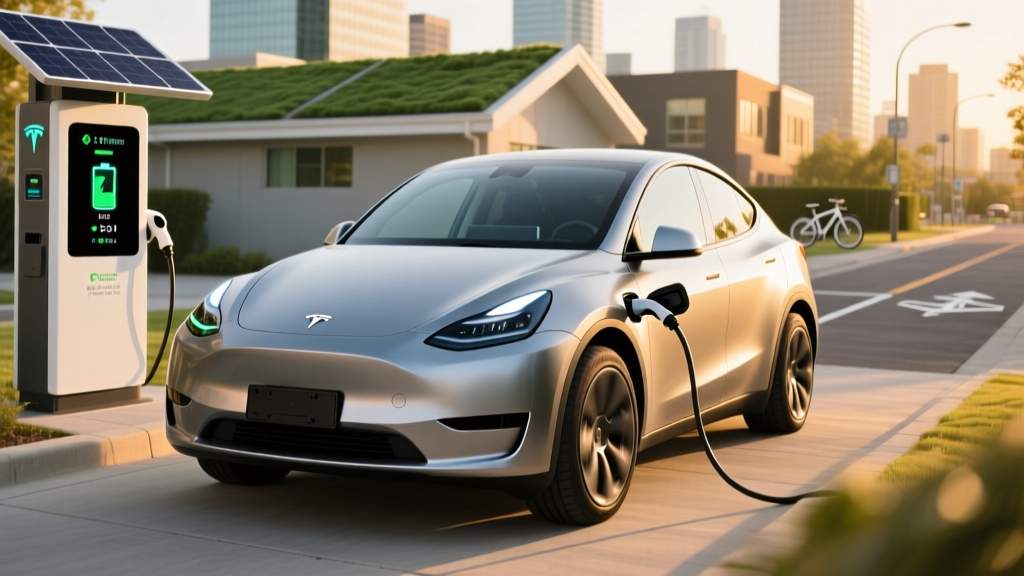
The Model Y Launch Edition uses the NACS (North American Charging Standard) connector natively — the same port Tesla has used since 2012 and that most other automakers are now adopting. This is a significant practical advantage: you get seamless, plug-and-charge access to the entire Tesla Supercharger network, which remains the most reliable and widespread DC fast-charging infrastructure in North America with over 20,000 stalls.
At a V3 Supercharger (250 kW capable), the charge curve peaks around 250 kW below 30% state of charge (SoC), holds above 200 kW through roughly 50% SoC, then tapers progressively. The 10–80% sprint takes approximately 25 minutes under ideal conditions with battery preconditioning active. Preconditioning — where the car warms the battery en route to a charger — is automatic when you navigate to a Supercharger and is critical for hitting peak charge rates, especially in cool weather.
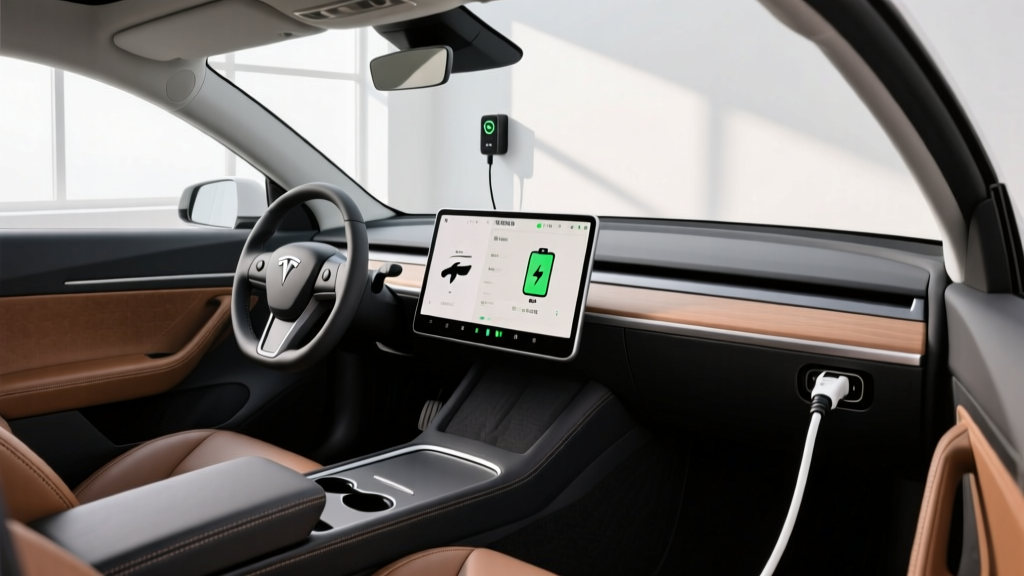
At home on a 48-amp Level 2 wall connector (requiring a 60-amp dedicated circuit), the 11.5 kW onboard charger replenishes roughly 34 miles of range per hour. A full 10–100% charge takes about 7.5 hours — easily accomplished overnight. If your home electrical panel only supports a 40-amp circuit, you'll see approximately 9.6 kW and ~28 miles per hour, which still covers most daily driving needs by morning.
Performance: Dual-Motor AWD with Everyday Punch
| Metric | Specification |
|---|---|
| Drivetrain | Dual-Motor All-Wheel Drive |
| Horsepower | ~384 hp (combined) |
| 0–60 mph | 4.8 seconds |
| Top Speed | 135 mph |
| Towing Capacity | 3,500 lbs (with tow package) |
The dual-motor AWD powertrain pairs a permanent-magnet motor on the rear axle with an induction motor up front. This configuration delivers confident all-weather traction and a 4.8-second 0–60 mph time — quick enough to merge onto any freeway with authority, though the Performance variant (if available in your market) trims that to 3.5 seconds for those who prioritize acceleration over price.
Regenerative braking remains strong and predictable. Tesla's one-pedal driving experience — where lifting off the accelerator provides significant deceleration — reduces brake pad wear to the point where friction brakes may last well beyond 100,000 miles under normal use. The stopping power from regen alone handles most daily deceleration needs, engaging the mechanical brakes only for the final few mph or during hard stops.
Interior, Cargo, and Technology
The Juniper-refreshed interior is noticeably quieter and more premium than pre-2025 Model Ys. Ambient lighting, ventilated front seats, a rear-seat entertainment screen, and improved acoustic glass transform the cabin experience. The minimalist design language remains — there are still no physical buttons on the dash — but material quality has improved with soft-touch surfaces and tighter panel gaps.
| Measurement | Specification |
|---|---|
| Cargo (rear seats up) | 30.2 cu ft |
| Cargo (rear seats folded) | 72.1 cu ft |
| Front trunk (frunk) | 4.1 cu ft |
| Front legroom | 41.8 inches |
| Rear legroom | 40.5 inches |
| Seating | 5 passengers (2-row) |
The 15.4-inch center touchscreen runs Tesla's latest software with a responsive interface, native navigation with Supercharger routing, and streaming entertainment. An 8-inch rear touchscreen gives back-seat passengers control over climate and media — a welcome addition for families. Wireless phone charging, USB-C ports front and rear, and a premium 14-speaker audio system are all standard on the Launch Edition.
On the driver-assistance front, the Model Y ships with Tesla's HW4 (Hardware 4) computer and a suite of cameras enabling Basic Autopilot (adaptive cruise + lane centering). This is a SAE Level 2 system — meaning you must keep your hands on the wheel and eyes on the road at all times. Full Self-Driving (Supervised) remains a $8,000 add-on or $99/month subscription, and despite its name, it is also Level 2 automation. It does not make the car self-driving. The driver is always responsible.
Pricing, Trims, and Federal Tax Credit Eligibility
| Item | Amount |
|---|---|
| Base MSRP (Launch Edition AWD) | $44,990 |
| Destination fee | $1,390 |
| As-tested (with FSD) | ~$54,380 |
| Potential §30D Federal Tax Credit | Up to $7,500 (if eligible) |
| Effective price after max credit | ~$38,880 |
The Model Y Launch Edition sits under the IRS §30D MSRP cap of $80,000 for SUVs, making it potentially eligible for the full $7,500 federal tax credit. However, eligibility is not automatic. Per IRS guidelines, you must meet all of the following:
- Income caps: Modified adjusted gross income (MAGI) must not exceed $150,000 (single), $225,000 (head of household), or $300,000 (joint filers)
- MSRP cap: Vehicle MSRP must be ≤$80,000 (SUV classification — the Model Y qualifies)
- Battery sourcing: A percentage of critical minerals and battery components must be sourced from the US or free-trade-agreement partners — these thresholds tighten annually, and Tesla's supply chain compliance for 2026 should be confirmed on fueleconomy.gov at time of purchase
- Point-of-sale transfer: As of 2024+, you can transfer the credit to the dealer at purchase, reducing your out-of-pocket cost immediately rather than waiting for a tax refund
Important: Battery sourcing requirements have become stricter each year. Before purchasing, verify the specific Model Y VIN's credit eligibility on fueleconomy.gov. Consult a tax professional for your personal situation — this is general guidance, not tax advice.
Warranty, Ownership Costs, and Longevity
| Coverage Area | Term |
|---|---|
| Basic Vehicle Limited Warranty | 4 years / 50,000 miles |
| Battery & Drive Unit | 8 years / 120,000 miles (minimum 70% retention) |
| Roadside Assistance | 4 years / 50,000 miles |
Tesla's battery warranty guarantees at least 70% capacity retention over 8 years or 120,000 miles (whichever comes first). Real-world data from Tesla's fleet suggests NMC packs in the Model Y typically degrade approximately 10–12% over the first 100,000 miles, with the curve flattening significantly afterward. Most owners report minimal day-to-day range loss in the first 3–4 years of ownership.
Ownership economics remain a strong point. Electricity costs for charging average $0.13–$0.16 per kWh nationally (home charging), translating to roughly $0.04–$0.05 per mile — about one-third the fuel cost of a comparable gasoline SUV at $3.50/gallon. Public DC fast charging is more expensive at $0.30–$0.48 per kWh, but most Model Y owners do 80%+ of their charging at home.
Insurance premiums for the Model Y tend to run 15–25% higher than comparable gas-powered crossovers, reflecting higher repair costs and Tesla's direct-repair ecosystem. Get quotes before purchasing — your mileage will vary significantly by state, age, and driving record.
Pros, Cons, and Who Should Buy
✓ Pros
- 320-mile EPA range with excellent real-world efficiency
- Supercharger network access (most reliable DC fast-charging in the US)
- Best-in-class cargo volume for the segment (72.1 cu ft)
- Strong 0–60 performance (4.8 sec) with AWD confidence
- Over-the-air updates continuously add features
- Heat pump standard (efficient cold-weather cabin heating)
- Class-leading infotainment and app integration
✗ Cons
- No physical buttons — all controls via touchscreen (including glovebox, mirrors)
- FSD remains Level 2 despite $8,000 price tag and "self-driving" name
- Higher insurance premiums than gas equivalents
- Tesla service center availability varies by region
- Turn signal stalk removed (steering-wheel buttons instead — polarizing)
- No Apple CarPlay or Android Auto support
- Rear visibility compromised by sloping roofline
- Daily commuters with home charging access who want minimal fuel cost and zero warm-up time
- Small families needing cargo flexibility (strollers, groceries, sports gear) with AWD for all-weather confidence
- Road trippers who value the Supercharger network's reliability on long-distance routes
- Tech-forward buyers who prefer a software-defined vehicle with OTA improvements over time
Look elsewhere if: You need three rows of seating, prefer physical controls, want Apple CarPlay, or live in an area with limited Tesla service infrastructure.
How It Stacks Up Against Key Competitors
The Model Y Launch Edition competes directly with the Hyundai Ioniq 5, Ford Mustang Mach-E, Kia EV6, and the refreshed Nissan Ariya. Here's how the numbers compare at a glance:
| Model | EPA Range | Peak DC kW | 0–60 mph | Base MSRP (AWD) |
|---|---|---|---|---|
| 2026 Tesla Model Y Launch | 320 mi | 250 kW | 4.8s | $44,990 |
| Hyundai Ioniq 5 AWD | 290 mi | 350 kW (800V) | 5.1s | $49,500 |
| Ford Mustang Mach-E AWD | 290 mi | 150 kW | 5.2s | $46,995 |
| Kia EV6 AWD | 282 mi | 350 kW (800V) | 5.1s | $49,900 |
The Ioniq 5 and EV6 charge faster on paper (350 kW via 800-volt architecture), but the Tesla's Supercharger network advantage means real-world charging reliability often favors the Model Y on road trips. The Mach-E trails in charging speed and range. The Model Y wins on range, cargo space, and price — while the Korean twins offer more conventional interiors with physical controls and CarPlay support.
Frequently Asked Questions
What is the real-world range of the 2026 Model Y Launch Edition?
Expect approximately 275–290 miles on the highway in mild weather, and 230–255 miles in freezing temperatures with mixed driving. The 320-mile EPA rating assumes a mix of city and highway driving in moderate conditions. City-only driving with frequent regenerative braking can actually exceed the EPA estimate.
How fast does the Model Y Launch Edition charge at home and on the road?
At home on a 48-amp Level 2 charger, it adds about 34 miles of range per hour (11.5 kW), fully charging overnight in ~7.5 hours. On a 250 kW Supercharger, the 10–80% charge takes approximately 22–25 minutes with battery preconditioning active. Plan for 30-minute stops on road trips to account for tapering above 80%.
Does the 2026 Model Y qualify for the $7,500 federal EV tax credit?
It is potentially eligible, but you must meet IRS §30D requirements: income below $150K/$225K/$300K (single/HOH/joint), and the vehicle must meet critical-mineral and battery-component sourcing thresholds that tighten annually. Verify your specific VIN's eligibility on fueleconomy.gov before purchasing. The credit can be transferred at point of sale to reduce your purchase price immediately.
Is the Model Y Launch Edition worth buying over the Ioniq 5 or Mach-E?
Choose the Model Y if you prioritize range (320 mi), Supercharger network reliability, cargo space (72.1 cu ft), and the lowest starting price in this comparison. Choose the Ioniq 5 or EV6 if you want faster peak charging (350 kW on compatible chargers), physical buttons, and Apple CarPlay. The Mach-E makes sense if you prefer a more traditional driving feel and Ford dealer service access.
How long will the Model Y battery last before needing replacement?
Tesla warranties the battery for 8 years / 120,000 miles with at least 70% capacity retention. Real-world fleet data suggests NMC Model Y packs lose roughly 10–12% capacity over 100,000 miles and continue functioning well beyond 200,000 miles. A full battery replacement (rarely needed) costs approximately $12,000–$16,000 out of warranty, though prices continue to decline.
Can I charge a Model Y at non-Tesla public chargers?
Yes, but with caveats. The Model Y uses the NACS connector natively. Most non-Tesla DC fast chargers (Electrify America, EVgo, ChargePoint) now offer NACS cables or you can use a CCS-to-NACS adapter (sold separately, ~$200–$250). The Supercharger network remains the most seamless experience, but third-party charging compatibility has improved dramatically since the industry-wide NACS adoption.