The 2026 Tesla Model 3 at a Glance: Beyond the Vegan Leather
Search for "tesla vegan leather" and you will find endless forum debates about material quality, durability, and whether synthetic upholstery lives up to the premium price tag. But the 2026 Tesla Model 3 is far more than its interior trim. Now in its third full model year of the "Highland" refresh, the Model 3 remains the benchmark compact electric sedan — and the vegan leather interior is just one piece of a package that includes up to 363 miles of EPA-estimated range, 250 kW DC fast charging, and a starting price that undercuts several key rivals.
This review covers the full ownership picture: real-world range, charging speeds, interior material quality, performance, tax credit eligibility, and whether the Model 3 still earns its reputation in 2026.
| Spec | Long Range AWD | Performance AWD | RWD (Base) |
|---|---|---|---|
| EPA Range | 363 mi | 341 mi | 341 mi |
| Battery (usable) | 79 kWh (NMC) | 79 kWh (NMC) | 60 kWh (LFP) |
| Max DC Fast Charge | 250 kW | 250 kW | 170 kW |
| 10–80% DCFC Time | ~25 min | ~25 min | ~30 min |
| Level 2 Rate (11.5 kW) | ~44 mi/hr | ~44 mi/hr | ~30 mi/hr |
| 0–60 mph | 4.2 sec | 2.9 sec | 5.8 sec |
| Horsepower | 346 hp | 510 hp | 271 hp |
| Drivetrain | Dual-Motor AWD | Dual-Motor AWD | RWD |
| MPGe (combined) | 132 MPGe | 121 MPGe | 132 MPGe |
| kWh/100 mi | 25 kWh | 28 kWh | 25 kWh |
| Base MSRP | $47,740 | $54,990 | $38,990 |
Real-World Range: What the EPA Sticker Does Not Tell You
EPA estimated: 363 miles
Real-world highway (70 mph, 72°F): ~300–320 miles
Cold weather (30°F, mixed driving): ~250–280 miles
City / stop-and-go with regen: ~340–360 miles
The Long Range AWD's 363-mile EPA estimate is among the highest of any compact electric sedan sold in the US. According to fueleconomy.gov, the Model 3 Long Range achieves 132 MPGe combined, translating to 25 kWh per 100 miles — exceptional efficiency for a dual-motor AWD vehicle.
But EPA testing uses a mix of city and highway cycles with moderate temperatures. In sustained 70–75 mph highway driving, expect roughly 300 to 320 miles before needing a charge. Cold weather compounds the loss: at 30°F, the lithium-ion battery's internal resistance increases, and cabin heating draws significant energy even with the standard heat pump. Budget 250 to 280 miles in winter conditions if you are driving a mix of highway and suburban roads.
The base RWD model uses an LFP (lithium iron phosphate) battery with 60 kWh usable capacity. Its 341-mile EPA rating benefits from slightly lighter weight, but the smaller battery means real-world highway range lands closer to 280–300 miles. LFP chemistry, however, allows regular charging to 100% without degradation concerns — a meaningful advantage for daily drivers who want maximum available range every morning.
Charging Speed: DC Fast, Level 2, and the Supercharger Advantage
Charging speed is where the Model 3 continues to lead the segment, largely thanks to Tesla's proprietary Supercharger network and the vehicle's thermal management system.
| Charging Level | Power / Rate | Speed | Notes |
|---|---|---|---|
| Level 1 (120V) | 1.4 kW | ~5 mi/hr | Emergency / trickle only |
| Level 2 (240V, 48A) | 11.5 kW | ~44 mi/hr (LR) / ~30 mi/hr (RWD) | Home overnight charge: ~7–9 hours |
| DC Fast (V3 Supercharger) | 250 kW peak | 10–80% in ~25 min | LR/Performance; RWD peaks at 170 kW |
| DC Fast (CCS adapter, non-Tesla) | Up to 250 kW | Similar to Supercharger | Requires Tesla CCS adapter (included) |
The Long Range and Performance trims peak at 250 kW on V3 Superchargers, though that peak is sustained only between roughly 10% and 30% state of charge. The charge curve tapers progressively: by 60% SoC you are typically seeing 100–120 kW, and above 80% it drops below 50 kW. This is standard lithium-ion behavior, not a Tesla-specific limitation, but it means the advertised "25 minutes to 80%" is accurate while charging from 80% to 100% can take nearly as long again.
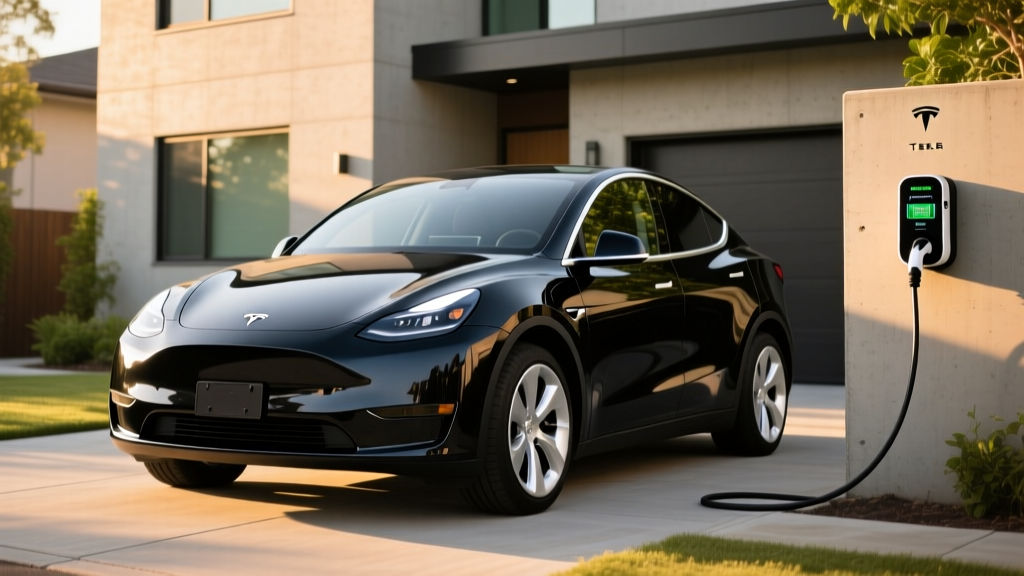
For home charging, the onboard 11.5 kW AC charger (Long Range/Performance) adds roughly 44 miles of range per hour. A full overnight session from 20% to 80% takes about 4 to 5 hours — easily enough for any daily commute. The RWD model's smaller battery charges proportionally faster at home, reaching a full charge in roughly 5 to 6 hours at 11.5 kW.
Tesla now includes a CCS adapter with every new Model 3, opening access to Electrify America, EVgo, and other networks. However, the Supercharger network — with over 6,000 US stalls and near-universal reliability — remains a significant ownership advantage. Non-Tesla EVs gained Supercharger access via NACS adapters starting in 2024, but Tesla owners still benefit from seamless plug-and-charge integration and navigation-based battery preconditioning.
The Vegan Leather Interior: Material Quality and Durability
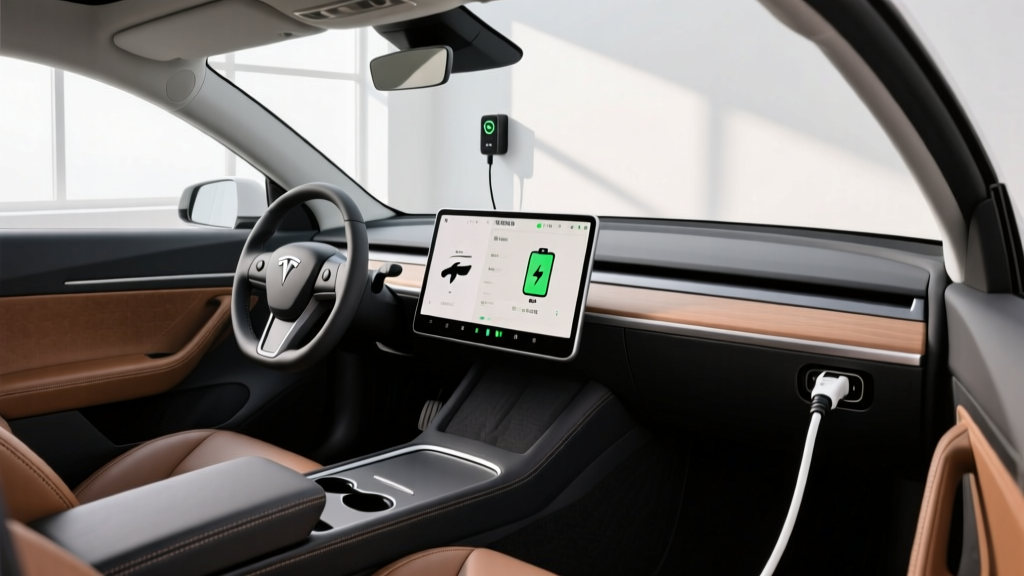
Tesla phased out animal-derived leather across its entire lineup beginning in 2017, and the 2026 Model 3 uses the company's latest-generation synthetic upholstery — a polyurethane-based material that Tesla simply calls "premium" interior. This is the vegan leather that generates so much search interest and owner discussion.
In the Highland-refreshed Model 3, the seats feature revised bolsters with improved lateral support, ventilated front seats (a first for the Model 3, introduced with the refresh), and a textile dashboard wrap that replaces the previous all-plastic upper dash. The overall cabin feel is noticeably more premium than the pre-2024 Model 3, though it still does not match the material richness of a BMW i4 or Mercedes EQB.
Durability is where Tesla's vegan leather earns its reputation. Unlike some early-generation synthetic leathers that developed cracks or peeling after 3–4 years, the current material resists UV degradation, staining, and wear well. Owners in the Tesla Motors Club forums and Reddit communities consistently report that the seats hold up well after 50,000+ miles, particularly in black and cream colorways. The white interior option ($1,000) shows dirt more readily but cleans easily with a damp microfiber cloth — a maintenance reality worth knowing before ordering.
Practical interior dimensions remain competitive:
- Front legroom: 42.7 inches
- Rear legroom: 35.2 inches
- Cargo volume (trunk): 23 cu ft
- Front trunk (frunk): 3.1 cu ft
- Total cargo: 26.1 cu ft
The rear seat is adequate for adults on shorter trips but tighter than a Hyundai Ioniq 6 or BMW i4 for long-distance comfort. The trunk, however, is generous for the segment, and the 60/40 split-folding rear seat expands capacity for larger items.
Performance, Efficiency, and Drivetrain Breakdown
The 2026 Model 3 lineup offers three distinct personalities:
RWD ($38,990): The base model uses a single rear motor producing 271 hp and 317 lb-ft of torque. Its 5.8-second 0–60 time is more than adequate for daily driving, and the LFP battery's tolerance for 100% daily charging makes it the most practical version for commuters without home Level 2 charging who rely on public infrastructure.
Long Range AWD ($47,740): Dual motors deliver 346 hp and 389 lb-ft with a 4.2-second 0–60. The 79 kWh NMC battery provides the lineup's maximum 363-mile range. This is the volume trim and the one most buyers should consider — it balances range, performance, and all-weather capability.
Performance AWD ($54,990): Track-oriented tuning, 510 hp, and a 2.9-second 0–60 time. You sacrifice 22 miles of range versus the Long Range, but gain adaptive dampers, larger brakes, and a lowered ride height. This trim competes directly with the BMW i4 M50 and Porsche Taycan on acceleration, if not on chassis refinement.
All trims feature Tesla's heat pump as standard equipment, which improves cold-weather range by roughly 10–15% compared to resistive heating. Regenerative braking is aggressive enough for one-pedal driving in most conditions, though Tesla removed the driver-adjustable regen setting several years ago — you get one calibration, and it is strong.
Pricing, Trims, and Federal Tax Credit Eligibility
| Trim | Base MSRP | Destination | As-Tested (typical) | §30D Credit Eligible? |
|---|---|---|---|---|
| RWD | $38,990 | $1,390 | $40,380 | Yes — up to $7,500 |
| Long Range AWD | $47,740 | $1,390 | $49,130 | Yes — up to $7,500 |
| Performance AWD | $54,990 | $1,390 | $56,380 | Yes — up to $7,500 |
All 2026 Model 3 trims fall below the IRS §30D sedan MSRP cap of $55,000, making them potentially eligible for the full $7,500 federal tax credit. However, eligibility depends on several buyer- and vehicle-specific factors that change periodically. Per IRS guidelines, the following must be satisfied:
- Buyer income caps: Modified AGI must not exceed $150,000 (single), $225,000 (head of household), or $300,000 (joint).
- MSRP cap: Sedans must be at or below $55,000 (all Model 3 trims qualify).
- Battery sourcing: A percentage of critical minerals and battery components must be sourced from the US or free-trade-agreement countries. These thresholds increase annually and can affect eligibility mid-year.
- Point-of-sale transfer: As of 2024, buyers can transfer the credit to the dealer at purchase, reducing the out-of-pocket price immediately rather than waiting for a tax refund.
With the full $7,500 credit applied at point of sale, the RWD Model 3 effectively starts around $31,490 — a price point that competes directly with the Hyundai Ioniq 6 and Chevrolet Equinox EV. Consult a tax professional to confirm your personal eligibility, as battery-sourcing rules have shifted multiple times since 2023.
Technology, Driver Assistance, and Standout Features
The 2026 Model 3 centers all vehicle controls on a 15.4-inch touchscreen running Tesla's latest software. There is no instrument cluster, no heads-up display, and no physical stalks — turn signals are buttons on the steering wheel, and gear selection is via the touchscreen or a capacitive strip on the center console. This minimalist approach remains polarizing: some owners adapt within days, others find it a persistent annoyance.
A rear-seat 8-inch touchscreen (added with the Highland refresh) allows passengers to control climate and entertainment. Ambient lighting, power-folding mirrors, and acoustic glass on all windows contribute to a cabin that is significantly quieter than the pre-refresh Model 3.
Driver assistance: Tesla's Autopilot (SAE Level 2) is standard and includes adaptive cruise control, lane centering, and automatic emergency braking. Full Self-Driving (Supervised) remains a $8,000 option or $99/month subscription and adds automated lane changes, traffic-light recognition, and city-street navigation. Despite the "FSD" name, this is still a Level 2 system — the driver must remain attentive and keep hands on the wheel at all times. Tesla's vision-only approach (no lidar or radar) continues to draw scrutiny from NHTSA, which has investigated multiple Autopilot-related incidents.
Warranty, Ownership Costs, and Long-Term Outlook
Tesla's warranty coverage is competitive but not class-leading:
- Basic vehicle: 4 years / 50,000 miles
- Battery & drive unit (RWD): 8 years / 100,000 miles
- Battery & drive unit (Long Range/Performance): 8 years / 120,000 miles
- Battery degradation guarantee: Retains at least 70% capacity during the warranty period
The 70% retention threshold is standard across the industry. Real-world data from Tesla fleet analytics suggests most Model 3 batteries retain 85–90% capacity at 100,000 miles, with the steepest degradation occurring in the first 10,000–20,000 miles before leveling off. LFP batteries (RWD) typically show slower degradation than NMC, though they have lower energy density.
Insurance costs remain a consideration: the Model 3 averages $1,800–$2,400 annually depending on trim, location, and driver profile — roughly 15–25% higher than comparable gas sedans. Tesla Insurance is available in many states and can be competitive, but shop multiple quotes.
Who Should Buy the 2026 Tesla Model 3?
- You want the longest range in the compact EV sedan segment (363 mi EPA)
- Supercharger network access and reliability are top priorities
- You value fast DC charging for road trips (250 kW, ~25 min to 80%)
- You prefer a minimalist tech-forward cabin over traditional luxury materials
- You want a sub-$32,000 effective price on the RWD after the federal credit
- You need a spacious rear seat for tall adults (consider Ioniq 6 or BMW i4)
- You prefer physical controls, an instrument cluster, or Apple CarPlay/Android Auto
- You want the quietest, most refined ride in the segment (BMW i4 wins here)
- You are uncomfortable with vision-only driver assistance and no radar backup
Frequently Asked Questions
Is Tesla's vegan leather durable after years of use?
Yes. The current-generation synthetic upholstery used in the 2026 Model 3 resists cracking, peeling, and UV damage well. Long-term owner reports consistently show the material holds up beyond 50,000 miles with basic cleaning. The white option requires more frequent wiping but does not stain permanently with prompt care.
What is the real-world highway range of the Model 3 Long Range?
Expect 300 to 320 miles at sustained highway speeds (70–75 mph) in moderate temperatures. In cold weather (below 35°F), plan for 250 to 280 miles. The EPA's 363-mile estimate reflects a mixed driving cycle and is achievable primarily in city and suburban conditions with regenerative braking.
Does the 2026 Model 3 qualify for the $7,500 federal tax credit?
All trims fall under the $55,000 MSRP cap and are potentially eligible. However, buyer income limits ($150K single / $300K joint), battery critical-mineral sourcing requirements, and point-of-sale transfer rules all apply. Verify current eligibility on IRS.gov before purchasing, as sourcing thresholds change annually.
How does the Model 3 compare to the Hyundai Ioniq 6?
The Ioniq 6 offers a more comfortable rear seat, physical controls, Apple CarPlay, and a slightly quieter ride. The Model 3 counters with longer range (363 vs. 361 miles for the Ioniq 6 SE), faster Supercharger access, and a more mature software ecosystem. If interior space and traditional ergonomics matter, drive both before deciding.
Can I charge a Tesla Model 3 at non-Tesla charging stations?
Yes. Tesla includes a CCS adapter with every new Model 3, enabling access to Electrify America, EVgo, ChargePoint, and other CCS-equipped networks. Charging speeds on non-Tesla chargers are comparable to Superchargers when using a 250 kW-capable station, though preconditioning features work best when navigating to a Supercharger.