Quick Verdict: Should You Lease the 2026 Rivian R1S?
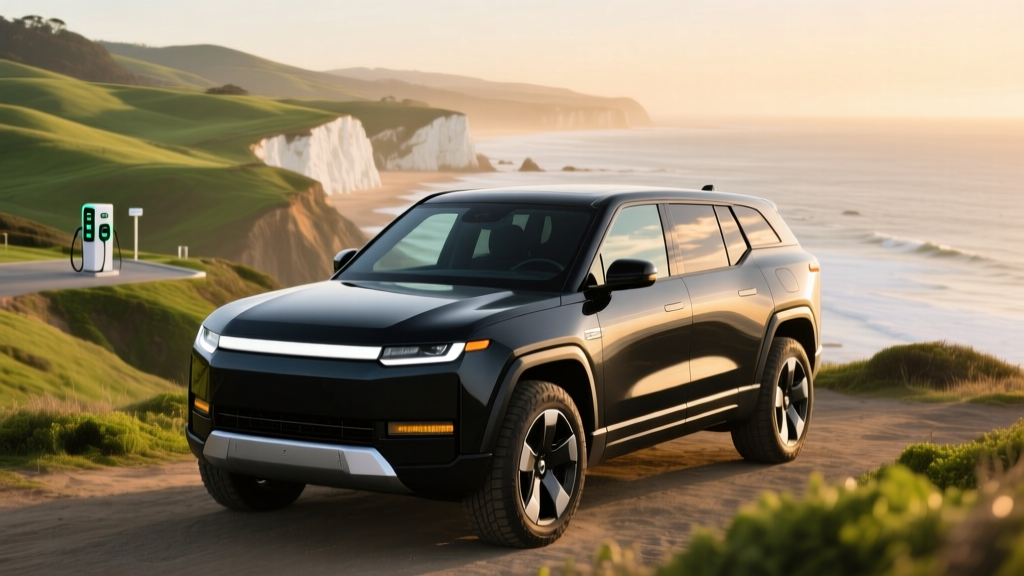
The Rivian R1S remains the benchmark three-row electric SUV for buyers who want genuine off-road capability wrapped in a premium, tech-forward package. For 2026, the R1S continues with its Gen 2 dual-motor and tri-motor powertrains, a refreshed electrical architecture, and a starting MSRP that still clears the IRS §30D federal tax credit cap for SUVs. But with base prices pushing past $80,000 and rapid EV depreciation, an R1S lease has become the smartest path for many shoppers — locking in a predictable monthly cost while sidestepping battery-depreciation risk and capturing the full $7,500 credit through the lease-credit passthrough structure.
This review breaks down every number that matters: real-world range versus EPA estimates, the actual charging curve you'll see at a DC fast charger, interior dimensions, and the math behind buying versus leasing in 2026.
Rivian R1S Specs at a Glance
| Specification | Dual-Motor (Standard) | Tri-Motor (Performance) |
|---|---|---|
| EPA Range | ~330 mi (Max Pack) | ~315 mi (Max Pack) |
| Battery (usable, est.) | ~141 kWh (Max Pack, NMC) | ~141 kWh (Max Pack, NMC) |
| Horsepower | 533 hp (Standard) / 665 hp (Performance) | 850 hp |
| 0-60 mph | ~4.5 sec (Std) / ~3.5 sec (Perf) | ~2.9 sec |
| Drivetrain | AWD (dual-motor) | AWD (tri-motor, torque vectoring) |
| Peak DC Fast Charge | ~220 kW | ~220 kW |
| 10-80% DCFC Time | ~27 min | ~27 min |
| Level 2 Home Charge | ~11.5 kW (~25 mi/hr) | ~11.5 kW (~25 mi/hr) |
| MPGe (combined, est.) | ~73 MPGe | ~69 MPGe |
| Towing Capacity | 7,700 lbs | 7,700 lbs |
| Base MSRP (2026) | $79,900 (Adventure Dual-Motor Std) | $105,900 (Tri-Motor Max) |
Source: Rivian official specifications and fueleconomy.gov. Figures vary by pack size (Standard, Large, Max) and wheel option. Confirm exact trims on Rivian's configurator.
Real-World Range: What the EPA Sticker Doesn't Tell You
The R1S is a tall, heavy, boxy SUV — aerodynamics and mass work against it at highway speeds. In our experience and consistent with third-party testing, the R1S delivers roughly 85-90% of its EPA rating in moderate-temperature highway cruising. Cold weather (below 30°F) compounds this: battery resistance increases, cabin heating draws significant energy (the R1S uses a heat pump, which helps but doesn't eliminate the penalty), and you can expect a 20-30% range reduction on winter road trips.
The Max Pack's ~141 kWh usable NMC (nickel-manganese-cobalt) battery is among the largest in any consumer EV. That sheer capacity gives you a buffer even after losses, but it also means longer charging sessions if you arrive at a charger at a low state of charge. The Standard Pack (~95 kWh usable) and Large Pack (~120 kWh usable) offer 230-270 and 270-310 EPA miles respectively, at lower price points — a better fit for commuters who rarely need 330 miles in a single stint.
Charging Speeds: DC Fast Charging and Home Setup
Rivian equips the R1S with a CCS1 connector (with NACS adapter compatibility for Tesla Supercharger access). The Gen 2 architecture supports peak DC fast-charge rates up to ~220 kW, but as with every EV, that peak is not sustained across the entire session.
| Charging Method | Power | Speed / Time |
|---|---|---|
| Level 1 (120V household) | ~1.4 kW | ~3-4 mi/hr |
| Level 2 (240V home, Rivian Wall Charger) | ~11.5 kW | ~25 mi/hr (full charge ~12-14 hr) |
| DC Fast Charge (peak) | ~220 kW | 10-80% in ~27 min |
| DC Fast Charge (sustained avg, 10-80%) | ~150-170 kW avg | ~200+ mi added in 20 min |
Charging curve reality: The R1S hits peak charge rate only between roughly 10-30% state of charge. Above 50%, the rate tapers progressively — by 80%, you're down to ~50-60 kW. This is standard lithium-ion behavior to protect cell longevity, but it means a 10-90% session takes significantly longer than the headline 10-80% figure. For road trips, plan to charge to 80% and move on; the last 20% is painfully slow unless you need every mile to reach the next station.
At home, an 11.5 kW Level 2 setup (requires a 60A circuit and a NEMA 14-50 or hardwired connection) replenishes roughly 25 miles of range per hour. A full Max Pack charge from near-empty takes 12-14 hours — manageable for overnight charging. Budget $500-$1,500 for professional Level 2 installation depending on your panel capacity and run distance; a 200A panel upgrade can add $1,500-$3,000.
Performance, Capability, and Daily Driving
The R1S is genuinely quick. The Dual-Motor Performance variant (665 hp) dispatches 0-60 mph in approximately 3.5 seconds — sports-car territory for a three-row SUV weighing nearly 7,000 pounds. The Tri-Motor (850 hp) is absurdly fast at ~2.9 seconds, with torque vectoring on the rear axle that sharpens cornering and enables tank turns off-road.
Ride quality is adjustable thanks to the standard air suspension, which offers up to 14.9 inches of ground clearance in Off-Road mode and drops for easy entry and highway efficiency. The electro-hydraulic steering is precise, and the R1S feels planted at speed — a significant improvement over the first-generation model's tuning.
Towing: Rated at 7,700 lbs, the R1S handles boat and camper duty, though towing cuts range roughly in half. Plan for 150-170 miles between charges when pulling a loaded trailer.
Interior Space, Tech, and Standout Features
The R1S seats up to seven across three rows. Third-row space is usable for children and shorter adults on trips under an hour — a genuine advantage over competitors like the Tesla Model X, whose third row is more occasional-use. Cargo volume measures approximately 20 cu ft behind the third row, 57 cu ft behind the second, and up to 105 cu ft with both rear rows folded. The front trunk (frunk) adds ~11 cu ft of lockable, drainable storage.
Infotainment: Rivian's in-house software runs on a 15.6-inch center display with a clean, responsive interface. Wireless Apple CarPlay and Android Auto are not supported — Rivian's native system replaces them, which is a pro or con depending on your preference. Over-the-air updates continuously add features.
Driver assistance: The R1S ships with Rivian's Driver+ system, a Level 2 SAE driver-assist suite offering adaptive cruise control, lane centering, and automatic lane changes on divided highways. It is not self-driving — the driver must remain attentive with hands on or near the wheel at all times. It's competent for highway cruising but trails GM's Super Cruise and Ford's BlueCruise in hands-free highway coverage.
Unique features: Camp Kitchen (slide-out galley, optional), Gear Tunnel (on R1T; R1S has under-floor rear storage), built-in flashlight in the door, and a panoramic glass roof with electrochromic dimming on upper trims.
Pricing, Lease Math, and Federal Tax Credit Eligibility
| Trim / Configuration | 2026 MSRP (est.) |
|---|---|
| Dual-Motor Standard Pack (Adventure) | $79,900 |
| Dual-Motor Large Pack (Adventure) | $85,900 |
| Dual-Motor Max Pack (Adventure) | $94,900 |
| Tri-Motor Max Pack (Ascend) | $105,900 |
Destination charge additional. Prices subject to change; verify on Rivian.com.
Federal Tax Credit (§30D) Eligibility
- MSRP cap: SUVs must be at or below $80,000 MSRP to qualify. Only the base Dual-Motor Standard Pack at $79,900 clears this cap. All other trims exceed it.
- Buyer income cap: AGI must not exceed $300,000 (joint), $225,000 (head of household), or $150,000 (single).
- Battery sourcing: Critical minerals and battery component requirements must be met per IRS §30D rules. Rivian has worked to qualify its supply chain, but sourcing rules tighten annually — confirm eligibility at purchase.
- Point-of-sale transfer: Eligible buyers can apply the $7,500 credit as an instant rebate at delivery, reducing the purchase price directly.
Why an R1S Lease Often Beats Buying
Here's the key advantage: under a lease, the $7,500 federal credit goes to the lessor (Rivian's financing arm), which can pass it through as a capitalized-cost reduction — effectively lowering your monthly payment. This works even for trims above the $80,000 MSRP cap, because the §30D MSRP cap applies to purchases, and the commercial clean-vehicle credit (§45W) can apply to leased vehicles regardless of MSRP. Confirm this passthrough structure with Rivian's finance team, as it depends on how the lease is classified.
A typical R1S lease in 2026 might look like:
- Dual-Motor Large Pack, 36-month lease, 10,000 mi/yr
- Estimated monthly payment: $1,050-$1,350 depending on money factor and residual
- Cap cost reduction from credit passthrough: ~$7,500
- No due-at-signing beyond first month + fees (varies by deal)
Leasing also insulates you from the steep depreciation that large luxury EVs experience. The R1S has seen 30-40% depreciation over three years in the used market — a risk the lessor absorbs, not you.
Pros, Cons, and Who the R1S Is For
Pros
- Genuine three-row SUV with usable third row and strong cargo space
- Class-leading off-road capability (air suspension, quad-motor option)
- Up to ~330 mi EPA range with Max Pack
- Premium build quality and distinctive design
- 7,700-lb towing capacity
- Lease passthrough may unlock credit on higher trims
Cons
- MSRP exceeds §30D cap on all but base trim
- Highway and cold-weather range losses are significant
- No Apple CarPlay or Android Auto
- Charging speed trails Hyundai/Kia E-GMP rivals (220 kW vs 240-350 kW)
- Premium pricing — even base trim nears $80K
- Service center network still expanding in some regions
Who the R1S Suits Best
Ideal for: Active families who need three rows, tow occasionally, and want off-road capability without sacrificing daily comfort. The R1S is the go-to EV for ski trips, camping weekends, and school runs alike.
Consider alternatives if: You primarily commute solo (a smaller, cheaper EV makes more sense), you need the absolute fastest charging for frequent road trips (look at Hyundai Ioniq 9 or Kia EV9), or your budget caps below $70,000 (consider the Kia EV9 or a used R1S).
Frequently Asked Questions
What is the real-world range of the Rivian R1S?
The EPA rates the Dual-Motor Max Pack at approximately 330 miles. In real-world highway driving at moderate temperatures, expect 270-290 miles. In winter conditions, plan for 220-240 miles. The Standard Pack delivers roughly 230 miles EPA / 190-210 real-world.
How fast does the R1S charge?
Peak DC fast-charging is ~220 kW, achieving a 10-80% charge in approximately 27 minutes. At home on a Level 2 charger (11.5 kW), you gain about 25 miles of range per hour, with a full charge taking 12-14 hours for the Max Pack.
Does the R1S qualify for the $7,500 federal tax credit?
Only the base Dual-Motor Standard Pack at $79,900 MSRP clears the §30D SUV cap of $80,000. Higher trims exceed the cap for purchase. However, leasing may unlock the credit through the §45W commercial vehicle credit passthrough — confirm with Rivian's finance team and a tax professional.
Is it better to buy or lease the R1S?
For most buyers, an R1S lease is the financially smarter move in 2026. You avoid the steepest depreciation years, potentially access the federal credit on higher-MSRP trims via lease passthrough, and keep monthly payments predictable. Buying makes sense only if you plan to keep the vehicle 7+ years, drive under 10,000 miles annually, and qualify for the credit on the base trim.
How does the R1S compare to the Kia EV9 and Tesla Model X?
The Kia EV9 is $20,000-$30,000 cheaper, offers comparable three-row space, and charges faster (up to 350 kW on 800V architecture), but lacks the R1S's off-road capability and premium interior. The Tesla Model X is similarly priced but offers less cargo versatility, a more polarizing design, and relies on Tesla's Supercharger network advantage. The R1S occupies a unique niche: premium adventure SUV with genuine off-road chops.
What is the R1S battery warranty?
Rivian covers the battery and drive system with an 8-year/175,000-mile warranty, with a capacity retention threshold (typically 70% state of health). This is competitive with the industry standard. See Rivian's official warranty documentation for exact terms.