Rivian in Houston: What Lone Star EV Buyers Need to Know
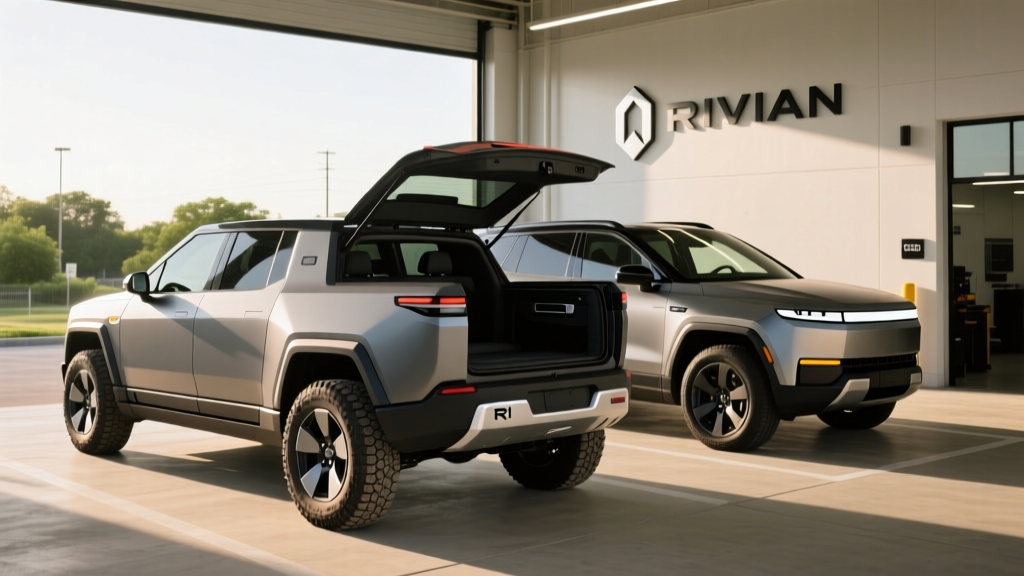
If you've been searching for "Rivian Houston" you're likely one of the growing number of Texas buyers trying to figure out how Rivian's R1T pickup and R1S SUV fit into life in the nation's fourth-largest city — a metro defined by sprawl, brutal summer heat, and a conspicuous lack of public transit. Houston is also one of Rivian's key service and delivery hubs in the South, making it a practical market for ownership.
This guide reviews the 2026 Rivian R1 Tri-Motor and Dual-Motor lineup with a specific eye toward Houston-area realities: 100°F+ summers that stress battery thermal management, highway-heavy commutes along I-10 and I-45, towing to the Hill Country, and the availability of local service and charging infrastructure. We'll cover EPA range versus real-world expectations, DC fast-charge curves, federal tax credit eligibility under current IRS §30D rules, and whether the R1T or R1S makes more sense for Texas use cases.
2026 Rivian R1T and R1S: Specifications at a Glance
Rivian offers the R1T pickup and mechanically identical R1S three-row SUV across three powertrain tiers for 2026. The Max battery pack uses NMC (nickel manganese cobalt) chemistry, while the Standard pack has shifted to LFP (lithium iron phosphate) for lower-cost trims — a chemistry split that affects charging habits, longevity, and usable capacity.
| Spec | Dual-Motor Standard | Dual-Motor Max | Tri-Motor Max |
|---|---|---|---|
| EPA Range (R1T) | ~270 mi | ~420 mi | ~390 mi |
| EPA Range (R1S) | ~260 mi | ~400 mi | ~370 mi |
| Battery (usable) | ~92 kWh (LFP) | ~141 kWh (NMC) | ~141 kWh (NMC) |
| Horsepower | 533 hp | 533 hp | 850 hp |
| 0-60 mph | 4.5 sec | 4.5 sec | 2.9 sec |
| Drivetrain | AWD (dual-motor) | AWD (dual-motor) | AWD (tri-motor) |
| Max DC Fast Charge | ~200 kW | ~220 kW | ~220 kW |
| 10-80% DCFC Time | ~28 min | ~40 min | ~40 min |
| Level 2 Home Rate | 11.5 kW (~25 mi/hr) | 11.5 kW (~25 mi/hr) | 11.5 kW (~25 mi/hr) |
| Max Towing | 11,000 lb | 11,000 lb | 11,000 lb |
| MPGe (combined) | ~73 MPGe | ~70 MPGe | ~65 MPGe |
Sources: fueleconomy.gov, Rivian R1T specs, Rivian R1S specs.
Real-World Range: What Houston Drivers Actually See
Houston's driving profile — long highway commutes, stop-and-go on the 610 Loop, and frequent A/C use — is moderately favorable for EVs. Regenerative braking recovers energy in traffic, and you won't face the 20-30% cold-weather range penalties that owners in Chicago or Denver endure. However, sustained 80 mph cruising on flat, open Texas highways is where large trucks and SUVs are least efficient. The Tri-Motor's extra powertrain mass and performance tuning reduce efficiency further; plan for ~280-300 real-world highway miles from its 390-mile EPA rating.
For context, a round trip from Houston to Austin (~330 miles total) is doable in the Max-pack R1T without charging if you drive conservatively, but you'll arrive with a thin buffer. Most owners will want a 10-minute DC top-up in College Station or Bastrop for peace of mind.
Charging Speed and Houston Infrastructure
Rivian's 2026 models accept up to ~220 kW on DC fast chargers (Max pack) and ~200 kW on the Standard pack. Critically, peak kW is not sustained kW — the charge curve tapers significantly above 80% state of charge (SoC) to protect the NMC cells. The Max pack's large 141 kWh battery means even a 10-80% charge in ~40 minutes represents a substantial energy addition (~100 kWh), but you'll spend more time at the charger than an Ioniq 5 or Model Y owner with smaller, faster-charging packs.
| Method | Power (kW) | Miles Added per Hour | Typical Use Case |
|---|---|---|---|
| Level 1 (120V household) | ~1.4 kW | ~3 mi/hr | Emergency/trickle only |
| Level 2 (240V home, 48A) | 11.5 kW | ~25 mi/hr | Overnight daily charging |
| DC Fast Charge (peak) | 200-220 kW | ~500+ mi/hr (at peak) | Road trips, 10-80% in ~28-40 min |
Houston charging landscape: The Rivian Adventure Network has been expanding in Texas, with chargers strategically placed along I-10, I-35, and I-45 corridors, plus destination chargers at locations like the Rivian Space Houston (the company's service and delivery center in the metro area). The broader Electrify America and Tesla Supercharger networks (now accessible to Rivian via the included NACS adapter) provide extensive coverage throughout Greater Houston and along major travel corridors.
For home Level 2 charging, Houston's relatively modern housing stock and widespread 200-amp electrical panels make installation straightforward in most suburbs (Sugar Land, The Woodlands, Katy). Budget $800-$2,000 for a professional Level 2 install with a hardwired 48-amp charger, though older homes inside the 610 Loop may require a panel upgrade adding $1,500-$3,000.
Pricing, Trims, and Federal Tax Credit Eligibility
The 2026 Rivian lineup starts in the mid-$70,000s and climbs past $100,000 for fully equipped Tri-Motor builds. Here's the current MSRP landscape and how federal incentives apply:
| Model / Trim | Base MSRP | §30D Credit Eligible? | Effective Price (est.) |
|---|---|---|---|
| R1T Dual-Motor Standard | ~$69,900 | Yes (if under MSRP + income caps) | ~$62,400 |
| R1T Dual-Motor Max | ~$83,900 | Limited (MSRP cap applies) | ~$76,400–$83,900 |
| R1T Tri-Motor Max | ~$99,900 | Unlikely (exceeds truck MSRP cap) | ~$99,900 |
| R1S Dual-Motor Standard | ~$74,900 | Yes (SUV cap is $80,000) | ~$67,400 |
| R1S Dual-Motor Max | ~$89,900 | No (exceeds $80K SUV cap) | ~$89,900 |
The IRS §30D clean vehicle credit provides up to $7,500, but eligibility hinges on three factors that frequently trip up Rivian buyers:
- MSRP cap: $80,000 for SUVs (R1S), $80,000 for pickups (R1T). The R1S and R1T are classified differently — verify the IRS vehicle classification for your specific VIN before purchase.
- Buyer income cap: AGI must not exceed $150,000 (single), $225,000 (head of household), or $300,000 (joint).
- Battery sourcing: Critical minerals and battery component requirements phase in annually. Confirm current-year compliance on the IRS qualified vehicles list at the point of sale.
The $7,500 credit can now be transferred to the dealer at point of sale, reducing your out-of-pocket cost immediately rather than waiting for tax filing. Always verify eligibility with your tax professional and the dealer before signing.
Performance, Tech, and Daily Livability
The Dual-Motor's 533 hp and 4.5-second 0-60 time are more than adequate for merging onto Houston's fast-moving freeways. The Tri-Motor's 850 hp and sub-3-second sprint is supercar territory in a 7,000-pound truck — entertaining but largely unnecessary for daily driving and a meaningful hit to efficiency.
Rivian's software-defined platform receives regular over-the-air updates, and the 15.6-inch center display running the company's proprietary infotainment stack is responsive and well-organized. The Driver+ system provides highway lane-centering and adaptive cruise, but it is a SAE Level 2 driver-assist system — not self-driving. You must keep hands on the wheel and eyes on the road at all times.
Cargo and space: The R1T offers a 4-foot-6-inch bed with the innovative Gear Tunnel (67 cu ft of enclosed, lockable storage spanning the vehicle width behind the cab). The front trunk (frunk) adds ~11 cu ft. The R1S provides three rows of seating with ~105 cu ft of total cargo volume behind the front seats. Both vehicles feature Rivian's Camp Kitchen and Gear Guard accessories for overlanding.
Pros, Cons, and the Verdict for Houston Buyers
Pros
- Class-leading combination of off-road capability, on-road refinement, and tech
- Max pack offers 400+ EPA miles — rare in the EV truck/SUV segment
- 11,000-lb towing capacity with integrated trailer brake controller
- Gear Tunnel and frunk provide cargo flexibility competitors lack
- Rivian Adventure Network expanding along Texas highway corridors
- NACS adapter included — full Supercharger network access
Cons
- Premium pricing — most trims exceed $80K, limiting tax credit access
- Large 141 kWh battery means longer DC fast-charge sessions vs. smaller packs
- Houston service capacity still limited — wait times for body/paint work can stretch
- Tri-Motor efficiency penalty is significant (~65 MPGe)
- No Apple CarPlay or Android Auto (Rivian uses proprietary infotainment only)
- Insurance premiums run 20-35% higher than comparable ICE trucks in Texas
Rivian R1T vs. Ford F-150 Lightning vs. Chevy Silverado EV
For Houston truck buyers cross-shopping electric pickups, the competitive set is clear:
- Ford F-150 Lightning: Lower starting price (~$55K), broader dealer service network in Houston, but less range on standard packs and a more conventional truck interior. Better for fleet and budget-conscious buyers.
- Chevy Silverado EV: Competitive max range (up to ~440 miles EPA on 4WT trim), but availability has been inconsistent and the two-row crew-cab-only format limits versatility.
- Rivian R1T: Premium positioning, best-in-class adventure/lifestyle features (Gear Tunnel, Camp Kitchen), superior off-road geometry. The right choice if budget is secondary to capability and design.
The R1S has fewer direct competitors in the three-row electric SUV space — the Kia EV9 is cheaper but smaller; the Cadillac Escalade IQ is larger but six figures; the Tesla Model X is aging. For a tech-forward, adventure-capable family hauler, the R1S occupies a unique niche.
Frequently Asked Questions
Is there a Rivian service center in Houston?
Yes. Rivian operates a Service Center and delivery hub in the Houston metro area (Rivian Space Houston), handling sales, deliveries, warranty service, and collision referrals. Mobile service vans also cover much of Greater Houston for minor repairs and recalls. For major bodywork, Rivian partners with certified collision centers — wait times can stretch several weeks during peak demand.
How does Houston heat affect the Rivian battery?
Rivian's liquid thermal management system actively cools the battery during charging and high-load driving. Sustained 100°F+ ambient temperatures will increase cooling energy draw (reducing range by roughly 5-8%) and may cause DC fast-charge sessions to taper earlier to protect cell health. Parking in shade or a garage when possible helps preserve long-term battery State of Health (SoH). The battery warranty covers 8 years / 175,000 miles with a minimum 70% capacity retention threshold.
Does the Rivian R1T qualify for the $7,500 federal tax credit?
It depends on the trim, your income, and current battery-sourcing rules. The Dual-Motor Standard pack R1T (MSRP ~$69,900) is most likely to qualify, provided your AGI is under the IRS cap and the battery meets critical-mineral and component sourcing requirements. Higher trims exceeding the $80,000 MSRP cap for pickups do not qualify. Always check the IRS qualified vehicle list and consult a tax professional before purchasing.
Can I tow a trailer from Houston to Big Bend on a single charge?
No. Towing dramatically increases energy consumption — expect a 40-55% range reduction when pulling a 5,000+ lb trailer at highway speeds. A Max-pack R1T rated at 420 EPA miles will realistically deliver ~200-240 miles while towing. Plan DC fast-charge stops every 150-180 miles on long towing trips.
Is Rivian a reliable brand for long-term ownership?
Rivian's build quality has improved significantly since the 2022-2023 launch years, with fewer panel-gap and software complaints on 2025-2026 models. The company's vertical integration (proprietary drivetrain, battery pack, and software) gives it control over updates but means you're dependent on Rivian's service network — which, while growing, is still far smaller than Ford or Toyota's. Houston's service capacity is adequate for routine needs but can be strained for complex repairs.