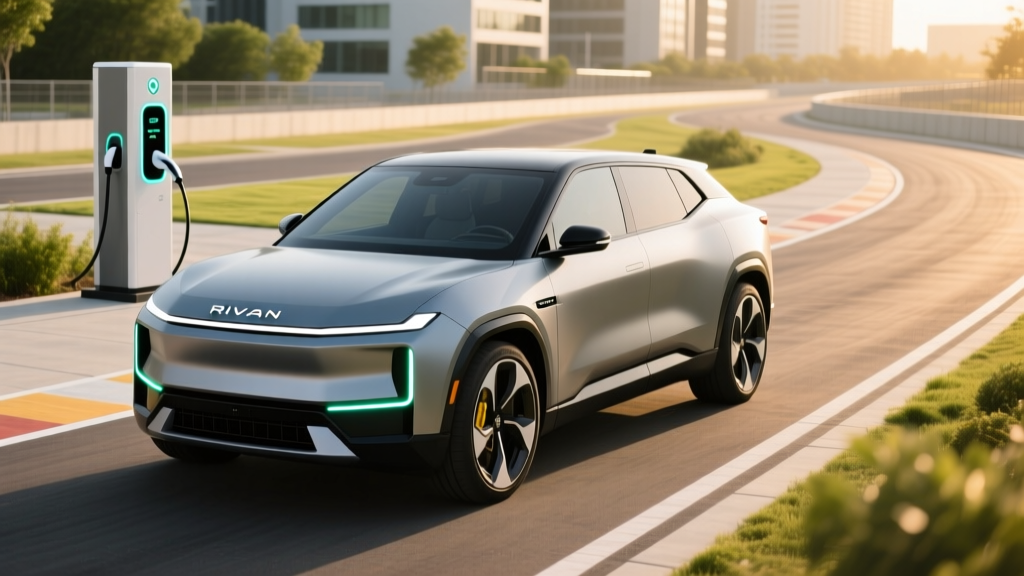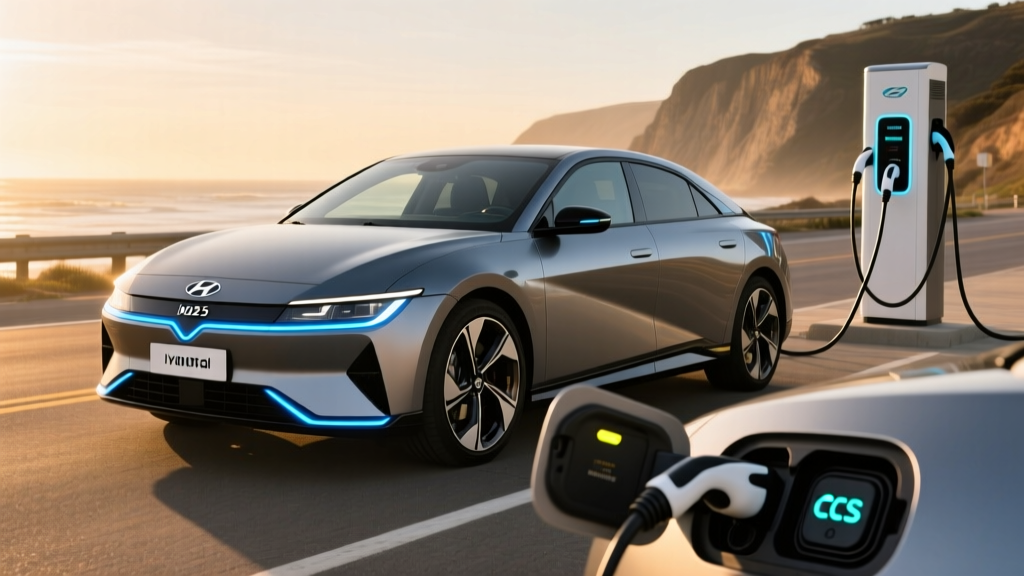
The three-row electric SUV segment has been dominated by a handful of players, and Hyundai's entry — the 2025 Hyundai Ioniq 9 — arrives with serious credentials. Built on the E-GMP platform with a massive 110.3 kWh battery, the Ioniq 9 targets families who need space for seven passengers without sacrificing range or charging speed. After spending time with the specs, analyzing Hyundai's published data, and cross-referencing EPA filings, here's a comprehensive breakdown of what this EV actually delivers — and where it falls short.
Quick Verdict: Who the Ioniq 9 Is For
The 2025 Hyundai Ioniq 9 is a full-size, three-row electric SUV designed for families who want genuine third-row usability, 300+ miles of range, and fast DC charging. It competes directly with the Kia EV9, Tesla Model X, and Rivian R1S. If you need a three-row EV with a comfortable ride, a usable frunk, and access to Hyundai's strong dealer network for service, the Ioniq 9 deserves a serious look. If you prioritize sporty driving dynamics or need maximum towing capacity, look elsewhere.
Range and Efficiency: EPA Estimates vs. Real-World Expectations
EPA Estimated Range: 311 miles (SE RWD Long Range trim, 19-inch wheels)
Real-World Expectation: ~250–280 miles on highway trips at 70–75 mph; ~200–230 miles in cold weather (below 32°F) with cabin heating. AWD trims drop to an EPA-estimated 274 miles, and expect ~220–250 miles real-world highway.
The Ioniq 9's headline number is its EPA-estimated 311 miles of range in the RWD Long Range configuration. This comes from Hyundai's largest battery pack to date: a 110.3 kWh (usable capacity) lithium-ion pack using NMC (nickel-manganese-cobalt) chemistry. Hyundai chose NMC over LFP here because the energy density advantage is critical in a vehicle this size — packing 110+ kWh into an LFP pack would add significant weight.
Efficiency varies meaningfully by trim and drivetrain. The RWD Long Range SE achieves an EPA-estimated 87 MPGe combined (roughly 38 kWh/100 miles), while the dual-motor AWD HSEL drops to approximately 79 MPGe combined. For context, the Kia EV9 Long Range RWD achieves 89 MPGe — slightly better, likely due to aerodynamic tuning and weight differences.
In real-world highway driving, large SUVs face significant aero drag penalties. Expect a 10–15% reduction from EPA figures at sustained 70+ mph speeds. In winter conditions, battery chemistry and cabin heating demands can push losses to 25–35%. The Ioniq 9 does include a heat pump as standard equipment on most trims, which mitigates cold-weather range loss compared to resistive heating systems, but physics still applies.
Charging Speed: DC Fast Charging and Home Level 2
| Charging Level | Power / Rate | Time / Speed | Connector |
|---|---|---|---|
| Level 1 (120V household) | ~1.4 kW | ~3–4 miles/hour | NACS (native) |
| Level 2 (240V home) | 10.9 kW (max onboard) | ~30 miles/hour; 0–100% in ~11 hours | NACS (native) |
| DC Fast Charging | Peak ~240 kW | 10–80% in ~24 minutes | NACS (native) |
Hyundai equips the Ioniq 9 with the NACS (North American Charging Standard) port natively — no adapter needed for Tesla Superchargers. This is a significant advantage for road-trippers, as the Supercharger network remains the most reliable DC fast-charging infrastructure in the U.S.
The 800-volt E-GMP architecture enables peak DC charging rates of approximately 240 kW. Hyundai quotes a 10–80% charge time of around 24 minutes. However, understand the charging curve: peak 240 kW is only sustained in the lower portion of the battery (roughly 10–40% state of charge). Above 60%, charge rate tapers progressively to protect the battery. If you regularly charge to 100% at DC stations, expect the full session to take 40+ minutes.
At home on a Level 2 charger (240V, 48-amp circuit), the Ioniq 9's 10.9 kW onboard charger adds roughly 30 miles of range per hour. An overnight charge from 20% to full takes approximately 9–10 hours — well within a typical overnight window. Home Level 2 installation costs typically range from $500–$2,500 depending on your electrical panel capacity and run length to the garage; consult a licensed electrician for a site-specific quote.
Performance and Drivetrain
| Spec | RWD Long Range | AWD (Dual Motor) |
|---|---|---|
| Horsepower | 215 hp | 338 hp |
| Torque | 258 lb-ft | 446 lb-ft |
| 0–60 mph | ~7.9 seconds | ~5.2 seconds |
| Drivetrain | Rear-Wheel Drive | Dual-Motor AWD |
| Top Speed | 115 mph (electronically limited) | 124 mph (electronically limited) |
The RWD Long Range variant prioritizes efficiency with a single rear motor producing 215 horsepower. The 0–60 mph time of roughly 7.9 seconds is adequate for daily driving but won't thrill anyone. The dual-motor AWD version is the more compelling performance choice: 338 hp and a 0–60 time of approximately 5.2 seconds gives it confident highway merging and passing capability, even when fully loaded with passengers and cargo.
Ride quality is where the Ioniq 9 earns praise. The multi-link rear suspension and well-tuned damping deliver a composed, comfort-oriented feel — this is a cruiser, not a corner-carver. Steering is light and low-effort, ideal for parking-lot maneuvering but lacking feedback at highway speeds. Towing capacity is rated at up to 3,500 lbs (AWD trims with factory tow package), which handles a small boat trailer or utility trailer but falls short of the Rivian R1S's 7,700-lb rating.
Interior Space, Cargo, and Technology
The Ioniq 9's interior is designed around a flat-floor architecture thanks to the E-GMP platform's skateboard battery layout. This translates to genuinely usable space across all three rows.
| Measurement | Specification |
|---|---|
| First-row legroom | 41.7 inches |
| Second-row legroom | 39.4 inches |
| Third-row legroom | 32.1 inches |
| Cargo (behind 3rd row) | ~14.0 cu ft |
| Cargo (3rd row folded) | ~44.0 cu ft |
| Cargo (all rear rows folded) | ~87.0 cu ft |
| Front trunk (frunk) | ~3.2 cu ft (RWD) / ~1.8 cu ft (AWD) |
The second row offers available captain's chairs with power recline and slide — a premium touch for family hauling. The third row is best suited for children on longer trips; adults can fit but will find the 32.1 inches of legroom tight beyond short drives. Cargo space behind the third row is modest at roughly 14 cubic feet — enough for a few grocery bags or a couple of carry-on suitcases, but you'll need to fold the third row for any serious hauling.
Technology highlights include a dual 12.3-inch panoramic display (instrument cluster and infotainment), wireless Apple CarPlay and Android Auto, Hyundai's Digital Key 2 (phone-as-key via NFC/UWB), and available Hyundai SmartSense driver-assistance suite. SmartSense includes adaptive cruise control with stop-and-go, lane-keeping assist, blind-spot monitoring, and highway driving assist. Note: these are SAE Level 2 driver-assist features — the driver must remain fully engaged with hands on the wheel and eyes on the road at all times.
A notable standout: the Ioniq 9 offers Vehicle-to-Load (V2L) capability, allowing you to power external devices (laptops, camping gear, small appliances) directly from the vehicle's battery via a standard 120V outlet adapter. Maximum output is approximately 3.6 kW — enough for a worksite or campsite.
Pricing, Trims, and Federal Tax Credit Eligibility
| Trim | Drivetrain | Base MSRP | Est. After §30D Credit* |
|---|---|---|---|
| SE Standard Range | RWD | ~$56,200 | ~$48,700 |
| SE Long Range | RWD | ~$60,500 | ~$53,000 |
| SEL Long Range | AWD | ~$65,000 | ~$57,500 |
| Limited | AWD | ~$71,500 | ~$64,000 |
| Calligraphy | AWD | ~$76,000 | ~$68,500 |
*Tax credit figures assume full $7,500 eligibility under IRS §30D. Actual credit depends on your individual tax situation, income, vehicle sourcing, and MSRP cap compliance. See eligibility checklist below.
- MSRP Cap: SUVs/vans must be ≤ $80,000 MSRP — all Ioniq 9 trims qualify.
- Buyer Income Cap: Modified AGI ≤ $150,000 (single) / $300,000 (married filing jointly) / $225,000 (head of household).
- Battery Sourcing: Critical minerals and battery components must meet phased percentage thresholds from U.S. or FTA-partner countries. Hyundai's battery sourcing compliance varies by build date — confirm with your dealer at purchase.
- Point-of-Sale Transfer: As of 2024+, eligible buyers can transfer the credit to the dealer for an immediate price reduction at purchase rather than waiting for tax filing.
- Final Assembly: Must be assembled in North America. The Ioniq 9 is assembled at Hyundai's Metaplant in Ellabell, Georgia — qualifying.
Source: IRS §30D Clean Vehicle Credit. Consult a tax professional for your specific eligibility.
Warranty and Long-Term Ownership
Hyundai backs the Ioniq 9 with one of the strongest warranty packages in the segment:
- Battery/Powertrain: 10 years / 100,000 miles (whichever comes first)
- New Vehicle Limited: 5 years / 60,000 miles
- Anti-Perforation: 7 years / unlimited miles
- Roadside Assistance: 5 years / unlimited miles
The battery warranty guarantees that the high-voltage pack will retain a minimum capacity threshold (typically 70% state of health) over the 10-year/100,000-mile period. Hyundai's NMC packs have demonstrated strong longevity in the Ioniq 5 and Ioniq 6, with most owners reporting less than 5% degradation at 50,000 miles based on community data. The 110.3 kWh pack in the Ioniq 9 is Hyundai's largest to date, and the robust thermal management system (liquid-cooled with active heating) should support long-term durability.
For ownership cost context, charging the Ioniq 9 at the U.S. average electricity rate of ~$0.17/kWh costs roughly $18.75 for a full charge (0–100%), translating to approximately $0.06 per mile. Compare that to a comparable gas-powered three-row SUV averaging 22 MPG at $3.50/gallon — roughly $0.16 per mile. Over 15,000 miles annually, the Ioniq 9 saves an estimated $1,500/year in fuel costs, though actual savings depend on your local electricity and gas prices.
How It Compares: Ioniq 9 vs. Key Rivals
| Spec | Hyundai Ioniq 9 (RWD LR) | Kia EV9 (RWD LR) | Tesla Model X (LR) |
|---|---|---|---|
| EPA Range | 311 mi | 304 mi | 348 mi |
| Battery (usable) | 110.3 kWh (NMC) | 99.8 kWh (NMC) | ~100 kWh (NMC) |
| Peak DC Charge | ~240 kW | ~236 kW | ~250 kW |
| 10–80% DC Time | ~24 min | ~24 min | ~22 min |
| 0–60 mph (AWD) | ~5.2 sec | ~5.0 sec | ~3.8 sec |
| Starting MSRP | ~$56,200 | ~$54,900 | ~$79,990 |
| Battery Warranty | 10 yr / 100k mi | 10 yr / 100k mi | 8 yr / 120k mi |
| Charging Port | NACS (native) | CCS1 (NACS adapter avail.) | NACS (native) |
- You want the longest-range three-row EV under $65,000
- Native NACS/Supercharger access matters to you
- You value Hyundai's 10-year battery warranty
- V2L capability is important for camping/worksites
- You prefer a comfort-tuned ride over sporty handling
- You need maximum towing (see Rivian R1S at 7,700 lbs)
- You want the fastest acceleration (Tesla Model X or Model Y Performance)
- Third-row adult comfort is a top priority (consider a minivan PHEV)
- Budget is tight — the Kia EV9 starts ~$1,300 lower
- You prefer a sporty driving feel over comfort isolation
Pros, Cons, and Final Assessment
- Class-leading EPA range at 311 miles (RWD LR)
- Native NACS port — seamless Supercharger access
- 800V architecture enables fast DC charging
- Generous 10-year/100,000-mile battery warranty
- Flat floor and spacious second row
- V2L capability for off-grid power
- Heat pump standard for cold-weather efficiency
- Competitive starting price for the segment
- Third row is tight for adults on long trips
- RWD base model is slow (7.9s to 60 mph)
- Cargo behind third row is modest (~14 cu ft)
- Towing limited to 3,500 lbs (AWD w/ tow pkg)
- Frunk is small, especially on AWD trims
- Infotainment learning curve with dual-screen layout
- AWD trims sacrifice ~37 miles of range
- Limited real-world long-term data (new model)
Frequently Asked Questions
What is the real-world range of the 2025 Hyundai Ioniq 9?
The EPA estimates 311 miles for the RWD Long Range trim and 274 miles for AWD trims. In real-world highway driving at 70–75 mph, expect roughly 250–280 miles (RWD) or 220–250 miles (AWD). In cold weather below freezing, range can drop 25–35% depending on cabin heating usage and whether you precondition the battery.
How fast does the Ioniq 9 charge at home and on the road?
At home on a Level 2 (240V) charger, the Ioniq 9 charges at up to 10.9 kW, adding approximately 30 miles of range per hour — a full charge from empty takes about 11 hours. On a DC fast charger, it peaks at ~240 kW and charges from 10–80% in approximately 24 minutes, though charging speed tapers significantly above 80% SoC to protect the battery.
Does the 2025 Hyundai Ioniq 9 qualify for the $7,500 federal EV tax credit?
The Ioniq 9 is assembled in Georgia and all trims fall under the $80,000 SUV MSRP cap, so it meets two key requirements. However, full §30D credit eligibility also depends on your income (≤$300,000 MFJ / ≤$150,000 single), battery component and critical mineral sourcing compliance, and your personal tax liability. The credit can be transferred to the dealer at point of sale for an immediate price reduction. Confirm eligibility with your dealer and consult a tax professional. See IRS guidelines.
Is the Ioniq 9 worth buying over the Kia EV9?
Both share Hyundai Motor Group's E-GMP platform, but the Ioniq 9 offers a larger battery (110.3 vs 99.8 kWh), slightly more EPA range (311 vs 304 miles), and native NACS charging. The EV9 starts at a lower MSRP and has marginally quicker acceleration in AWD form. If range and Supercharger access are your priorities, the Ioniq 9 edges ahead. If you want the lowest entry price and don't mind using an adapter for Superchargers, the EV9 is a strong alternative.
Can the Ioniq 9 tow a trailer?
AWD trims with the factory tow package are rated for up to 3,500 lbs — sufficient for a small camping trailer, utility trailer, or a pair of jet skis. The RWD trims are not rated for towing. For comparison, the Rivian R1S tows up to 7,700 lbs, making it the clear choice if heavy towing is a priority.
What is the battery chemistry and how long will it last?
The Ioniq 9 uses NMC (nickel-manganese-cobalt) lithium-ion cells, chosen for their high energy density — essential for fitting 110+ kWh into a manageable package. Hyundai's battery warranty guarantees the pack for 10 years or 100,000 miles with a minimum capacity retention threshold (typically ~70% SoH). Based on data from Ioniq 5 owners, NMC packs in Hyundai's thermal management system typically show less than 5% degradation at 50,000 miles.
Sources: EPA Fuel Economy, Hyundai Motor America Press, IRS §30D Clean Vehicle Credit. Specifications based on manufacturer data at time of publication. Confirm final specs, pricing, and tax credit eligibility with your local dealer and tax advisor.