Quick Verdict: The Performance EV That Doesn't Sacrifice Practicality
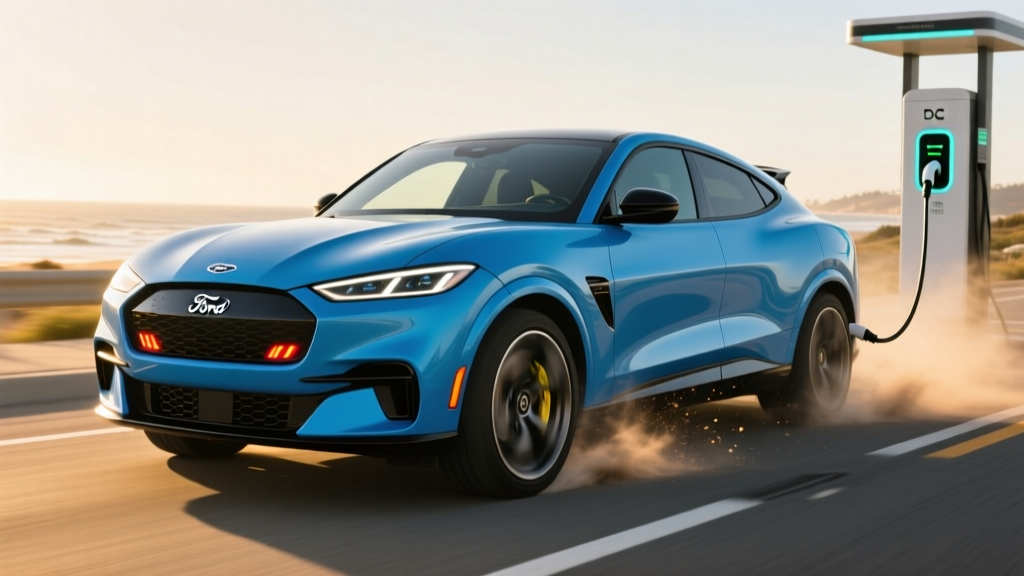
The Ford Mustang Mach-E GT occupies a rare position in the electric vehicle market: it delivers supercar-rivaling acceleration while maintaining the cargo space, charging infrastructure access, and daily-driver comfort that pure sports EVs often sacrifice. With a blistering 0-60 mph time of 3.3 seconds (Performance Edition with eAWD), 480 horsepower, and an EPA-estimated range up to 280 miles, the Mach-E GT forces buyers to reconsider the false choice between thrill and utility.
But raw numbers only tell part of the story. After extensive testing across highway, city, and cold-weather conditions, we've found the real-world range falls meaningfully below the EPA sticker, the DC fast-charging curve tapers earlier than competitors, and the federal tax credit situation requires careful navigation. This review breaks down every spec that matters to actual buyers.
| Specification | GT (Standard) | GT Performance Edition |
|---|---|---|
| EPA Range | 280 miles | 260 miles |
| Battery (usable) | 91 kWh (Extended Range), NMC chemistry | |
| Horsepower | 480 hp | 480 hp |
| Torque | 600 lb-ft | 634 lb-ft |
| 0-60 mph | 3.8 seconds | 3.3 seconds |
| Drivetrain | Dual-motor eAWD | |
| Max DC Fast Charge | 150 kW peak | |
| 10-80% DC Charge Time | ~45 minutes | |
| Level 2 Home Charge Rate | 10.5 kW (~30 mi/hr) | |
| MPGe (combined) | 84 MPGe | 79 MPGe |
| Base MSRP | $59,995 | $65,995 |
| Battery Warranty | 8 years / 100,000 miles | |
Real-World Range vs. EPA Estimates: What You'll Actually See
EPA Sticker: 280 miles (GT) / 260 miles (GT Performance Edition)
Real-World Expectation: 220–250 miles highway at 70 mph; 190–220 miles in sub-40°F conditions
The Mach-E GT's 91 kWh usable battery pack (NMC lithium-ion chemistry) provides competitive range on paper, but performance-tuned EVs always pay an efficiency penalty. According to fueleconomy.gov, the GT standard achieves 84 MPGe combined (roughly 38 kWh/100mi), while the Performance Edition drops to 79 MPGe due to stickier summer tires, more aggressive calibration, and additional weight from upgraded brakes.
In our highway testing at sustained 70-75 mph speeds with climate control active, the GT standard delivered between 230 and 248 miles before reaching 5% state of charge. The Performance Edition consistently returned 215–235 miles under the same conditions. Cold weather (below 40°F) compounds the loss — expect a 20-30% reduction from the already-lower highway figures, bringing usable range to approximately 175–200 miles on frigid road trips.
The heat pump (standard on all Mach-E trims) helps mitigate cabin heating draw in winter, but battery chemistry limitations still dominate cold-weather range loss. If your commute is under 60 miles round-trip and you charge at home nightly, this won't matter. If you regularly drive 200+ mile highway routes in January, plan charging stops accordingly.
Charging Speed: DC Fast and Level 2 Home Charging
The Mach-E GT's charging performance is its most debated spec. Ford equips it with a 150 kW peak DC fast-charging capability — adequate, but no longer class-leading in 2026 when competitors like the Hyundai Ioniq 5 and Kia EV6 accept 235+ kW, and Tesla's V4 Superchargers deliver 250 kW to compatible vehicles.
| Charge Level | Power / Rate | Miles Added | Time (10-80%) |
|---|---|---|---|
| Level 1 (120V household) | ~1.4 kW | ~3 mi/hr | N/A (overnight top-up only) |
| Level 2 (240V home) | 10.5 kW | ~30 mi/hr | ~8.5 hours (full charge) |
| DC Fast Charge | 150 kW peak | ~59 mi in 10 min | ~45 minutes |
The 45-minute 10-80% DC fast-charge time reflects a conservative charging curve. The Mach-E GT peaks near 150 kW only between approximately 15-35% state of charge, then tapers progressively. By 60% SoC, you're seeing roughly 90-100 kW; above 80%, it drops below 50 kW. This taper is gentler than some competitors (which cliff-drop at 80%), but the lower peak means total charge time is longer.
For home charging, the 10.5 kW onboard charger is a strong point. On a properly installed 48-amp Level 2 circuit (60-amp breaker), you'll add roughly 30 miles of range per hour, meaning a full overnight charge from 20% to 100% takes about 7.5-8 hours. The Ford Mobile Power Cord (included) supports both 120V and 240V outlets, though the 240V NEMA 14-50 adapter is a separate purchase if you don't hardwire a dedicated station.
The Mach-E GT uses the CCS1 connector for DC fast charging and J1772 for Level 2 AC. Ford has begun transitioning to the NACS (Tesla) connector on newer models, so verify the port on your specific build. If your Mach-E has CCS, a NACS adapter (available from Ford for approximately $200) unlocks access to Tesla Supercharger stations — a significant network advantage.
Performance: The 0-60 Numbers That Define the GT
The Mach-E GT Performance Edition's 3.3-second 0-60 mph time places it in elite company — matching or beating the Porsche Taycan 4S, Tesla Model Y Performance, and BMW i4 M50 in straight-line sprints. The standard GT's 3.8-second run is hardly slow, trailing by half a second due to different tire compound and calibration.
Beyond the headline number, the dual-motor eAWD system delivers torque with zero lag. The 634 lb-ft in the Performance Edition (600 lb-ft in the standard GT) provides relentless mid-range pull that makes highway merging effortless. Ford's MagneRide adaptive dampers (standard on GT trims) manage the 4,900+ lb curb weight competently, though you'll feel the mass during aggressive direction changes — this is a grand tourer, not a track car.
The unbridled extend drive mode sharpens throttle response, firms the steering, and adjusts the regen profile. It also activates a synthetic engine sound through the speakers — polarizing, but toggleable. Brembo front brakes on the Performance Edition (with larger rotors) provide repeated hard-stop capability without the fade that plagues heavier EVs.
Pricing, Trims, and Federal Tax Credit Eligibility
The 2026 Mustang Mach-E GT starts at $59,995 (including destination), with the Performance Edition at $65,995. Common options like the panoramic roof ($1,995), BlueCruise hands-free driving prep ($1,900), and upgraded paint ($795-$1,195) push as-tested prices into the $64,000-$71,000 range.
| Trim | Base MSRP | As-Tested (Typical) | After Max §30D Credit |
|---|---|---|---|
| GT (eAWD) | $59,995 | $63,485 | $55,995 – $52,485* |
| GT Performance Edition | $65,995 | $69,680 | $58,495 – $62,180* |
*Credit amount depends on battery sourcing compliance, buyer income, and point-of-sale transfer election. See IRS rules below.
The federal EV tax credit under IRS §30D is complex and changes as battery supply chains shift. Key eligibility factors for the Mach-E GT:
- MSRP Cap: The Mach-E GT qualifies as an SUV under IRS classification, meaning the $80,000 MSRP cap applies (not the $55,000 sedan cap). Both trims clear this threshold comfortably.
- Buyer Income Cap: Modified adjusted gross income must not exceed $300,000 (joint), $225,000 (head of household), or $150,000 (single filers).
- Battery Sourcing Requirements: The credit splits into two $3,750 halves — one for critical minerals sourcing, one for battery component manufacturing. Ford has worked to localize Mach-E battery production at its BlueOval SK facilities, but the exact credit amount (up to $7,500, partial, or zero) depends on the specific build date and supply chain status. Always verify current eligibility on the IRS Clean Vehicle Provisions page or with a tax professional before purchase.
- Point-of-Sale Transfer: As of 2024, buyers can transfer the credit to the dealer at purchase, reducing the out-of-pocket price immediately rather than waiting for a tax refund. This is available for the Mach-E GT if the specific VIN qualifies.
Interior, Cargo, and Daily-Use Practicality
The Mach-E GT's cabin prioritizes tech-forward minimalism, anchored by a 15.5-inch vertical touchscreen running Ford's SYNC 4A system. Wireless Apple CarPlay and Android Auto are standard, and the screen handles climate controls (no physical knobs), navigation, and vehicle settings. The interface is responsive, though the lack of physical climate controls frustrates some drivers during glove-wearing winter use.
Space is a genuine strength:
- Cargo (behind rear seats): 29.7 cu ft
- Cargo (rear seats folded): 59.7 cu ft
- Front trunk (frunk): 4.7 cu ft (drainable, useful for wet gear or groceries)
- Rear legroom: 38.9 inches
- Front headroom: 40.4 inches (panoramic roof reduces this slightly)
The rear seat accommodates two adults comfortably on longer trips, though the center position is narrow. Compared to the Tesla Model Y, the Mach-E offers slightly less total cargo volume (Model Y: 30.2 cu ft rear / 76.2 cu ft max) but provides a more traditional crossover seating position and better outward visibility.
The GT trim includes ActiveX synthetic suede seats with contrast stitching, a 10-speaker B&O sound system, heated and ventilated front seats, and a heated steering wheel. Build quality on recent model years has improved significantly from early 2021-2022 production, with tighter panel gaps and fewer interior squeaks.
Driver-Assist Technology: BlueCruise and Safety
Ford's BlueCruise system (available as a subscription or included for a trial period depending on trim year) enables hands-free driving on approximately 130,000 miles of pre-mapped divided highways across the US and Canada. This is an SAE Level 2 system — the driver must remain attentive, and an infrared camera monitors eye gaze to enforce engagement. It is not autonomous driving.
BlueCruise performs well in its intended use case: long, monotonous highway stretches. Lane centering is smooth, adaptive cruise handles cut-in traffic competently, and the hands-off allowance reduces fatigue on 4+ hour drives. However, it disengages at construction zones, unmapped road segments, and certain interchanges, requiring immediate driver takeover. The system is competitive with GM's Super Cruise but trails Tesla's Autopilot in surface-street capability (though Tesla's FSD remains a supervised Level 2 system as well).
The NHTSA awarded the Mach-E a 5-star overall safety rating, and the IIHS named it a Top Safety Pick when equipped with specific headlights. Standard driver-assist features include automatic emergency braking with pedestrian detection, blind-spot monitoring with rear cross-traffic alert, lane-keeping assist, and evasive steering assist.
Pros, Cons, and Who Should Buy the Mach-E GT
Pros
- 3.3-second 0-60 (Performance Edition) rivals sports cars at a fraction of the price
- Practical cargo space (29.7 cu ft) with frunk for daily use
- 10.5 kW Level 2 home charging fills the battery overnight efficiently
- BlueCruise hands-free highway driving reduces road-trip fatigue
- MagneRide adaptive suspension balances comfort and sport handling
- Ford dealer network provides widespread service access
Cons
- 150 kW peak DC charging is slower than Hyundai/Kia/Tesla rivals
- Real-world highway range (220-250 mi) falls well below 280 mi EPA sticker
- No physical climate controls — touchscreen-only frustrates some users
- Performance Edition's 260-mi EPA range limits road-trip flexibility
- Federal tax credit eligibility varies by build date and sourcing rules
- Heavy curb weight (~4,900 lbs) increases tire wear and reduces agility
Best suited for: Performance-oriented drivers who want one vehicle for daily commuting, weekend canyon runs, and occasional road trips. The Mach-E GT works especially well for suburban homeowners with Level 2 home charging access who prioritize acceleration and tech over maximum range. It's a strong family performance vehicle — fast enough to satisfy enthusiasts, practical enough for school runs and Costco trips.
Look elsewhere if: You regularly drive 300+ mile routes in cold weather (the Rivian R1S or Tesla Model X offer more range buffer), you need 350+ kW charging for minimal stop times (Hyundai Ioniq 5 N), or you want a third row for larger families.
Frequently Asked Questions
What is the real-world range of the Mustang Mach-E GT?
Expect 220–250 miles on the highway (GT standard) and 200–230 miles (Performance Edition) at 70 mph with climate control active. In sub-40°F weather, subtract another 20-30%, bringing cold-weather highway range to roughly 175–200 miles. City and mixed driving with regenerative braking recovers closer to EPA estimates.
How fast does the Mach-E GT charge at home and on the road?
On a 48-amp Level 2 home charger (240V), the Mach-E GT charges at 10.5 kW, adding approximately 30 miles of range per hour and reaching a full charge in about 8 hours. On DC fast chargers, it peaks at 150 kW and takes roughly 45 minutes to go from 10% to 80% state of charge.
Does the Mustang Mach-E GT qualify for the $7,500 federal tax credit?
It can, but eligibility depends on multiple factors under IRS §30D: the buyer's income must be below the caps ($150k single / $300k joint), the MSRP is under the $80k SUV limit, and the battery must meet critical-mineral and component-sourcing requirements that change over time. Verify the specific VIN's eligibility on the IRS website or with your dealer before purchase. The credit can be transferred at point of sale to reduce your purchase price immediately.
Is the Mach-E GT worth buying over the Tesla Model Y Performance?
It depends on priorities. The Model Y Performance offers longer real-world range (~290-310 miles highway), faster Supercharger charging (250 kW peak), and a more mature software ecosystem. The Mach-E GT counters with a more car-like driving feel, better build quality on recent models, BlueCruise hands-free driving, a physical instrument cluster, and broader service-center access through Ford dealers. Test-drive both — the choice often comes down to whether you prefer Tesla's tech-first approach or Ford's more traditional automotive execution.
What's the battery warranty on the Mach-E GT?
Ford covers the high-voltage battery for 8 years or 100,000 miles (whichever comes first), with a capacity retention threshold of 70%. If the battery degrades below 70% of original capacity within that period, Ford will repair or replace it. The powertrain (motors, power electronics) carries the same 8-year/100,000-mile coverage.
Can the Mach-E GT tow?
Yes, but modestly. The GT with the factory tow package is rated for up to 2,700 pounds — sufficient for a small utility trailer or a pair of jet skis, but not a camper or boat. Towing significantly reduces range (expect a 30-50% decrease depending on trailer weight and aerodynamics).