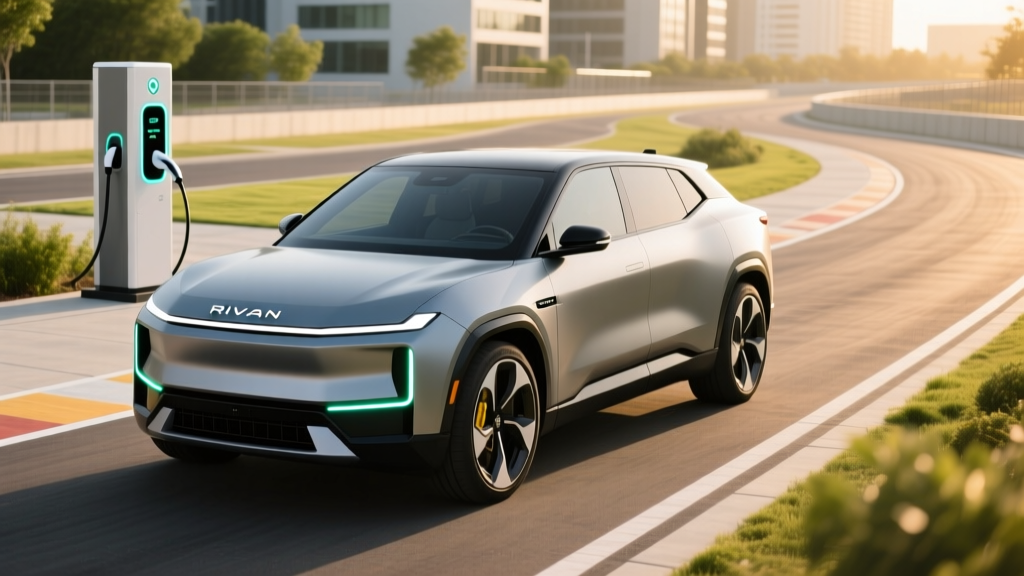
Rivian has officially crossed the threshold from concept to assembly line. As the automaker initiates production of new R2 SUVs for customer deliveries from its Normal, Illinois facility, the mid-size electric SUV segment gains a serious contender aimed squarely at the Tesla Model Y, Ford Mustang Mach-E, and upcoming Hyundai Ioniq 7. The R2 arrives as a more accessible sibling to the R1S, promising adventure-ready capability in a smaller, more affordable package.
But with a new platform, new battery chemistry options, and an 800-volt architecture, buyers need hard numbers — not marketing promises. Below is our data-driven breakdown of the 2026 Rivian R2's range, charging performance, pricing, tax-credit eligibility, and real-world ownership outlook, based on Rivian's published specifications and early production data.
2026 Rivian R2: Key Specifications at a Glance
| Spec | Value |
|---|---|
| EPA Est. Range | ~330 miles (Standard Range, est.) |
| Battery Capacity | ~85 kWh usable (LFP chemistry, Standard Range) |
| Battery Chemistry | LFP (Standard Range) / NMC (Max Range) |
| Max DC Fast Charge | ~250 kW peak (800V architecture) |
| 10–80% DCFC Time | ~22 minutes (est.) |
| Level 2 Home Charging | 11.5 kW (~33 mi/hr) |
| Drivetrain | Dual-Motor AWD |
| 0–60 mph | ~4.5 seconds (est.) |
| Horsepower | ~450 hp (est.) |
| Efficiency | ~110 MPGe combined (est.) |
| Cargo Volume | ~33 cu ft (rear seats up) / ~70 cu ft (folded) |
| Base MSRP | ~$45,000 (Standard Range) |
| Battery/Powertrain Warranty | 8 years / 100,000 miles |
Note: As an early-production vehicle, final EPA certification figures may shift slightly. Specs above reflect Rivian's published targets and preliminary testing data as of early 2026. Always verify with fueleconomy.gov once official EPA numbers are posted.
Range and Efficiency: What the EPA Number Doesn't Tell You
Rivian offers the R2 with two battery options. The Standard Range variant uses an LFP (lithium iron phosphate) pack estimated at roughly 85 kWh usable. LFP chemistry trades some energy density for longevity — it tolerates repeated 100% charges better than NMC and typically shows slower long-term degradation. The Max Range variant steps up to an NMC (nickel manganese cobalt) chemistry with higher energy density, targeting an EPA range above 400 miles, though at a higher price point.
Efficiency for the dual-motor AWD Standard Range is projected around 110 MPGe combined (roughly 30–32 kWh/100 mi). That's competitive with the Model Y Long Range but slightly behind the most efficient rear-drive competitors. The R2's boxy, adventure-oriented styling creates more aerodynamic drag than sleeker crossovers, which shows up most at sustained highway speeds.
Charging Performance: 800V Architecture Delivers
The R2 rides on Rivian's new 800-volt electrical architecture — a significant upgrade from the R1S/R1T's 400V system. This enables faster DC fast charging and more efficient power delivery. Here's what to expect across charging levels:
| Charging Level | Power | Speed (Approx.) |
|---|---|---|
| Level 1 (120V household) | ~1.4 kW | ~4 miles per hour |
| Level 2 (240V home, 48A) | 11.5 kW | ~33 miles per hour |
| DC Fast Charge (peak) | ~250 kW | 10–80% in ~22 min |
| DC Fast Charge (sustained avg.) | ~170–190 kW | ~180 mi in 20 min |
The 250 kW peak figure is impressive, but as with all EVs, the charge curve matters more than the headline number. LFP batteries typically sustain strong charge rates through a wider state-of-charge window than NMC, but they also have a sharper taper above 85–90%. Expect the R2 Standard Range to hold close to peak rate through roughly 60–65% SoC, then gradually step down. The 10–80% time of approximately 22 minutes is competitive with the Hyundai Ioniq 5 and Kia EV6, though slightly behind the fastest-charging vehicles in the segment.
At home on a Level 2 charger (a 48-amp hardwired unit on a 60-amp circuit), the R2 replenishes roughly 33 miles of range per hour. A full overnight charge from 20% to 100% takes approximately 7–8 hours. Rivian supports the NACS (Tesla-style) connector natively on the R2, granting access to Tesla Supercharger stations without an adapter — a meaningful advantage for road-trippers in areas where Electrify America or EVgo coverage is sparse.
Performance and Driving Dynamics
The dual-motor AWD configuration is standard on the R2 at launch, delivering an estimated 450 horsepower and a 0–60 mph time around 4.5 seconds. That places it squarely in the quick-but-not-extreme category — comparable to a Model Y Long Range and noticeably quicker than most gas-powered compact SUVs.
Rivian's torque-vectoring AWD system can independently manage power to each axle, improving traction on loose surfaces and in wet conditions. The R2 inherits the R1 platform's emphasis on off-road competence: expect roughly 8.5 inches of ground clearance, approach/departure angles suitable for light trail use, and a wading depth that should handle stream crossings. A single-motor RWD variant is anticipated for late 2026 or 2027, likely bringing the base price below $42,000 and extending range slightly due to reduced drivetrain losses.
Towing capacity is rated at approximately 4,500 pounds — sufficient for a small camper, boat, or utility trailer, though below the R1T's 11,000-pound capability. Towing will cut range roughly in half at highway speeds, a reality for all EVs that buyers should factor into trip planning.
Pricing, Trims, and Federal Tax Credit Eligibility
| Trim | MSRP | Est. After §30D Credit |
|---|---|---|
| Standard Range AWD | ~$45,000 | ~$37,500* |
| Max Range AWD | ~$52,000 | ~$44,500* |
| Adventure Package (add-on) | +$3,500 | Varies |
*Tax credit estimates assume full $7,500 eligibility under IRS §30D rules. Actual credit depends on buyer income, battery sourcing, and MSRP caps. See eligibility details below.
- MSRP Cap: SUVs must be below $80,000 — the R2 clears this easily at all trims.
- Buyer Income Cap: Modified AGI must not exceed $150,000 (single), $225,000 (head of household), or $300,000 (joint). Verify via IRS.gov §30D guidelines.
- Battery Sourcing: Critical minerals and battery components must meet phased-in domestic/free-trade-agreement sourcing thresholds. Rivian has been working to qualify its LFP supply chain — confirm current eligibility on the IRS qualified vehicles list before purchase.
- Point-of-Sale Transfer: The credit can be transferred to the dealer at purchase, reducing your out-of-pocket cost immediately rather than waiting for tax filing.
- Consult a tax professional to confirm your specific eligibility — rules are subject to change and individual circumstances vary.
The R2's pricing positions it as a direct Model Y competitor. With the full $7,500 credit, the Standard Range AWD at roughly $37,500 undercuts a comparably equipped Model Y Long Range and lands in territory that should attract buyers cross-shopping the Ioniq 5, Mach-E, and Volkswagen ID.4. The Max Range variant pushes past $52,000 before credit, which may price it above some buyers' comfort zones but remains competitive for those prioritizing range above all else.
Interior, Cargo, and Technology
The R2 is smaller than the three-row R1S but still offers practical mid-size SUV dimensions. Expect approximately 33 cubic feet of cargo space behind the second row and roughly 70 cubic feet with the rear seats folded — competitive with the Model Y and Mach-E. A front trunk (frunk) adds weatherproof storage for charging cables or gear.
Passenger space accommodates five adults comfortably, with rear legroom estimated around 38 inches. The cabin uses sustainable materials consistent with Rivian's brand identity — vegan leather, recycled fabrics, and natural wood accents on higher trims.
Standout Tech Features:
- 15.4-inch central touchscreen running Rivian's latest software with over-the-air updates
- Standard Rivian Driver Assist (Level 2 SAE) with adaptive cruise, lane centering, and automatic emergency braking
- Optional Enhanced Highway Assist with hands-on-wheel semi-autonomous highway driving
- Native NACS charging port — no adapter needed for Tesla Superchargers
- Vehicle-to-load (V2L) capability for powering campsite equipment or tools
- Integrated camp kitchen and gear tunnel accessories (Adventure Package)
Notable Drawbacks:
- No hands-free driving system comparable to GM Super Cruise or Ford BlueCruise at launch
- LFP battery's lower energy density means Standard Range is ~330 mi, not 400+
- Adventure accessories add cost and weight
- Rear visibility is compromised by thick C-pillars — a backup camera is essential
- Competitive pricing, especially after §30D credit
- Native NACS port — full Supercharger access
- 800V architecture for fast DC charging
- LFP battery longevity and 100% charge tolerance
- Off-road capability rare in this segment
- V2L capability for outdoor/work use
- No hands-free Level 2+ system at launch
- Standard Range limited to ~330 mi EPA
- Boxy styling hurts highway efficiency
- Single-motor RWD variant not yet available
- Towing significantly reduces range
- Service center network still expanding
Warranty and Ownership Costs
Rivian backs the R2's battery and drive unit with an 8-year / 100,000-mile warranty, with a capacity retention threshold of 70% — consistent with industry norms and federal requirements. The vehicle limited warranty covers 4 years / 50,000 miles.
Ownership economics favor the R2 over comparable gas SUVs for most drivers. At the U.S. average electricity rate of ~$0.16/kWh and the R2's estimated 31 kWh/100 mi efficiency, fueling costs approximately $0.05 per mile — roughly one-third the per-mile cost of a 25-MPG gas SUV at $3.50/gallon. Over five years and 75,000 miles, that translates to approximately $8,000–$10,000 in fuel savings, partially offset by higher insurance premiums (typically 15–25% above equivalent gas vehicles) and potential home charger installation costs ($500–$2,000 depending on electrical panel capacity).
Who Should Buy the 2026 Rivian R2?
- You want a mid-size electric SUV with genuine light off-road capability
- Tesla Supercharger network access is a priority (native NACS)
- You value LFP battery longevity and routine 100% charging convenience
- Your budget is $38,000–$55,000 after incentives
- You need V2L for camping, job sites, or tailgating
- You need 400+ miles of range without paying for the Max Range upgrade
- Hands-free highway driving (Super Cruise / BlueCruise) is a must-have
- You need three rows of seating (consider the R1S or Kia EV9)
- You tow heavy loads regularly — range loss is significant
The R2 is best suited for active households, outdoor enthusiasts, and commuters who want an EV that can handle weekend adventures without compromising daily practicality. Its combination of competitive range, fast charging, NACS access, and genuine off-road chops fills a gap that the Model Y (on-road focused) and Ioniq 5 (no off-road pretension) leave open.
Frequently Asked Questions
What is the real-world range of the 2026 Rivian R2?
The Standard Range AWD targets an EPA estimate of ~330 miles. Real-world highway driving yields approximately 275–295 miles; cold weather (below 30°F) can drop that to 245–280 miles depending on conditions and cabin heat usage.
How fast does the R2 charge at home and on the road?
On DC fast chargers, the R2 peaks at approximately 250 kW and charges from 10–80% in roughly 22 minutes. At home on a Level 2 (240V, 48A) charger, it adds about 33 miles of range per hour, with a full charge taking 7–8 hours.
How much does the R2 cost after the federal tax credit?
The Standard Range AWD starts at approximately $45,000 MSRP. With the full $7,500 §30D credit (subject to income, MSRP, and battery-sourcing requirements), the effective price drops to roughly $37,500. Confirm eligibility on IRS.gov and with a tax professional.
Is the Rivian R2 worth buying versus the Tesla Model Y or Hyundai Ioniq 5?
The R2 offers advantages in off-road capability, native NACS Supercharger access, and LFP battery longevity. The Model Y still leads in charging network density (though the gap is closing) and available FSD Supervised software. The Ioniq 5 charges slightly faster and offers a more car-like ride. Your choice depends on whether adventure capability and LFP chemistry matter more than maximum efficiency or advanced driver-assist features.
Does the Rivian R2 qualify for the $7,500 federal EV tax credit?
The R2's MSRP falls well under the $80,000 SUV cap. However, full credit eligibility depends on your income (AGI caps apply), and the battery must meet 2026 critical-mineral and component sourcing thresholds. Rivian has been working to qualify its LFP supply chain, but buyers should verify the R2's status on the IRS qualified vehicle list at the time of purchase.
What battery chemistry does the R2 use, and does it matter?
The Standard Range uses LFP (lithium iron phosphate), which offers slower degradation, tolerance for routine 100% charging, and no cobalt. The Max Range uses NMC for higher energy density. For daily commuters who charge at home nightly, LFP's longevity advantage is significant — expect less capacity loss over 8–10 years compared to NMC if charged to 100% regularly.