The 2025 Cadillac Lyriq is General Motors' flagship luxury electric SUV, built on the Ultium platform with a focus on premium materials, cutting-edge infotainment, and long-range cruising. While competitors like the BMW iX and Mercedes EQE SUV lean into performance or opulence, the Lyriq carves a distinct niche: American luxury EV with a 33-inch curved LED display, Super Cruise hands-free driving, and a price that undercuts its German rivals by $10,000 or more. But does the 2025 Cadillac Lyriq interior and overall package deliver enough substance to justify the badge?
We've analyzed EPA data, real-world driving impressions, and ownership economics to give you every number you need before visiting a dealer.
2025 Cadillac Lyriq Interior: Design, Tech & Space
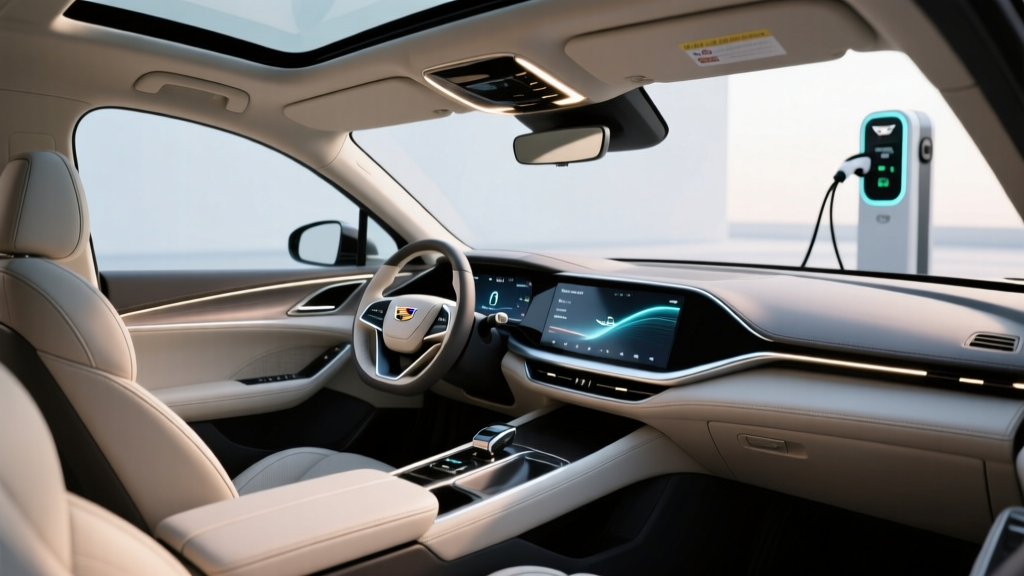
The headline feature inside the Lyriq is the 33-inch diagonal Advanced LED display that spans from behind the steering wheel across the center stack. It runs GM's latest Google-based infotainment system with native Google Maps navigation, Google Assistant voice control, and access to the Play Store for third-party apps. The resolution is sharp, the curved glass eliminates glare effectively, and the system responds quickly to inputs — a meaningful step up from the lag-prone interfaces in earlier GM EVs.
Material quality is where Cadillac earns its luxury positioning. The cabin features standard leatherette (Synthetic Leather) with available Nappa leather on Premium Luxury and Sport trims. Real wood and metallic trim accents are standard, and ambient lighting with 26 color choices adds atmosphere. The steering wheel is a flat-bottom design with capacitive touch controls that some drivers find finicky — physical buttons would be preferable for volume and cruise adjustments.
The center console houses a rotary controller alongside the touchscreen, giving you a backup input method. Wireless Apple CarPlay and Android Auto are standard, along with a wireless phone charging pad. A 19-speaker AKG Studio audio system is standard, with a 23-speaker AKG Studio Reference system available on higher trims — both deliver concert-hall clarity.
Passenger & Cargo Dimensions
| Dimension | Specification |
|---|---|
| Front Headroom | 39.7 in |
| Rear Headroom | 38.4 in |
| Front Legroom | 44.3 in |
| Rear Legroom | 39.6 in |
| Cargo Volume (behind 2nd row) | 28.0 cu ft |
| Cargo Volume (seats folded) | 60.9 cu ft |
| Frunk | None |
Rear seat comfort is excellent for two adults on long trips, though the floor-mounted battery raises the floor slightly, giving rear passengers a knees-up seating position compared to some rivals. The absence of a frunk (front trunk) is a missed opportunity — the Lyriq's Ultium platform uses the space for power electronics, meaning all cargo goes in the rear.
Range, Efficiency & Real-World Expectations
EPA Estimated: 314 miles (RWD, 20-inch wheels) | 307 miles (AWD)
Real-World Highway (70-75 mph): ~255-275 miles
Real-World Cold Weather (below 32°F): ~220-250 miles
Combined Efficiency: 89 MPGe | 37 kWh/100 mi
The 2025 Lyriq uses a 102 kWh usable battery pack (106 kWh gross) with NMC (nickel manganese cobalt) lithium-ion chemistry. This is a high-energy-density pack optimized for range rather than the rapid charge rates you'd see with some LFP cells. EPA estimates put the rear-wheel-drive model at 314 miles and the dual-motor AWD at 307 miles.
In real-world highway driving at sustained 70-75 mph speeds, expect to see between 255 and 275 miles before needing a charge. The Lyriq's aerodynamic profile helps, but its 5,800+ lb curb weight and large frontal area work against it on the interstate. Cold weather compounds the issue: below-freezing temperatures without preconditioning can drop usable range to 220-250 miles. The Lyriq does include a heat pump, which mitigates cabin-heating energy draw in winter, but battery chemistry still loses efficiency in cold conditions.
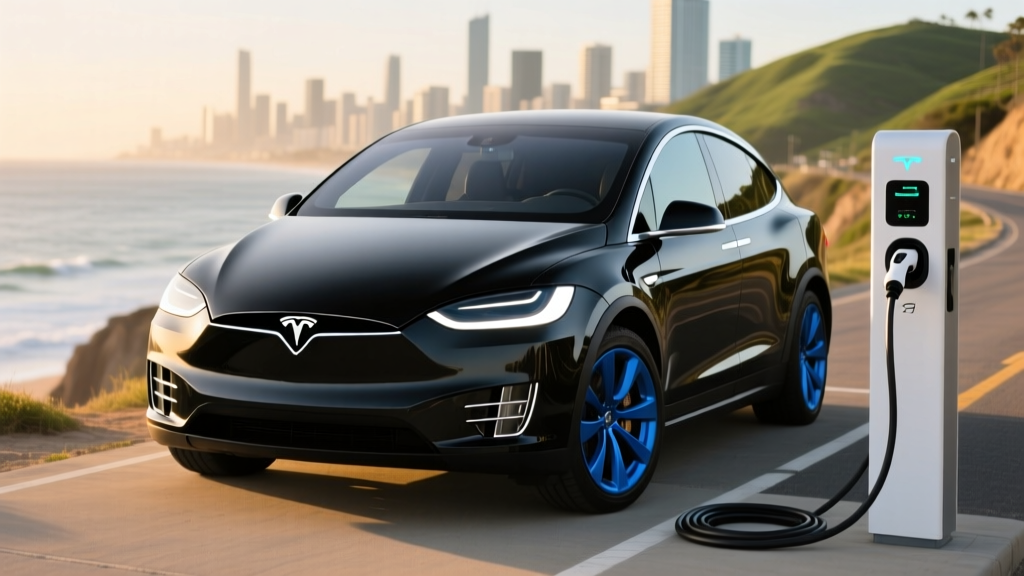
Efficiency comes in at 89 MPGe combined (37 kWh per 100 miles) for the RWD model, per fueleconomy.gov. That's competitive with the BMW iX xDrive50 (87 MPGe) but trails the more aerodynamic Tesla Model X (102 MPGe).
Charging Speed: DC Fast, Level 2 & Home Setup
| Charging Level | Power | Speed | Time |
|---|---|---|---|
| Level 1 (120V household) | ~1.4 kW | ~3-4 mi/hr | ~70+ hours (0-100%) |
| Level 2 (240V home/public) | 11.5 kW (48A) | ~31 mi/hr | ~10 hours (0-100%) |
| DC Fast Charge (peak) | 190 kW | ~195 mi in 30 min | 10-80% in ~34 min |
The Lyriq's onboard charger accepts up to 11.5 kW on Level 2 AC, which is solid — most home Wall Connectors or ChargePoint Home Flex units running at 48 amps will fully replenish the pack overnight in about 10 hours.
DC fast charging peaks at 190 kW on compatible CCS stations (the Lyriq uses CCS1, though GM has committed to NACS adoption for future models). A 10-80% session takes approximately 34 minutes under ideal conditions. However, the charge curve tapers noticeably above 80%, and sustained rates between 40-70% SoC hover around 150-170 kW before dropping further. On a road trip, plan for 30-35 minute stops at Electrify America or EVgo stations.
The Lyriq supports battery preconditioning: when you navigate to a DC fast charger in Google Maps, the thermal management system warms the pack to optimize charge acceptance. Skipping preconditioning in cold weather can add 10-15 minutes to your charge session.
Performance: 0-60, Horsepower & Drivetrain
| Spec | RWD (Luxury/Premium Luxury) | AWD (Sport/Premium Luxury AWD) |
|---|---|---|
| Horsepower | 340 hp | 500 hp |
| Torque | 325 lb-ft | 450 lb-ft |
| 0-60 mph | 6.0 sec | 4.6 sec |
| Top Speed | 118 mph | 130 mph |
| Drivetrain | Rear-Wheel Drive | Dual-Motor AWD |
The RWD Lyriq delivers 340 hp and a 6.0-second 0-60 time — adequate for highway merging and confident around town, but not thrilling. The dual-motor AWD model bumps output to 500 hp and drops the 0-60 to 4.6 seconds, which feels properly quick for a 5,800-lb SUV. Neither version matches the sub-4-second sprints of a Tesla Model X Plaid or BMW iX M60, but the Lyriq's mission is luxury cruising, not track performance.
Ride quality is a highlight. The Lyriq uses a five-link rear suspension with passive dampers (adaptive dampers are not available), and it absorbs road imperfections with the composure expected of a Cadillac. Cabin isolation is excellent — road and wind noise are well-suppressed even at 80 mph.
Pricing, Trims & Federal Tax Credit
| Trim | MSRP | Drivetrain | EPA Range |
|---|---|---|---|
| Luxury (RWD) | $58,590 | RWD | 314 mi |
| Premium Luxury (RWD) | $63,590 | RWD | 314 mi |
| Premium Luxury (AWD) | $65,590 | AWD | 307 mi |
| Sport (AWD) | $65,590 | AWD | 307 mi |
The Lyriq starts at $58,590 for the Luxury RWD trim, which includes the 33-inch display, 19-speaker AKG audio, Super Cruise capability (subscription required after trial), 20-inch wheels, and a panoramic glass roof with power shade. Fully optioned Sport or Premium Luxury AWD models can reach $70,000-$73,000 with packages like the AKG Reference audio, 22-inch wheels, and Nappa leather.
Federal EV Tax Credit (§30D) Eligibility
As of current IRS §30D rules, the Lyriq may qualify for up to $7,500 in federal tax credit, but eligibility depends on several factors:
- MSRP Cap: SUVs must be under $80,000 MSRP — all Lyriq trims qualify.
- Buyer Income Cap: Modified AGI must not exceed $150,000 (single), $225,000 (head of household), or $300,000 (joint filers).
- Battery Sourcing: Critical minerals and battery components must meet phased-in percentages from US/free-trade-agreement countries. GM has worked to secure compliant supply chains, but the exact credit amount ($3,750 or $7,500) can vary by model year and build date.
- Point-of-Sale Transfer: Buyers can transfer the credit to the dealer at purchase, reducing the purchase price directly rather than waiting for a tax refund.
Always verify current eligibility with your tax professional and check the latest IRS guidance before purchasing, as battery-sourcing rules tighten annually.
Driver Assistance: Super Cruise & Safety
Super Cruise is a hands-free driver-assist system, NOT a self-driving system. You must remain attentive, keep your eyes on the road (monitored by a driver-facing camera), and be ready to take over at any time. It does not handle construction zones, unmapped roads, or adverse weather autonomously.
Super Cruise is the Lyriq's standout tech feature. On over 400,000 miles of compatible divided highways in the US and Canada, the system allows true hands-free driving with automatic lane centering and adaptive cruise. Lane changes require driver initiation (unlike Tesla's Auto Lane Change). The driver-monitoring camera is effective but can flag you for inattention if you glance at the center screen too long.
Beyond Super Cruise, the Lyriq includes standard automatic emergency braking, blind-spot monitoring, rear cross-traffic alert, lane-keep assist, and a following-distance indicator. The Lyriq earned a 5-Star overall safety rating from NHTSA and Top Safety Pick recognition from IIHS.
Warranty & Ownership Costs
| Coverage | Term |
|---|---|
| Basic Vehicle Warranty | 4 years / 50,000 miles |
| Powertrain Warranty | 6 years / 70,000 miles |
| Battery Warranty | 8 years / 100,000 miles (retains ≥70% capacity) |
| Roadside Assistance | 6 years / 70,000 miles |
The 8-year/100,000-mile battery warranty guarantees at least 70% state-of-health retention. If the pack degrades below that threshold within the warranty period, GM will repair or replace it. Real-world NMC degradation data from early Lyriq owners suggests approximately 5-8% capacity loss over the first 50,000 miles, which is within normal expectations.
Insurance premiums for the Lyriq average 10-15% higher than a comparable gas-powered Cadillac XT5, reflecting the higher repair costs associated with EV battery and structural components. Home charging at the US average electricity rate of $0.16/kWh costs approximately $5.90 per 100 miles — roughly one-third the cost of fueling a gas SUV at $3.50/gallon and 22 MPG.
Pros & Cons
- Stunning 33-inch curved display with fast Google-based OS
- Super Cruise hands-free driving on 400K+ miles of highway
- 314-mile EPA range (RWD) is competitive in class
- Quiet, comfortable ride quality befitting a Cadillac
- Undercuts BMW iX and Mercedes EQE SUV on price by $10K+
- Heat pump standard for cold-weather efficiency
- 190 kW peak DC charge rate trails rivals (BMW iX: 200+ kW, Hyundai Ioniq 5: 240 kW)
- No frunk — cargo limited to 28 cu ft rear
- Capacitive steering-wheel controls are imprecise
- AWD performance (4.6 sec 0-60) trails sportier competitors
- Super Cruise requires paid subscription after trial period
- Rear floor height creates knees-up seating for tall passengers
Who Should Buy the 2025 Cadillac Lyriq?
The Lyriq is ideal for luxury-oriented commuters and road-trippers who prioritize cabin refinement, advanced driver assists, and long range over outright performance. If you regularly drive Super Cruise-compatible highways, the hands-free capability transforms daily commutes. Families will appreciate the spacious rear seat and cargo area, though the lack of a frunk limits total utility.
If you need the fastest charging in the segment, want a third row, or prioritize sub-4-second acceleration, look at the Tesla Model X, BMW iX, or Rivian R1S instead. The Lyriq's sweet spot is buyers stepping up from a Cadillac XT5 or CT5 who want to go electric without the six-figure price of a Mercedes EQS SUV.
Frequently Asked Questions
What is the real-world range of the 2025 Cadillac Lyriq?
The EPA rates the RWD Lyriq at 314 miles and the AWD at 307 miles. In real-world highway driving at 70-75 mph, expect 255-275 miles. In freezing temperatures without preconditioning, range can drop to 220-250 miles.
How fast does the Lyriq charge at home and on the road?
At home on a 240V Level 2 charger (48A/11.5 kW), the Lyriq gains about 31 miles per hour and fully charges in roughly 10 hours. On a DC fast charger, it peaks at 190 kW and charges from 10-80% in about 34 minutes.
Does the 2025 Lyriq qualify for the $7,500 federal EV tax credit?
The Lyriq's MSRP is under the $80,000 SUV cap, so it clears that hurdle. Full $7,500 eligibility depends on your income (under $150K single / $300K joint), and whether the specific vehicle's battery meets current-year critical-mineral and component sourcing thresholds per IRS §30D. Confirm with your tax professional.
Is the Lyriq worth buying over the BMW iX or Tesla Model X?
The Lyriq wins on value — it starts $10,000-$20,000 below the iX and Model X with comparable range and superior hands-free driving (Super Cruise vs. BMW's limited Highway Assistant). The iX charges faster and handles better; the Model X offers a frunk, falcon-wing doors, and faster acceleration. Choose the Lyriq for American luxury value and highway cruising comfort.
What is the battery warranty on the Lyriq?
GM covers the Lyriq's battery for 8 years or 100,000 miles, guaranteeing it retains at least 70% of original capacity. Early owner data suggests 5-8% degradation over the first 50,000 miles, well within warranty tolerance.
Does the Lyriq have a front trunk (frunk)?
No. The Lyriq does not have a frunk. All cargo space is in the rear: 28.0 cu ft behind the second row, expanding to 60.9 cu ft with seats folded.