If you have landed here searching for a Tesla 1999 model, you are not alone. The phrase generates consistent search interest every month, and it is easy to see why: Tesla dominates today's EV landscape, so it feels natural to assume the company has been around since the late 1990s. The reality is more interesting—and understanding it clarifies exactly how the modern electric vehicle market evolved.
The short answer is that no Tesla vehicle existed in 1999. Tesla Motors was not incorporated until July 1, 2003, and its first production car—the original Tesla Roadster—did not reach customers until 2008. But the EV landscape of 1999 was far from empty, and the technologies being developed that decade directly shaped the Tesla we know in 2026. Below, we untangle the timeline, explain why the confusion persists, and profile the real 2026 Tesla lineup with the exact specs buyers need.
Why People Search for a "Tesla 1999" Model
Several factors feed the Tesla-1999 confusion. First, General Motors launched the EV1 in 1996—a landmark two-seat electric coupe that was available only through limited leases in California and Arizona. By 1999, the EV1 was the most advanced mass-produced electric car on American roads, and its eventual recall and crushing became the subject of the documentary Who Killed the Electric Car?. Many people who remember that era mentally associate late-1990s EVs with Tesla, even though Tesla did not yet exist.
Second, Tesla's co-founders Martin Eberhard and Marc Tarpenning were active in Silicon Valley tech circles during the late 1990s, and Elon Musk joined the company as an early investor and chairman in 2004. The company's origin story overlaps with the dot-com era, which blurs the timeline in popular memory.
Third, a handful of aftermarket shops and hobbyists have retrofitted classic 1990s vehicles with Tesla drivetrains in recent years, creating "1999 Tesla" builds that circulate on social media. These are custom conversions, not factory products.
The Real EV Landscape of 1999
In 1999, the electric vehicle market was small but genuinely active. Here is what was actually on the road or in development:
- GM EV1 (Gen II, 1999): The second-generation EV1 swapped lead-acid batteries for nickel-metal hydride (NiMH), extending range to roughly 80–100 miles. It used a 137 hp AC induction motor and could charge via an inductive paddle. GM leased approximately 1,117 units before famously recalling and destroying most of them by 2003.
- Toyota RAV4 EV (first generation, 1997–2003): Sold in limited numbers in California, the RAV4 EV used NiMH batteries and delivered about 95 miles of range. Toyota later cited patent and supply-chain constraints on NiMH as a factor in discontinuing it.
- Honda EV Plus (1997–1999): A compact hatchback with NiMH batteries and roughly 80 miles of range. Honda produced about 340 units.
- Ford Ranger EV (1998–2002): A small electric pickup available by lease, initially with lead-acid and later NiMH batteries. Range was approximately 50–80 miles depending on the pack.
- Th!nk City (1999): A Norwegian-built microcar with about 53 miles of range, one of the first European city EVs.
None of these vehicles carried the Tesla name. But their shared lesson—that NiMH batteries were heavy, expensive, and range-limited—directly motivated Tesla's founders to bet on lithium-ion cells from laptop batteries when they began engineering the Roadster in 2004.
Tesla's Actual Timeline: 2003 to 2026
| Year | Milestone |
|---|---|
| 2003 | Tesla Motors incorporated by Martin Eberhard and Marc Tarpenning |
| 2004 | Elon Musk leads Series A funding, becomes chairman |
| 2006 | Tesla publishes "The Secret Master Plan" |
| 2008 | Original Roadster begins deliveries (244 mi EPA range, 6,831 lithium-ion cells) |
| 2012 | Model S launches—first sedan on a dedicated EV platform |
| 2015 | Model X launches with falcon-wing doors |
| 2017 | Model 3 begins production, targeting mass-market pricing |
| 2020 | Model Y launches; becomes global best-selling EV within two years |
| 2022 | Semi prototype deliveries begin |
| 2023 | Cybertruck enters production |
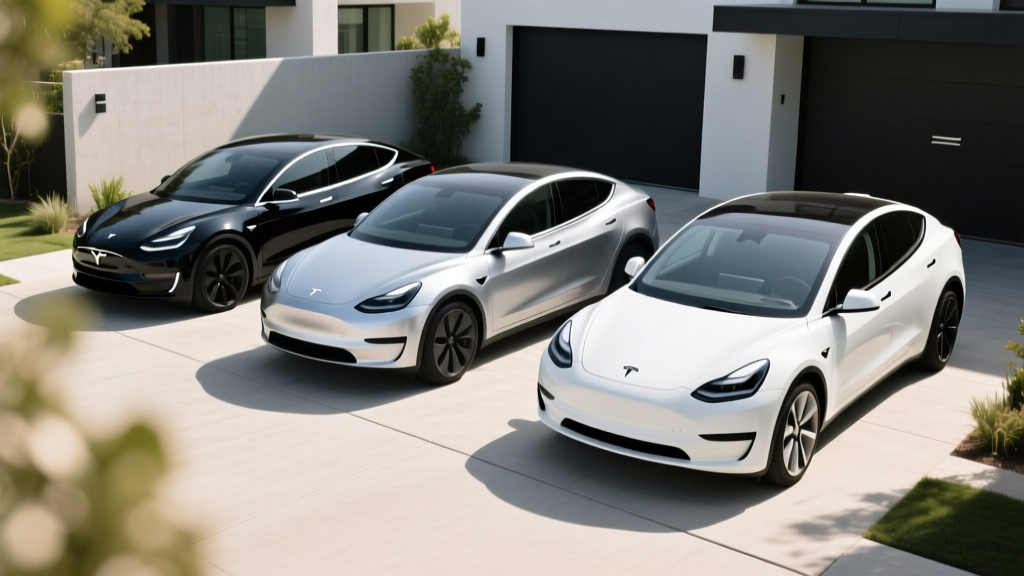
| 2025–2026 | Refreshed Model 3 "Highland" and Model Y "Juniper" roll out globally |
For authoritative historical data on Tesla's early production figures, the IRS and EPA fueleconomy.gov databases are reliable starting points, while the NHTSA maintains safety and recall records for every model year.
The 2026 Tesla Lineup: What You Can Actually Buy Today
If you came looking for a 1999 Tesla and want to redirect that curiosity toward a current purchase, here is a spec-driven snapshot of what Tesla sells in the U.S. for the 2026 model year. All figures reflect the latest EPA data and Tesla's published specifications.
| Model | EPA Range (mi) | Battery (kWh usable) | Chemistry | Peak DC kW | 10–80% Time | 0–60 mph | HP | Base MSRP |
|---|---|---|---|---|---|---|---|---|
| Model 3 RWD | 363 | ~60 | LFP | 170 | ~25 min | 5.8 s | 283 | $38,990 |
| Model 3 Long Range AWD | 346 | ~75 | NMC | 250 | ~20 min | 4.2 s | 384 | $44,990 |
| Model Y Long Range AWD | 320 | ~75 | NMC | 250 | ~22 min | 4.8 s | 384 | $44,990 |
| Model S Long Range | 402 | ~100 | NMC | 250 | ~25 min | 3.1 s | 670 | $79,990 |
| Cybertruck AWD | 340 | ~123 | NMC | 250 | ~28 min | 4.1 s | 600 | $79,990 |
Charging the 2026 Tesla Fleet: Speeds, Connectors, and Networks
One of Tesla's enduring advantages is its integrated charging ecosystem. As of 2026, the Tesla Supercharger network includes over 60,000 stalls globally, and the company has opened a significant portion of its North American network to non-Tesla EVs via the NACS (North American Charging Standard) connector.
| Charging Level | Power (kW) | Miles Added per Hour | Connector | Typical Use Case |
|---|---|---|---|---|
| Level 1 (120V household) | ~1.4 kW | 3–5 mi/hr | NACS | Overnight trickle; emergency top-ups |
| Level 2 (240V home wall connector) | Up to 11.5 kW | 30–44 mi/hr | NACS | Daily home charging; full charge overnight |
| DC Fast Charge (Supercharger V3) | Up to 250 kW | ~1,000 mi/hr peak | NACS | Road trips; 10–80% in ~20 min |
| DC Fast Charge (Supercharger V4) | Up to 350 kW (cable) | Varies by vehicle | NACS | Next-gen stalls; vehicle-limited on most current Teslas |
Charge curve reality check: The peak DC kW figure is a maximum, not a sustained rate. A Model 3 Long Range peaking at 250 kW will typically hold that rate only between approximately 10% and 30% State of Charge (SoC). Above 50%, the rate tapers significantly, and above 80%, charging slows to protect battery longevity. This is why manufacturers quote 10–80% times rather than 0–100%.
Federal Tax Credit Eligibility (§30D) for 2026 Tesla Models
Under the current IRS §30D rules, the federal EV tax credit provides up to $7,500 for qualifying new EVs. However, eligibility depends on three intersecting requirements, and not every Tesla model qualifies in full for every buyer.
- MSRP cap: Sedans (Model 3, Model S) must have an MSRP at or below $55,000. SUVs, pickups, and vans (Model Y, Cybertruck) must be at or below $80,000.
- Buyer income cap: Modified adjusted gross income (MAGI) must not exceed $150,000 (single), $225,000 (head of household), or $300,000 (married filing jointly).
- Battery sourcing requirements: A percentage of critical minerals and battery components must be sourced from the U.S. or free-trade-agreement partners. These thresholds increase annually through 2029.
| 2026 Tesla Model | Base MSRP | Under MSRP Cap? | Estimated Credit | Effective Price (after credit) |
|---|---|---|---|---|
| Model 3 RWD | $38,990 | Yes ($55K sedan cap) | Up to $7,500* | ~$31,490 |
| Model 3 Long Range AWD | $44,990 | Yes | Up to $7,500* | ~$37,490 |
| Model Y Long Range AWD | $44,990 | Yes ($80K SUV cap) | Up to $7,500* | ~$37,490 |
| Model S Long Range | $79,990 | No (exceeds $55K sedan cap) | $0 | $79,990 |
| Cybertruck AWD | $79,990 | Yes ($80K truck cap) | Up to $7,500* | ~$72,490 |
*Credit amount depends on battery-sourcing compliance and buyer income. The credit can now be transferred to the dealer at point of sale as an upfront price reduction. Always verify current-year rules at IRS.gov §30D and consult a tax professional before purchasing.
Tesla's Tech, Driver Assistance, and Ownership Experience
Tesla's software-first approach remains a differentiator in 2026. Key features across the lineup include:
- Infotainment: A 15.4-inch center touchscreen (Model 3/Y) or 17-inch (Model S/X) handles navigation, media, climate, and vehicle settings. No Apple CarPlay or Android Auto—Tesla uses its own interface exclusively.
- Autopilot (standard): Adaptive cruise control and lane-centering. This is an SAE Level 2 driver-assistance system, meaning the driver must remain engaged and hands-on at all times.
- Full Self-Driving (Supervised): An optional $8,000 upgrade (or $99/month subscription as of early 2026) adding automatic lane changes, traffic-light recognition, and city-street navigation. Despite the name, FSD is also SAE Level 2 and requires full driver supervision. It is not a Level 4 autonomous system.
- Over-the-air updates: Tesla pushes firmware updates that can add features, improve efficiency, or adjust suspension tuning remotely.
- Sentry Mode and Dashcam: Continuous recording when parked or driving, stored on a USB drive.
Warranty, Battery Longevity, and Total Cost of Ownership
Tesla's warranty structure in 2026:
- Basic vehicle: 4 years / 50,000 miles
- Battery and drive unit: 8 years / 100,000 miles (Model 3 RWD with LFP); 8 years / 120,000 miles (Long Range and Model Y); 8 years / 150,000 miles (Model S/X)
- Capacity retention threshold: Tesla warrants that the battery will retain at least 70% of its original capacity during the warranty period.
LFP vs NMC in practice: The Model 3 RWD uses a lithium iron phosphate (LFP) battery, which offers slower degradation and a longer cycle life than the nickel-manganese-cobalt (NMC) packs in Long Range and performance trims. LFP also tolerates regular charging to 100% SoC without accelerated wear—Tesla recommends periodic full charges for LFP to keep the battery management system calibrated. The trade-off is lower energy density (fewer miles per kilogram) and reduced cold-weather performance compared to NMC.
On total cost of ownership, a 2026 Model 3 RWD charged primarily at home on a national-average electricity rate of $0.16/kWh costs roughly $0.045 per mile in energy. A comparable gasoline sedan at 30 MPG combined and $3.40/gallon costs approximately $0.113 per mile. Over 60,000 miles, the energy savings approach $4,000—not including lower maintenance costs (no oil changes, fewer brake replacements due to regenerative braking).
Pros
- Best-in-class Supercharger network access
- Strong real-world efficiency (kWh/100mi)
- LFP battery option on Model 3 RWD for longevity
- Over-the-air updates add features post-purchase
- Competitive pricing after §30D tax credit
Cons
- No Apple CarPlay or Android Auto
- Panel gaps and build consistency still draw criticism
- FSD (Supervised) is expensive and remains Level 2
- Insurance premiums are above segment average
- Model S exceeds MSRP cap—no federal tax credit
Who Should Buy a 2026 Tesla (and Who Should Look Elsewhere)
Choose Tesla if:
- You take regular road trips and want the most reliable DC fast-charging network in North America.
- You can install a Level 2 home charger and want minimal public-charging dependence.
- You value software updates, a minimalist interior, and integrated navigation.
- You want an EV with strong resale-value data and a large service-center footprint.
Look elsewhere if:
- You need Apple CarPlay or Android Auto for your daily commute.
- You want a traditional dealership experience with in-person service negotiations.
- You need a three-row SUV (Tesla does not currently offer one in the U.S.; the Model X third row was discontinued).
- You are uncomfortable with a single-screen interface controlling all vehicle functions.
Frequently Asked Questions
Did Tesla make a car in 1999?
No. Tesla Motors was founded in 2003, and its first production vehicle—the Roadster—began deliveries in 2008. In 1999, the most prominent U.S. electric car was the GM EV1, which was available only by lease.
What is the real-world range of the 2026 Tesla Model 3?
The Model 3 Long Range AWD carries an EPA estimate of 346 miles. In real-world highway driving at 70 mph, expect 290–310 miles. In sub-freezing conditions, plan for 250–280 miles before needing to charge.
How fast does a 2026 Tesla charge at home and on the road?
At home on a Level 2 Tesla Wall Connector (11.5 kW), a Model 3 Long Range adds approximately 44 miles of range per hour, reaching a full charge in roughly 7 hours. On a V3 Supercharger (250 kW DC), the 10–80% charge takes about 20 minutes.
Does the 2026 Tesla Model Y qualify for the $7,500 federal tax credit?
Yes, the Model Y qualifies under the $80,000 MSRP cap for SUVs, provided the buyer meets income limits ($150K single / $300K joint) and the vehicle's battery meets current-year critical-mineral and component sourcing thresholds. The credit can be applied as a point-of-sale price reduction. Verify current rules at IRS.gov.
Is Tesla's FSD actually self-driving?
No. Full Self-Driving (Supervised) is an SAE Level 2 driver-assistance system. The driver must keep hands on the wheel, eyes on the road, and remain fully responsible for vehicle operation at all times. True Level 4 driverless service (no human driver needed) is currently offered only by robotaxi operators like Waymo in select cities.
Is a 2026 Tesla worth buying vs. competitors?
Tesla remains the benchmark for charging-network reliability and software integration. However, the Hyundai Ioniq 5, Ford Mustang Mach-E, and Chevrolet Equinox EV now offer competitive range, faster peak charging in some trims, and features Tesla lacks (CarPlay, more physical controls). For buyers who prioritize road-trip charging ease and software, Tesla still leads. For those who want a more traditional interior or need a lower entry price, the competition is strong.