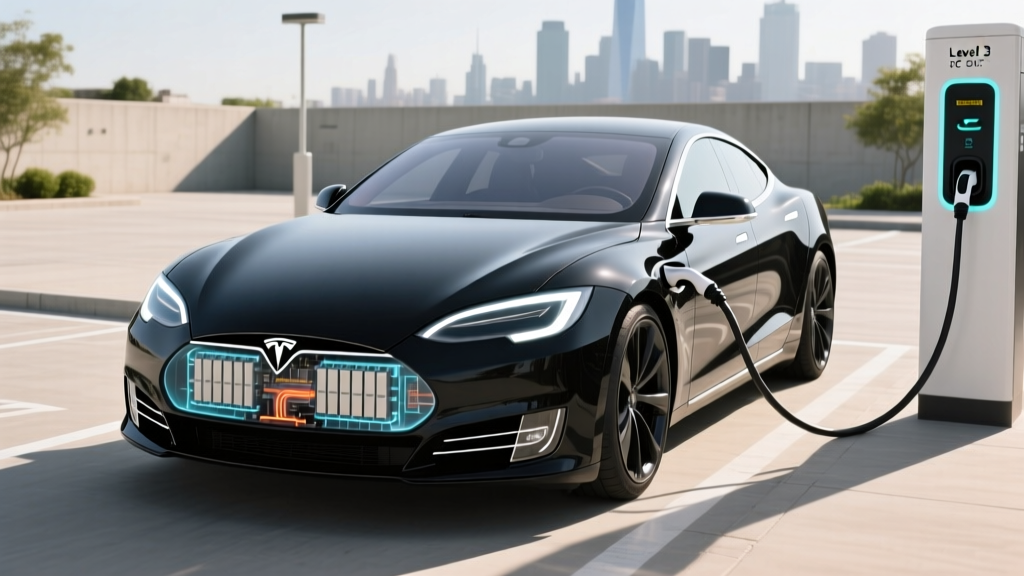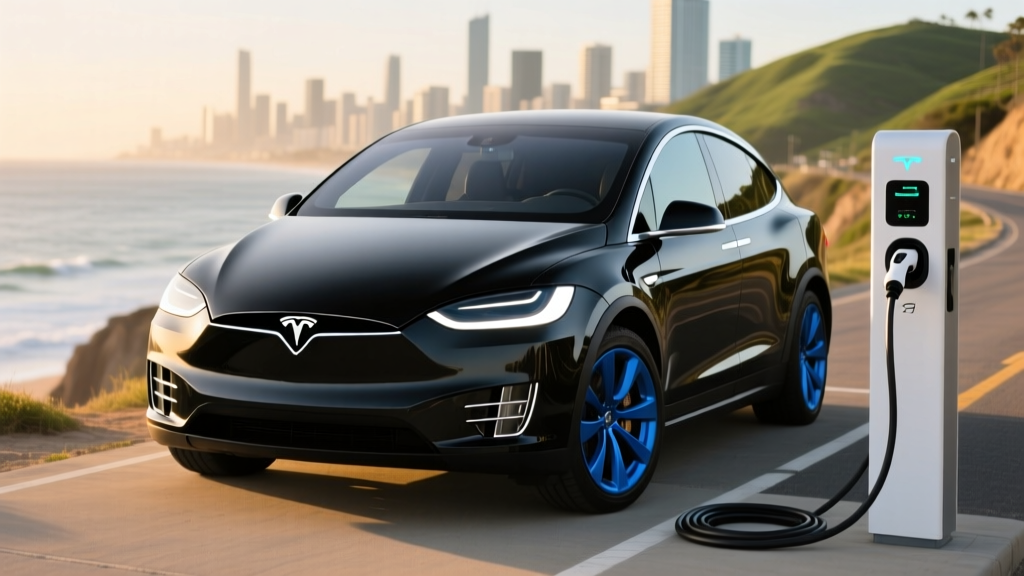
If you're shopping the used luxury electric SUV market, the 2018 Tesla Model X 100D remains one of the most recognizable options. With its falcon-wing doors, three-row seating, and a 100 kWh battery pack, this was Tesla's flagship family hauler before the Long Range and Plaid trims arrived. But buying a six-year-old EV requires a hard look at real-world range, charging infrastructure compatibility, battery degradation, and whether it still qualifies for any federal incentives.
This guide breaks down the 2018 Model X 100D with the exact numbers a used-EV buyer needs — EPA range versus what you'll actually see, DC fast-charge taper behavior, home charging rates, and how the IRS §30D used-EV credit applies in 2026.
2018 Tesla Model X 100D: Core Specifications at a Glance
| Spec | Value |
|---|---|
| EPA Estimated Range | 289 miles |
| Battery Capacity (Usable) | ~100 kWh (NMC chemistry) |
| Drivetrain | Dual Motor AWD |
| Horsepower | ~518 hp (combined) |
| 0-60 mph | 4.7 seconds |
| Max DC Fast Charge Rate | ~120 kW (peak, V2 Supercharger) |
| 10-80% DC Fast Charge Time | ~45-50 minutes |
| Level 2 Home Charge Rate | Up to 48 amps / 11.5 kW (with HPWC) |
| EPA Efficiency | 92 MPGe combined (36 kWh/100 mi) |
| Original Base MSRP | $99,500 (before options/delivery) |
| Battery & Drive Unit Warranty | 8 years / unlimited miles (from original in-service date) |
| Seating | 5, 6, or 7 passengers (config-dependent) |
| Cargo (rear seats folded) | ~88 cu ft |
Real-World Range: What the 289-Mile EPA Sticker Doesn't Tell You
The 2018 Model X 100D uses a ~100 kWh NMC (nickel-manganese-cobalt) lithium-ion battery pack. NMC chemistry offers strong energy density — which is how Tesla fit enough capacity for nearly 300 miles into a large SUV — but it's more sensitive to extreme temperatures and long-term degradation than LFP (lithium iron phosphate) packs found in some newer Tesla Standard Range models.
For a 2018 vehicle purchased in 2026, battery degradation is a legitimate consideration. Tesla's battery management system includes a top-end buffer and bottom-end reserve that protect the cells, but owners typically see 8-15% degradation after 6-8 years depending on charging habits and climate. A Model X 100D that originally delivered 289 EPA miles might realistically show 250-265 miles at 100% State of Charge today if well maintained. Always request a State of Health (SoH) reading from Tesla service or a third-party diagnostic tool before purchasing.
The Model X's aerodynamic profile — despite its SUV stance — is surprisingly efficient. The drag coefficient of 0.25 Cd helps highway efficiency, but the vehicle's 5,000+ lb curb weight works against it in stop-and-go traffic and on steep grades. According to fueleconomy.gov, the combined efficiency rating is 92 MPGe, translating to roughly 36 kWh consumed per 100 miles of driving.
Charging Speeds: DC Fast Charging, Level 2, and the Supercharger Network
The 2018 Model X 100D predates Tesla's V3 Supercharger architecture (which supports up to 250 kW on newer models). This SUV is limited to V2 Supercharger speeds of approximately 120 kW peak, and only when the battery is preconditioned and at a low State of Charge.
| Charging Method | Power (kW) | Miles Added per Hour | Notes |
|---|---|---|---|
| Level 1 (120V household) | ~1.4 kW | ~3-4 mi/hr | Emergency/trickle only |
| Level 2 (240V, 32A mobile connector) | ~7.7 kW | ~22 mi/hr | Standard mobile connector included |
| Level 2 (240V, 48A HPWC/Wall Connector) | ~11.5 kW | ~33 mi/hr | Requires 60A circuit; full overnight charge in ~9-10 hrs |
| DC Fast Charge (V2 Supercharger) | Up to ~120 kW peak | ~250-300 mi/hr (at peak) | 10-80% in ~45-50 min; tapers significantly above 80% |
| DC Fast Charge (CHAdeMO w/ adapter) | Up to ~50 kW | ~110 mi/hr | Limited adapter availability; mostly legacy networks |
The charging curve is the critical detail many used-EV buyers overlook. The Model X 100D will accept its peak ~120 kW only between roughly 10-30% SoC. From 30-60%, it holds a steady but lower rate around 80-90 kW. Above 60%, it tapers further, and above 80%, charging slows dramatically to protect the NMC cells — often dropping below 30 kW. This is why the 10-80% time (~45-50 minutes) is the standard metric, and why Tesla's navigation system will recommend you charge to 80% and move on during road trips rather than wait for a full charge.
One advantage the 2018 Model X retains in 2026: it uses Tesla's proprietary connector, which means full access to the Supercharger network — still the most reliable and widespread DC fast-charging network in North America. With Tesla opening Superchargers to non-Tesla EVs via the NACS standard, the network has only expanded, and your 2018 Model X remains a first-class citizen on it.
For home charging, installing a Tesla Wall Connector on a 60-amp dedicated circuit (requiring a 240V line and a licensed electrician) delivers up to 11.5 kW, adding roughly 33 miles of range per hour. A full 0-100% charge takes about 9-10 hours — ideal for overnight replenishment. Expect a home installation cost of $800-$2,500 depending on your electrical panel capacity, distance from the panel to the garage, and local permit requirements. Homes with older 100-amp electrical panels may need a panel upgrade ($1,500-$3,000 additional) to support a 60-amp EV circuit.
Performance and Drivetrain: Dual Motor AWD in Practice
The 2018 Model X 100D pairs two electric motors — one on each axle — for full-time all-wheel drive. The combined system output is approximately 518 horsepower, launching this 5,000-lb SUV from 0-60 mph in 4.7 seconds. That's genuinely quick for a three-row family vehicle, and the instant torque delivery makes highway merging and passing effortless.
Unlike the Performance variant (which dropped 0-60 to around 3.7 seconds with Ludicrous Mode), the 100D was tuned as the long-range cruiser of the lineup. Ride quality is firm but composed, aided by the standard adaptive air suspension that can raise the vehicle for rough driveways or lower it at highway speeds for improved aerodynamics.
Regenerative braking on the 2018 Model X is strong enough to enable one-pedal driving in most situations. The "Standard" regen setting provides significant deceleration when you lift off the accelerator, recovering energy back into the battery. Tesla removed the "Low" regen option in later software updates, so expect a firm regen feel regardless.
Interior, Cargo, and Technology: The Falcon Wing Factor
The Model X's defining feature remains its falcon-wing rear doors — double-hinged gullwing-style doors that open upward with ultrasonic sensors to avoid nearby obstacles. They're dramatic at school drop-off and genuinely useful for loading child seats in tight parking spaces. However, they add mechanical complexity, and some used examples have experienced issues with door struts, seals, and sensor calibration. Budget for potential maintenance here.
Interior space is generous. With five seats configured, cargo volume behind the second row is approximately 44 cu ft, expanding to ~88 cu ft with the second row folded. The front trunk (frunk) adds another ~6.6 cu ft for groceries or charging cables. Six- and seven-seat configurations sacrifice some cargo flexibility for passenger capacity, with the third row best suited for children on short trips due to limited legroom (~32 inches).
The 17-inch center touchscreen controls virtually every vehicle function — climate, navigation, media, suspension height, and charging settings. The 2018 model year runs older MCU1 (Media Control Unit) hardware, which can feel sluggish compared to the MCU2 (Intel Atom) that Tesla began installing in March 2018 and later MCU3 (AMD Ryzen). Some 2018 Model X vehicles received MCU upgrades under warranty or via paid retrofit; verify which unit the specific car you're evaluating has.
Driver assistance comes via Tesla's Enhanced Autopilot (if optioned) or the more basic Autopilot suite. This is an SAE Level 2 driver-assistance system — it handles adaptive cruise control and lane centering on highways, but the driver must remain fully engaged with hands on the wheel and eyes on the road. This is not autonomous or "self-driving" capability. Tesla's Full Self-Driving (FSD) package was available as an add-on but remains a Level 2 supervised system requiring constant driver attention.
Used Pricing and Federal Tax Credit Eligibility in 2026
When new, the 2018 Model X 100D carried a base MSRP of approximately $99,500 before destination charges, with well-optioned examples exceeding $120,000 after adding Enhanced Autopilot ($5,000), premium interior upgrades, and larger wheel packages.
In the 2026 used market, a 2018 Model X 100D with 60,000-90,000 miles typically sells for $28,000-$42,000, depending on condition, mileage, service history, and battery State of Health. Lower-mileage examples with documented battery replacements or MCU2 upgrades command premiums at the top of that range.
- Sale price is $25,000 or less — this is a hard cap and most 2018 Model X 100D examples exceed it
- Buyer's modified adjusted gross income does not exceed $75,000 (single) / $112,500 (head of household) / $150,000 (joint)
- The vehicle is purchased from a licensed dealer (private-party sales do not qualify)
- The buyer has not claimed another used clean vehicle credit in the prior 3 years
Pros, Cons, and Who Should Buy the 2018 Model X 100D
Pros
- 289-mile EPA range remains competitive for a used large SUV
- Supercharger network access — the most reliable DC fast-charging ecosystem
- Genuine three-row seating with falcon-wing door utility
- Dual motor AWD with 4.7-second 0-60 performance
- Air suspension for ride-height adjustability
- Over-the-air software updates continue to add features
- 8-year/unlimited-mile battery warranty may still have coverage remaining
Cons
- DC fast charging limited to ~120 kW (V2 Supercharger) — slower than modern EVs
- Falcon-wing doors are complex and expensive to repair
- MCU1 hardware (pre-March 2018 builds) feels dated
- Used-EV tax credit unlikely to apply due to $25K price cap
- Build quality inconsistencies common to pre-2020 Tesla production
- Insurance premiums tend to be higher than comparable ICE SUVs
- No CCS/NACS adapter needed, but CHAdeMO networks are largely inaccessible
Best suited for: Families needing three-row electric seating who have reliable home Level 2 charging, primarily drive within a 200-mile daily radius, and value Supercharger access for occasional road trips. The 100D's balance of range and performance makes it a strong used commuter-family hauler, provided you budget for potential falcon-wing and air-suspension maintenance.
Look elsewhere if: You need the fastest possible DC charging for frequent long-distance travel (consider a 2021+ Model X Long Range or a Hyundai Ioniq 9), you require a sub-$25K purchase to trigger the used-EV tax credit, or you want a simpler door mechanism with lower repair risk.
How the 2018 Model X 100D Compares to Key Used-EV Competitors
| Spec | 2018 Tesla Model X 100D | 2019 Jaguar I-PACE EV320 | 2019 Audi e-tron |
|---|---|---|---|
| EPA Range | 289 mi | 234 mi | 204 mi |
| Battery (kWh usable) | ~100 | ~84 | ~84 |
| Peak DC Charge (kW) | ~120 | ~100 | ~150 |
| 10-80% DC Time | ~45-50 min | ~45 min | ~30 min |
| 0-60 mph | 4.7 sec | 4.5 sec | 5.5 sec |
| Seating Rows | 2 or 3 | 2 | 2 |
| Typical Used Price (2026) | $28K-$42K | $22K-$32K | $24K-$35K |
| Supercharger Access | Native | No (CCS) | No (CCS) |
The Model X 100D's range advantage is significant. Neither the I-PACE nor the e-tron breaks 240 miles EPA, which matters on road trips and in cold weather. However, the Audi e-tron's 150 kW peak DC charge rate is notably faster, and its build quality and interior materials surpass Tesla's 2018-era fit and finish. If third-row seating is non-negotiable, the Model X is the only option among these three.
Frequently Asked Questions
What is the real-world range of the 2018 Tesla Model X 100D?
The EPA rates it at 289 miles. Real-world highway driving at 70-75 mph typically yields 230-260 miles. In freezing weather, expect 200-220 miles. For a 2018 vehicle in 2026, factor in 8-15% battery degradation, which may reduce the usable range to 250-265 miles at full charge depending on the pack's State of Health.
How fast does the 2018 Model X 100D charge?
On a V2 Supercharger, it peaks at approximately 120 kW, achieving a 10-80% charge in roughly 45-50 minutes. At home on a 240V/48A Wall Connector, it charges at up to 11.5 kW, adding about 33 miles of range per hour and completing a full charge overnight in 9-10 hours. It cannot access V3 Supercharger speeds (250 kW) due to its older onboard architecture.
Does the 2018 Model X 100D qualify for the federal EV tax credit?
It does not qualify for the new-vehicle §30D credit (that's for new purchases only). For the used-EV credit under §25E, the vehicle must sell for $25,000 or less from a licensed dealer, and the buyer must meet income caps. Most 2018 Model X 100D examples sell for $28,000-$42,000 in 2026, making them ineligible. Only unusually high-mileage or damaged examples might fall under the cap. Check current rules at IRS.gov.
Is the 2018 Model X 100D worth buying versus competitors?
If you need three-row electric seating with strong range and Supercharger access, it remains one of the best used options. If you only need two rows and prioritize DC charging speed or interior luxury, the Audi e-tron or Jaguar I-PACE may be better values at lower used prices. Always verify battery SoH before purchasing any used EV.
Is Tesla Autopilot on the 2018 Model X self-driving?
No. Tesla Autopilot and Full Self-Driving (Supervised) are SAE Level 2 driver-assistance systems. They provide adaptive cruise control and lane centering but require the driver to remain fully attentive, with hands on the wheel and eyes on the road, at all times. The driver is legally and operationally responsible for the vehicle.
How long is the battery warranty on the 2018 Model X 100D?
Tesla's battery and drive unit warranty covers 8 years with unlimited miles, guaranteeing a minimum of 70% battery capacity retention. For a 2018 model, this warranty may still be partially active depending on the original in-service date — for example, a vehicle first delivered in June 2018 would have battery warranty coverage through June 2026. Verify warranty status via Tesla's support portal using the VIN.