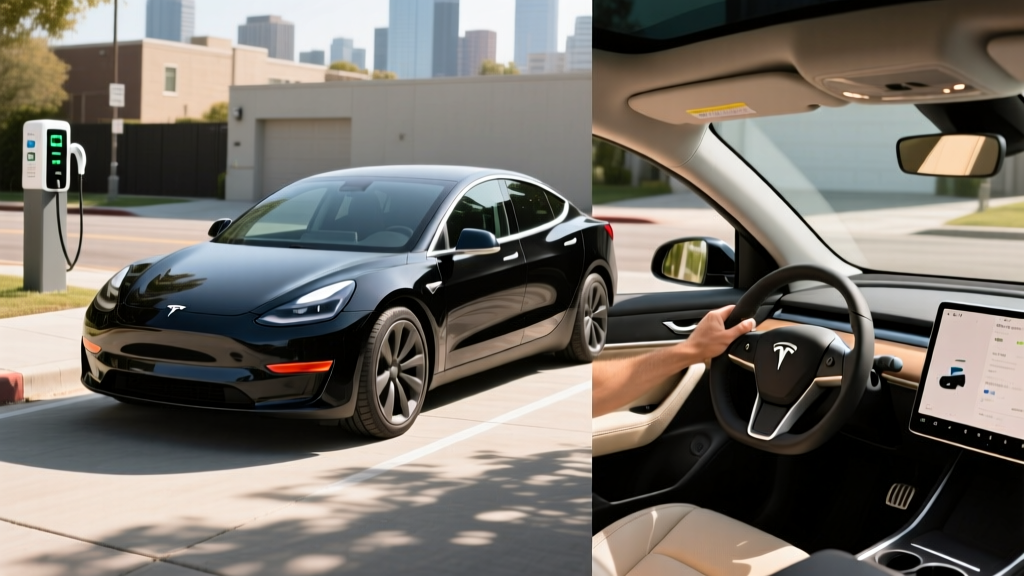
The 2019 Tesla Model 3 was the year Tesla finally cracked mass production — and paid for it with panel gaps, paint defects, and a rushed assembly line in Fremont. Now, seven years later, those early Model 3s are flooding the used market at tempting prices. But is the 2019 Tesla Model 3 reliable enough to bet your daily commute on?
After reviewing owner-reported data, Tesla's own battery longevity reports, service bulletins, and our own long-term driving notes, the answer is layered: the powertrain is remarkably durable, but the build quality and ancillary systems carry specific failure points you need to inspect before signing a check. Here's the full breakdown.
2019 Model 3 at a Glance: Specs That Still Matter
| Spec | Standard Range Plus | Long Range RWD | Long Range AWD | Performance |
|---|---|---|---|---|
| EPA Range | 240 mi | 325 mi | 310 mi | 310 mi |
| Battery (usable) | ~50 kWh (NMC) | ~75 kWh (NMC) | ~75 kWh (NMC) | ~75 kWh (NMC) |
| 0-60 mph | 5.3 sec | 5.0 sec | 4.4 sec | 3.2 sec |
| Horsepower | 283 hp | 283 hp | 346 hp | 450 hp |
| Drivetrain | RWD | RWD | Dual-Motor AWD | Dual-Motor AWD |
| MPGe (combined) | 140 MPGe | 134 MPGe | 126 MPGe | 121 MPGe |
| Efficiency | 24 kWh/100mi | 25 kWh/100mi | 27 kWh/100mi | 28 kWh/100mi |
| Peak DC Charge | ~145 kW | ~195 kW | ~195 kW | ~195 kW |
| 10-80% DC Time | ~28 min | ~30 min | ~30 min | ~30 min |
| Cargo (trunk + frunk) | 23 cu ft total (15 trunk + 8 frunk) | |||
| Rear Legroom | 35.2 inches | |||
These numbers held up remarkably well for 2019 — the Model 3's efficiency still rivals or beats newer competitors like the Hyundai Ioniq 6 and BMW i4. The 2019 model year used Panasonic 2170 NMC (nickel-manganese-cobalt) cells exclusively; Tesla did not introduce LFP chemistry into Model 3 until the 2021 Standard Range refresh.
Real-World Range: What the EPA Sticker Doesn't Tell You
The Long Range AWD's 310-mile EPA sticker was class-leading in 2019. In real-world mixed driving, owners consistently report 270–290 miles at moderate temperatures. Highway-only driving at 75 mph drops that to roughly 250–265 miles. In sub-freezing winter conditions (below 30°F), expect a 20–30% reduction — putting real cold-weather range for the Long Range AWD at approximately 215–250 miles depending on cabin heat usage. The 2019 Model 3 uses resistive cabin heating, not a heat pump (introduced in 2021), making winter efficiency noticeably worse than newer EVs.
For the Standard Range Plus, plan on roughly 190–210 miles in temperate mixed driving and as low as 150–170 miles in harsh winter highway use. That's adequate for commuting but demands route planning on road trips over 200 miles.
Battery Degradation: The Core Reliability Question
The 2019 Model 3's battery is the single most important reliability factor — and here, the data is genuinely reassuring. According to Tesla's 2023 Impact Report, Model 3/Y batteries retain approximately 85% of original capacity at 150,000 miles. Independent data from Teslanomics and Recurrent Auto corroborates this: most 2019 Model 3 Long Range examples at 80,000–100,000 miles show 8–14% degradation, translating to roughly 270–285 miles of remaining range.
The NMC chemistry in the 2019 Model 3 is well-understood and proven. Unlike early Nissan Leaf batteries (which lacked active thermal management), the Model 3's liquid-cooled battery pack manages temperature aggressively, which is the primary reason degradation stays low even in hot climates.
Battery warranty remaining: The 2019 Model 3 came with an 8-year/100,000-mile (Standard Range) or 8-year/120,000-mile (Long Range/Performance) battery and drive unit warranty. As of 2026, most 2019 examples have 1–2 years left on the battery warranty if they haven't exceeded the mileage cap. Tesla's warranty guarantees 70% capacity retention; if your pack drops below that threshold within the warranty window, Tesla replaces it at no cost.
Charging Speed: Still Competitive in 2026?
The 2019 Model 3 was one of the first vehicles to support V3 Supercharging at up to 250 kW — but only for the Long Range and Performance trims. The Standard Range Plus peaks lower, around 145 kW, due to its smaller battery's C-rate limitations.
| Charging Method | Power / Rate | Speed | Notes |
|---|---|---|---|
| Level 1 (120V outlet) | ~1.4 kW | ~3–5 mi/hr | Emergency/trickle only |
| Level 2 (240V, 48A) | ~11.5 kW | ~44 mi/hr | Full charge overnight (~7–8 hrs for LR) |
| DC Fast (V3 Supercharger) | Up to 195–250 kW peak | 10–80% in ~28–30 min | Peak only sustained to ~45% SoC, then tapers |
| DC Fast (CCS adapter) | Up to 150–195 kW | 10–80% in ~35–40 min | Requires Tesla CCS adapter (~$175); non-Tesla networks |
Charging curve reality: The widely cited "250 kW" peak on V3 Superchargers is only sustained from roughly 10–45% state of charge. From 45–80%, the rate tapers progressively from ~150 kW down to ~60 kW. This means the 10–80% time of ~30 minutes is realistic, but 80–100% adds another 25–35 minutes. Always precondition the battery by navigating to a Supercharger in the car's nav system — this warms the pack and enables peak charge rates.
Home Level 2 charging on a Tesla Wall Connector (48 amps) adds roughly 44 miles per hour of charging, meaning a depleted Long Range battery refills in about 7–8 hours. A standard 32-amp Level 2 unit (like a ChargePoint Home Flex) delivers about 30 mi/hr. Installation of a 240V/60A circuit typically costs $800–$2,000 depending on panel proximity and local permitting, assuming your electrical panel has spare capacity.
Known Issues: Where the 2019 Model 3 Falls Short
The powertrain is bulletproof by industry standards. It's everything else where 2019 owners report headaches:
- Exceptional battery longevity — 85%+ retention at 150k miles
- Access to Tesla Supercharger network (now with CCS adapter for non-Tesla stations)
- Class-leading efficiency: 24–28 kWh/100mi depending on trim
- Strong 0-60 performance across all trims
- Over-the-air updates still adding features in 2026
- Spacious cargo area (23 cu ft combined trunk + frunk)
- IIHS Top Safety Pick+ rating (when built after April 2019)
- Build quality inconsistency: panel gaps, paint chips, trim rattles common
- No heat pump — resistive heater drains range in winter
- Phantom braking incidents with Autopilot (documented by NHTSA)
- Suspension components (control arms, bushings) wearing at 60–80k miles
- 12V lead-acid battery failures reported (replaced with lithium in 2021+)
- Touchscreen-only controls frustrate some drivers
- Rear seat comfort is tight for tall adults (35.2" legroom)
Suspension and steering: Multiple owner forums and NHTSA complaint data show front upper control arm bushings wearing prematurely, producing clunking noises over bumps around 60,000–80,000 miles. Replacement costs $600–$1,200 for both sides at an independent shop. This is a wear item, not a safety defect, but budget for it.
12V battery: The 2019 Model 3 uses a conventional lead-acid 12V battery to run accessories and computers. These typically last 3–4 years and many 2019 owners are on their second or third replacement. Tesla has since switched to a lithium 12V pack in newer models. Replacement cost: ~$200–$350.
Autopilot hardware: The 2019 Model 3 shipped with Hardware 3 (HW3). Tesla confirmed that HW3 supports Full Self-Driving (Supervised) — but note that FSD remains an SAE Level 2 driver-assist system requiring full driver attention at all times. It is not autonomous driving.
Used Pricing in 2026 and Tax Credit Eligibility
The 2019 Model 3 originally started at $39,990 (Standard Range Plus) and climbed to $56,990 (Performance). In today's used market, typical asking prices run:
- Standard Range Plus (60–80k mi): $16,000–$20,000
- Long Range RWD (50–80k mi): $19,000–$24,000
- Long Range AWD (50–80k mi): $21,000–$26,000
- Performance (40–70k mi): $23,000–$29,000
Used EV tax credit (§25E): Under the IRS used clean vehicle credit, buyers purchasing a qualifying used EV from a licensed dealer for $25,000 or less can claim 30% of the sale price, up to $4,000. This means a 2019 Model 3 Standard Range Plus purchased for $18,000 from a dealer could net a $4,000 credit — bringing the effective cost to $14,000. Income caps apply: modified adjusted gross income cannot exceed $75,000 (single), $112,500 (head of household), or $150,000 (joint). See IRS §25E guidelines for full eligibility rules. The vehicle must be purchased from a dealer (not private party) and the sale price must be $25,000 or below.
| Trim | Typical Used Price | Max §25E Credit | Effective Cost |
|---|---|---|---|
| Standard Range Plus | $18,000 | $4,000 | ~$14,000 |
| Long Range RWD | $22,000 | $4,000 | ~$18,000 |
| Long Range AWD | $24,500 | $4,000 | ~$20,500 |
| Performance | $26,000 | $0 (over $25k cap) | ~$26,000 |
Credit eligibility requires dealer purchase, income within caps, and sale price ≤ $25,000. Verify current rules at irs.gov before purchasing.
Who Should Buy a 2019 Model 3 in 2026?
Best fit: Commuters covering 30–80 miles daily who have access to home Level 2 charging. The Long Range AWD is the sweet spot — enough range to handle 200-mile round trips without charging anxiety, dual-motor traction for snow-belt states, and strong enough Supercharger speeds for occasional road trips.
Good fit: Budget-conscious buyers wanting a premium EV under $25,000. With the §25E credit, a Standard Range Plus can be had for under $15,000 — genuinely remarkable value for a car with this level of tech, performance, and efficiency.
Poor fit: Families needing rear-seat space for tall teenagers or bulky car seats (the rear is snug). Cold-climate buyers who drive 100+ miles in winter without charging access — the lack of a heat pump makes the 2019 Model 3 less ideal than a 2021+ model or a competitor like the Hyundai Ioniq 5 in deep winter. Anyone who needs towing capacity (the 2019 Model 3 is not rated for towing).
2019 Model 3 vs. Key Used EV Competitors
At similar used prices, you'll cross-shop the 2019–2020 Chevrolet Bolt EV (259 mi EPA, ~$14,000–$18,000), the 2020 Hyundai Kona Electric (258 mi, ~$16,000–$20,000), and the 2019 Nissan Leaf Plus (226 mi, ~$13,000–$17,000).
The Model 3 wins on charging speed (DC fast charging at 150–250 kW vs. the Bolt's 55 kW or Leaf's CHAdeMO at 100 kW), Supercharger network access, performance, and efficiency. The Bolt wins on cargo versatility (hatchback), lower entry price, and a slightly roomier rear seat. The Kona Electric is a strong runner-up but charges slower. The Leaf Plus suffers from CHAdeMO's declining network support and passive battery cooling.
If Supercharger access and road-trip charging speed matter to you, the 2019 Model 3 remains the strongest used EV value in its class. If you strictly commute and want the cheapest entry point, the Bolt is worth a serious look.
Pre-Purchase Checklist: What to Inspect
- Battery health: Request a battery health report from Tesla Service or check the car's energy graph. Confirm capacity is above 85% for examples under 80,000 miles.
- Warranty status: Verify remaining battery/drive unit warranty via the VIN at a Tesla Service Center. Note the mileage cap (100k or 120k depending on trim).
- Panel gaps and paint: Inspect door and trunk gaps — 2019 Fremont-built cars are notorious for misalignment. Check for stone chips on the front bumper and hood (no factory paint protection film).
- Suspension: Drive over speed bumps at low speed. Clunking from the front suggests worn upper control arm bushings ($600–$1,200 repair).
- 12V battery age: Ask when it was last replaced. If original, budget $200–$350 for a new one soon.
- Autopilot/FSD: Confirm whether the car has basic Autopilot (standard) or if FSD was purchased and transfers with the vehicle. FSD does not always transfer on resale — verify in the Tesla app.
- Tire wear: Model 3s are heavy and torque-rich. Check for uneven wear, especially on the rear tires of RWD models. Budget $800–$1,200 for a set of EV-rated tires if needed.
Frequently Asked Questions
Is the 2019 Tesla Model 3 reliable after 100,000 miles?
Yes, for the powertrain. Tesla's battery data shows approximately 85% capacity retention at 150,000 miles, and the drive motors rarely require service. The reliability concerns are peripheral: suspension bushings, 12V battery, window regulators, and build-quality issues like rattles and trim separation. Mechanically, a 2019 Model 3 at 100,000 miles is typically in better shape than a comparable gas car at the same mileage.
How much does it cost to replace the battery on a 2019 Model 3?
Out-of-warranty battery replacement for the Long Range (75 kWh) runs approximately $13,000–$16,000 at a Tesla Service Center, including labor. The Standard Range Plus is slightly less at $10,000–$13,000. However, battery failure before 150,000 miles is statistically rare — most packs outlast the car's economic life. If the vehicle is still within its 8-year/120,000-mile battery warranty, replacement is covered at no cost if capacity drops below 70%.
Does the 2019 Model 3 qualify for any tax credits in 2026?
Not the new-vehicle §30D credit (that applies only to new purchases). However, if you buy a 2019 Model 3 from a licensed dealer for $25,000 or less and meet income requirements, you may qualify for the §25E used clean vehicle credit: 30% of the sale price up to $4,000. This can bring effective cost below $15,000 for a Standard Range Plus. See IRS guidelines for current eligibility rules.
Can the 2019 Model 3 use non-Tesla charging networks?
Yes. Tesla offers an official CCS adapter (~$175) that allows the 2019 Model 3 to charge at Electrify America, EVgo, ChargePoint, and other CCS-equipped public stations. Charging speeds on non-Tesla networks typically peak at 150–195 kW depending on the station. The native Tesla port still provides access to the Supercharger network without any adapter.
How does the 2019 Model 3 handle in winter?
AWD trims (Long Range AWD, Performance) offer strong traction in snow and ice thanks to low center of gravity and precise torque vectoring. However, the 2019 model lacks a heat pump, so cabin heating draws significant power from the battery. Expect 20–30% range loss in sub-freezing temperatures. Preconditioning the battery while plugged in mitigates this somewhat and is strongly recommended for cold-climate owners.
Is Autopilot on the 2019 Model 3 safe?
Autopilot is an SAE Level 2 driver-assist system — it handles lane centering and adaptive cruise control but requires continuous driver supervision. It is not self-driving. NHTSA has investigated phantom braking incidents (the car braking unexpectedly on highways) in Tesla vehicles including the 2019 Model 3. Use Autopilot as a fatigue-reduction tool, not a replacement for attentive driving. Keep hands on the wheel and eyes on the road at all times.