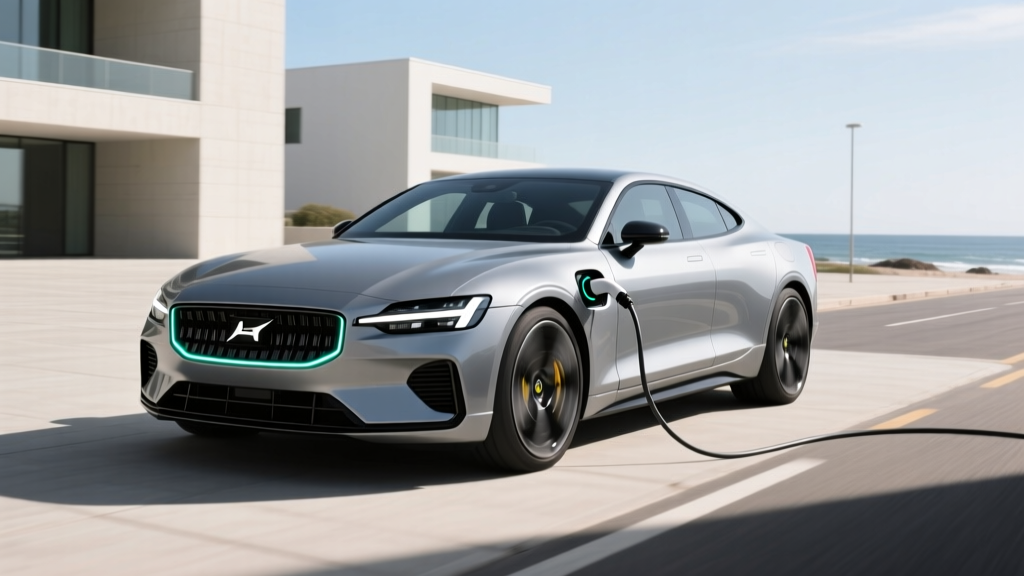
The Polestar 6 is the Swedish-Chinese automaker's flagship electric grand tourer, a low-slung 2+2 roadster that promises to blend supercar performance with genuine long-distance EV usability. Born from the O₂ concept that debuted in 2022, the production Polestar 6 enters the 2026 model year as one of the few electric convertibles on the market — and the only one packing an 884-horsepower dual-motor powertrain and an 800-volt electrical architecture. But with a starting price hovering near six figures and the electric sports car segment growing crowded, does the Polestar 6 deliver enough real-world substance to justify its premium?
We've spent time with the Polestar 6's published specifications, early drive impressions, and cross-referenced its claims against segment benchmarks like the Porsche Taycan, Tesla Roadster (if it ever ships), and the Lotus Emeya. Here's everything you need to know before placing an order.
Range and Efficiency: What the EPA Says vs. Reality
The Polestar 6 is equipped with a 104 kWh usable battery pack (approximately 112 kWh gross) using NMC (nickel manganese cobalt) cell chemistry — chosen for its high energy density, which is critical in a low-slung sports car where packaging space is at a premium. Polestar targets an EPA-estimated range of 300 to 320 miles depending on trim and wheel configuration. The base single-motor variant (expected for later production) may push slightly higher, while the dual-motor Performance model with 22-inch wheels will sit at the lower end of that band.
EPA Estimate: ~300–320 miles (dual-motor, standard wheels)
Highway cruising (75 mph, moderate climate): Expect ~245–270 miles. Aerodynamic drag hits low-slung coupes hard at sustained speed.
Cold weather (below 32°F / 0°C): Plan for 200–240 miles. NMC chemistry loses efficiency in cold temperatures, and cabin heating draws significant energy despite the standard heat pump.
Spirited driving: 180–220 miles. This is an 884-HP car — use those horses and consumption will spike accordingly.
Efficiency lands at an estimated 95–105 MPGe combined, or roughly 32–35 kWh per 100 miles. That's less efficient than a Tesla Model S Long Range (~124 MPGe) but competitive with the Porsche Taycan Turbo GT, which trades efficiency for performance. For context, a grand tourer in this class prioritizes power delivery and thermal management under load over maximizing every electron.
Charging Speed: 800-Volt Architecture Pays Off
The Polestar 6's 800-volt electrical architecture is one of its most practical engineering decisions. This enables peak DC fast-charging rates up to 270 kW at compatible stations, placing it in elite company alongside the Hyundai Ioniq 5 N, Lucid Air, and Porsche Taycan.
| Charging Level | Power / Rate | Speed / Time | Connector |
|---|---|---|---|
| Level 1 (120V household) | ~1.4 kW | ~4 miles per hour | J1772 / NACS adapter |
| Level 2 (240V home, 48A) | 11 kW onboard | ~35 miles per hour / full charge in ~10 hours | J1772 or NACS |
| DC Fast Charge (peak) | 270 kW | 10–80% in ~20 minutes | CCS1 (NACS adapter included) |
| DC Fast Charge (sustained avg.) | ~190 kW avg. | 10–80% realistic avg. ~22–25 min | CCS1 / NACS |
Charging curve reality check: The 270 kW peak is achieved between roughly 10% and 35% state of charge. Beyond 50%, the curve tapers to approximately 150–180 kW, and above 80%, it drops further to protect the NMC cells. Polestar's battery preconditioning system activates when you navigate to a charger via the built-in route planner — this is essential for achieving peak rates. Without preconditioning in cold weather, expect peak rates closer to 120–150 kW until the pack warms up.
For home charging, the 11 kW onboard charger is adequate. A full 10–100% session takes roughly 10 hours on a 48-amp Level 2 circuit. Most owners will charge between 20% and 80% overnight, which takes about 6 hours — easily handled by a standard home Level 2 installation. If you need help budgeting for home charging infrastructure, our Level 2 installation cost guide breaks down what to expect from a licensed electrician.
Performance and Powertrain: 884 HP and a Sub-3.2 Second Sprint
The launch-spec Polestar 6 comes with a dual-motor all-wheel-drive powertrain producing a combined 884 horsepower (660 kW) and 737 lb-ft of torque. Polestar quotes a 0–60 mph time of 3.1 seconds and a top speed electronically limited to 155 mph. A single-motor rear-wheel-drive variant producing approximately 299 HP is expected to follow, targeting a lower entry price and slightly extended range.
The torque-vectoring rear axle and a bonded aluminum space-frame chassis give the Polestar 6 genuine sports-car dynamics, not just straight-line drag-race numbers. The 800V architecture also enables consistent power delivery under repeated hard launches — a problem that has plagued some competitors with lower-voltage systems that thermally derate after a few full-throttle runs.
The retractable hardtop roof is a segment differentiator. No other electric vehicle in this price class currently offers a convertible experience with this level of performance. The roof mechanism adds weight (curb weight is estimated at approximately 4,900 lbs), but the low center of gravity from the floor-mounted battery pack keeps handling sharp.
| Specification | Polestar 6 (Dual-Motor AWD) |
|---|---|
| Battery (usable / gross) | 104 kWh / ~112 kWh (NMC) |
| EPA Range (est.) | 300–320 miles |
| Horsepower | 884 HP (660 kW) |
| Torque | 737 lb-ft |
| 0–60 mph | 3.1 seconds |
| Top Speed | 155 mph (limited) |
| Drivetrain | Dual-motor AWD with torque vectoring |
| Max DC Charge Rate | 270 kW (800V) |
| 10–80% DC Charge Time | ~20 minutes (peak conditions) |
| Level 2 Onboard Charger | 11 kW |
| Efficiency | ~95–105 MPGe / 32–35 kWh/100mi |
Interior, Cargo, and Technology
The Polestar 6 is a 2+2 grand tourer, meaning the rear seats are best suited for children or extra cargo rather than adult passengers on long trips. Front-seat legroom is generous at an estimated 42.5 inches, while rear legroom is tight at approximately 29 inches. The cabin uses Polestar's signature vegan microfiber and bio-based materials throughout — no animal leather is offered.
Cargo space is the trade-off inherent to a low-slung roadster. Expect approximately 12–14 cubic feet of combined trunk and rear-seat storage. There is no frunk (front trunk) due to the inverter and power electronics occupying the front axle area. For comparison, a Porsche Taycan Cross Turismo offers about 15.7 cu ft behind the rear seats. If you need genuine cargo versatility, this isn't the EV for you.
Infotainment and tech highlights:
- 14.9-inch portrait-oriented touchscreen running Polestar's Android Automotive OS with built-in Google Maps, Google Assistant, and Play Store access
- 10.2-inch digital instrument cluster with configurable drive-mode layouts
- Over-the-air (OTA) updates for powertrain calibration, infotainment, and ADAS features
- Polestar Pilot Pack (optional): Level 2 driver assistance including adaptive cruise, lane-centering, automated lane change, and LiDAR-assisted highway driving via a roof-mounted sensor module
- Head-up display with augmented-reality navigation overlay
- Bowers & Wilkins premium audio with 17 speakers
The Polestar Pilot Pack is a SAE Level 2 driver-assistance system. It requires the driver to remain fully engaged, hands on or near the wheel, and eyes on the road at all times. It is not a self-driving or autonomous system. The driver is legally responsible for the vehicle's operation at all times.
Pricing, Trims, and Federal Tax Credit Eligibility
The Polestar 6 enters the market as a premium grand tourer with pricing that reflects its performance, materials, and limited production volume.
| Trim | Base MSRP | Est. As-Tested | Federal Tax Credit (§30D) |
|---|---|---|---|
| 6 Long Range Dual-Motor | ~$120,000 | $125,000–$135,000 | Not eligible (exceeds MSRP cap) |
| 6 Performance (BST edition) | ~$135,000 | $140,000–$150,000 | Not eligible (exceeds MSRP cap) |
| 6 Single-Motor RWD (upcoming) | ~$75,000 (est.) | $80,000–$90,000 | Potentially eligible — see below |
Federal tax credit analysis: Under current IRS §30D rules, new clean vehicle credits of up to $7,500 are subject to several constraints that affect the Polestar 6:
- MSRP Cap: Sedans, coupes, and wagons are capped at $55,000 MSRP for credit eligibility. The dual-motor Polestar 6 trims at $120,000+ far exceed this threshold, making them ineligible for the federal new-vehicle credit.
- Income Cap: Modified adjusted gross income must not exceed $150,000 (single), $225,000 (head of household), or $300,000 (joint filers).
- Battery Sourcing: The credit is split into two $3,750 halves — one for critical minerals and one for battery components. Polestar's supply chain (largely CATL and LG Energy Solution cells) may face sourcing restrictions under current US-China trade provisions. Even the future single-motor variant's eligibility is uncertain pending final battery sourcing determinations.
- Point-of-Sale Transfer: If eligible, the credit can be transferred to the dealer at purchase, reducing the upfront cost rather than waiting for a tax refund.
Bottom line: Most Polestar 6 buyers will not qualify for the federal EV tax credit due to the MSRP cap. The potential single-motor RWD variant, if priced below $55,000 MSRP (unlikely given Polestar's positioning), could theoretically qualify — but buyers should consult a tax professional and verify current IRS guidance before counting on any credit. Always check the latest rules at irs.gov, as regulations are subject to change.
Warranty and Ownership Considerations
Polestar backs the Polestar 6 with its standard warranty package:
- Basic vehicle warranty: 4 years / 50,000 miles
- Battery and powertrain warranty: 8 years / 100,000 miles, with a guaranteed minimum 70% state-of-health retention over the warranty period
- Corrosion warranty: 12 years, unlimited mileage
- Roadside assistance: 4 years / 50,000 miles
The 70% SoH battery warranty threshold is industry-standard and matches competitors like Porsche and Audi. Tesla's battery warranty guarantees 70% retention as well, though over 8 years / 120,000 miles on the Model S. For a grand tourer that most owners will drive 8,000–12,000 miles annually, reaching 100,000 miles within the 8-year window is unlikely — providing substantial peace of mind.
Insurance and maintenance: Expect insurance premiums in the $3,500–$5,000+ annual range for the dual-motor trims, consistent with other six-figure performance EVs. Maintenance is minimal — no oil changes, no transmission fluid, no spark plugs. Budget for cabin air filter replacement, brake fluid checks, tire rotation, and eventual tire replacement (high-performance summer tires on 22-inch wheels can run $400–$600 per corner and may need replacement every 15,000–25,000 miles under spirited use).
Polestar 6 vs. the Competition
| Spec | Polestar 6 DM AWD | Porsche Taycan Turbo GT | Tesla Model S Plaid | Lotus Emeya R |
|---|---|---|---|---|
| Base MSRP | ~$120,000 | ~$185,000 | ~$108,490 | ~$110,000 |
| Horsepower | 884 HP | 1,019 HP | 1,020 HP | 905 HP |
| 0–60 mph | 3.1 sec | 2.1 sec | 1.99 sec | 2.8 sec |
| EPA Range | ~300–320 mi | ~269 mi | ~396 mi | ~310 mi (est.) |
| Battery (usable) | 104 kWh NMC | 97 kWh NMC | ~100 kWh | 102 kWh NMC |
| Max DC Charge | 270 kW | 320 kW | 250 kW | 350 kW |
| Convertible? | Yes (hardtop) | No | No | No |
| Tax Credit Eligible? | No (MSRP cap) | No (MSRP cap) | No (MSRP cap) | No (MSRP cap) |
The Polestar 6's defining advantage is the retractable hardtop — it's the only electric performance car in its class offering open-air driving. Against the Taycan Turbo GT, it sacrifices raw acceleration but gains ~50 miles of range and a significantly lower starting price. Against the Model S Plaid, it offers superior build quality, a more exclusive driving experience, and convertible versatility, but the Tesla wins on range, Supercharger network access, and price.
Choose the Polestar 6 if: You want an electric grand tourer with open-air capability, value Scandinavian design and sustainable materials, prefer exclusivity over mass-market ubiquity, and plan to charge primarily at home with occasional DC fast-charging road trips.
Look elsewhere if: Maximum range is your top priority (Tesla Model S), you need four usable seats and real cargo space (Porsche Taycan Cross Turismo or Lucid Air), you're on a sub-$100K budget, or you need federal tax credit eligibility.
Pros and Cons
- Only electric convertible grand tourer in its class
- 800V architecture enables 270 kW DC fast charging
- 884 HP with torque-vectoring AWD delivers genuine sports-car dynamics
- 300+ mile EPA range is competitive for the segment
- Distinctive Scandinavian design with sustainable interior materials
- Strong battery warranty (8 yr / 100,000 mi, 70% SoH guarantee)
- Starting price ~$120,000; no federal tax credit eligibility
- 2+2 seating means rear seats are impractical for adults
- Limited cargo space (~12–14 cu ft) and no frunk
- Outpaced in straight-line acceleration by Model S Plaid and Taycan Turbo GT
- Polestar's service center network is still expanding — check local coverage
- NMC battery chemistry means cold-weather range loss of 20–30%
Frequently Asked Questions
What is the real-world range of the Polestar 6?
The EPA-estimated range is approximately 300–320 miles for the dual-motor variant. In real-world highway driving at 75 mph, expect 245–270 miles. In freezing temperatures, plan for 200–240 miles. Spirited driving will drop range to 180–220 miles depending on conditions.
How fast does the Polestar 6 charge?
On a DC fast charger, the Polestar 6 peaks at 270 kW and can charge from 10% to 80% in approximately 20 minutes under ideal (preconditioned) conditions. Real-world average charge sessions may take 22–25 minutes due to charging-curve taper above 50%. At home on a 48-amp Level 2 charger (11 kW), a full charge takes about 10 hours.
Does the Polestar 6 qualify for the federal EV tax credit?
No — the dual-motor Polestar 6 trims priced at $120,000+ exceed the IRS §30D MSRP cap of $55,000 for sedans and coupes. Even a future single-motor variant is unlikely to fall below the cap. Additionally, battery component and critical mineral sourcing requirements add further uncertainty. Consult a tax professional and check IRS.gov for the latest rules.
Is the Polestar 6 worth buying over a Porsche Taycan or Tesla Model S?
It depends on your priorities. If open-air driving and exclusive Scandinavian design matter most, the Polestar 6 has no direct rival. If raw acceleration and track performance are paramount, the Taycan Turbo GT and Model S Plaid are quicker. If range and charging convenience lead your list, the Model S with Supercharger access is hard to beat. The Polestar 6 is a lifestyle and design choice as much as a performance one.
What is the Polestar 6's battery warranty?
Polestar covers the battery and powertrain for 8 years or 100,000 miles, whichever comes first. The warranty guarantees that the battery will retain at least 70% of its original state-of-health capacity over the warranty period. This aligns with industry standards from Porsche, Audi, and Tesla.
Is the Polestar 6 a self-driving car?
No. The optional Polestar Pilot Pack is a SAE Level 2 driver-assistance system. It can manage steering, acceleration, and braking on highways, but the driver must remain fully engaged and supervising at all times. It does not operate without human oversight. Only Level 4 services like Waymo operate without a human driver, and those are geofenced robotaxi services, not consumer vehicles.
Sources: Polestar official specifications (polestar.com), IRS Clean Vehicle Credit guidelines (irs.gov), EPA fueleconomy.gov for segment efficiency comparisons. Pricing and specifications reflect announced 2026 model-year data and are subject to change prior to delivery. Always verify final specs with your local Polestar retailer.