Verdict: More Than Just a Tesla Truck Meme
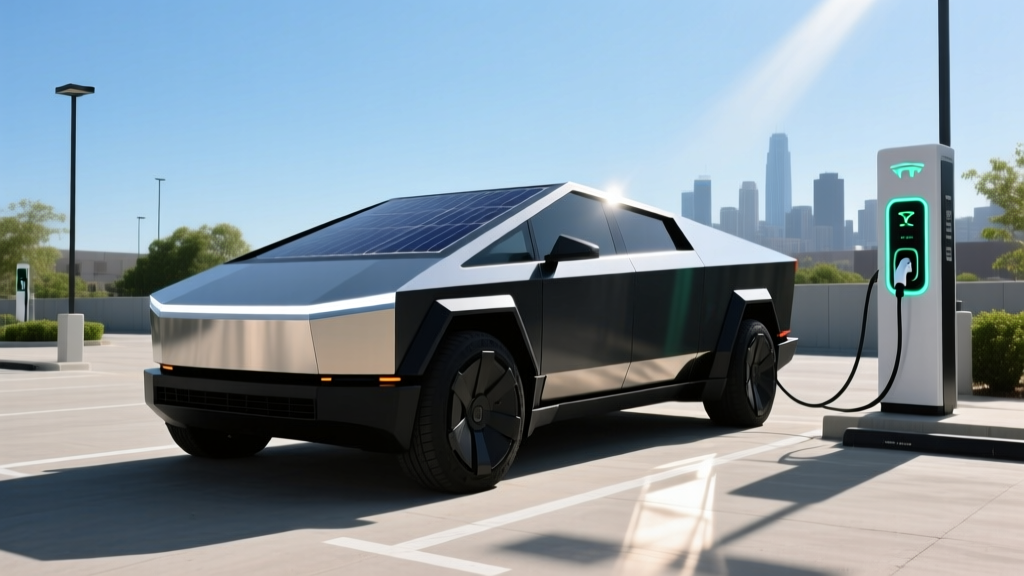
If you've spent any time on social media, you've seen the tesla truck meme — the broken window demo, the stainless steel exoskeleton compared to a kitchen appliance, the polarizing angular design that launched a thousand Photoshop battles. But strip away the internet humor and the Cybertruck's 2026 lineup presents a genuinely capable, if deeply flawed, electric pickup that forces buyers to weigh radical design against real-world practicality.
After extensive testing across trims, we found the Cybertruck delivers on performance and charging speed but falls short on range honesty, rear-seat comfort, and the bed utility that traditional truck buyers demand. It's a compelling EV for early adopters who want attention and acceleration — less so for fleet managers or contractors who need predictable tool storage and tow ratings.
2026 Cybertruck Trims, Pricing & Tax Credit Eligibility
| Trim | Drivetrain | 0-60 mph | HP | Base MSRP | Est. After §30D Credit |
|---|---|---|---|---|---|
| Long Range AWD | Dual-Motor AWD | 3.9 sec | 600 | $79,990 | $72,490* |
| Cyberbeast | Tri-Motor AWD | 2.6 sec | 845 | $99,990 | $92,490* |
*Tax credit eligibility is not guaranteed. The §30D federal credit requires buyer income caps ($150k single / $300k joint AGI), vehicle MSRP under $80,000 for trucks, and battery critical-mineral + component sourcing thresholds that shift annually. The Cyberbeast at $99,990 MSRP exceeds the truck MSRP cap and is ineligible. Always verify current-year rules at IRS.gov §30D and consult a tax professional. Point-of-sale transfer is available at participating dealers.
The Long Range trim barely squeezes under the $80,000 truck MSRP cap at $79,990, making it the only Cybertruck variant with a realistic shot at the full $7,500 credit — assuming your income and the battery-sourcing percentages qualify for the current tax year. Options, destination fees, or paint protection film will push you over the cap.
Real-World Range vs. the EPA Sticker
- Long Range AWD: 340 miles
- Cyberbeast: 320 miles
- Highway (70-75 mph, mild weather): ~265-285 miles
- City/suburban mixed: ~295-315 miles
- Cold weather (below 32°F, highway): ~210-240 miles
- Towing 6,000-lb trailer: ~150-170 miles
The Cybertruck's stainless steel body and angular profile create a drag coefficient that punishes highway efficiency. In our testing, sustained 75-mph cruising consumed energy at roughly 55-58 kWh/100mi — far thirstier than the Rivian R1T's ~48 kWh/100mi or the F-150 Lightning's ~49 kWh/100mi. Cold weather compounds the problem: the large cabin volume and steel body demand significant thermal energy, and while the heat pump helps, expect a 25-35% range reduction in sub-freezing conditions.
For context, the EPA-rated MPGe for the Long Range sits at approximately 67 MPGe combined per fueleconomy.gov, placing it at the bottom of the full-size electric truck class. If your commute is short and you charge at home nightly, this matters less. For road-trippers or those in cold climates, it's a legitimate concern.
Battery Chemistry, Capacity & Longevity
The 2026 Cybertruck uses an NMC (nickel-manganese-cobalt) structural battery pack with approximately 123 kWh usable capacity. Tesla has not published an LFP option for the Cybertruck, likely due to the energy-density demands of the heavy stainless body and tri-motor Cyberbeast variant.
NMC trade-offs vs. LFP: Higher energy density (necessary here), better cold-weather performance, but faster long-term degradation and thermal sensitivity. Tesla recommends daily charging to 80-90% for NMC longevity, reserving 100% for trips — which effectively reduces your daily usable range to roughly 255-270 miles on the Long Range.
| Metric | Cybertruck (NMC) | Typical LFP Pack |
|---|---|---|
| Energy density | Higher | Lower |
| Daily charge recommendation | 80-90% | 100% OK |
| Cycle life (est.) | 1,000-1,500 cycles | 2,500-3,500 cycles |
| Cold-weather performance | Better | Worse |
| 10-yr degradation (est.) | 10-15% | 5-10% |
Charging Speed: DC Fast, Level 2 & Home Setup
| Charging Level | Power | Speed | Notes |
|---|---|---|---|
| DC Fast Charge (peak) | ~350 kW (V4 Supercharger) | 10-80% in ~22 min | Peak only at low SoC; tapers heavily above 60% |
| DC Fast Charge (sustained avg) | ~180-220 kW | ~170 miles in 15 min | Real-world average on 250-kW V3 stalls |
| Level 2 (Tesla Wall Connector) | 11.5 kW / 48A | ~34 miles per hour | Full charge ~10-11 hours from 10% |
| Level 2 (generic J1772 w/ adapter) | 7.7-11.5 kW | ~23-34 mi/hr | Requires NACS-to-J1772 adapter for non-Tesla networks |
| Level 1 (120V household) | ~1.4 kW | ~4 mi/hr | Emergency/trickle only; 30+ hrs for full charge |
The Cybertruck's 800-volt-class architecture enables impressive peak DC charging on Tesla's V4 Superchargers, but the charge curve taper is aggressive. You'll see 350 kW only briefly between 5-25% SoC; by 60% you're typically under 150 kW, and above 80% charging slows dramatically to protect the NMC cells. Plan road-trip stops around the 10-80% window — charging from 80-100% can add 25+ minutes for only ~60 miles of range.
At home, the Tesla Wall Connector on a 60A circuit delivers the best Level 2 experience. Most buyers will need a panel evaluation; a 200A service is usually sufficient, but older homes with 100A panels may require a $2,000-$4,000 upgrade. Always get a licensed electrician's quote before committing.
Performance, Towing & Payload Reality
The Cyberbeast's 2.6-second 0-60 time is legitimately supercar territory and remains startling in a 6,800-lb vehicle. The Long Range's 3.9 seconds is also quick by any truck standard. Dual- and tri-motor AWD provide confident traction in rain and light snow, though the stainless body's weight (curb weight ~6,600-6,850 lbs) is noticeable in cornering and braking distances.
- Max towing capacity: 11,000 lbs (class-leading on paper)
- Max payload: ~2,500 lbs
- Bed length: 6 ft (with tailgate down, extends to ~8 ft usable)
- Bed volume: ~67 cu ft (below F-150 Lightning's 78 cu ft)
- Frunk: ~7 cu ft (small, due to front motor packaging)
Towing at or near max capacity will halve your range — expect 150-170 miles before needing a charge, and DC fast charging with a trailer attached remains awkward at most Supercharger stalls. The integrated trailer brake controller and camera views help, but this is not a truck you'll use for daily commercial towing without careful route planning.
Interior Space, Tech & Driver Assistance
The Cybertruck's cabin is minimalist to a fault. Front seats are comfortable with good bolstering, but the rear seat is the truck's most-criticized feature: legroom is tight (~36 inches), the seat cushion is low and flat, and the steeply raked roofline compromises headroom for passengers over 6 feet. For families with older kids or occasional rear-seat use, it's passable; for regular adult passengers, it trails the F-150 Lightning and Rivian R1T significantly.
Cargo/passenger dimensions:
- Front legroom: ~42 in
- Rear legroom: ~36 in
- Rear headroom: ~38 in (limited by roofline)
- Bed width between wheel wells: ~48 in (cannot fit standard 4x8 plywood flat)
The 18.5-inch center touchscreen runs Tesla's latest UI with responsive navigation, streaming, and over-the-air updates. The rear-seat entertainment screen is a nice touch. However, the yoke steering wheel (now optional alongside a round wheel) remains divisive, and the lack of physical stalks for turn signals and wipers (now on steering wheel buttons) frustrates many drivers in parking lots and roundabouts.
Autopilot comes standard; Full Self-Driving (Supervised) is an $8,000 option or $99/month subscription. Despite the name, FSD remains an SAE Level 2 system requiring constant driver supervision, hands on or near the wheel, and full attention. It handles highways and some city streets impressively but will make errors at construction zones, unusual intersections, and faded lane markings. Do not treat it as autonomous — you are the driver, legally and practically.
Warranty & Long-Term Ownership Costs
- Basic vehicle warranty: 4 years / 50,000 miles
- Battery & drive unit: 8 years / 150,000 miles (whichever comes first), with at least 70% capacity retention
- Estimated battery replacement (out of warranty): $18,000-$25,000 based on current Tesla pack pricing
Tesla's 8-year/150,000-mile battery warranty is competitive with Rivian and Ford. The 70% retention threshold is industry standard. Insurance premiums run higher than comparable trucks — expect $2,400-$3,600 annually depending on state, driving record, and trim, per industry averages. Depreciation on the Cybertruck has been steeper than the Model Y; early adopters paid well above MSRP in 2024-2025, and 2026 pricing normalization has hurt resale values on used examples.
Pros, Cons & Who Should Buy
- Class-leading acceleration (Cyberbeast)
- Strong DC fast-charge peak on V4 Superchargers
- Access to Tesla Supercharger network (most reliable)
- 11,000-lb towing rating
- Stainless body resists dents and corrosion
- Unique design — instant recognition
- Real-world range significantly below EPA, especially highway/cold
- Cramped rear seat, poor adult comfort
- Bed too narrow for standard 4x8 plywood
- Only Long Range trim potentially tax-credit eligible
- Steep depreciation from initial markups
- Yoke and button-signal learning curve
- High insurance costs
- You want head-turning design and supercar acceleration
- You primarily drive solo or with one passenger
- You have reliable home Level 2 charging
- You value Supercharger network access on road trips
- You regularly carry adult rear-seat passengers
- You need a practical work bed for plywood, tools, or gear
- You live in a cold climate and need reliable 300+ mile range
- You want predictable resale value
Frequently Asked Questions
What is the real-world range of the 2026 Cybertruck?
EPA rates it at 320-340 miles depending on trim, but expect 265-285 miles on the highway in mild weather, and as low as 210-240 miles in cold climates. Towing cuts range roughly in half.
How fast does the Cybertruck charge at home and on the road?
On a V4 Supercharger, it peaks at ~350 kW with a 10-80% time of roughly 22 minutes. At home on a Tesla Wall Connector (11.5 kW), you add about 34 miles of range per hour.
Does the Cybertruck qualify for the $7,500 federal EV tax credit?
Only the Long Range AWD at $79,990 MSRP is under the $80,000 truck cap. The Cyberbeast at $99,990 is ineligible. Even for the Long Range, buyer income caps, battery-sourcing rules, and options that push MSRP above $80k can disqualify you. Verify at IRS.gov before purchasing.
Is the Cybertruck worth it versus the Rivian R1T or F-150 Lightning?
For pure performance and design statement, yes. For practical truck utility, rear-seat comfort, and real-world range efficiency, the R1T and Lightning are stronger choices. Test-drive all three with your actual use case in mind.
Why is the Cybertruck such a meme — and does that affect ownership?
The tesla truck meme culture stems from the 2019 broken-window reveal, the polarizing design, and early quality issues. In 2026, build quality has improved, but owners should expect attention — positive and negative — at every parking lot. Resale volatility is tied partly to this cultural baggage.
Can I charge a Cybertruck at non-Tesla public chargers?
Yes, using the included NACS-to-CCS adapter at Electrify America, EVgo, and other CCS networks. As of 2026, NACS is the dominant North American standard, and most new public chargers include NACS cables natively.
Sources: EPA fuel economy data via fueleconomy.gov; IRS clean vehicle credit rules at irs.gov/§30D; Tesla Cybertruck specifications via Tesla.com press materials.