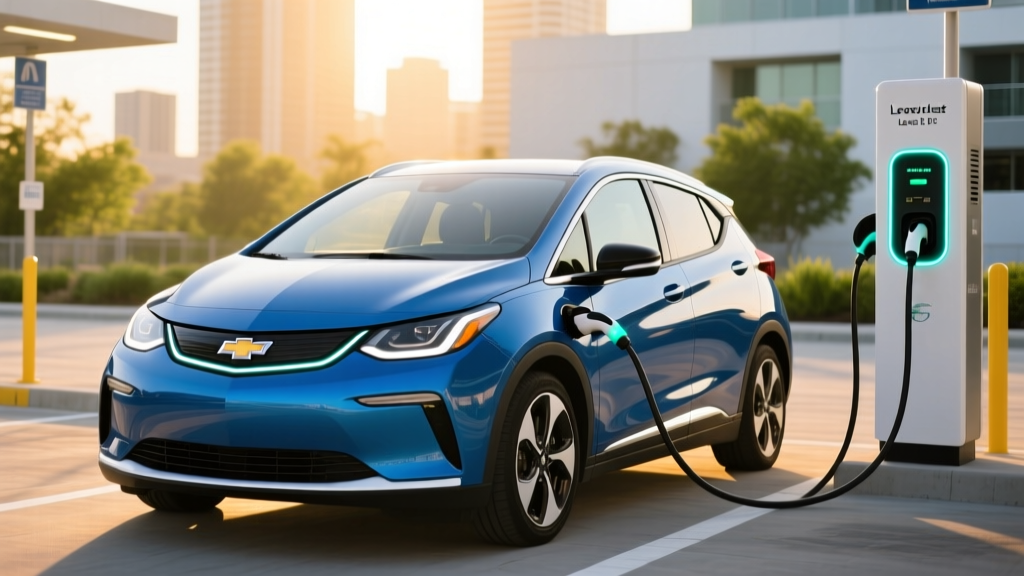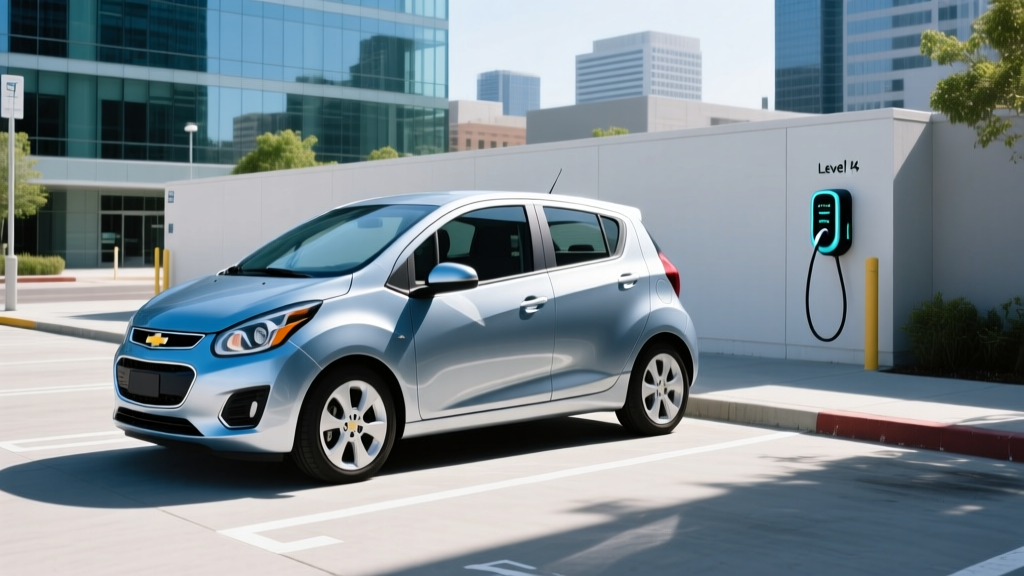
The 2014 Chevrolet Spark EV was one of the first affordable, purpose-built electric subcompacts sold in the United States. With an EPA-estimated range of 82 miles, a 21.3 kWh battery, and 140 horsepower, it remains a viable budget commuter in 2026 — but only for specific use cases. If you are considering a used Spark EV, this guide breaks down exactly what you need to know about real-world range, charging times, battery health, and total ownership cost compared to a gas alternative.
Quick Verdict: Is the 2014 Spark EV Worth It?
Yes, if you need a cheap, reliable city commuter with home Level 2 charging, drive under 50 miles daily, and live in a mild climate. No, if you need highway range, DC fast charging (the Spark EV has none), or rely solely on public charging infrastructure. Expect to pay $5,000–$8,500 on the used market in 2026.
2014 Spark EV: Key Specifications at a Glance
| Specification | 2014 Chevy Spark EV |
|---|---|
| EPA Range | 82 miles |
| Battery Capacity | 21.3 kWh (usable) |
| Battery Chemistry | NMC (Nickel Manganese Cobalt) |
| Motor Output | 140 hp / 400 lb-ft torque |
| 0–60 mph | 7.6 seconds |
| Level 1 Charging (120V) | ~1.4 kW, ~4 mi/hr |
| Level 2 Charging (240V) | ~3.3 kW, ~10 mi/hr (full charge ~7 hrs) |
| DC Fast Charging | Not available |
| MPGe (Combined) | 119 MPGe |
| EPA Efficiency | 28 kWh/100 mi |
| Original MSRP | ~$26,685 (before incentives) |
| Used Price (2026 est.) | $5,000–$8,500 |
| Battery Warranty (original) | 8 years / 100,000 miles |
Real-World Range: What 82 Miles Actually Means
EPA Sticker: 82 miles
Real-World Expectation: 65–75 miles at highway speeds (65+ mph); 75–85 miles in city driving with regen braking; 50–60 miles in freezing weather (below 32°F) due to cabin heating and battery chemistry limitations.
The Spark EV's 21.3 kWh battery was modest even in 2014. By 2026, most new EVs offer 250+ miles of range. The Spark EV's range is strictly a commuter proposition. On a typical workday — 15 miles each way with errands — you will use roughly 40–50 miles of range, leaving a comfortable buffer. But a 70-mile round trip with highway driving will push you into range-anxiety territory, especially in winter.
Chevrolet equipped the Spark EV with an efficient thermal management system (liquid-cooled battery), which helped preserve battery health over time. According to fueleconomy.gov, the Spark EV achieves 119 MPGe combined, making it one of the most efficient EVs of its era. That efficiency matters when your total battery is only 21.3 kWh.
For context, a 2026 Chevrolet Equinox EV offers 319 miles of EPA range on a 85 kWh battery. The Spark EV is a different category of vehicle entirely — think of it as an electric golf cart with doors, not a road-trip machine.
Charging: The Spark EV's Biggest Limitation
Here is where the Spark EV shows its age most clearly: it has no DC fast charging capability. You cannot plug into a 50 kW, 150 kW, or 350 kW DC fast charger at an Electrify America or EVgo station and gain range quickly. The Spark EV charges exclusively via AC:
| Charging Level | Power (kW) | Miles Added Per Hour | Full Charge Time (0–100%) |
|---|---|---|---|
| Level 1 (120V household) | ~1.4 kW | ~4 miles | ~20 hours |
| Level 2 (240V, 16A) | ~3.3 kW | ~10 miles | ~7 hours |
| DC Fast Charging | N/A | N/A | Not supported |
This is a critical ownership consideration. If you have a garage or driveway where you can install a Level 2 charger (240V), the Spark EV charges overnight easily — plug in at 10 PM, full by 5 AM. But if you live in an apartment without charging access, the Spark EV becomes nearly impractical. Level 1 charging at 1.4 kW means a full charge takes nearly a full day, and you would need to plug in every single night to maintain usable range.
For a 2026 Level 2 home charger installation, expect to pay $800–$2,000 for a quality 32-amp or 40-amp unit (such as a ChargePoint Home Flex or Emporia Vue) including electrician labor and permits, assuming your electrical panel has capacity. A panel upgrade (from 100A to 200A service) can add $1,500–$3,500. Because the Spark EV only accepts 3.3 kW on Level 2, you will not benefit from a 48-amp charger — but installing a higher-capacity unit now future-proofs your setup for your next EV.
Cost Breakdown: Spark EV vs. Gas Car (2026 Ownership)
The Spark EV's strongest argument in 2026 is total cost of ownership. Used prices have dropped dramatically, and electricity costs per mile are a fraction of gasoline. Here is a realistic 5-year comparison assuming 10,000 miles driven per year (50,000 miles total):
| Cost Category | 2014 Spark EV (Used) | 2014 Chevy Spark (Gas) | 2020 Honda Civic (Gas) |
|---|---|---|---|
| Purchase Price | $6,500 | $5,000 | $14,000 |
| Fuel/Energy (5 yrs, 50k mi) | $2,100 ($0.042/mi) | $5,500 ($0.11/mi) | $5,000 ($0.10/mi) |
| Maintenance (5 yrs) | $600 | $2,500 | $2,200 |
| Insurance (5 yrs avg.) | $5,500 | $5,000 | $5,800 |
| Estimated Battery Replacement | $0–$5,000* | $0 | $0 |
| 5-Year Total | $14,700–$19,700 | $13,000 | $22,000 |
*Battery replacement is unlikely if the pack is healthy, but budget for the possibility. See the battery health section below.
The Spark EV saves roughly $3,400 in fuel and maintenance over 5 years compared to its gas counterpart. The gas Spark gets about 30 MPG combined, while the Spark EV uses 28 kWh per 100 miles. At the US average electricity rate of $0.15/kWh (per EIA data), that works out to $0.042 per mile — roughly one-third the cost of gasoline at $3.30/gallon.
Maintenance savings are significant: the Spark EV has no oil changes, no spark plugs, no transmission fluid, and regenerative braking extends brake pad life considerably. You will still need tire rotations, cabin air filter changes, brake fluid checks, and coolant service for the battery thermal management system.
Battery Health: What to Check Before Buying
The 2014 Spark EV uses a 21.3 kWh NMC (Nickel Manganese Cobalt) lithium-ion battery pack manufactured by A123 Systems. NMC chemistry offers good energy density but is more susceptible to calendar degradation than LFP (Lithium Iron Phosphate) chemistry used in some newer EVs.
After 12 years, you should expect some capacity loss. Industry data suggests NMC batteries lose approximately 1.5–2.5% capacity per year under normal use, meaning a 2014 Spark EV in 2026 could have 80–88% of its original capacity — translating to roughly 65–72 miles of real-world range on a full charge.
Before purchasing, demand a battery health check:
- Ask the seller or a Chevy dealer to pull the battery's State of Health (SoH) via OBD-II diagnostics. A reading below 75% is a red flag.
- Check if the original 8-year/100,000-mile battery warranty still applies. For a 2014 model, the warranty expired in 2022, so you are likely on your own.
- Look for signs of uneven cell degradation: does the range estimate fluctuate wildly during a drive? Does the car lose range suddenly below 30% SoC?
- A replacement battery pack, if needed, runs $5,000–$8,000 installed at a dealership — which may exceed the car's value. Independent EV shops may offer refurbished packs for $3,000–$5,000.
The liquid-cooled thermal management system in the Spark EV was a strong design choice that helped preserve battery health compared to passively cooled competitors like the early Nissan Leaf. Cars garaged in mild climates (California, the Southeast) tend to have better-preserved packs than those exposed to extreme heat (Arizona, Texas) or extreme cold (Minnesota, Michigan).
Common Misconceptions About the Spark EV
| Myth | Fact |
|---|---|
| "It qualifies for the $7,500 federal tax credit." | The §30D federal tax credit applies to new EV purchases only. A used Spark EV may qualify for the used EV credit (up to $4,000 or 30% of sale price, whichever is less) under IRS §25E, subject to income limits ($75K single / $150K joint) and a sale price cap of $25,000. See IRS guidelines. |
| "82 miles is enough for anyone." | 82 miles is the EPA estimate under ideal conditions. Real-world highway driving, cold weather, and battery degradation can reduce this to 50–65 miles. Plan conservatively. |
| "I can fast-charge on road trips." | The Spark EV has no DC fast charging port. It uses a standard J1772 connector for AC charging only. Road trips require overnight stops with Level 2 access. |
| "The battery will need replacing soon." | Many Spark EVs still have 80%+ battery health after 12 years thanks to liquid cooling. A pre-purchase SoH check is essential, but catastrophic failure is uncommon. |
| "It's too slow for highway merging." | With 140 hp and 400 lb-ft of instant torque, the Spark EV hits 0–60 in 7.6 seconds — quicker than many gas compact cars. Highway merging is not an issue. |
Decision Framework: Should You Buy a 2014 Spark EV?
Buy the Spark EV if:
- You drive under 50 miles round-trip daily and can charge at home overnight
- You want the cheapest possible entry into EV ownership (under $7,000)
- You live in a mild climate (rarely below 25°F or above 100°F)
- This is a second car for commuting, not your only vehicle
- You have access to a dedicated parking spot with a 240V outlet or can install one
- You want to eliminate gas station visits and reduce maintenance costs
Skip the Spark EV if:
- You regularly drive more than 60 miles in a day
- You need to take road trips or drive long highway routes
- You live in an apartment without charging access and depend on public infrastructure
- You live in an extreme cold climate (below 10°F regularly)
- You need cargo space or seating for more than four people
- The battery SoH reads below 78% on a pre-purchase inspection
If you need more range but want to stay budget-conscious, consider a used 2017–2019 Chevrolet Bolt EV (238 miles EPA, DC fast charging capable, ~$10,000–$14,000 used in 2026) or a 2018–2020 Nissan Leaf with the 60 kWh battery (226 miles EPA).
First-Time EV Buyer Tips for the Spark EV
If the Spark EV is your first electric vehicle, here are the practical ownership realities no brochure will tell you:
Precondition the battery. The Spark EV allows you to set a departure time while plugged in. This warms or cools the battery to optimal temperature before you drive, improving range and regen braking effectiveness — especially important in cold weather.
Use regen braking aggressively. The Spark EV has a "Low" gear mode and a regen paddle that enables near-one-pedal driving. In city traffic, this recovers significant energy and reduces brake wear.
Install a Level 2 charger before the car arrives. Relying on Level 1 (120V) charging with an 82-mile-range car is frustrating. A 240V Level 2 setup is practically mandatory for daily usability.
Download charging apps. PlugShare, ChargePoint, and EVgo apps help you find Level 2 chargers near your destinations for opportunistic top-ups during shopping or dining.
Check the 12V battery. Like all EVs, the Spark EV has a conventional 12V auxiliary battery that powers electronics. If it dies, the car won't start — even if the main traction battery is full. Replace it proactively every 4–5 years.
Frequently Asked Questions
Does the 2014 Spark EV qualify for any tax credits in 2026?
Not the new-vehicle §30D credit — that applies only to new EV purchases. However, if you buy from a dealer and meet income requirements (under $75,000 single / $150,000 joint), you may qualify for the IRS §25E used clean vehicle credit: up to $4,000 or 30% of the sale price, whichever is less. The vehicle must sell for $25,000 or less and be purchased through a licensed dealer. Always verify current eligibility on irs.gov and consult a tax professional.
Can I take the Spark EV on a road trip?
Technically yes, but practically no. Without DC fast charging, every charging stop requires a multi-hour Level 2 session. A 200-mile trip would require at least two overnight stops. This car is designed for daily commuting, not highway touring.
What connector does the Spark EV use?
The standard J1772 connector for AC Level 1 and Level 2 charging. It does not have a CCS, CHAdeMO, or NACS port because it does not support DC fast charging at all. You will not need a NACS adapter for this vehicle.
How much does it cost to charge a Spark EV at home?
A full charge from 0–100% uses about 21.3 kWh. At the US average rate of $0.15/kWh, that is roughly $3.20 for a full charge, giving you about 65–80 real-world miles. Cost per mile works out to approximately $0.04–$0.05, compared to $0.10–$0.12 per mile in a comparable gas car.
Is the Spark EV safe?
The Spark EV received a 4-star overall safety rating from NHTSA. It includes standard stability control, anti-lock brakes, and eight airbags. It lacks modern ADAS features like automatic emergency braking, lane-keeping assist, or adaptive cruise control — those were not common in 2014 subcompacts.
What happens if the battery dies completely?
If the traction battery depletes to 0%, the car will not move and must be towed (flatbed only — never tow an EV with wheels on the ground, as this can damage the motor). Chevrolet built in a buffer below the displayed 0% to protect battery health, but you should avoid regularly running the pack to empty.
The 2014 Chevrolet Spark EV occupies a specific niche in 2026: an ultra-budget commuter EV for drivers with short routes and reliable home charging. It is not a do-everything vehicle, and it was never intended to be. But at $5,000–$8,500 with electricity costs at roughly $0.04 per mile, it remains one of the cheapest ways to drive electric — if its limitations align with your lifestyle.