The Battle of the Battery Architectures: 800V vs. 400V
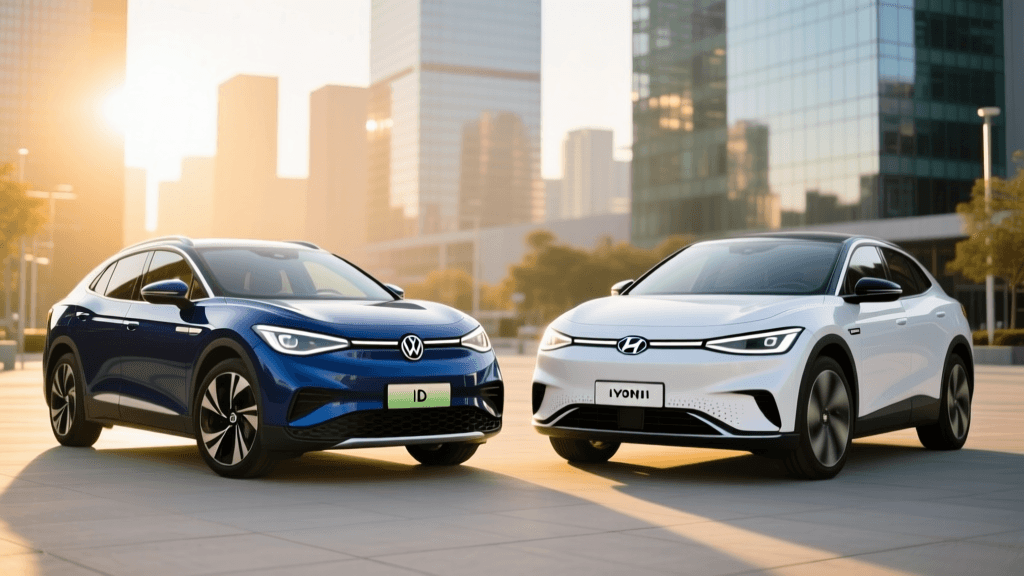
When evaluating family electric SUVs, range and cargo space often dominate the conversation. However, the underlying technology dictates the daily ownership experience. The Volkswagen ID.4 and the Hyundai Ioniq 5 represent two fundamentally different engineering philosophies, particularly when it comes to battery architecture and charging technology. According to extensive testing data compiled by Car and Driver, the Ioniq 5 utilizes Hyundai Motor Group's Electric Global Modular Platform (E-GMP), which features an 800-volt electrical architecture. This is a massive technological advantage for fast charging.
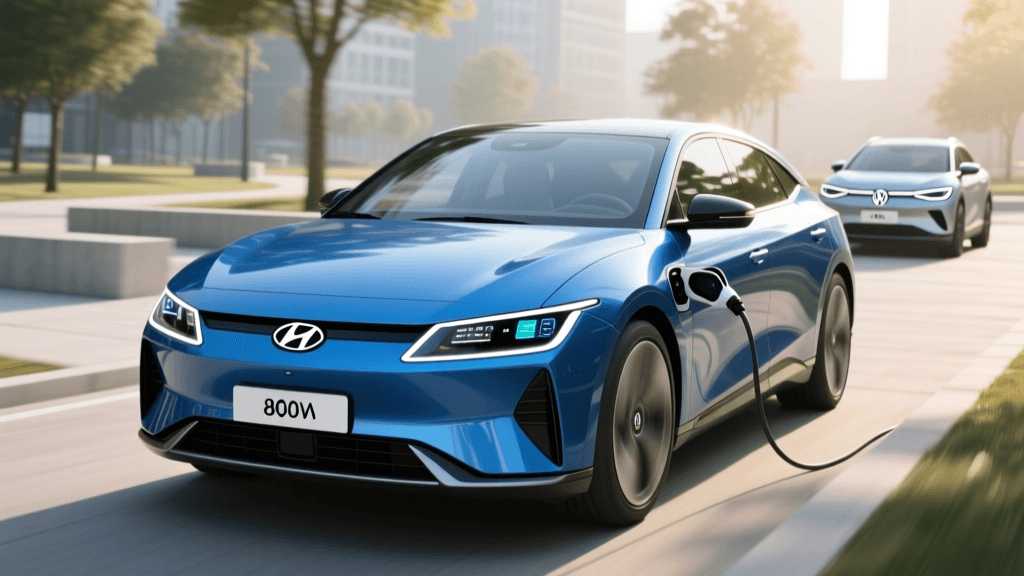
The 800V system allows the Ioniq 5 to accept peak charging rates of up to 350 kW on compatible DC fast chargers. In real-world conditions, this translates to a blistering 10% to 80% charge in approximately 18 minutes, provided you are plugged into a 350 kW Electrify America or Ionity station. Furthermore, the E-GMP platform includes a sophisticated battery thermal management system that pre-conditions the battery when a fast charger is routed in the navigation system, ensuring optimal charging curves even in colder weather.
Conversely, the Volkswagen ID.4 is built on the MEB platform, which operates on a more traditional 400-volt architecture. While highly capable and reliable, it caps out at lower peak charging speeds. Depending on the battery pack (the 82 kWh usable pack being the most common for families), the ID.4 peaks around 135 kW to 175 kW. A 10% to 80% charge typically takes between 28 and 36 minutes. While VW's charging curve is remarkably flat—meaning it holds its peak speed longer than many competitors—the absolute time spent at the charger is noticeably longer than in the Hyundai. For road-tripping families, the Ioniq 5's 800V tech is a clear generation ahead in terms of minimizing downtime.
Infotainment and User Experience (UX)
Software can make or break an EV, and both automakers have taken divergent paths in their UX design. The Volkswagen ID.4 launched with ID.Software 2.0, which was heavily criticized for its reliance on unlit capacitive touch sliders and laggy response times. However, VW has aggressively iterated. Models equipped with ID.Software 4.0 (and the upcoming 5.0) feature a drastically improved UI, faster processing speeds, and a new voice assistant that recognizes natural speech patterns without needing a wake word. Despite these improvements, VW still relies heavily on touch-sensitive sliders for volume and climate control, though they have finally added backlighting to these sliders in recent model years to appease frustrated users.
Hyundai takes a more balanced approach in the Ioniq 5. The cabin is dominated by a dual 12.3-inch panoramic display setup that runs Hyundai's highly responsive infotainment software. The UI is colorful, intuitive, and features a customizable widget-based home screen. Crucially, Hyundai listened to consumer feedback regarding touch-only interfaces. While early Ioniq 5 models buried climate controls in the touchscreen, recent refreshes and newer model years have reintroduced physical, tactile buttons for HVAC and volume controls. This blend of high-resolution digital displays with physical ergonomics makes the Ioniq 5's tech suite much easier to use while driving, a vital safety and convenience factor for parents managing a chaotic family cabin.
Both vehicles support Over-The-Air (OTA) updates, but Hyundai's Bluelink ecosystem has proven slightly more robust in delivering tangible, user-facing feature additions post-purchase, whereas VW's OTA rollouts have historically been more focused on backend stability and bug fixes.
Advanced Driver Assistance Systems (ADAS)
For family road trips, ADAS technology is essential for reducing driver fatigue. The Volkswagen ID.4 utilizes the IQ.DRIVE suite, highlighted by Travel Assist. This system combines Adaptive Cruise Control (ACC) with Lane Guidance, offering reliable centering on the highway and smooth stop-and-go functionality. However, some drivers find VW's lane-keeping assist to be overly sensitive, occasionally fighting the driver's inputs on winding roads or during lane changes.
The Hyundai Ioniq 5 counters with Highway Driving Assist (HDA). On higher trims, this includes HDA 2, which adds semi-automatic lane changing. If you activate your turn signal on the highway, the Ioniq 5 will verify the adjacent lane is clear and smoothly execute the lane change. The steering calibration in the Hyundai feels slightly more natural and less intrusive than the VW's system. Furthermore, the Ioniq 5's navigation-based smart cruise control automatically slows the vehicle down for upcoming highway curves or toll booths, a predictive tech feature that the ID.4's standard ACC lacks.
Utility Tech: V2L vs. V2H Capabilities
A major technological differentiator between these two family haulers is bi-directional charging capability. The Hyundai Ioniq 5 features Vehicle-to-Load (V2L) technology. This allows the SUV to act as a massive 3.6 kW mobile power bank. It includes a standard 120V interior outlet in the second row, and an exterior V2L adapter that plugs into the charge port. Families can use this to power CPAP machines while camping, run electric grills at a tailgate, or even charge an e-bike or another EV in an emergency. It is a plug-and-play tech feature that requires zero additional home infrastructure.
Volkswagen approaches bi-directional tech differently. The ID.4 supports Vehicle-to-Home (V2H) and Vehicle-to-Grid (V2G) capabilities, but this is heavily dependent on the market and requires a specific, expensive DC bi-directional home wallbox and compatible home energy management system. While V2H is incredibly valuable for home backup power during grid outages, it lacks the spontaneous, portable utility of the Ioniq 5's V2L system. For families who want immediate, portable power for outdoor adventures, Hyundai's implementation is far more accessible.
Thermal Management and Cold Weather Tech
EV efficiency drops in cold weather, making thermal management tech critical. Data from the EPA's FuelEconomy.gov database highlights how different EV configurations impact overall range ratings, but the hardware behind those numbers tells a deeper story. Both the ID.4 and Ioniq 5 offer heat pump systems to scavenge waste heat from the battery and motors to warm the cabin, saving precious battery capacity. However, VW includes a sophisticated battery pre-heating system that activates automatically when the winter package is equipped and a charger is routed. Hyundai's heat pump is highly efficient, but early models lacked an automatic battery pre-conditioning toggle for DCFC unless the battery was already quite warm, a software quirk that Hyundai has been slowly addressing via OTA updates. In freezing climates, the ID.4's integrated winter tech package gives it a slight edge in preserving range and charging speeds out of the box.
Tech Spec Comparison Table
| Technology Feature | Volkswagen ID.4 (Pro S) | Hyundai Ioniq 5 (SEL/Limited) |
|---|---|---|
| Electrical Architecture | 400-Volt | 800-Volt |
| Peak DC Fast Charge Rate | ~175 kW | ~350 kW |
| 10-80% Charge Time (Ideal) | ~30-36 Minutes | ~18 Minutes |
| Infotainment Display | 12.9-inch Touchscreen | Dual 12.3-inch Panoramic |
| Physical Climate Controls | No (Capacitive Sliders) | Yes (In recent refreshes) |
| Bi-Directional Power | V2H / V2G (Requires DC Wallbox) | V2L (3.6kW Portable Adapter) |
| ADAS Highlight | Travel Assist (ACC + Lane Centering) | HDA 2 (Includes Auto Lane Change) |
| OTA Update Capability | Yes | Yes |
Final Verdict: Which Tech Suite Wins?
When stripping away the aesthetics and focusing purely on the technology stack, the Hyundai Ioniq 5 emerges as the superior choice for the tech-savvy family. Its 800-volt architecture is not just a marketing bullet point; it fundamentally changes the road-trip experience by cutting charging times in half compared to the ID.4. Furthermore, Hyundai's decision to blend high-definition digital displays with physical ergonomic controls, combined with the sheer utility of the plug-and-play V2L system, makes it a more practical and user-friendly tech hub on wheels.
The Volkswagen ID.4 is not without its technological merits. Its flat charging curve, robust IQ.DRIVE ADAS suite, and excellent cold-weather thermal management software make it a highly capable, safe, and reliable family hauler. If your family prioritizes a traditional, subdued driving experience and you have access to home charging where 400V speeds don't matter, the ID.4's tech suite is more than adequate. However, for those who want cutting-edge charging speeds, superior bi-directional utility, and a more intuitive infotainment interface, the Ioniq 5's technological deep dive reveals a clear winner.