Introduction: The Ultimate Electric Crossover Dilemma
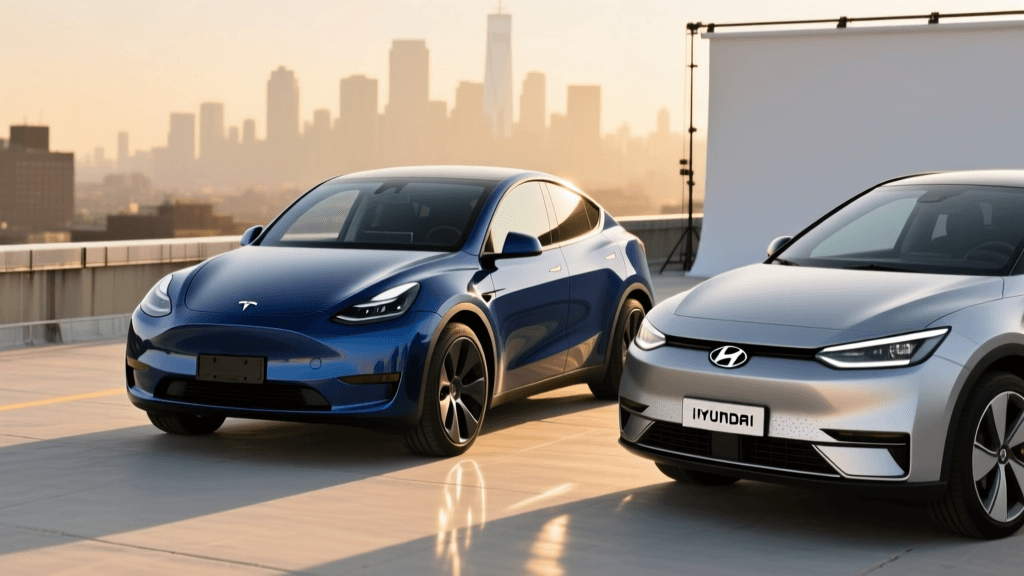
When shopping for a mainstream electric crossover, the Tesla Model Y and the Hyundai Ioniq 5 consistently top the must-drive lists. Both vehicles offer compelling technology, spacious interiors, and zero tailpipe emissions, but they approach the EV experience from entirely different philosophies. The Model Y is the benchmark for efficiency and charging infrastructure, while the Ioniq 5 brings retro-futuristic styling, ultra-fast 800-volt charging architecture, and a more traditional, button-friendly cabin. If you are torn between these two industry leaders, making the right choice requires looking beyond the brochure. This comprehensive how-to guide will walk you through a step-by-step methodology to evaluate real-world range, charging logistics, and total cost of ownership, ensuring you select the EV that perfectly aligns with your lifestyle and budget.
Step 1: Analyze Real-World Range and Efficiency
The first step in choosing between the Model Y and the Ioniq 5 is understanding how their range and efficiency metrics translate to your daily life. The EPA provides standardized estimates, but real-world highway driving, weather conditions, and vehicle aerodynamics play a massive role in actual mileage.
The Tesla Model Y Long Range AWD benefits from a sleek, teardrop aerodynamic profile and an incredibly efficient powertrain. Conversely, the Hyundai Ioniq 5 features a boxy, wedge-shaped design that looks stunning but creates more wind resistance at highway speeds. Consequently, the Model Y generally outperforms the Ioniq 5 in real-world highway range tests, despite both vehicles carrying similarly sized battery packs.
Core Specifications Comparison
| Feature | Tesla Model Y Long Range AWD | Hyundai Ioniq 5 Limited AWD |
|---|---|---|
| EPA Estimated Range | 310 miles | 266 miles |
| Battery Capacity (Usable) | ~75 kWh | 77.4 kWh |
| Combined MPGe | 111 MPGe | 98 MPGe |
| Aerodynamic Drag Coefficient | 0.23 Cd | 0.29 Cd |
How to apply this data: If your typical road trip involves sustained speeds of 75 mph or higher through mountainous or cold-weather regions, the Model Y's superior aerodynamics and efficiency will result in fewer charging stops. You can use the EPA's Side-by-Side EV Comparison Tool to plug in your local electricity rates and see exactly how much energy each vehicle consumes per 100 miles.
Step 2: Evaluate Charging Infrastructure and Speed
Range is only half of the equation; how quickly and easily you can replenish that range is equally critical. To make the right decision, you must map out your local charging ecosystem and understand the hardware differences between the two vehicles.
Tesla's Supercharger Network vs. Hyundai's 800V Architecture
The Tesla Model Y utilizes the proprietary NACS (North American Charging Standard) connector, granting it native, plug-and-charge access to the Tesla Supercharger network. This network is widely regarded as the most reliable and expansive in North America. When you pull up to a Supercharger, the car communicates with the pump instantly, and billing is handled seamlessly through your Tesla app.
The Hyundai Ioniq 5 uses the CCS (Combined Charging System) standard. While the public CCS network (like Electrify America or EVgo) has historically suffered from more downtime and fragmented payment apps than Tesla's network, the Ioniq 5 has a massive hardware advantage: an 800-volt electrical architecture. When paired with a 350 kW DC fast charger, the Ioniq 5 can charge from 10% to 80% in roughly 18 minutes. The Model Y, operating on a 400-volt architecture, peaks around 250 kW and typically takes 25 to 30 minutes for the same 10-80% sprint.
How to choose based on charging: Download apps like PlugShare or ChargePoint and map your most frequent road trip routes. If your routes are heavily saturated with reliable 350 kW CCS chargers, the Ioniq 5's blistering charge speeds will minimize your downtime. If you frequently travel through rural areas or regions where Tesla Superchargers are the only reliable option, the Model Y is the undisputed king of road trip convenience. For a deeper dive into the financial and logistical benefits of home and public charging, consult the U.S. Department of Energy's Alternative Fuels Data Center.
Step 3: Calculate Total Cost of Ownership (TCO) and Value
Sticker price is just the starting line. To truly compare the value of the Tesla Model Y and the Hyundai Ioniq 5, you must calculate the Total Cost of Ownership (TCO), which includes purchase incentives, depreciation, insurance, and maintenance.
Navigating Federal and State Incentives
The federal EV tax credit landscape is complex and subject to battery sourcing requirements. Depending on the current IRS guidelines and the specific manufacturing plant where your vehicle was assembled, either or both of these vehicles may qualify for up to $7,500 in federal tax credits, which can now often be applied at the point of sale to reduce your down payment. Furthermore, many states offer additional rebates for purchasing or leasing an EV, and some utility companies will subsidize the cost of installing a Level 2 home charger.
Depreciation and Insurance
Historically, Teslas have experienced volatile depreciation curves, often tied to the company's aggressive price cuts on new models. Hyundai, on the other hand, offers an industry-leading 10-year/100,000-mile powertrain warranty, which provides immense peace of mind and helps stabilize the vehicle's residual value on the used market. However, insurance premiums for the Model Y can sometimes be higher due to the cost of Tesla-specific body repairs and parts availability. Always run an insurance quote for both specific VINs before signing the paperwork.
Step 4: Match the EV to Your Specific Lifestyle
Data and spreadsheets can only take you so far. The final step in this how-to guide is matching the qualitative, day-to-day experience of each vehicle to your personal preferences and family needs.
- Choose the Tesla Model Y if: You prioritize maximum cargo space (the Model Y offers a deeper rear trunk and a more usable front trunk/frunk), you want a minimalist interior dominated by a single central screen, you rely heavily on over-the-air software updates that frequently add new features, and you demand access to the native Supercharger network for stress-free cross-country travel.
- Choose the Hyundai Ioniq 5 if: You prefer a retro-futuristic, lounge-like cabin with physical buttons for climate and audio controls, you value a smoother, more compliant suspension tune for city driving, you want ultra-fast 800V charging capabilities for quick highway pit stops, and you appreciate the security of Hyundai's comprehensive 10-year warranty.
Evaluating Interior Space and Tech
While both vehicles are classified as midsize crossovers, their interior packaging feels entirely different. The Model Y is a practicality powerhouse. Its panoramic glass roof creates an airy cabin, and the sheer volume of storage space makes it an excellent choice for growing families or those who frequently haul bulky gear. The Ioniq 5, however, boasts a remarkably long wheelbase, resulting in class-leading rear legroom that feels more akin to a luxury sedan than a crossover. Its dual-screen setup and tactile steering wheel buttons cater to drivers who find Tesla's screen-only menu diving to be a distraction while driving.
Final Verdict: Which EV Should You Buy?
There is no universally wrong choice between the Tesla Model Y and the Hyundai Ioniq 5; there is only the right choice for your specific parameters. If your primary goal is to maximize real-world range, minimize charging anxiety on remote road trips, and haul maximum cargo, follow the steps above to configure and test drive the Model Y. It remains the efficiency and infrastructure benchmark.
However, if you are willing to trade a small amount of highway range for a vastly superior interior design, physical controls, lightning-fast 800V charging speeds, and a class-leading warranty, the Ioniq 5 is a phenomenal value proposition. By systematically evaluating your daily commute, mapping your charging routes, and calculating your true out-of-pocket costs, you can confidently drive off the lot knowing you've selected the perfect electric companion for your journey.