The Battle of the Mainstream Electric Family SUVs
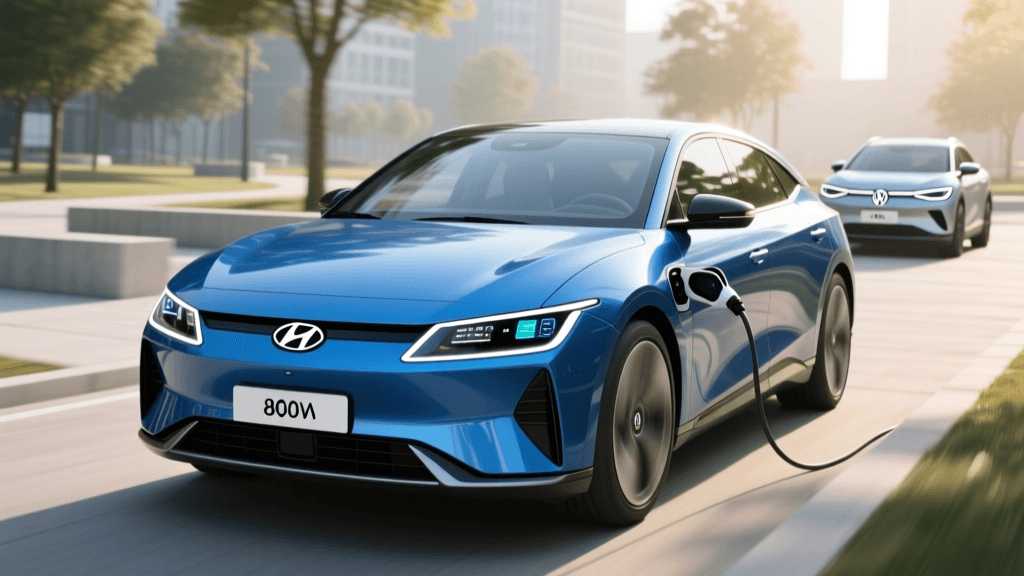
When shopping for an electric family SUV, the Volkswagen ID.4 and the Hyundai Ioniq 5 consistently rise to the top of the shortlist. Both vehicles offer ample cargo space, comfortable rides, and competitive pricing. However, beneath their sheet metal lies a fundamental divergence in engineering philosophy. The ID.4, built on Volkswagen’s modular MEB platform, represents a traditional, iterative approach to electrification. In contrast, the Ioniq 5, utilizing Hyundai’s dedicated E-GMP architecture, pushes the boundaries of next-generation EV technology. For the tech-savvy family buyer, understanding these underlying software and hardware differences is crucial. In this technology deep dive, we dissect the charging architectures, infotainment ecosystems, advanced driver assistance systems (ADAS), and utility features to determine which EV truly offers the superior tech stack for modern family life.
Platform Architecture: 400V vs. 800V Charging
The most significant technological divide between these two SUVs is their electrical architecture. The Volkswagen ID.4 utilizes a standard 400-volt system. While perfectly adequate for daily home charging and standard public DC fast chargers, it limits the vehicle's peak charging speed. On a 175 kW Electrify America station, the ID.4 peaks around 135 kW, taking approximately 29 minutes to charge from 10% to 80%. Furthermore, higher voltage requires thicker, heavier copper wiring to manage the heat generated by higher amperage, which adds weight to the MEB platform.
Conversely, the Hyundai Ioniq 5 is built on an 800-volt native architecture. As detailed in Car and Driver's analysis of EV charging speeds, 800V systems allow for lower current and reduced heat generation, enabling the use of thinner wiring and vastly superior fast-charging capabilities. When connected to a 350 kW charger, the Ioniq 5 can accept up to 235 kW of power, rocketing from 10% to 80% in just 18 minutes. For families embarking on cross-country road trips, this 800V architecture translates to significantly less time idling at charging plazas and more time on the road.
Infotainment and User Experience (UX)
Inside the cabin, the user experience highlights another stark contrast in technological execution. The Volkswagen ID.4 features a minimalist, screen-heavy approach driven by VW’s ID. Software (currently in version 3.x and rolling out 4.x). The centerpiece is a 12.9-inch floating infotainment display paired with a smaller 5.3-inch driver cluster. The ID.4 also offers an available Augmented Reality Head-Up Display (AR HUD), which overlays navigation arrows and ADAS warnings directly onto the windshield, appearing as if they are floating over the road ahead—a fantastic piece of safety tech for keeping parents' eyes on the road.
However, the ID.4’s reliance on haptic, capacitive touch sliders for volume and climate control has been a persistent point of frustration for users, often requiring precise finger placement and taking eyes off the road. Hyundai takes a much more pragmatic approach in the Ioniq 5. It utilizes a stunning panoramic dual-screen setup (two 12.3-inch displays merged under a single glass panel) but retains physical toggle switches for climate control and drive modes. Additionally, the Ioniq 5 features a 'Universal Island' sliding center console that can move back and forth by 5.5 inches, allowing front passengers to exit through the opposite door in tight parking spots—a brilliant piece of mechanical utility tech that the ID.4 lacks.
Advanced Driver Assistance Systems (ADAS)
For family haulers, ADAS technology is a primary safety concern. Volkswagen equips the ID.4 with its IQ.DRIVE suite, highlighted by 'Travel Assist.' This system combines adaptive cruise control and lane centering, capable of operating up to 95 mph. In newer software iterations, VW has introduced 'Swarm Data,' which uses anonymized data from other VW vehicles on the road to improve lane-keeping on roads with faded or missing lane lines. It is a highly capable, albeit conservative, system that prioritizes smooth, predictable inputs.
Hyundai’s Highway Driving Assist 2 (HDA2) feels slightly more advanced in its execution. HDA2 not only manages speed and lane centering but also includes semi-automatic lane-change assist when the turn signal is engaged. Furthermore, Hyundai’s system incorporates machine learning algorithms that analyze the driver’s habits—such as preferred following distances and acceleration profiles—and subtly adjusts the ADAS behavior to mimic the driver's natural style. This reduces the 'robotic' feel of the cruise control and builds greater driver trust over long highway stretches.
Battery Thermal Management and V2L Utility
Battery longevity and preconditioning are vital tech metrics. Both vehicles feature active liquid thermal management systems to keep the battery packs in their optimal temperature windows. However, the Ioniq 5 includes a dedicated battery heater for extreme cold climates and an automated navigation-based preconditioning system that warms the battery when a DC fast charger is inputted into the route, ensuring peak charging speeds even in winter. While VW has improved the ID.4's preconditioning via over-the-air (OTA) updates, Hyundai's out-of-the-box thermal readiness remains slightly more aggressive.
Perhaps the Ioniq 5’s ultimate party trick is its Vehicle-to-Load (V2L) technology. Using an adapter plugged into the charge port or the internal outlet under the rear seats, the Ioniq 5 can export up to 3.6 kW of continuous 120V AC power. As noted by the Department of Energy's Alternative Fuels Data Center, bidirectional charging capabilities are becoming a hallmark of modern EV utility. With V2L, families can power tailgate grills, run CPAP machines during camping trips, or even keep essential home appliances running during a grid outage. The North American VW ID.4 currently lacks native V2L hardware, giving the Hyundai a massive advantage in off-grid utility.
Tech & Specification Comparison Matrix
| Technology Feature | Volkswagen ID.4 (Pro S AWD) | Hyundai Ioniq 5 (Limited AWD) |
|---|---|---|
| Electrical Architecture | 400-Volt (MEB Platform) | 800-Volt (E-GMP Platform) |
| Peak DC Fast Charge Rate | ~135 kW | ~235 kW |
| 10-80% Charge Time (Ideal) | ~29 Minutes | ~18 Minutes |
| Infotainment Display | 12.9-inch Touchscreen | Dual 12.3-inch Panoramic Screens |
| Climate Controls | Capacitive Touch Sliders | Physical Toggle Buttons |
| Head-Up Display | Augmented Reality (AR) HUD | Standard AR HUD |
| ADAS Suite | IQ.DRIVE (Travel Assist) | Highway Driving Assist 2 (HDA2) |
| Vehicle-to-Load (V2L) | Not Available | 3.6 kW Output (Internal/External) |
| Over-The-Air (OTA) Updates | Yes (Infotainment & Chassis) | Yes (Infotainment & Navigation) |
Total Cost of Ownership & Warranty Tech Coverage
When evaluating technology, one must also consider how that technology is protected. Hyundai offers an industry-leading 10-year/100,000-mile powertrain and battery warranty, providing immense peace of mind regarding the long-term degradation of the E-GMP battery pack and power electronics. Volkswagen provides an 8-year/100,000-mile battery warranty, which is standard for the segment but falls short of Hyundai’s coverage. Furthermore, Hyundai includes three years of complimentary 30-minute charging sessions at Electrify America, effectively subsidizing the cost of utilizing the Ioniq 5's superior 800V charging speeds during the initial years of ownership.
The Verdict: Which EV Tech Suits Your Family?
If your definition of automotive technology leans heavily into cutting-edge electrical engineering, ultra-fast charging, and versatile power export, the Hyundai Ioniq 5 is the undisputed winner. Its 800V architecture future-proofs it for the next generation of 350 kW charging stalls, and the V2L capability transforms it from a mere vehicle into a mobile power station for family adventures. The retention of physical buttons alongside top-tier ADAS makes it a triumph of practical UX design.
However, the Volkswagen ID.4 remains a formidable choice for families who prioritize a traditional, car-like driving dynamic and conservative software deployment. Its turning radius is incredibly tight for a crossover (thanks to its rear-wheel-drive-biased MEB layout), and the Augmented Reality HUD is a standout feature that Hyundai's system only matches, but doesn't necessarily beat. Ultimately, the Ioniq 5 takes the crown for the tech-focused family, but the ID.4 remains a highly competent, comfortable, and thoroughly modern electric hauler.