The Minivan Renaissance: EV vs. PHEV
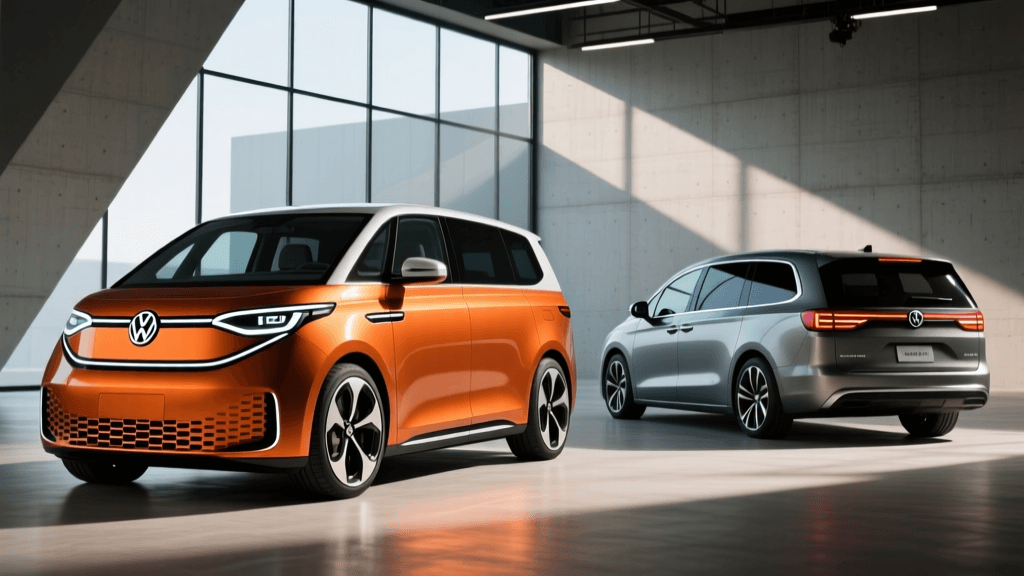
The family hauler segment is undergoing a massive transformation. For decades, the gas-powered minivan has been the undisputed king of suburban utility. Today, buyers are caught in a tug-of-war between the all-electric, retro-styled Volkswagen ID.Buzz and the established plug-in hybrid (PHEV) Chrysler Pacifica Hybrid. While both vehicles aim to solve the same family transportation needs, they do so using fundamentally different powertrains. This divergence has led to a minefield of misconceptions, misleading forum rumors, and costly assumptions.
As a senior automotive reviewer, I see buyers make the same expensive mistakes time and time again. Whether you are cross-shopping the ID.Buzz and the Pacifica Hybrid or just trying to understand the EV vs. PHEV debate, it is time to separate fact from fiction. Let us bust the most pervasive myths surrounding these two iconic minivans and highlight the common mistakes you must avoid before signing on the dotted line.
Myth 1: The Pacifica Hybrid is Always Cheaper to Own
The Myth: Because the Chrysler Pacifica Hybrid has a lower starting MSRP and uses gas for long trips, buyers assume its total cost of ownership (TCO) will naturally beat the fully electric VW ID.Buzz.
The Reality: This is a classic mistake that ignores the mathematics of daily driving and energy costs. The Pacifica Hybrid features a 16 kWh battery pack yielding an EPA-estimated 32 miles of electric-only range. If your daily round-trip commute and school runs exceed 32 miles, the Pacifica’s internal combustion engine (ICE) kicks in. Once the battery is depleted, you are driving a heavy minivan powered by a V6 engine, achieving roughly 30 MPG combined.
Conversely, the VW ID.Buzz runs exclusively on electricity. According to the EPA's Electric Vehicle Myths guide, electricity prices are generally much more stable and lower per mile than gasoline. If you charge the ID.Buzz at home using off-peak utility rates, your cost per mile can drop to a fraction of the Pacifica’s gas-powered running costs. Over a five-year period, the fuel savings of the ID.Buzz frequently eclipse its higher initial purchase price, making the PHEV the more expensive option for high-mileage families.
Myth 2: The VW ID.Buzz Cannot Handle Family Road Trips
The Myth: The ID.Buzz’s boxy, aerodynamic-defying shape will destroy its highway range, leaving families stranded on the interstate during summer road trips.
The Reality: Range anxiety is real, but it is often based on outdated EV data. The ID.Buzz is equipped with a 91 kWh usable battery pack, delivering an EPA-estimated range of up to 234 miles (depending on the trim and drivetrain). While its brick-like shape does reduce efficiency at 80 MPH compared to a sleek sedan, Volkswagen has engineered the MEB platform to handle real-world family abuse.
The critical factor buyers miss is charging speed. The ID.Buzz supports up to 170 kW DC fast charging. This means you can charge from 10% to 80% in roughly 26 minutes. Actionable Advice: When planning road trips, use apps like PlugShare or A Better Routeplanner (ABRP). By timing your charging stops with natural family rest breaks (bathroom, snacks, stretching), the 25-minute fast-charging window becomes a non-issue. The mistake is trying to drive 5 hours straight and expecting an EV to mimic a gas tank's 10-minute refill; adapt your driving rhythm, and the ID.Buzz is a phenomenal road-tripper.
Myth 3: PHEVs Require Less Maintenance Than EVs
The Myth: Because the Pacifica Hybrid has a smaller battery, it must be simpler and cheaper to maintain than a full EV.
The Reality: This is perhaps the most dangerous financial myth in the automotive space. A Plug-in Hybrid does not eliminate the complexity of a gas engine; it simply adds an electric powertrain on top of it. The Pacifica Hybrid requires oil changes, spark plug replacements, transmission fluid flushes, and exhaust system maintenance, alongside the standard cooling system checks for its high-voltage battery.
The U.S. Department of Energy notes that all-electric vehicles generally require significantly less scheduled maintenance than conventional vehicles. The VW ID.Buzz has vastly fewer moving parts. There are no oil changes, no timing belts, no exhaust systems, and regenerative braking drastically extends the life of the friction brake pads. Over a 10-year ownership cycle, the maintenance savings on the ID.Buzz will dwarf the Pacifica Hybrid.
Head-to-Head: Spec Comparison Table
| Feature | VW ID.Buzz (Pro S) | Chrysler Pacifica Hybrid |
|---|---|---|
| Powertrain | All-Electric (BEV) | Plug-in Hybrid (PHEV) |
| Usable Battery | 91 kWh | 16 kWh |
| EPA EV Range | 234 Miles | 32 Miles |
| MPGe / MPG | 87 MPGe Combined | 82 MPGe / 30 MPG (Gas) |
| Max DC Fast Charge | 170 kW | N/A (Level 2 AC only) |
| Cargo (Behind 3rd Row) | 18.6 cu-ft | 32.3 cu-ft |
| 2nd Row Stow 'n Go | No (Removable/Sliding) | No (Battery in the way) |
Myth 4: You Lose Cargo Space Going Electric
The Myth: The Pacifica Hybrid is the ultimate utility vehicle, while the ID.Buzz sacrifices cargo space for its retro aesthetics.
The Reality: Buyers often assume the Pacifica retains its legendary "Stow 'n Go" seating across all trims. Common Mistake: The Pacifica Hybrid physically cannot fold its second-row seats into the floor because the high-voltage battery pack occupies that exact space. You must physically remove the heavy second-row captain's chairs and store them in your garage to get a flat floor.
The ID.Buzz, built on a dedicated EV skateboard platform, features a completely flat floor from the start. While the ID.Buzz has slightly less cubic volume behind the third row (18.6 cu-ft vs 32.3 cu-ft), its interior height and modular seating allow for massive vertical storage. If you frequently haul lumber or furniture, neither vehicle offers true Stow 'n Go convenience, but the ID.Buzz’s low load floor and wide hatch make loading heavy items significantly easier on your back.
3 Common Mistakes Buyers Make When Choosing
- Mistake 1: Ignoring Home Charging Infrastructure. Buying the ID.Buzz without installing a 48-amp Level 2 home charger is a recipe for frustration. A standard 120V wall outlet will take days to recharge the 91 kWh battery. Budget $500–$1,200 for a professional Level 2 installation before the van arrives.
- Mistake 2: Misjudging the Pacifica's Electric Range. The FuelEconomy.gov PHEV guide highlights that PHEVs only save money if you actually drive within their electric window. If your daily school and work loop is 45 miles, you will burn gas every single day in the Pacifica, negating the premium you paid for the hybrid system.
- Mistake 3: Overlooking Winter Range Degradation. EV batteries lose efficiency in freezing temperatures. If you live in the Midwest and choose the ID.Buzz, expect a 20% to 30% range drop in deep winter. Pacifica Hybrid buyers don't face range anxiety here, as the gas engine provides unlimited winter range, though their fuel economy will also take a hit.
The Verdict: Which Minivan Fits Your Reality?
The choice between the VW ID.Buzz and the Chrysler Pacifica Hybrid is not about which vehicle is objectively "better," but rather which powertrain aligns with your specific lifestyle.
Choose the VW ID.Buzz if: You can install a Level 2 home charger, your daily driving stays under 200 miles, and you want to eliminate gas station visits and oil changes forever. It is the superior choice for tech-forward families willing to embrace the EV ecosystem and reap the long-term TCO rewards.
Choose the Chrysler Pacifica Hybrid if: You live in an apartment without charging access, you frequently take spontaneous 600-mile road trips into rural areas with sparse charging infrastructure, or you need the absolute maximum cargo volume behind the third row without removing seats. It remains a brilliant bridge technology for families not quite ready to cut the gas cord entirely.