Introduction: The Battle of the Aerodynamic Kings
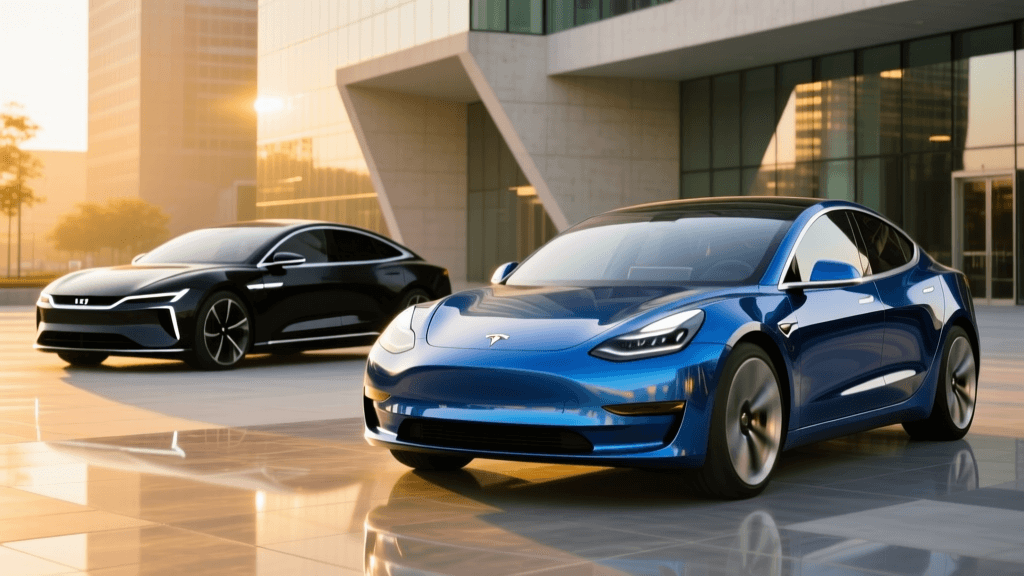
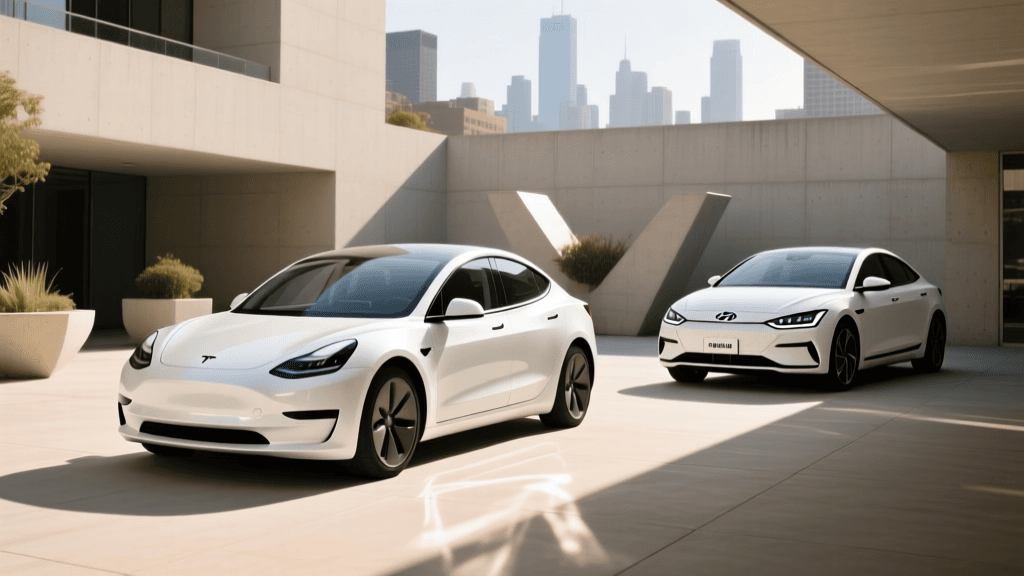
When shopping for the most efficient electric vehicles on the market, the Tesla Model 3 and the Hyundai Ioniq 6 consistently sit at the top of the leaderboard. Both vehicles have been engineered with a singular obsession: cutting through the air with minimal resistance and converting battery chemistry into maximum forward momentum. But how do these two efficiency titans actually compare in the real world? More importantly, how can you, as an owner or prospective buyer, tune, configure, and drive these vehicles to squeeze out every possible mile from their battery packs?
This comprehensive how-to guide will walk you through the exact steps to evaluate, compare, and maximize the efficiency of the Tesla Model 3 (specifically the refreshed 'Highland' generation) and the Hyundai Ioniq 6. Whether you are trying to lower your daily commute energy costs or extend your road-trip range, understanding the nuances of these two platforms is critical. According to the U.S. Department of Energy's Fuel Economy Guide, small variations in driving habits and vehicle configuration can alter an EV's real-world range by up to 15 percent. Let us break down exactly how to master efficiency in both vehicles.
Step 1: Understand the Baseline EPA and Wh/Mile Metrics
Before you can optimize your EV, you must understand its baseline efficiency. The EPA measures EV efficiency in kWh/100 miles (or Miles Per Gallon equivalent, MPGe), but in the real world, EV drivers use Watt-hours per mile (Wh/mi). A lower Wh/mi number means the car is using less energy to travel the same distance, which translates to more range.
Below is a structured comparison of the most popular rear-wheel-drive and long-range configurations for both vehicles. Use this table as your benchmark when tracking your personal trip computer data.
| Metric | Tesla Model 3 RWD | Tesla Model 3 Long Range AWD | Hyundai Ioniq 6 SE RWD (Long Range) | Hyundai Ioniq 6 SEL/Limited AWD |
|---|---|---|---|---|
| Battery Capacity (Usable) | ~57.5 kWh (LFP) | ~75 kWh (NMC) | 77.4 kWh (NMC) | 77.4 kWh (NMC) |
| EPA Estimated Range | 272 Miles | 341 Miles | 361 Miles | 316 Miles |
| Efficiency (EPA kWh/100mi) | 24 kWh/100mi | 26 kWh/100mi | 24 kWh/100mi | 27 kWh/100mi |
| Real-World Target (Wh/mi) | 230 - 250 Wh/mi | 250 - 270 Wh/mi | 220 - 240 Wh/mi | 260 - 280 Wh/mi |
| Drag Coefficient (Cd) | 0.219 | 0.219 | 0.21 | 0.22 |
How to track this data: In the Tesla Model 3, navigate to the 'Trips' tab on the touchscreen to view your average Wh/mi over the last 5, 15, and 30 miles. In the Hyundai Ioniq 6, use the digital instrument cluster's 'EV' tab to monitor real-time and cumulative kWh/100km (switch to miles in the settings menu). To beat the EPA estimates, your goal is to keep your highway speeds under 70 mph, as aerodynamic drag increases exponentially past this threshold.
Step 2: Optimize Aerodynamics and Tire Selection
The Hyundai Ioniq 6 boasts an astonishingly low drag coefficient of 0.21, achieved through its teardrop silhouette, active air flaps, and wheel gap reducers. The refreshed Tesla Model 3 Highland is close behind at 0.219. However, your choice of tires and wheels can completely ruin these factory aerodynamic advantages.
How to choose the right tires for maximum range:
- For the Tesla Model 3: If your car came with the 18-inch Photon wheels, keep them. They feature integrated aero covers that reduce drag. If you need replacement tires, opt for the Michelin Pilot Sport EV or the Hankook iON evo, which are specifically formulated with low-rolling-resistance compounds.
- For the Hyundai Ioniq 6: The SE trim comes with 18-inch aero-optimized wheels that are crucial for achieving the 361-mile EPA range. Upgrading to the 20-inch wheels on the Limited trim will drop your range by roughly 30 miles due to increased weight and rolling resistance. Stick to the Hankook Kinergy GT EV tires for optimal efficiency.
How to maintain tire pressure for efficiency: EVs are heavy, and under-inflated tires create massive rolling resistance. Check your tire pressure monthly. Inflate the Model 3 tires to the factory-recommended 42 PSI (cold). For the Ioniq 6, maintain 38-41 PSI depending on the tire placard located on the driver's door jamb. For every 5 PSI you drop below the recommendation, you will lose roughly 2 to 3 percent of your total range.
Step 3: Master Battery Preconditioning and Climate Control
Electric vehicle batteries operate most efficiently when they are warm (typically between 70°F and 90°F). Using cabin heating while driving drains the battery rapidly, especially in winter. Both Tesla and Hyundai utilize advanced heat pump systems to mitigate this, but you must know how to use them correctly.
How to precondition your EV like a pro:
- Always precondition while plugged in: Use the Tesla mobile app or the Hyundai Bluelink app to schedule your departure time. This instructs the car to use grid power (rather than battery power) to warm the battery pack and the cabin.
- Use Seat and Steering Wheel Heaters: Both vehicles offer excellent seat heaters. The U.S. Department of Energy notes that heating the occupants directly via seats and steering wheels uses a fraction of the energy required to heat the entire cabin air volume. Set the cabin temperature to 66°F and rely on the seat heaters set to level 2 or 3 for maximum winter efficiency.
- Engage Tesla's 'Camp Mode' or Hyundai's 'Utility Mode' carefully: While these modes are great for keeping the cabin warm while parked, using them while driving to bypass standard climate routing will severely impact your Wh/mi metrics. Stick to the standard 'Auto' climate settings, which intelligently balance the heat pump's compressor speed.
Step 4: Routing and Charging Efficiency on Road Trips
Efficiency is not just about how far you can drive on a single charge; it is also about how quickly and efficiently you can recharge during a road trip. This is where the architectural differences between the Model 3 and the Ioniq 6 become apparent.
The Tesla Model 3 relies on a 400-volt architecture but benefits from the ubiquitous Supercharger network and the car's native, highly accurate route planner. The Hyundai Ioniq 6, built on the E-GMP platform, features an 800-volt architecture. This allows the Ioniq 6 to accept up to 350 kW of power at compatible chargers, enabling a 10% to 80% charge in just 18 minutes under optimal conditions, compared to roughly 25-30 minutes for the Model 3.
How to plan the most efficient road trip:
- Use A Better Routeplanner (ABRP): Do not rely solely on the in-car navigation for multi-state trips. Download the ABRP app on your smartphone. Link your vehicle's live telemetry (supported by both Tesla and Hyundai via third-party OBD2 dongles or native API integrations).
- Set your arrival SOC (State of Charge): Configure ABRP to arrive at each charging stop with exactly 10% battery. This prevents you from carrying excess, heavy battery weight on the next leg of the trip, which inherently improves your Wh/mi efficiency.
- Exploit the Ioniq 6's 800V curve: If you are driving the Ioniq 6, prioritize 350 kW Electrify America or Ionity stations. The car's battery management system will precondition the battery automatically when a fast charger is set as your navigation destination. For the Model 3, simply entering a Supercharger into the nav will trigger the battery preconditioning sequence, ensuring you hit peak charging speeds immediately upon plugging in.
Step 5: Regenerative Braking Configuration
How you slow down dictates how much free energy you put back into the battery. Both vehicles offer regenerative braking, but their implementation differs.
Tesla Model 3: Tesla has largely removed user-adjustable regen settings in recent software updates, forcing a 'one-pedal driving' experience. To maximize efficiency, practice 'blending.' Lift off the accelerator progressively rather than abruptly. This keeps the regen system in its most efficient conversion band and prevents the friction brakes from engaging prematurely.
Hyundai Ioniq 6: Hyundai offers paddle shifters behind the steering wheel that allow you to toggle between four levels of regenerative braking (0 to 3) on the fly. For highway driving, set regen to Level 1 or 2 and use the i-Pedal (Level 3) only for stop-and-go city traffic. Setting the car to 'Auto' regen mode allows the radar cruise control system to dynamically adjust regen based on the traffic ahead, which is highly efficient for mixed-commute scenarios.
Final Verdict: Which EV Wins the Efficiency War?
If your primary goal is achieving the absolute lowest Wh/mi on the highway and maximizing interior passenger space per kilowatt-hour, the Hyundai Ioniq 6 SE Long Range RWD is the undisputed efficiency champion. Its 0.21 drag coefficient and massive 77.4 kWh battery allow it to achieve real-world highway numbers that rival much larger, more expensive luxury EVs. Furthermore, its 800V charging architecture makes it the superior choice for frequent road-trippers who value time saved at the charger.
However, if your definition of efficiency includes the 'total ecosystem'—meaning the ease of finding a reliable charger, the accuracy of the route planner, and the seamless integration of software that minimizes range anxiety—the Tesla Model 3 Long Range remains a masterclass in practical EV ownership. While its 400V architecture charges slightly slower, the Supercharger network ensures that your real-world travel efficiency remains consistently high without the hassle of broken third-party chargers.
By following the steps in this guide—optimizing your tire pressures, mastering the heat pump via preconditioning, and utilizing smart routing apps—you can push either of these incredible machines past their EPA estimates and into the upper echelon of electric vehicle efficiency.