Welcome to the EV Affordability Showdown
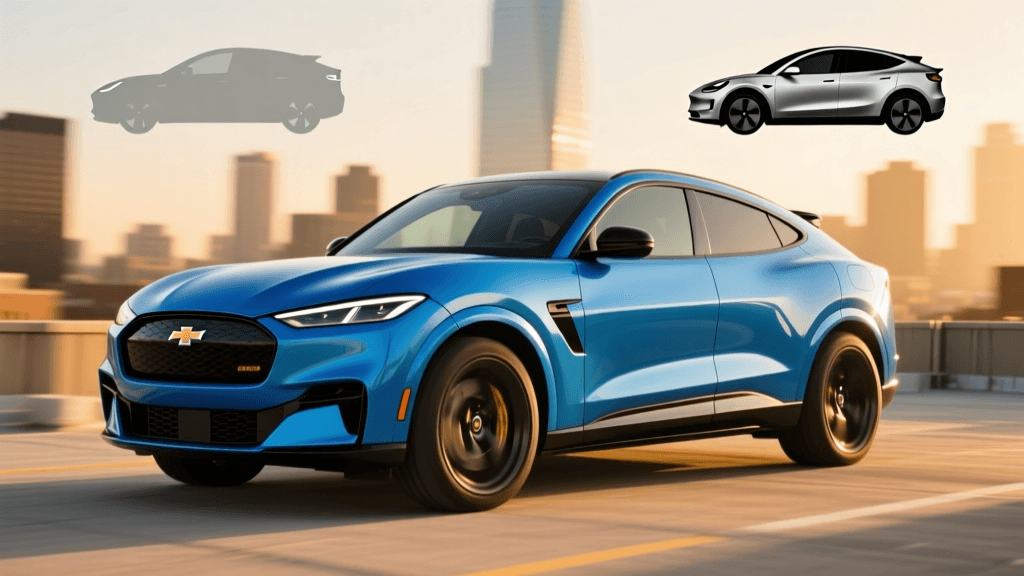
If you are new to the world of electric vehicles, stepping into a dealership or browsing online configurators can feel overwhelming. You are likely asking yourself: Can I actually afford an EV? The good news is that the market has finally matured to offer compelling options for a variety of budgets. Today, we are putting two of the most talked-about electric crossover SUVs head-to-head in a comprehensive beginner's guide to affordability: the Chevrolet Equinox EV and the Tesla Model Y.
The Tesla Model Y has been the best-selling EV in the world for good reason, offering incredible range, performance, and access to the legendary Supercharger network. However, the newly introduced Chevrolet Equinox EV has entered the chat with a promise of aggressive pricing, practical range, and legacy automaker familiarity. But which one is truly more affordable when you look beyond the sticker price? Let's break down the purchase price, tax incentives, charging infrastructure costs, insurance, and long-term ownership to find out.
Sticker Price and Trim Levels: The Starting Line
When most beginners start shopping, the first number they look at is the Manufacturer's Suggested Retail Price (MSRP). This is where the Chevrolet Equinox EV and Tesla Model Y target very different segments of the market.
The Chevrolet Equinox EV was designed from the ground up to be an accessible, mass-market electric SUV. Chevrolet offers the Equinox EV in several trims, with the entry-level 2LT starting at an incredibly competitive price point, hovering around the $33,000 to $35,000 mark (depending on destination fees and model year adjustments). For that price, you get an estimated 315 miles of range, a spacious interior, and modern infotainment.
On the other hand, the Tesla Model Y sits in the premium compact SUV segment. While Tesla frequently adjusts its pricing, the most widely available and practical version, the Long Range All-Wheel Drive, typically starts between $48,000 and $50,000. The Model Y offers superior acceleration, a slightly more spacious cargo area, and a minimalist tech-forward cabin. However, the gap in base MSRP is substantial—often exceeding $15,000 before any incentives are applied.
The Federal Tax Credit Factor
For EV beginners, the Federal Clean Vehicle Tax Credit is a crucial piece of the affordability puzzle. Under the Inflation Reduction Act (IRA), eligible buyers can receive up to $7,500 in tax credits. The best part? As of 2024, this credit can be applied as a point-of-sale rebate, meaning you can use it as an immediate down payment reduction at the dealership rather than waiting to claim it on your tax return.
According to the EPA's official guidelines on clean vehicle tax credits, both the Chevrolet Equinox EV and the Tesla Model Y (Long Range and Rear-Wheel Drive variants) currently meet the North American battery component and critical mineral sourcing requirements to qualify for the full $7,500 credit, provided the buyer meets the income caps and MSRP limits (the MSRP cap for SUVs is $80,000, which both easily clear).
When you subtract the $7,500 point-of-sale rebate from the Equinox EV's base price, the effective starting price can drop into the high-$20,000 range, making it one of the most affordable long-range EVs on the market. The Model Y also benefits from the $7,500 discount, bringing its effective price into the low-$40,000s, which is excellent for a premium EV but still significantly more expensive than the Chevy.
Home Charging Setup: The Hidden Upfront Cost
Beginners often forget that buying an EV means upgrading your home's electrical setup. To wake up to a 'full tank' every morning, you will need a Level 2 home charger (240V).
- Equipment Cost: A quality Level 2 smart charger (like the ChargePoint Home Flex or Emporia Vue) will cost between $500 and $700. Tesla's Wall Connector is similarly priced around $475.
- Installation Cost: Hiring a licensed electrician to install a 240V NEMA 14-50 outlet or hardwire a charger typically costs between $800 and $2,000, depending on your home's existing electrical panel capacity and the distance from the panel to your garage.
Because the Tesla Model Y is more expensive upfront, buyers might feel the pinch of a $2,000 electrical upgrade more acutely. However, both vehicles will require this exact same home infrastructure investment, meaning the affordability gap between the two remains largely unchanged here.
Public Charging Costs: Superchargers vs. The Competition
One of Tesla's historic advantages has been the Supercharger network—reliable, fast, and seamlessly integrated into the car's navigation. Historically, non-Tesla EVs had to rely on fragmented public networks like Electrify America or EVgo, which often suffered from downtime and confusing billing apps.
However, the landscape has shifted. General Motors (Chevy's parent company) adopted the North American Charging Standard (NACS). This means Equinox EV owners can purchase an official adapter (or receive one, depending on current GM promotions) to access Tesla's Supercharger network. When comparing public charging affordability, the cost per kilowatt-hour (kWh) at a Supercharger is generally competitive, averaging $0.30 to $0.45 per kWh depending on the region and time of day. Because the Equinox EV and Model Y have similar efficiency ratings (roughly 3 to 3.5 miles per kWh), your actual out-of-pocket cost for road trips will be nearly identical. The affordability tie goes to both, but the convenience tie now leans toward a draw since Chevy owners can access the same network.
Insurance and Maintenance: The Long-Term Reality
Here is where beginners are often caught off guard. Electric vehicles have fewer moving parts than gas cars, meaning you will never pay for an oil change, spark plugs, or a transmission fluid flush. Maintenance for both the Equinox EV and Model Y is largely limited to tire rotations, cabin air filters, wiper blades, and windshield washer fluid.
Insurance, however, tells a different story. Tesla vehicles are notoriously expensive to insure. Because Teslas utilize specialized aluminum body panels, require proprietary software recalibrations after minor collisions, and must be repaired at Tesla-approved body shops, insurance companies price in that risk. The Model Y can cost 30% to 50% more to insure annually than a comparable legacy EV. The Chevrolet Equinox EV, built with traditional steel and aluminum mixes and repairable at any standard GM-certified collision center, will enjoy much more favorable, mainstream insurance premiums.
5-Year Total Cost of Ownership (TCO) Breakdown
To truly understand affordability, we must look at the Total Cost of Ownership over a standard 5-year period (assuming 15,000 miles driven annually). Below is a comparative estimate based on current market averages, federal incentives, and typical utility rates.
| Cost Category | Chevy Equinox EV (2LT) | Tesla Model Y (Long Range) |
|---|---|---|
| Base MSRP | $34,000 | $49,000 |
| Federal Tax Credit | -$7,500 | -$7,500 |
| Effective Purchase Price | $26,500 | $41,500 |
| 5-Year Home Charging Cost | $3,200 | $3,400 |
| 5-Year Insurance (Est.) | $8,500 | $12,500 |
| 5-Year Maintenance | $1,200 | $1,400 |
| Est. 5-Year Depreciation | $11,000 | $18,000 |
| Total 5-Year Cost | $50,400 | $76,800 |
Note: Depreciation is calculated based on the effective purchase price and current EV market retention trends. Insurance and electricity costs vary heavily by zip code and driving habits.
Depreciation: The Silent Wallet Drain
Depreciation is the single largest cost of vehicle ownership. Because the Tesla Model Y has a higher starting price, the actual dollar amount lost to depreciation over five years will be higher, even if the percentage of value retained is similar. Furthermore, Tesla's aggressive price cuts on new vehicles over the last two years have severely impacted the resale values of used Model Ys. The Equinox EV, starting at a much lower baseline and backed by GM's traditional dealer network and fleet sales stability, is projected to offer a gentler depreciation curve in pure dollar terms.
Final Verdict: Which EV Should You Buy?
When it comes to pure, unadulterated affordability, the Chevrolet Equinox EV is the undisputed winner. It offers over 300 miles of range, qualifies for the full federal tax credit, and costs roughly $25,000 less to own over five years compared to the Model Y. For beginners, budget-conscious families, and first-time EV buyers who want a practical daily driver without breaking the bank, the Equinox EV is a phenomenal gateway into electric mobility.
However, the Tesla Model Y justifies its premium price tag with superior performance, a more extensive native software ecosystem, and a slightly larger cargo footprint. If your definition of 'value' includes blistering acceleration, over-the-air software updates that feel like a smartphone, and the prestige of the Tesla brand, the Model Y remains an excellent—albeit more expensive—choice.
Beginner's Action Plan: If your priority is minimizing monthly payments and keeping insurance low, test drive the Equinox EV. If you have a flexible budget and prioritize tech and performance, the Model Y awaits. Whichever you choose, remember to factor in the cost of a home Level 2 charger and always verify your personal eligibility for the $7,500 federal tax credit before signing the paperwork.