The e-TNGA Platform: A Tale of Two Twins
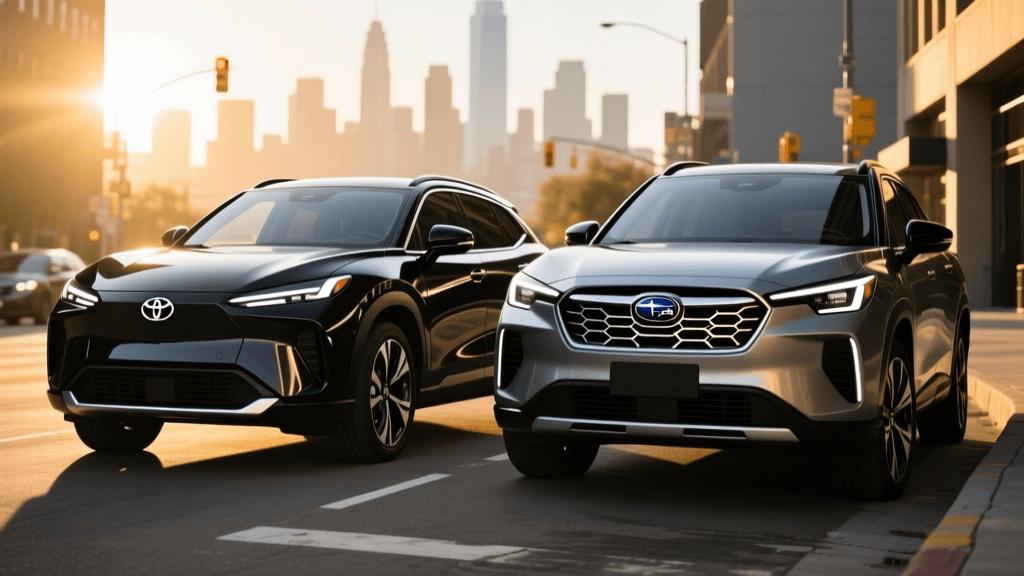
The automotive industry is no stranger to badge engineering, but the collaboration between Toyota and Subaru on the e-TNGA (Toyota New Global Architecture) platform represents one of the most closely watched twin electric vehicle releases in recent memory. Born from a joint venture that leverages Toyota’s manufacturing might and battery expertise alongside Subaru’s legendary all-wheel-drive and chassis-tuning prowess, the Toyota bZ4X and Subaru Solterra share the same fundamental DNA. Yet, beneath the identical wheelbases and shared 72.8 kWh battery packs, these two compact electric SUVs have been tuned to appeal to distinctly different buyer personas.
In this head-to-head showdown, we break down the nuances of range, charging speeds, off-road capability, interior technology, and total cost of ownership. Whether you are a daily commuter looking for maximum efficiency or an outdoor enthusiast needing trail-ready capability, understanding the subtle differences between these twin EVs is critical before you sign the paperwork.
Performance, Drivetrain, and Off-Road Capability
The most significant divergence between the bZ4X and the Solterra lies in their drivetrain configurations and suspension tuning. Subaru’s brand identity is inextricably linked to all-weather capability. Consequently, the Subaru Solterra is offered exclusively with a dual-motor all-wheel-drive (AWD) setup. This system utilizes two independent 80-kW e-Axles (one front, one rear) to produce a combined 215 horsepower and 249 lb-ft of torque. More importantly, Subaru equips every Solterra with its renowned X-MODE and Grip Control systems, allowing for precise low-speed traction management on snow, dirt, and mud.
Toyota, on the other hand, offers the bZ4X in both Front-Wheel Drive (FWD) and AWD configurations. The FWD model uses a single front-mounted e-Axle producing 201 horsepower and 196 lb-ft of torque. While the AWD bZ4X matches the Solterra’s 215 horsepower output, it lacks the sophisticated X-MODE terrain management software found in the Subaru. Furthermore, the Solterra boasts a slightly higher ground clearance at 8.3 inches across all trims, compared to the bZ4X AWD’s 8.1 inches and the FWD model’s 7.8 inches. For buyers who frequently encounter deep snow, steep gravel driveways, or light off-road trails, the Solterra’s mechanical and software advantages are undeniable.
Range, Battery, and Charging Realities
Both vehicles share the same 72.8 kWh gross (71.4 kWh usable) lithium-ion battery pack, but their EPA-estimated range figures differ based on drivetrain efficiency and wheel size. According to data compiled on the U.S. Department of Energy's fueleconomy.gov database, the Toyota bZ4X FWD equipped with 18-inch wheels achieves the highest range of the pair, peaking at an estimated 252 miles. If you opt for the 20-inch wheels on the bZ4X Limited, that number drops to 236 miles.
Because the Subaru Solterra is strictly AWD and comes standard with larger, more aggressive tires, its range is inherently lower. The Solterra Premium and Limited trims achieve 228 miles, while the heavier, more aerodynamically drag-prone Touring trim drops to 222 miles. While neither vehicle is a class-leader in range compared to rivals like the Hyundai Ioniq 5 or Ford Mustang Mach-E, 220+ miles is generally sufficient for the daily commutes and weekend trips of most compact SUV buyers.
The Charging Curve Caveat
DC fast charging is where both twins share a common weakness. Both are capped at a peak charging rate of 150 kW (for the AWD/Solterra models) and 100 kW (for the bZ4X FWD). However, real-world testing shows that neither vehicle sustains its peak rate for long. The charging curve tapers significantly after reaching a 50% state of charge. Expect a 10% to 80% charge to take roughly 55 to 60 minutes at a Level 3 DC fast charger, which is noticeably slower than the 18-minute to 30-minute times boasted by 800-volt architecture competitors. Neither vehicle currently features an active battery preconditioning feature specifically tied to navigation routing for DC chargers, meaning cold-weather charging speeds can be further compromised.
Interior Space, Tech, and Daily Livability
Step inside either cabin, and the shared architecture becomes immediately obvious, though brand-specific styling cues emerge. Both feature a massive 12.3-inch touchscreen infotainment system, wireless Apple CarPlay and Android Auto, and a unique 'floating' center console that creates a spacious storage area beneath the dash.
Where they differ is in the driver’s display and steering wheel options. As highlighted in Car and Driver's comprehensive review of the Toyota bZ4X, Toyota offers a traditional round steering wheel and a standard digital instrument cluster positioned far up the dash, requiring drivers to look slightly above the steering rim. Subaru, however, insists on a more traditional hooded instrument cluster directly behind a standard, thick-rimmed steering wheel, which many traditionalists find easier to read and more ergonomic. While Toyota initially offered a futuristic 'yoke' steering wheel with a steer-by-wire system in certain markets, the traditional setup remains the most practical choice for North American buyers.
Cargo space is identical across the board: 27.7 cubic feet behind the rear seats, expanding to roughly 56 cubic feet with the 60/40 split-folding rear seats lowered. Unfortunately, neither EV offers a front trunk (frunk), a missed opportunity for storing charging cables and wet gear.
Pricing, Trims, and Total Cost of Ownership
Pricing is a major differentiator, largely because Toyota offers a lower-barrier FWD entry point. The Toyota bZ4X XLE FWD starts at an MSRP of approximately $43,070 (including destination). Stepping to the AWD XLE adds roughly $2,000, while the range-topping Limited AWD pushes past $48,000.
The Subaru Solterra, equipped exclusively with AWD, starts at a higher baseline. The Premium trim begins around $44,995, the Limited sits near $48,700, and the fully loaded Touring trim eclipses $52,000. However, when comparing the AWD bZ4X XLE to the Solterra Premium, the Subaru commands only a slight premium while including standard roof rails with static load limits (great for rooftop tents) and off-road drive modes that Toyota charges extra for or omits entirely.
Both vehicles come with a standard 3-year/36,000-mile bumper-to-bumper warranty and a 5-year/60,000-mile powertrain warranty. The battery is covered for 8 years or 100,000 miles. Furthermore, both Toyota and Subaru currently offer a complimentary year of EVgo fast-charging credits, which can save new owners hundreds of dollars during their first year of ownership.
Head-to-Head Spec Comparison
| Feature | Toyota bZ4X (AWD XLE) | Subaru Solterra (Premium) |
|---|---|---|
| Starting MSRP (Approx.) | $45,150 | $44,995 |
| Drivetrain | Dual-Motor AWD | Dual-Motor AWD w/ X-MODE |
| Horsepower / Torque | 214 hp / 248 lb-ft | 215 hp / 249 lb-ft |
| EPA Range Estimate | 228 miles | 228 miles |
| Ground Clearance | 8.1 inches | 8.3 inches |
| Max DC Fast Charge Rate | 150 kW | 150 kW |
| Cargo Volume (Rear Seats Up) | 27.7 cu-ft | 27.7 cu-ft |
| Towing Capacity | 3,500 lbs | 3,500 lbs |
The Final Verdict: Which Twin Should You Buy?
Choosing between the Toyota bZ4X and the Subaru Solterra ultimately comes down to your geographic location, your lifestyle, and your budget.
Buy the Toyota bZ4X if:
- You want maximum range and affordability: The FWD XLE trim with 18-inch wheels offers the best EPA range (252 miles) and the lowest starting price in the family.
- You are a traditional commuter: If you live in a mild climate where deep snow and mud are rare, the FWD setup and slightly lower ground clearance will not negatively impact your daily driving experience.
- You prefer Toyota's dealership network: Toyota's massive footprint often translates to easier servicing and wider availability of loaner vehicles in suburban and rural areas.
Buy the Subaru Solterra if:
- You live in the Snow Belt or love the outdoors: The standard X-MODE, Grip Control, and extra ground clearance make the Solterra vastly superior for ski trips, muddy campgrounds, and unplowed driveways.
- You need robust roof rails: Subaru includes heavy-duty roof rails standard, complete with an 800-lb static load rating, making it a plug-and-play solution for rooftop tents and heavy cargo boxes.
- You prefer traditional ergonomics: The placement of the instrument cluster and the feel of the steering wheel will appeal to drivers transitioning from older gas-powered Subarus who dislike the bZ4X's unconventional dash layout.
While neither EV is a flawless pioneer in the fast-charging or long-range segments, both the bZ4X and Solterra offer comfortable, quiet, and highly practical daily driving experiences. By aligning your purchase with your specific terrain and budget needs, you can confidently choose the twin that best fits your electric journey.