The Battle of the Electric Skateboards: MEB vs. E-GMP
When shopping for a family electric SUV, cargo space and safety ratings often dominate the conversation. However, the true longevity and daily usability of an electric vehicle are dictated by its underlying technology. The Volkswagen ID.4 and the Hyundai Ioniq 5 represent two distinct philosophies in electric vehicle engineering, built upon their respective proprietary platforms: VW’s MEB (Modularer E-Antriebs-Baukasten) and Hyundai’s E-GMP (Electric Global Modular Platform). According to comprehensive testing by Car and Driver's Volkswagen ID.4 Hub, the MEB platform prioritizes a rear-wheel-drive bias with a modular battery layout designed to scale across multiple vehicle sizes. It is a highly adaptable skateboard architecture, but one that was conceptualized earlier in the modern EV boom.
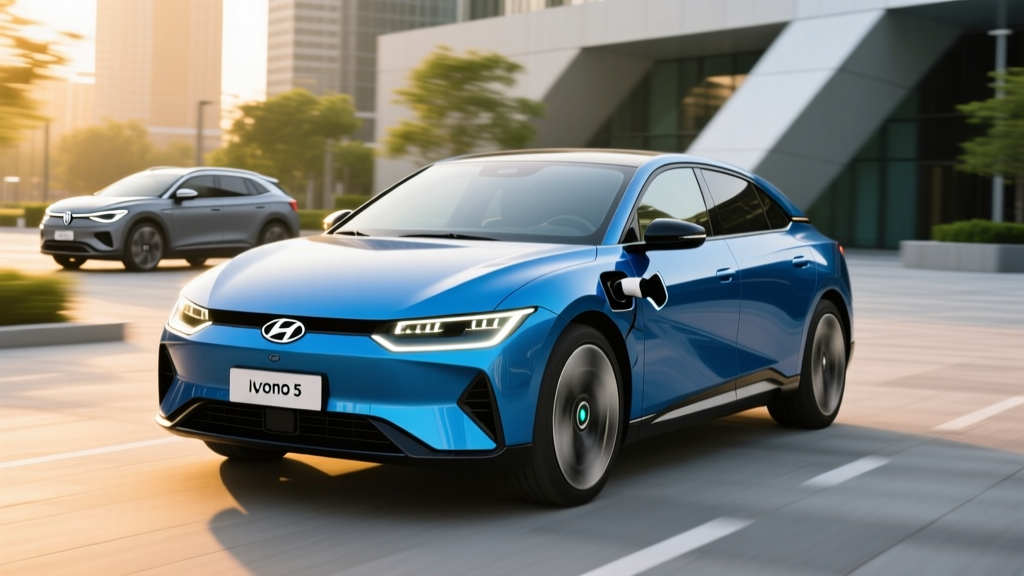
Conversely, Hyundai’s E-GMP platform was engineered from the ground up with next-generation electrical architectures in mind. As detailed in Car and Driver's Hyundai Ioniq 5 Hub, the E-GMP platform features a standardized wheelbase, a completely flat floor, and a lower center of gravity due to the integration of the battery pack into the chassis structure. For families, this translates to the Ioniq 5 offering a remarkably spacious cabin with a sliding center console and flat rear floor, maximizing interior utility without increasing the vehicle's exterior footprint.
The 800-Volt Advantage: Charging Architecture
The most significant technological divergence between these two family SUVs lies in their charging architectures. The Volkswagen ID.4 utilizes a conventional 400-volt electrical system. While capable, this architecture limits the vehicle's peak DC fast-charging rate. The latest rear-wheel-drive ID.4 models peak at around 135 kW, while the AWD Pro-S models can reach up to 170 kW under optimal thermal conditions. Charging from 10% to 80% takes approximately 29 minutes at a Level 3 fast charger.
The Hyundai Ioniq 5, however, features an 800-volt electrical architecture—a technology previously reserved for ultra-luxury EVs like the Porsche Taycan. The physics behind 800V systems are straightforward: Power equals Voltage multiplied by Current. By doubling the voltage, the vehicle can achieve the same charging power with half the current. Lower current reduces heat generation, minimizes energy loss, and allows for lighter, thinner wiring harnesses. The Ioniq 5 can accept up to 238 kW (and up to 350 kW on newer, larger battery variants), enabling a blistering 10% to 80% charge in just 18 minutes when plugged into a 350 kW Electrify America or Ionity station. For road-tripping families, this 10-minute difference per stop is a massive reduction in travel fatigue.
Battery Thermal Management and Efficiency
Fast charging is heavily dependent on battery thermal management. Both vehicles utilize liquid-cooled lithium-ion battery packs, but their approaches to preconditioning differ. The Ioniq 5 features an advanced battery heating system that optimizes cell temperature based on the navigation system's routing to a fast charger. The ID.4 has historically faced criticism for its lack of a dedicated battery preconditioning indicator, though recent software updates (ID. Software 3.2 and newer) have vastly improved its thermal routing algorithms when a DC fast charger is entered into the navigation system.
Furthermore, both vehicles offer optional heat pumps to preserve cabin heating efficiency in cold weather. The U.S. Department of Energy EV Guide notes that heat pumps can significantly reduce the range penalty associated with winter driving by transferring ambient heat rather than generating it via resistive elements. Hyundai's heat pump system is widely regarded as one of the most efficient in the industry, giving the Ioniq 5 a slight edge in real-world winter range retention compared to the ID.4.
Infotainment and the Capacitive Touch Debate
Inside the cabin, the technology experience heavily influences daily family life. The Volkswagen ID.4 relies heavily on a minimalist aesthetic dominated by a 12-inch touchscreen and a small digital instrument cluster behind the steering wheel. However, VW’s decision to use haptic, capacitive-touch sliders for volume and climate control has been a polarizing choice. These unlit sliders are notoriously difficult to use while driving or in low-light conditions, leading to user frustration.
Hyundai takes a more pragmatic approach in the Ioniq 5. While it also features dual 12-inch screens housed under a single curved glass panel, Hyundai retained physical toggle switches for core HVAC functions and a tactile button for the volume. For parents managing a chaotic cabin with children in the back, the ability to blindly reach out and adjust the climate control without taking their eyes off the road is a major ergonomic victory. Both systems support wireless Apple CarPlay and Android Auto, but Hyundai’s user interface is generally praised for its faster processing speeds and more intuitive menu hierarchies.
Advanced Driver Assistance Systems (ADAS)
On the highway, both SUVs offer robust Level 2 semi-autonomous driving aids. Volkswagen’s Travel Assist combines adaptive cruise control with lane centering. It is smooth, predictable, and requires periodic capacitive touch on the steering wheel to confirm driver engagement.
Hyundai’s Highway Driving Assist 2 (HDA2) goes a step further. In addition to adaptive cruise and lane centering, HDA2 includes automated lane-change assist. By activating the turn signal, the Ioniq 5 will safely execute a lane change on the highway if the adjacent lane is clear. Furthermore, Hyundai utilizes a capacitive steering wheel similar to VW, but the system's integration with the navigation system allows it to automatically slow the vehicle for upcoming highway curves and toll booths, offering a slightly more sophisticated co-pilot experience for long family road trips.
Bi-Directional Charging: The V2L Game Changer
One area where the Hyundai Ioniq 5 leaves the ID.4 in the dust is Vehicle-to-Load (V2L) capability. The Ioniq 5 is equipped with a V2L port that can output up to 3.6 kW of 120V AC power. This allows families to plug in standard household appliances directly into the car. Whether you are powering a coffee maker at a youth soccer tournament, running a CPAP machine while camping, or keeping a refrigerator running during a home power outage, the Ioniq 5 acts as a massive, mobile power bank. The North American ID.4 currently lacks native, easily accessible V2L functionality, limiting its utility as a mobile power source.
Technology Spec Comparison
| Feature | Volkswagen ID.4 (AWD Pro-S) | Hyundai Ioniq 5 (Limited AWD) |
|---|---|---|
| Platform Architecture | MEB (400-Volt) | E-GMP (800-Volt) |
| Peak DC Fast Charge Rate | 170 kW | 238 kW - 350 kW |
| 10-80% Charge Time (DC) | ~29 Minutes | ~18 Minutes |
| Vehicle-to-Load (V2L) | Not Available | 3.6 kW Output |
| Climate Controls | Capacitive Touch Sliders | Physical Buttons & Toggles |
| ADAS Suite | Travel Assist | Highway Driving Assist 2 (HDA2) |
| Over-The-Air (OTA) Updates | Yes (Infotainment & Select Modules) | Yes (Comprehensive System) |
The Verdict: Which Tech Suite Wins for Families?
When evaluating these two exceptional family SUVs strictly through a technology lens, the Hyundai Ioniq 5 emerges as the clear victor. Its 800-volt E-GMP architecture is not just a marketing gimmick; it is a fundamental leap in electrical engineering that drastically reduces charging downtime, a crucial metric for family road trips. Add in the inclusion of V2L capabilities, superior thermal management, and a much more user-friendly physical button layout for climate controls, and the Ioniq 5 proves to be a more forward-thinking, utilitarian piece of technology.
The Volkswagen ID.4 remains a fantastic vehicle with a quieter cabin, a more traditional SUV ride quality, and a highly competitive price point when factoring in dealership incentives. However, its reliance on an older 400-volt charging architecture and frustrating capacitive touch sliders hold it back from claiming the technology crown. For tech-savvy parents who prioritize rapid charging, mobile power capabilities, and intuitive software, the Hyundai Ioniq 5 is the ultimate digital family hauler.