The Pinnacle of Electric Luxury: A Clash of Philosophies
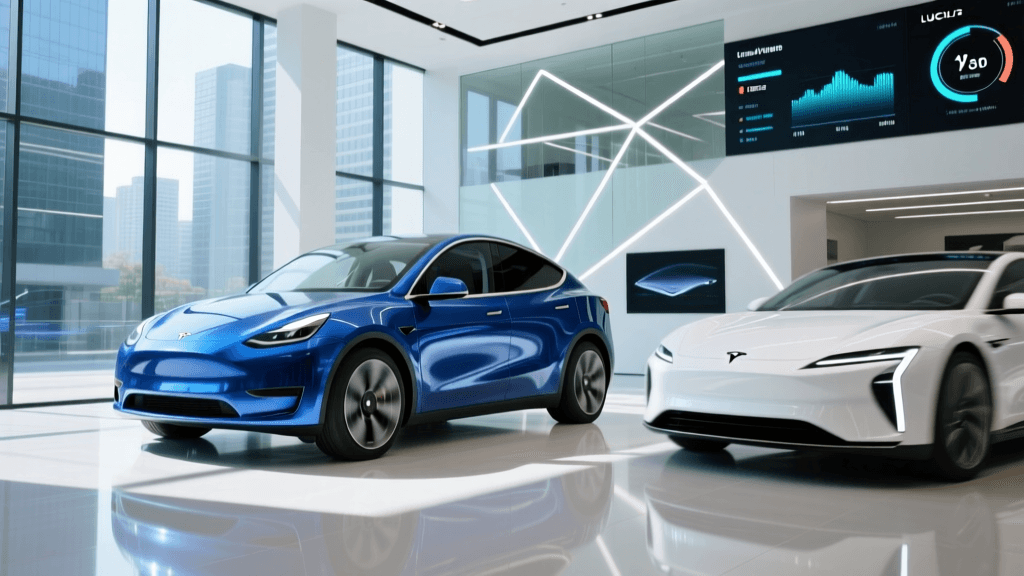
The luxury electric vehicle sedan segment is undergoing a massive transformation. For over a decade, the Tesla Model S has been the undisputed benchmark, pioneering the concept of the software-defined vehicle, over-the-air updates, and long-range electric mobility. However, the automotive landscape is shifting rapidly. Enter the Lucid Air, a challenger born from Silicon Valley engineering that aims to redefine what a luxury EV should be in the 2020s and beyond. As we look toward the future of the automotive industry, comparing the Lucid Air and the Tesla Model S is no longer just about 0-60 mph times or EPA range estimates. It is about evaluating which vehicle's underlying architecture, autonomy strategy, and approach to luxury are best positioned for the next decade of electric mobility.
When analyzing these two flagship sedans through the lens of future industry trends, distinct philosophies emerge. Tesla is pivoting heavily toward artificial intelligence, robotics, and a vision-only autonomous ecosystem, treating the Model S as a high-performance halo car for its broader tech ambitions. Lucid, conversely, is focusing on extreme powertrain efficiency, miniaturization, and traditional, high-end luxury craftsmanship. For prospective buyers and automotive enthusiasts, understanding these diverging paths is critical to making a future-proof purchasing decision.
High-Voltage Architectures: Future-Proofing the Charge
One of the most critical future trends in the EV industry is the migration from 400-volt to 800-volt and 900-volt electrical architectures. Higher voltage systems allow for thinner, lighter wiring harnesses, reduced thermal loss, and, most importantly, significantly faster charging speeds without overheating the battery cells. This is where the Lucid Air holds a distinct, forward-looking advantage. The Lucid Air utilizes a 900V+ electrical architecture, a benchmark currently shared only with elite performance EVs like the Porsche Taycan and the upcoming wave of next-generation electric platforms.
According to the U.S. Department of Energy's Alternative Fuels Data Center, the public charging infrastructure is rapidly evolving to support ultra-fast chargers capable of delivering 350 kW to 500 kW of power. Because the Lucid Air is engineered with a 900V+ system, it is natively compatible with the future of ultra-fast DC charging networks, allowing it to accept peak charge rates that older 400V systems simply cannot handle safely. While Tesla's Supercharger network remains the gold standard for reliability and geographic coverage, the Model S still relies on an older 400V architecture. Tesla compensates for this with exceptional thermal management and battery preconditioning, but as the industry standard shifts toward 800V+ systems for the next generation of solid-state and advanced lithium-ion batteries, Lucid's hardware is inherently more future-proofed for the charging infrastructure of 2030.
The Autonomy Race: Vision-Only vs. Sensor Fusion
Autonomous driving capabilities will define the luxury EV experience in the coming years. Tesla’s Full Self-Driving (FSD) software relies on a 'Tesla Vision' approach, utilizing only cameras and neural networks, having removed radar and ultrasonic sensors from its newer production models. Tesla bets that a vision-only system, mimicking human eyes, paired with massive real-world data collection, is the only scalable path to Level 4 and Level 5 autonomy.
Lucid takes a different, more conservative approach with its DreamDrive Pro system. Lucid utilizes a sensor-fusion strategy, combining high-resolution cameras with LiDAR, radar, and ultrasonic sensors. The National Highway Traffic Safety Administration (NHTSA) continues to emphasize the importance of redundant safety systems and rigorous validation in Advanced Driver Assistance Systems (ADAS). From a regulatory and safety outlook, Lucid’s sensor-fusion approach aligns more closely with current aerospace and traditional automotive safety redundancies. While Tesla’s FSD may achieve broader geographic coverage faster due to its scalable software model, Lucid’s hardware suite provides a robust safety net that may prove more resilient in edge-case scenarios and adverse weather conditions as federal regulations surrounding autonomous vehicles tighten in the late 2020s.
Space Efficiency and the 'Third Living Space'
As vehicles become more autonomous, the interior cabin is transitioning into a 'third living space'—an extension of the home and office. Lucid’s engineering team, leveraging their background in Formula E racing, developed remarkably compact and powerful electric drive units. This miniaturization allows the Lucid Air to offer an interior volume that rivals full-size luxury sedans like the Mercedes-Benz S-Class, despite having a smaller exterior footprint. The 'Space Concept' interior features a glass canopy roof and expansive legroom, positioning the Air as a premier environment for future relaxation and mobile productivity.
The Tesla Model S, refreshed in 2021, features a minimalist, screen-centric interior highlighted by a massive 17-inch cinematic display and a rear passenger screen. While technologically impressive and heavily focused on gaming and media consumption, the Model S interior materials and build quality have historically lagged behind traditional luxury benchmarks. As the luxury EV market matures, consumers are demanding that software excellence be matched by tactile, physical luxury—a gap that Lucid has expertly closed with premium sustainable materials, massaging seats, and superior acoustic insulation.
Head-to-Head Specifications: Flagship Trims Compared
To understand how these vehicles stack up today while preparing for tomorrow, we must look at the core specifications of their most popular long-range luxury trims.
| Feature | Lucid Air Grand Touring | Tesla Model S Long Range |
|---|---|---|
| Base MSRP (Approx.) | $125,600 | $74,990 |
| EPA Estimated Range | 512 Miles | 402 Miles |
| Electrical Architecture | 900V+ System | 400V System |
| Peak Charging Rate | ~300+ kW (CCS/NACS) | ~250 kW (Supercharger) |
| 0-60 MPH | 3.0 Seconds | 3.1 Seconds |
| ADAS Hardware | LiDAR, Radar, Cameras | Cameras Only (Tesla Vision) |
| Warranty | 8 Yr / 100,000 Mi Battery | 8 Yr / 150,000 Mi Battery |
Total Cost of Ownership and Future Depreciation
When forecasting the total cost of ownership (TCO), depreciation is the largest hidden cost in the luxury EV sector. The EV market has experienced significant price volatility over the last few years. As noted in the International Energy Agency's Global EV Outlook 2024, the rapid expansion of EV manufacturing and intense price competition, particularly from emerging global markets, is putting downward pressure on resale values across the board. Tesla’s aggressive price cuts on new vehicles have historically caused steep depreciation curves for used Model S models. While the Model S commands a lower initial entry price, its long-term value retention remains unpredictable due to Tesla's frequent pricing adjustments and rapid hardware iteration cycles.
Lucid, positioning itself as a true luxury marque akin to Porsche or Mercedes-Benz, has attempted to maintain stricter pricing discipline, though it has also utilized lease incentives to move inventory. However, Lucid's lower production volume and exclusive positioning may offer a more stable, albeit niche, resale market in the future. Furthermore, Lucid’s superior battery efficiency (miles per kWh) translates to lower long-term energy costs, partially offsetting its higher initial premium. For buyers planning to hold the vehicle for 7 to 10 years, the Lucid Air's 900V architecture may protect it from technological obsolescence better than the Model S as ultra-fast charging becomes the industry norm.
The Verdict: Positioning for the Next Decade
Choosing between the Lucid Air and the Tesla Model S ultimately depends on which vision of the future you believe in, and what you value most in a luxury daily driver.
- Choose the Lucid Air if: You prioritize future-proof hardware, traditional luxury craftsmanship, and class-leading efficiency. The 900V+ architecture ensures you are ready for the next generation of ultra-fast charging infrastructure, and the sensor-fusion ADAS suite offers a redundant, safety-first approach to semi-autonomous driving. It is the choice for the buyer who wants a true luxury sanctuary that happens to be an EV.
- Choose the Tesla Model S if: You are deeply invested in the Tesla ecosystem, value the unmatched convenience of the Supercharger network, and believe in Tesla's vision-only AI autonomy model. The Model S remains a technological tour de force with a lower entry price, massive software support, and a gaming-centric infotainment system that appeals to tech-forward buyers who view their car as a rolling supercomputer.
As the industry moves toward 2030, the definition of luxury will increasingly blend digital seamlessness with physical comfort. While Tesla continues to push the boundaries of software and AI, Lucid has proven that the future of luxury EVs requires a harmonious balance of groundbreaking electrical engineering, spatial efficiency, and uncompromising build quality. Both vehicles are masterpieces of modern engineering, but the Lucid Air's foundational hardware gives it a distinct edge in the race against technological obsolescence.