The Shifting Landscape of Budget Electric Vehicles
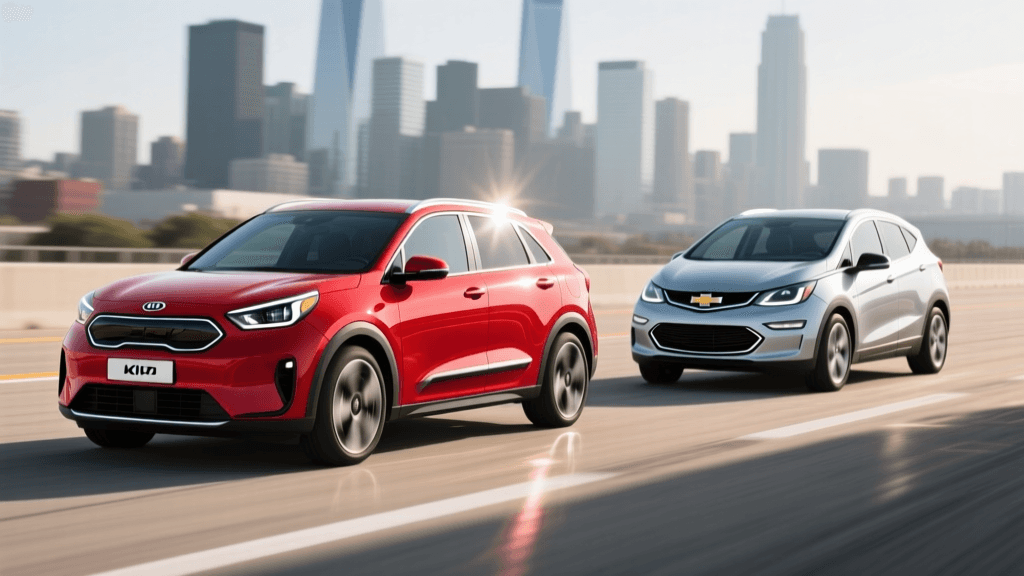
The affordable electric vehicle segment is currently undergoing a seismic shift. As legacy automakers pivot toward next-generation, ground-up EV architectures, the benchmark models that defined the budget EV space over the last five years are facing an existential crossroads. Nowhere is this more evident than in a head-to-head comparison between the Kia Niro EV and the Chevrolet Bolt EUV. While the Bolt EUV was discontinued after the 2023 model year to make way for GM's Ultium platform, it remains a dominant force in the used and discounted budget EV market. Meanwhile, the Kia Niro EV soldiers on, representing an iterative approach to affordable electrification.
Comparing these two vehicles is no longer just about evaluating their current spec sheets; it is about understanding what they represent for the future of budget electric mobility. As the industry braces for an influx of sub-$30,000 EVs powered by Lithium Iron Phosphate (LFP) batteries, how do the Niro EV and the outgoing Bolt EUV stack up? More importantly, what lessons do they offer for the future of affordable, mass-market EVs?
Head-to-Head Specifications: The Current Benchmarks
Before diving into the macroeconomic trends and future battery technologies, we must establish the baseline capabilities of these two budget EV pioneers. Both vehicles utilize Nickel Manganese Cobalt (NMC) battery chemistries, a hallmark of the previous generation of EV design.
| Feature | Kia Niro EV (2024 Model) | Chevrolet Bolt EUV (2023 Final Edition) |
|---|---|---|
| Battery Capacity | 64.8 kWh (NMC) | 65.0 kWh (NMC) |
| EPA Estimated Range | 239 miles | 247 miles |
| Powertrain Output | 201 hp / 188 lb-ft torque | 200 hp / 266 lb-ft torque |
| DC Fast Charging Max | ~72 kW (10-80% in ~45 mins) | ~55 kW (10-80% in ~60 mins) |
| Cargo Space (Behind Rear Seats) | 22.8 cu-ft | 16.3 cu-ft |
| Starting MSRP (Historical/Current) | ~$39,600 (New) | ~$28,800 (Discontinued / Used Market) |
Battery Chemistry and the LFP Horizon
Both the Kia Niro EV and the Chevy Bolt EUV rely on NMC battery packs. While NMC offers excellent energy density—allowing both crossovers to squeeze roughly 240 miles of range into relatively compact underfloor footprints—it comes with higher material costs and supply chain vulnerabilities tied to cobalt and nickel mining.
Looking toward the future of budget EVs, the industry is rapidly shifting toward LFP (Lithium Iron Phosphate) batteries. According to the U.S. Department of Energy's Alternative Fuels Data Center, LFP batteries sacrifice a small amount of energy density for massive gains in cost reduction, thermal stability, and lifespan. Future budget EVs will likely utilize LFP cells, allowing buyers to charge to 100% daily without the degradation anxieties associated with the NMC packs found in the Niro and Bolt.
For today's buyer, this means the Niro EV and Bolt EUV represent the peak of the 'old guard' budget EVs. They offer excellent range, but their long-term battery health requires careful charge management (typically capping daily charges at 80%). As next-generation $25,000 EVs roll out with LFP packs, the Niro and Bolt will be remembered as the bridge vehicles that normalized 240+ miles of range for the masses, even if their battery chemistries are soon to be outdated in the budget tier.
Charging Infrastructure and Road Trip Viability
If there is one area where both the Niro EV and Bolt EUV fail to meet the future standards of the EV industry, it is DC Fast Charging (DCFC) speed. The Bolt EUV is notoriously limited to a peak charging rate of roughly 55 kW, meaning a 10% to 80% charge takes nearly an hour. The Kia Niro EV fares marginally better, peaking around 72 kW, but it still lags far behind the 150 kW to 350 kW speeds seen in modern Hyundai, Kia, and Ford electric platforms.
This slow charging speed is a primary reason GM retired the Bolt architecture. The future of budget EVs demands structural battery packs and 800-volt (or highly optimized 400-volt) architectures that can add 150 miles of range in 15 minutes. When comparing the two for road trips today, the Niro EV's slightly faster charging curve and standard CCS2 port integration give it a minor edge, but neither vehicle is ideal for frequent cross-country travel. They are, first and foremost, exceptional commuter vehicles and regional road-trippers.
Interior Space, Tech, and Daily Practicality
Where the Kia Niro EV distinctly pulls ahead of the Bolt EUV is in interior packaging and technological modernization. The Niro EV, built on a dedicated EV-adapted platform, offers a remarkably spacious cabin with 22.8 cubic feet of cargo space. The Bolt EUV, despite its 'SUV' moniker and longer wheelbase than the standard Bolt hatchback, offers only 16.3 cubic feet of cargo space due to its adapted internal combustion engine architecture.
Technologically, the Niro EV features Kia's modern dual-screen panoramic display, over-the-air (OTA) update capabilities, and a more sophisticated suite of ADAS (Advanced Driver Assistance Systems). The Bolt EUV's interior, while comfortable and practical, feels anchored in the previous decade of GM infotainment design. However, the Bolt EUV does offer Super Cruise availability on higher trims, a hands-free driving technology that the Niro EV lacks. From an industry outlook perspective, the Niro's tech stack is much closer to what consumers will expect in software-defined vehicles moving forward.
Total Cost of Ownership and Market Positioning
The financial argument for these two vehicles is where the 'future trends' angle becomes highly actionable for consumers. Because the Bolt EUV was discontinued, it is currently flooding the used EV market, often qualifying for the Used Clean Vehicle Tax Credit of up to $4,000. This makes the Bolt EUV an undeniable bargain, often dipping below $20,000 out-the-door for qualified buyers.
The Kia Niro EV, while more expensive upfront, benefits from Kia's industry-leading 10-year/100,000-mile powertrain warranty. For buyers looking at the total cost of ownership over a decade, the Niro's warranty provides a safety net against battery degradation that the Bolt's 8-year/100,000-mile warranty (which transfers to second owners but expires sooner) cannot fully match.
The transition from legacy budget EVs to next-generation affordable platforms will define the mass-market EV adoption rate for the rest of the decade. Vehicles like the Bolt EUV and Niro EV are the crucial stepping stones making electrification accessible today.
Furthermore, as noted by the EPA's Green Vehicle Guide, the long-term maintenance savings of EVs over internal combustion vehicles remain substantial, regardless of the specific budget model chosen. Both the Niro and Bolt eliminate oil changes, spark plugs, and exhaust repairs, ensuring that their low running costs will remain relevant even as newer, cheaper EVs enter the market.
The Verdict: Which Budget EV Wins the Future?
If you are buying with an eye on the immediate future and maximum value, the Chevrolet Bolt EUV is the undisputed king of the budget segment. Its discontinuation has created a buyer's market, and its 247-mile range remains highly competitive. It is the perfect stop-gap vehicle for consumers who want to ride out the current high-interest-rate environment while waiting for the next generation of sub-$25k LFP EVs to arrive in the late 2020s.
However, if you are looking for a vehicle that aligns with the modern trajectory of EV design—prioritizing interior space, modern software architecture, cargo utility, and long-term warranty support—the Kia Niro EV is the superior choice. It represents the refined end of the current EV generation, offering a more premium, future-proof daily driving experience that doesn't feel like a compromise.
Ultimately, both the Niro EV and the Bolt EUV have secured their legacies. They proved that the mass market desires practical, 240-mile electric crossovers. As the industry shifts toward LFP batteries and ultra-fast charging, these two benchmarks will be remembered as the vehicles that built the foundation of the affordable EV revolution.