The Heavyweight EV Crossover Clash: Architecture and Efficiency
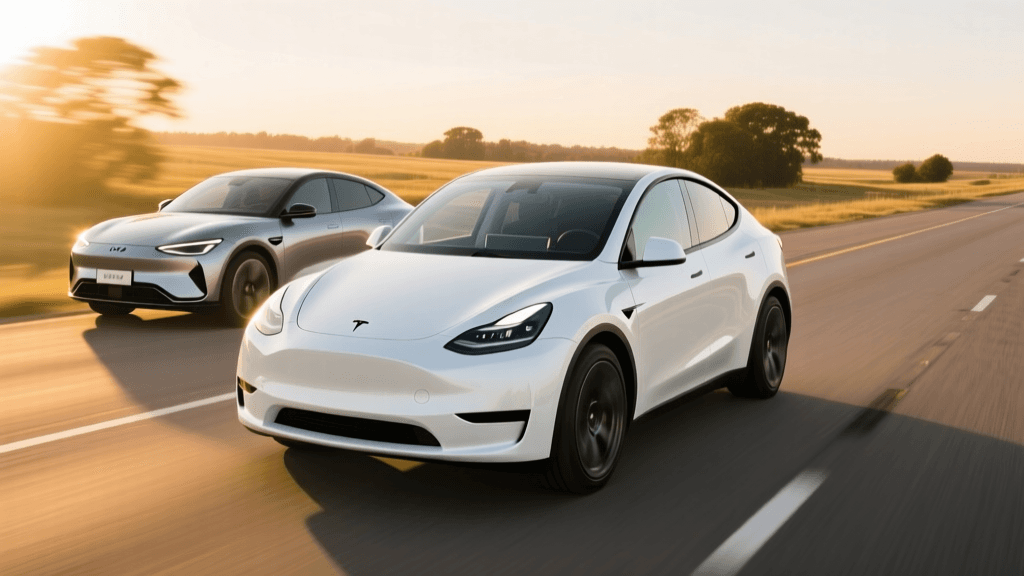
When planning a long-distance road trip in an electric vehicle, two metrics dictate your experience more than any other: real-world highway range and DC fast charging speed. In the mid-size electric crossover segment, the Tesla Model Y Long Range and the Kia EV6 (Wind/Light Long Range AWD) stand out as top contenders. However, beneath their sheet metal lies a fundamental difference in electrical engineering that drastically affects how they perform on the open road. The Tesla Model Y utilizes a traditional 400-volt architecture, while the Kia EV6 is built on Hyundai Motor Group's E-GMP platform, featuring an advanced 800-volt architecture. In this comprehensive head-to-head test, we break down the real-world data and provide expert tips to help you maximize your efficiency, minimize your charging stops, and master your next EV road trip.
Real-World Highway Range: EPA Estimates vs. Asphalt Reality
The EPA Fuel Economy ratings provide a standardized baseline, but they rarely reflect the reality of sustained highway driving at 70 to 75 mph. The Tesla Model Y Long Range AWD boasts an EPA-estimated range of 310 miles from its roughly 75 kWh usable battery pack. The Kia EV6 Wind AWD, equipped with a larger 77.4 kWh usable battery, is rated at 282 miles. On paper, the Tesla has a distinct advantage in efficiency.
However, independent real-world testing, such as the rigorous methodologies outlined by Edmunds in their EV range testing, reveals a more nuanced story. When driven on a standardized highway loop at 70 mph with the climate control set to 72 degrees Fahrenheit, the Model Y Long Range typically achieves around 265 to 275 miles of usable range before needing a charge. The Kia EV6, despite its lower EPA rating and slightly less aerodynamic profile, leverages its larger battery to deliver a remarkably similar real-world highway range of 255 to 265 miles. The gap in real-world highway range between the two vehicles is incredibly narrow, often separated by less than 15 miles depending on ambient temperatures and elevation changes.
DC Fast Charging Speed: The 800-Volt Advantage
Where the Kia EV6 decisively separates itself from the Tesla Model Y is at the DC fast charger. According to the Department of Energy's Alternative Fuels Data Center, charging curves are heavily dependent on battery temperature, state of charge (SoC), and vehicle voltage architecture.
The Tesla Model Y Long Range peaks at an impressive 250 kW when plugged into a V3 Supercharger, but this peak is fleeting. Due to its 400-volt system and aggressive battery protection algorithms, the charging rate tapers off significantly as the battery fills. By the time the Model Y reaches 40% SoC, it is often charging at around 150 kW, and by 60%, it drops closer to 100 kW. A typical 10% to 80% charge takes roughly 27 to 32 minutes.
Conversely, the Kia EV6's 800-volt architecture allows it to accept higher power for a much longer duration without overheating the battery cells. While its absolute peak is slightly lower (around 235 kW to 240 kW on a 350 kW Electrify America charger), it sustains over 170 kW well past the 60% SoC mark. The result is a blistering 10% to 80% charge time of just 18 to 20 minutes under optimal conditions. On a long road trip, this 10-minute savings per stop drastically reduces total travel time.
Charging Curve and Specifications Comparison
| Metric | Tesla Model Y LR AWD | Kia EV6 Wind AWD (77.4 kWh) |
|---|---|---|
| Battery Architecture | 400-Volt | 800-Volt |
| Usable Battery Capacity | ~75 kWh | ~77.4 kWh |
| EPA Estimated Range | 310 miles | 282 miles |
| Real-World Highway Range (70mph) | ~270 miles | ~260 miles |
| Peak DC Fast Charge Rate | 250 kW | ~240 kW |
| 10% to 80% Charge Time (Optimal) | 27 - 32 minutes | 18 - 20 minutes |
Expert Tips: Maximizing Range on the Highway
To squeeze every possible mile out of your Model Y or EV6, implement these expert driving and vehicle setup practices:
- Manage Your Climate Control: HVAC systems are massive energy drains. In the summer, use the seat heaters or ventilated seats instead of blasting the cabin air. In the winter, rely on the heated steering wheel and seats, and set the cabin temperature to 68°F or lower. Both vehicles feature highly efficient heat pumps, but minimizing the delta between cabin and outside temperature is key.
- Optimize Aerodynamics: Remove roof racks, cargo boxes, and bike carriers when not in use. At 75 mph, aerodynamic drag accounts for the majority of energy consumption. If you must carry gear, use the rear hitch-mounted cargo carriers rather than roof boxes, as they disrupt the vehicle's slipstream far less.
- Master Regenerative Braking: In the Tesla Model Y, keep regenerative braking set to 'Standard' (or use the one-pedal driving feel if equipped via software updates). In the Kia EV6, use the paddle shifters behind the steering wheel to adjust regen levels on the fly. Set it to Level 2 or 3 on winding downhill mountain roads to recapture massive amounts of kinetic energy without riding the friction brakes.
Expert Tips: Optimizing Charging Speed and Battery Health
Arriving at a charger is only half the battle. How you prepare the vehicle determines how fast you will get back on the road.
The Art of Battery Preconditioning
Lithium-ion batteries accept charge fastest when they are warm (ideally between 95°F and 115°F internally). The Tesla Model Y excels here: simply input the Supercharger into the native navigation system, and the car will automatically precondition the battery, heating it up as you approach. The Kia EV6 requires a bit more manual intervention in cold weather. If you are not using the native EV route planner, you must manually activate the 'Battery Heating' function via the infotainment menu when you are about 15 to 20 minutes away from the charger to ensure you hit peak 800V charging speeds upon arrival.
The 80% Rule for Road Trips
Never charge past 80% SoC at a DC fast charger unless you are at your final destination or staying overnight. The charging speed past 80% drops to a trickle—often below 50 kW—as the battery management system balances the cells and prevents lithium plating. It is vastly more time-efficient to charge from 15% to 80% in 20 minutes, get back on the road, and stop again later, rather than sitting at a charger for an extra 30 minutes to go from 80% to 100%.
Leverage Plug & Charge and Network Apps
While the Tesla Supercharger network remains the gold standard for reliability and seamless plug-and-charge functionality, Kia EV6 owners should take advantage of Plug & Charge on networks like Electrify America. Ensure your Kia Access account is linked to your payment method and the EV6's VIN is registered. This eliminates the need to fumble with apps or RFID cards in the freezing rain or blistering heat. Furthermore, use apps like PlugShare or A Better Routeplanner (ABRP) to check real-time charger availability and user-reported outages before you pull off the highway.
The Verdict: Which EV Wins the Road Trip?
The choice between the Tesla Model Y and the Kia EV6 ultimately comes down to your prioritization of network convenience versus raw charging technology. The Tesla Model Y wins on sheer efficiency, offering slightly better real-world highway range and unmatched access to the sprawling, ultra-reliable Supercharger network. It is the ultimate 'set it and forget it' road trip vehicle, largely due to its automated battery preconditioning and seamless routing software.
However, the Kia EV6 is the undisputed king of the charging pad. Its 800-volt architecture is a generational leap forward, shaving 10 to 12 minutes off every charging stop compared to the Model Y. For high-mileage road trippers who don't mind using third-party networks and prefer a more traditional, driver-focused interior with physical buttons and superior charging hardware, the EV6 is the superior technological marvel. By applying the expert preconditioning and SoC management tips outlined above, EV6 owners can easily mitigate network quirks and enjoy the fastest charging experience in the crossover segment.