Welcome to the Future of Trucks: Cybertruck vs. R1T
The automotive landscape has shifted dramatically, and the pickup truck segment is no exception. For decades, the market was dominated by gas-guzzling V8 engines, but today, two futuristic titans are redefining what a pickup can be: the Tesla Cybertruck and the Rivian R1T. If you are a beginner stepping into the world of electric vehicles (EVs), choosing between these two radically different trucks can feel overwhelming. Both offer blistering acceleration, cutting-edge technology, and zero tailpipe emissions, yet they approach the concept of a truck from entirely different philosophies. This comprehensive beginner's guide will break down the Tesla Cybertruck and Rivian R1T head-to-head, comparing their design, performance, utility, technology, and total cost of ownership to help you make an informed decision.
Exterior Design: Stainless Steel vs. Adventure Luxury
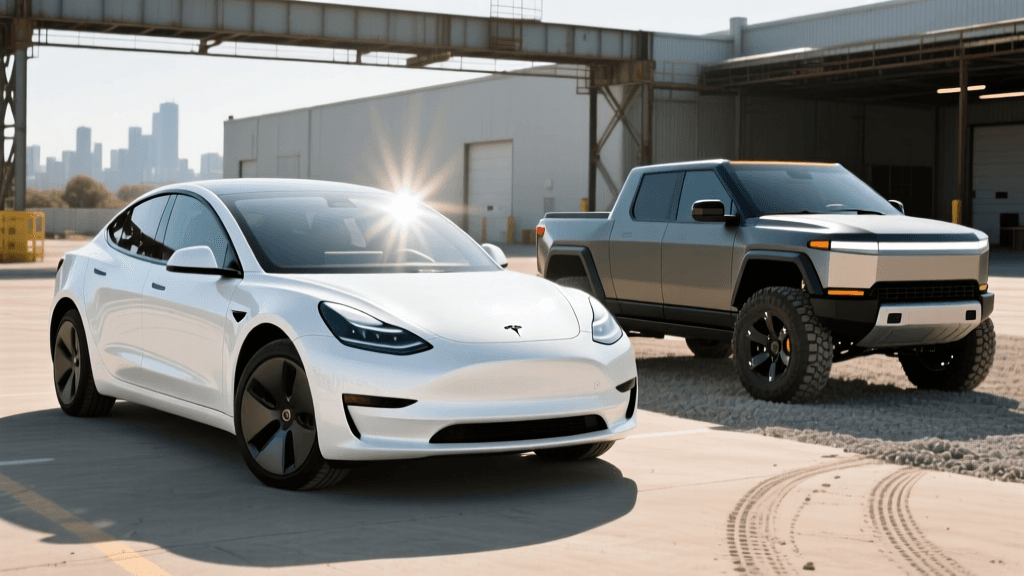
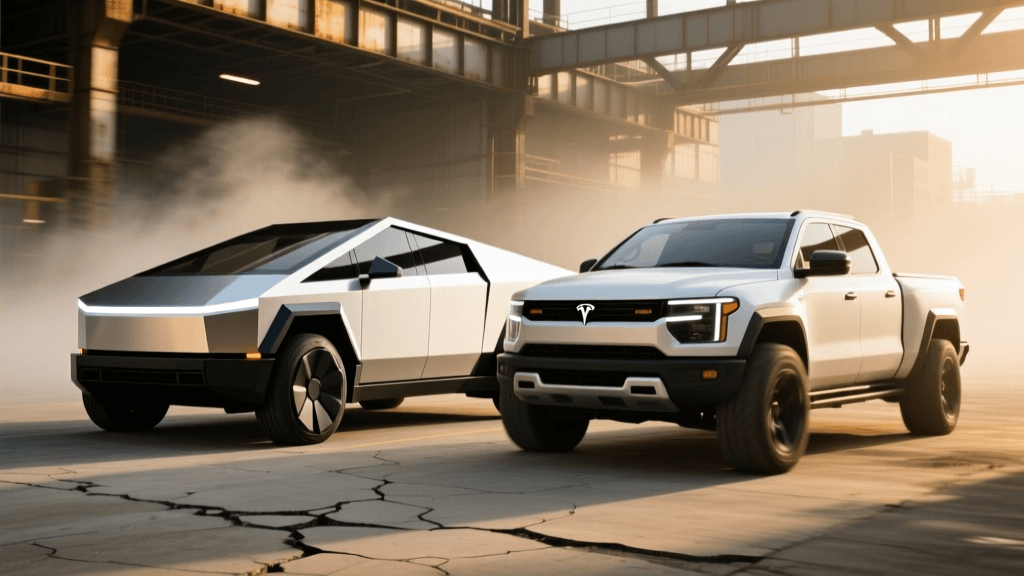
The most immediate difference between these two trucks is their exterior design. The Tesla Cybertruck looks like it drove straight off the set of a dystopian sci-fi movie. Its angular, polygonal shape is constructed from an ultra-hard 30X cold-rolled stainless steel exoskeleton. This material is incredibly dent-resistant and eliminates the need for traditional paint, though it does require special cleaning routines to avoid water spots and fingerprints. According to Car and Driver, the Cybertruck's unconventional design prioritizes structural rigidity and armor-like durability over traditional aerodynamics, though Tesla has integrated active aerodynamics to help manage its range.
In stark contrast, the Rivian R1T adopts a more traditional, yet highly modernized, truck silhouette. It blends rugged outdoor aesthetics with premium luxury cues, featuring a distinctive stadium-style headlight bar and a squared-off stance that looks at home both at a luxury resort and on a muddy trail. The R1T uses conventional stamped aluminum and steel panels with high-quality automotive paint, making it much easier to maintain and repair than the Cybertruck's stainless steel body.
Performance and the Reality of EV Towing
For beginners, understanding EV performance requires looking beyond just 0-60 mph times. Both trucks offer incredible electric torque, but their powertrain configurations differ. The Rivian R1T is available in Dual-Motor and Quad-Motor configurations. The Quad-Motor variant produces over 1,000 horsepower, allowing it to sprint to 60 mph in roughly 3.0 seconds, while offering precise torque vectoring for off-road crawling. The Tesla Cybertruck offers an All-Wheel Drive (AWD) model and the tri-motor Cyberbeast, which boasts 845 horsepower and a blistering 2.6-second 0-60 mph time.
However, the most critical performance metric for truck owners is towing and its impact on range. A crucial beginner tip: towing a heavy trailer with any EV will reduce its range by 40% to 50%. The Cybertruck claims a maximum towing capacity of 11,000 pounds, while the R1T maxes out at 11,000 pounds as well. If you plan to tow a 7,000-pound boat or camper, expect your real-world highway range to drop from over 300 miles to roughly 150-180 miles in either truck. The Cybertruck's aerodynamic wedge shape gives it a slight edge in highway efficiency when unloaded, but both trucks require careful route planning when towing heavy loads.
Cargo, Utility, and the Frunk Factor
Utility is where the Rivian R1T truly shines with its innovative packaging. Because it lacks a traditional engine, the R1T features a massive 11-cubic-foot front trunk (frunk) that is easily accessible and weather-sealed. But its party trick is the Gear Tunnel—a pass-through storage compartment that spans the width of the truck just behind the rear seats. This 11-cubic-foot space is perfect for storing skis, fishing rods, or the optional slide-out Camp Kitchen. The R1T's bed is relatively short at 4.5 feet, but it includes built-in tie-downs and a powered tonneau cover.
The Cybertruck takes a different approach. Its bed, which Tesla calls the 'Vault', is a full 6 feet long and 4 feet wide, making it more suitable for standard construction materials like plywood. The bed is covered by a remarkably fast, motorized stainless steel tonneau cover that can support up to 300 pounds of dynamic weight. The Cybertruck's frunk is smaller and uniquely shaped, but it offers lockable, secure storage. Both trucks feature 120V and 240V outlets in the bed, allowing you to power heavy tools or run appliances while camping, effectively turning the truck into a mobile generator.
Interior Tech: Minimalism vs. Rugged Ergonomics
Stepping inside the Cybertruck is a minimalist, almost jarring experience. The cabin is dominated by a massive 18.5-inch central touchscreen that controls virtually every function of the truck, from the glovebox release to the windshield wipers. Tesla offers a controversial Yoke steering wheel or a traditional round wheel, both of which lack physical turn signal stalks, requiring users to tap buttons on the wheel itself. While the interface is incredibly fast and features excellent navigation, the lack of physical buttons can be frustrating for beginners or those wearing work gloves.
The Rivian R1T interior feels more like a high-end luxury SUV mixed with outdoor gear. It features beautiful, sustainable wood trim, premium vegan leather, and a more traditional layout. Crucially, the R1T retains physical knobs for climate control and volume, as well as physical gear selectors. The 15.6-inch central display is excellent, and the software includes dedicated off-road screens, camp modes, and pet monitoring features that feel highly tailored to the outdoor lifestyle. For a beginner, the R1T's cabin offers a much gentler learning curve and a more tactile, traditional driving experience.
Charging Infrastructure: Superchargers and Adapters
Charging anxiety is the number one concern for EV beginners. Tesla holds a massive advantage here with its proprietary Supercharger network, widely regarded as the most reliable and extensive fast-charging network in North America. The Cybertruck uses the North American Charging Standard (NACS) natively, meaning it can plug directly into any Supercharger without an adapter, achieving peak charging speeds of up to 250 kW.
Rivian originally utilized the CCS charging standard. However, the industry has shifted toward NACS. Rivian owners can now access the Tesla Supercharger network using an official NACS adapter provided by Rivian. While this opens up thousands of new charging stalls for R1T owners, the adapter experience can sometimes be slightly more cumbersome than Tesla's native plug-and-play ecosystem. For home charging, both trucks support Level 2 wall connectors, which is a mandatory investment for any EV truck owner to wake up to a 'full tank' every morning. The Alternative Fuels Data Center provides excellent resources and maps for beginners looking to understand public charging networks and home installation requirements.
Total Cost of Ownership
When evaluating these trucks, look beyond the sticker price. The Rivian R1T Dual-Motor starts around $75,000, while the Cybertruck AWD starts near $80,000 (though early production Foundation Series models are significantly higher). Maintenance costs for both will be vastly lower than gas-powered trucks like the Ford F-150 or Ram 1500, as there are no oil changes, spark plugs, or transmission fluid replacements required. Regenerative braking also saves wear on the physical brake pads. However, insurance premiums for both vehicles are currently quite high due to expensive repair costs, particularly for the Cybertruck's steel panels and the R1T's complex sensor suite. Beginners should secure insurance quotes before finalizing a purchase.
Head-to-Head Specification Table
| Feature | Tesla Cybertruck (AWD) | Rivian R1T (Dual-Motor) |
|---|---|---|
| Starting Price (Est.) | $79,990 | $74,800 |
| EPA Est. Range | 340 miles | 270 miles (Standard) / 352 miles (Max) |
| Horsepower | 600 hp | 533 hp |
| 0-60 MPH | 4.1 seconds | 4.5 seconds |
| Max Towing Capacity | 11,000 lbs | 11,000 lbs |
| Bed Length | 6 feet | 4.5 feet (plus Gear Tunnel) |
| Charging Standard | Native NACS | CCS (NACS via adapter) |
Final Verdict: Which Truck Fits Your Lifestyle?
The choice between the Tesla Cybertruck and the Rivian R1T ultimately comes down to your personal lifestyle and tolerance for cutting-edge quirks. The Rivian R1T is the superior choice for the outdoor enthusiast, the camper, and the buyer who wants a premium, ergonomic interior with innovative storage solutions like the Gear Tunnel. It feels like a finished, highly refined product that excels in off-road environments and daily family duties alike.
Conversely, the Tesla Cybertruck is for the tech-forward early adopter who values raw straight-line performance, unparalleled access to the native Supercharger network, and a bed that can handle traditional 4x8 construction materials. It is a polarizing, futuristic statement piece that pushes the boundaries of automotive design. Whichever you choose, you are stepping into the vanguard of the electric truck revolution, leaving the gas pump behind for good.