The Shifting Paradigm of Luxury Electric Sedans
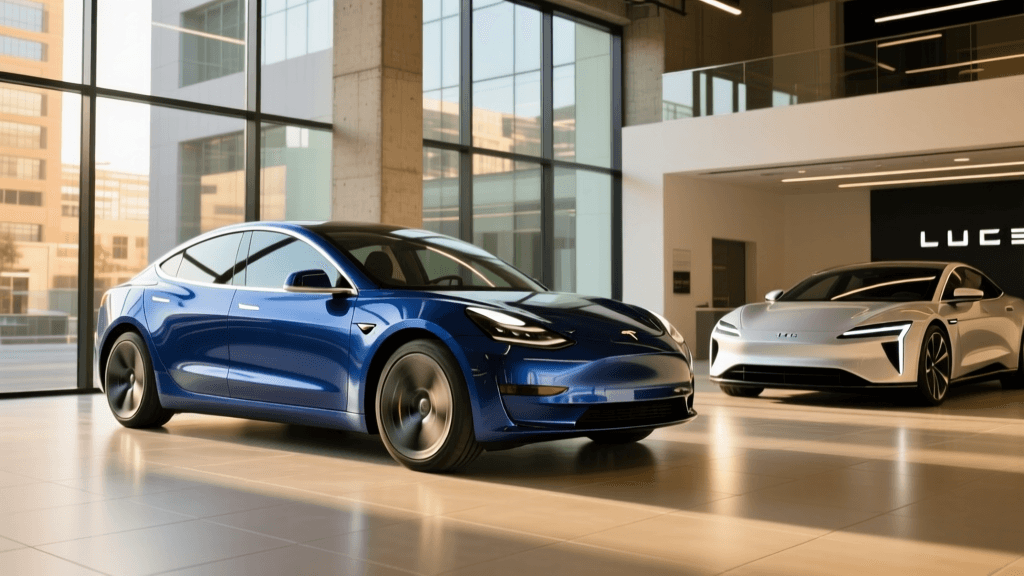
The luxury electric vehicle market is undergoing a massive transformation. What was once a niche dominated by a single pioneer has evolved into a fiercely competitive arena where engineering prowess, software integration, and forward-looking architecture dictate the winner. At the forefront of this evolution are two flagship sedans: the Tesla Model S, the vehicle that proved electric cars could be desirable, and the Lucid Air, a bespoke luxury challenger redefining efficiency and packaging.
When evaluating these two titans through the lens of future industry trends and long-term outlook, the comparison shifts from simple 0-60 mph times to deeper, more structural metrics. How do their electrical architectures position them for the next decade of battery tech? Which autonomous driving philosophy will win regulatory approval? And how does the shifting charging infrastructure landscape impact their long-term viability? In this head-to-head comparison, we break down the Lucid Air and Tesla Model S to determine which luxury EV is truly built for the future.
Platform Architecture: Bespoke 900V vs. Evolved 400V
One of the most critical differentiators between the Lucid Air and the Tesla Model S is their underlying electrical architecture, which directly impacts future-proofing. The Lucid Air was built from the ground up with a 900V+ electrical system. This high-voltage architecture is widely considered the future standard for premium EVs, as it allows for thinner, lighter wiring harnesses, reduced thermal loss, and significantly faster charging capabilities when paired with next-generation 350kW+ chargers.
Conversely, despite receiving a major 'Plaid' refresh with a new interior and powertrain, the Tesla Model S still relies on an older 400V electrical architecture. While Tesla's engineering team has squeezed remarkable performance out of this system, it inherently limits the vehicle's peak charging speed compared to newer 800V and 900V rivals. As the public charging infrastructure rapidly upgrades to deliver ultra-high power, Lucid's bespoke platform is better positioned to capitalize on future hardware advancements without requiring a complete vehicle redesign.
Efficiency and Range: The True Metric of the Future
While massive battery packs can artificially inflate range, the future of EVs is about doing more with less. Battery raw materials remain expensive and environmentally taxing, making efficiency (measured in miles per kWh) the ultimate flex of engineering capability. Lucid's proprietary miniaturized electric motors and advanced thermal management systems have resulted in industry-leading efficiency metrics.
| Feature | Lucid Air Grand Touring | Tesla Model S Long Range |
|---|---|---|
| EPA Estimated Range | 516 miles | 402 miles |
| Battery Capacity (Usable) | ~112 kWh | ~100 kWh |
| Efficiency (mi/kWh) | 4.6 mi/kWh | 4.0 mi/kWh |
| Electrical Architecture | 900V+ | 400V |
| Peak Charging Rate | ~300 kW | ~250 kW |
As detailed by Car and Driver, the Lucid Air Grand Touring achieves an astonishing 516 miles of EPA-estimated range on a single charge. More importantly, it does so while extracting more miles per kilowatt-hour than the Tesla Model S. For the future-minded buyer, this means the Lucid will age better as battery degradation occurs over a decade of use, retaining a more usable real-world range than its competitor.
Autonomous Driving: LiDAR Redundancy vs. Pure Vision
The race to Level 3 and Level 4 autonomy is a defining battleground for the next decade of luxury motoring. Tesla's approach with Full Self-Driving (FSD) relies entirely on a 'pure vision' camera-based neural network. Tesla argues that since humans drive using only vision, AI should be able to do the same. However, this approach faces immense scrutiny from safety regulators, particularly in low-visibility conditions where cameras can be blinded by sun glare, heavy rain, or fog.
Lucid has taken a fundamentally different, and arguably more regulation-friendly, approach with its DreamDrive Pro system. The Air incorporates a roof-mounted LiDAR sensor alongside its cameras and radar. LiDAR provides a real-time, 3D point-cloud map of the vehicle's surroundings, completely independent of lighting conditions. As global automotive safety organizations (like Euro NCAP and the NHTSA) increasingly demand sensor redundancy for higher-level autonomous certifications, Lucid's hardware suite is inherently more future-proof. While Tesla currently offers a more aggressive, widely available beta software experience, Lucid's hardware foundation is better aligned with the redundant safety standards that future legislation will likely mandate.
The Charging Ecosystem and NACS Adoption
For years, Tesla's exclusive Supercharger network was an impenetrable moat. However, the industry is rapidly standardizing around the North American Charging Standard (NACS). Following pivotal agreements highlighted in reports by Reuters regarding the opening of Tesla's network to rivals, the playing field is leveling.
For Tesla Model S owners, the native NACS port means seamless, plug-and-play access to the world's most reliable charging network. For Lucid Air owners, the current CCS port requires an adapter to access Superchargers. However, Lucid has committed to transitioning to native NACS ports on future production runs and provides adapters for existing owners. From an industry outlook perspective, the 'charging moat' is disappearing. By 2026, the charging experience between a Model S and an Air will be virtually indistinguishable, forcing Tesla to compete more directly on vehicle build quality and luxury refinement rather than infrastructure exclusivity.
Interior Space, Luxury, and the Software-Defined Cabin
Luxury in the 2020s and beyond is defined by space and digital integration. The Lucid Air's 'Space Concept' interior leverages its miniaturized powertrain to offer limousine-like rear legroom in a sedan footprint, complete with massaging seats, high-end sustainable materials, and a curved glass canopy display. It feels like a traditional, high-end luxury lounge that happens to be electric.
The Tesla Model S, especially post-refresh, embraces a minimalist, brutalist tech aesthetic. The yoke steering wheel and the lack of physical stalks or a traditional instrument cluster push the boundaries of software-defined interiors. While Tesla's infotainment system and over-the-air (OTA) update pipeline remain the gold standard for adding new features post-purchase, the Model S interior still suffers from panel gap inconsistencies and material choices that fall short of its six-figure price tag. As luxury consumers increasingly demand premium tactile experiences alongside digital ones, Lucid's traditional approach to luxury materials positions it better against legacy automakers like Mercedes-Benz and BMW.
Total Cost of Ownership & Depreciation Outlook
When forecasting the total cost of ownership (TCO) over a 5-to-10-year horizon, depreciation is the silent killer of luxury EVs. Historically, early EVs have suffered steep depreciation curves due to rapid advancements in battery tech. The Tesla Model S, being an older platform with a 400V architecture, may face steeper depreciation as the used market becomes flooded with cheaper, newer 800V EVs.
The Lucid Air, while not immune to luxury car depreciation, benefits from its class-leading efficiency and 900V architecture, which will remain relevant and desirable on the used market for years to come. Furthermore, Lucid's aggressive warranty coverage (including comprehensive battery and drivetrain warranties) provides long-term peace of mind that offsets the brand's newer status in the market.
Final Verdict: Which Luxury EV Leads the Future?
Choosing between the Lucid Air and the Tesla Model S ultimately depends on what you value most in the future trajectory of the EV industry.
- Buy the Lucid Air if: You want a vehicle engineered for the next decade. Its 900V+ architecture, LiDAR-equipped autonomous hardware, and unparalleled efficiency make it the superior piece of future-proofed engineering. It is the clear choice for buyers who prioritize traditional luxury, interior space, and long-term hardware relevance.
- Buy the Tesla Model S if: You prioritize the current software ecosystem, the immediate convenience of native Supercharger access, and the prestige of the Tesla brand. The Model S Plaid remains an unmatched performance bargain, but its underlying 400V platform and vision-only autonomy approach represent the pinnacle of the previous EV generation rather than the foundation of the next.
As the luxury EV market matures, the Lucid Air proves that the future belongs to companies that prioritize fundamental electrical engineering and efficiency over sheer battery size. While Tesla changed the world with the Model S, it is the Lucid Air that is currently drawing the blueprint for what the luxury electric sedan will look like in 2030 and beyond.