The Electric Truck Revolution: Separating Fact from Fiction
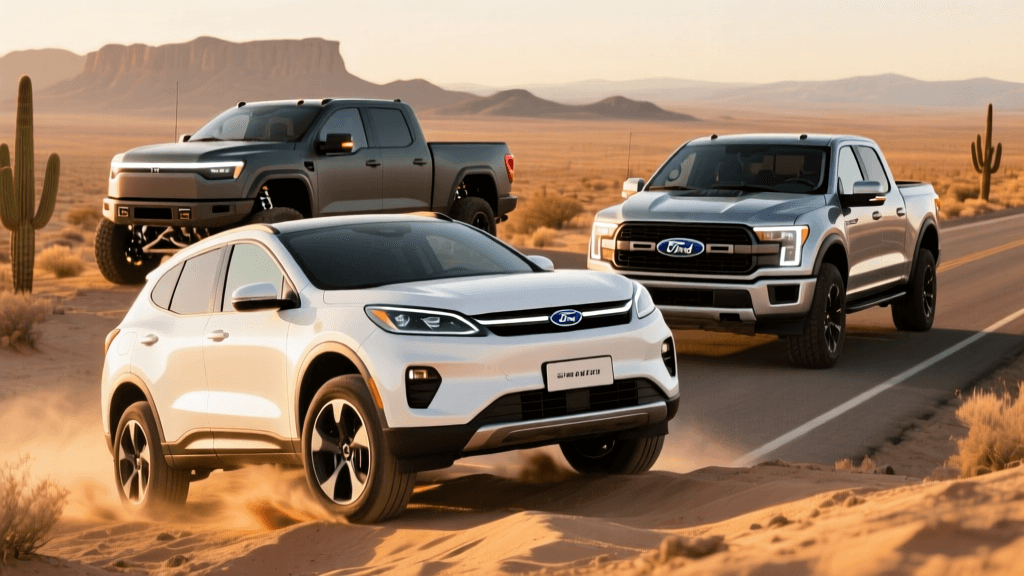
The transition to electric pickup trucks has been nothing short of revolutionary, with the Rivian R1T and the Ford F-150 Lightning leading the charge. However, as with any disruptive technology, a thick fog of misinformation, forum rumors, and outdated assumptions has settled over the market. Many buyers are making critical mistakes based on myths rather than measurable data. Whether you are a contractor needing a reliable workhorse, an outdoor enthusiast seeking weekend adventure, or a suburban parent looking for a safe, spacious family hauler, believing these myths could lead you to the wrong purchase. In this head-to-head comparison, we are busting the five most common myths about the Rivian R1T and the Ford F-150 Lightning, providing you with actionable advice, hard specifications, and a clear verdict on which electric truck actually deserves your money.
Myth 1: Towing Heavy Loads Makes EV Trucks Completely Impractical
The Myth: If you tow anything over 5,000 pounds, your electric truck will lose 80% of its range, leaving you stranded on the side of the highway.
The Reality: It is true that towing significantly impacts the range of any vehicle, and electric trucks are no exception. According to the U.S. Department of Energy's Alternative Fuels Data Center, aerodynamic drag and heavy loads drastically increase energy consumption at highway speeds. However, the mistake buyers make is assuming this renders the trucks useless for towing. When towing a 7,500-pound trailer, the F-150 Lightning Extended Range (131 kWh battery) can realistically achieve about 100 to 120 miles of range before needing a charge. The Rivian R1T Max Pack (149 kWh battery) performs similarly, yielding roughly 110 to 130 miles.
Actionable Advice: Do not buy either truck if your primary use case is towing 8,000+ pounds cross-country on a weekly basis. However, if you are towing a boat to a local lake within a 100-mile radius or hauling a utility trailer to a job site, both trucks are exceptionally capable. The Lightning offers superior integrated trailer tech, including Pro Trailer Hitch Assist and a built-in scale that measures tongue weight and estimates remaining range based on the specific load. The Rivian counters with a standard integrated air compressor and a quad-motor setup that provides unparalleled torque vectoring when navigating tight, hilly trailer parks.
Myth 2: The F-150 Lightning is Just a Gas F-150 with Batteries Bolted In
The Myth: Ford took the easy way out by simply ripping the engine out of a standard F-150 and dropping in batteries, resulting in a compromised, heavy, and poorly balanced vehicle.
The Reality: While the Lightning does share some exterior sheet metal and interior design cues with its internal combustion engine (ICE) sibling to maintain brand familiarity, its underlying architecture is fundamentally different. As detailed on Ford's official F-150 Lightning engineering page, the Lightning utilizes a dedicated EV skateboard platform. The most significant mechanical departure is the rear suspension. Gas-powered F-150s use a solid rear axle with leaf springs, which is great for heavy payload but terrible for unladen ride comfort. The Lightning features a fully independent rear suspension (IRS) with coil springs, drastically improving ride quality, handling, and rear-seat comfort when the bed is empty.
Actionable Advice: If you prioritize a smooth, car-like daily commute and rear passenger comfort over absolute maximum payload capacity, the Lightning's independent rear suspension makes it a far superior daily driver than a gas F-150. Furthermore, the battery placement creates a lower center of gravity, reducing body roll and making the Lightning feel surprisingly nimble for a full-size truck.
Myth 3: The Rivian R1T's Bed is Too Small to Be a "Real" Truck
The Myth: The Rivian R1T has a tiny 4.5-foot bed, making it essentially a Subaru Baja with a premium price tag, incapable of hauling standard construction materials or camping gear.
The Reality: It is a common mistake to judge the R1T solely by its primary bed length. While the 54-inch (4.5-foot) bed is indeed shorter than the Lightning's 67-inch (5.5-foot) bed, Rivian engineered a brilliant workaround: the Gear Tunnel. This massive, 11-cubic-foot pass-through compartment spans the width of the vehicle between the cab and the bed, accessible from both sides. It easily swallows golf bags, skis, camping chairs, and tools, freeing up the main bed for larger items. Additionally, the R1T boasts a maximum towing capacity of 11,000 pounds, edging out the Lightning's 10,000-pound maximum.
Actionable Advice: If you regularly need to haul 4x8 sheets of plywood flat on the floor, the Lightning is the better choice (especially with the tailgate down). However, if you are an outdoor enthusiast who needs secure, lockable, weatherproof storage for expensive gear without buying a tonneau cover, the R1T's Gear Tunnel is a game-changer. You can even purchase the Rivian Camp Kitchen, which slides directly out of the Gear Tunnel, turning the truck into a mobile culinary station.
Myth 4: Electric Trucks Cannot Handle Serious Off-Roading
The Myth: EVs are too heavy, have too much low-hanging battery exposure, and lack the low-end crawling control required for serious off-road trails.
The Reality: Electric motors provide instant, zero-RPM torque, which is actually a massive advantage for rock crawling and steep inclines. The Rivian R1T, as highlighted on Rivian's official R1T specifications, features an available quad-motor setup with over 1,000 horsepower and independent torque control at each wheel. This allows for "Tank Turns" (spinning the truck 360 degrees in place by reversing the wheels on one side) and exceptional traction control without needing mechanical locking differentials. The adjustable air suspension can raise the R1T to provide over 14 inches of ground clearance, with an approach angle of 35.5 degrees.
Actionable Advice: For extreme rock crawling and deep wilderness exploration, the Rivian R1T Quad-Motor is the undisputed champion. Its underbody armor and adjustable ride height are purpose-built for the trail. The F-150 Lightning, while equipped with robust steel skid plates to protect the battery and an off-road driving mode, is heavier and lacks the advanced torque vectoring of the Rivian. Choose the Lightning for light dirt roads and camping; choose the Rivian for Moab and the Rubicon Trail.
Myth 5: The Total Cost of Ownership is Always Cheaper for the Lightning
The Myth: Because the Ford F-150 Lightning has a lower starting MSRP and is built by a legacy automaker, it will always be cheaper to own in the long run compared to the boutique Rivian.
The Reality: The Lightning's base Pro model does start significantly lower than the R1T, making it highly attractive for fleet buyers and budget-conscious consumers. However, Total Cost of Ownership (TCO) involves depreciation, insurance, maintenance, and energy costs. Legacy automakers often suffer steeper initial depreciation curves on new EV platforms as early-adopter incentives fade and battery tech evolves. Furthermore, insurance premiums for the Rivian can be higher due to specialized repair networks, but Rivian's over-the-air (OTA) software updates and modular hardware design have shown strong long-term reliability and residual value retention among early adopters.
Head-to-Head Specification Comparison
| Feature | Rivian R1T (Dual-Motor Max) | Ford F-150 Lightning (Extended Range) |
|---|---|---|
| Starting MSRP (Approx) | $89,000 | $70,000 |
| Battery Capacity | 149 kWh | 131 kWh |
| EPA Estimated Range | 352 miles | 320 miles |
| Max Towing Capacity | 11,000 lbs | 10,000 lbs |
| Max Payload Capacity | 1,760 lbs | 2,235 lbs |
| Bed Length | 4.5 feet (plus Gear Tunnel) | 5.5 feet |
| Front Trunk (Frunk) | 11 cu-ft | 14.1 cu-ft (Mega Power Frunk) |
| Off-Road Capability | Excellent (Air Suspension, Quad-Motor available) | Good (Skid plates, AWD, standard suspension) |
The Final Verdict: Which EV Truck Should You Buy?
Busting these myths reveals that neither truck is inherently flawed; rather, they are built for fundamentally different buyer profiles. The Ford F-150 Lightning is the ultimate pragmatic choice. It is for the homeowner, the contractor, and the family that needs a traditional truck experience—complete with a larger bed, higher payload, a massive frunk, and a lower price of entry—without the noise and maintenance of a gas engine. Its independent rear suspension makes it a phenomenal daily driver, and its Pro Power Onboard system turns it into a mobile generator for job sites or tailgates.
Conversely, the Rivian R1T is a premium lifestyle and adventure vehicle disguised as a pickup. It is for the outdoor enthusiast, the tech-savvy early adopter, and the driver who prioritizes sports-car-like acceleration, cutting-edge off-road capability, and innovative storage solutions like the Gear Tunnel. By ignoring the myths and focusing on your specific hauling, towing, and terrain requirements, you can confidently choose the electric truck that will actually serve your lifestyle for years to come.