The Budget EV Battleground and Industry Shifts
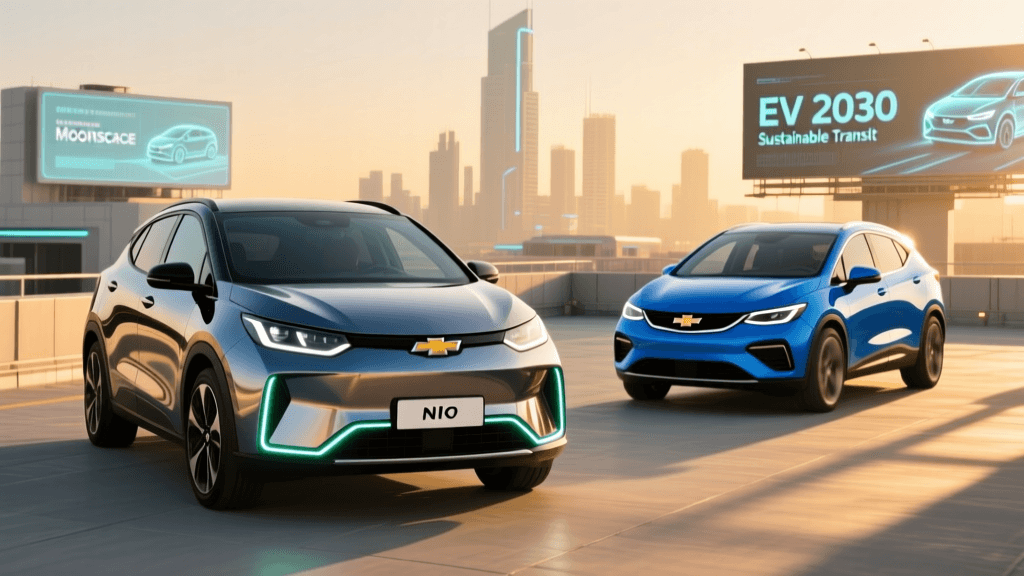
The electric vehicle industry is undergoing a seismic shift. As legacy automakers pivot toward next-generation architectures and ultra-affordable sub-$25,000 models, the current crop of budget EVs finds itself at a fascinating crossroads. For the past few years, the Kia Niro EV and the Chevrolet Bolt EUV have been the undisputed champions of the affordable electric segment. They proved that practical range, usable cargo space, and everyday comfort didn't have to cost upwards of $60,000. However, with the rapid evolution of battery chemistry and the industry-wide adoption of the North American Charging Standard (NACS), how do these current-generation models hold up when viewed through the lens of future trends?
Understanding the long-term viability of the Kia Niro EV and the Chevrolet Bolt EUV requires looking beyond their current spec sheets. We must evaluate how their existing technology will integrate with tomorrow's charging infrastructure, how their batteries will age compared to emerging chemistries, and what their total cost of ownership looks like in a rapidly depreciating used EV market. Whether you are shopping for a new inventory clearance model or a slightly used bargain, this head-to-head comparison will reveal which budget EV is best positioned for the future.
Kia Niro EV vs Chevrolet Bolt EUV: By the Numbers
Before diving into future outlooks, it is essential to establish the baseline specifications that define these two segment benchmarks. Both vehicles utilize similar battery capacities but deliver slightly different real-world results.
| Feature | 2023 Kia Niro EV | 2023 Chevrolet Bolt EUV |
|---|---|---|
| Original Base MSRP | ~$39,600 | ~$28,900 |
| EPA Estimated Range | 239 miles | 247 miles |
| Battery Capacity | 64.8 kWh (NMC) | 65.0 kWh (NMC) |
| Max DC Fast Charge | 72 kW | 55 kW |
| Cargo Space (Seats Down) | 53.0 cu-ft | 54.3 cu-ft |
| Charging Port Standard | CCS1 | CCS1 |
| 0-60 mph Time | 7.8 seconds | 7.0 seconds |
Note: Specifications based on final production models before GM's temporary Bolt hiatus and Kia's ongoing production cycles. Source: U.S. Department of Energy's Alternative Fuels Data Center.
Range and Battery Tech: Looking Toward LFP and Solid-State
Both the Niro EV and the Bolt EUV utilize Nickel Manganese Cobalt (NMC) lithium-ion battery packs. NMC has been the industry standard for the past decade due to its high energy density, allowing these compact crossovers to achieve over 230 miles of range without the battery taking up excessive cabin space. However, the future of budget EVs is rapidly shifting toward Lithium Iron Phosphate (LFP) chemistry. LFP batteries are cheaper to produce, do not rely on conflict-heavy cobalt, and can be charged to 100% daily without degrading the battery's lifespan.
General Motors has already confirmed that the next-generation Chevrolet Bolt, slated to return around 2026, will utilize LFP battery technology to drive costs down even further. According to CNBC's coverage of GM's battery strategy, this shift is critical for making EVs cost-competitive with internal combustion engines. For current owners of the Niro EV and Bolt EUV, this means their NMC batteries require slightly more careful management—specifically, limiting daily charging to 80% to preserve long-term health, reserving the 100% charge for road trips. While the current Bolt EUV edges out the Niro EV with 247 miles of range, the Niro's slightly more advanced thermal management system may offer better long-term battery health retention in extreme climates.
Charging Infrastructure: The NACS Transition
The most significant industry trend impacting current EV owners is the transition from the CCS1 charging standard to Tesla's NACS (North American Charging Standard). Both the Kia Niro EV and the Chevrolet Bolt EUV were built with CCS1 ports. Historically, the Bolt EUV has been criticized for its sluggish 55 kW maximum DC fast-charging speed, which can make a 10-80% charge take nearly 45 minutes. The Niro EV performs slightly better, peaking around 72 kW, but neither vehicle can compete with the 150kW+ speeds of modern 800-volt architectures like the Hyundai Ioniq 5.
However, the future outlook for charging access heavily favors the Chevrolet brand. GM was the first major automaker to partner with Tesla to open the Supercharger network. Bolt EV and EUV owners can currently purchase an approved CCS-to-NACS adapter (from brands like Lectron or A2Z EV) for roughly $150 to $200, instantly granting them access to the most reliable charging network in North America. Kia has also committed to adopting NACS, but their timeline for native integration and adapter rollouts has been slightly more fragmented. If seamless future road-tripping is your priority, the Bolt EUV's early integration into the Tesla Supercharger ecosystem gives it a distinct long-term advantage, despite its slower peak charging curve.
Interior Space and Practicality for the Modern Buyer
When evaluating future-proofing, interior versatility remains a constant. The Bolt EUV, despite being classified as a subcompact, offers a surprisingly spacious cabin with 39.1 inches of rear legroom. Its upright seating position and flat floor make it highly practical for families. The cargo area maxes out at 54.3 cubic feet with the rear seats folded, providing ample room for gear, groceries, or camping equipment.
The Kia Niro EV takes a slightly more premium approach. While its cargo space is marginally smaller at 53.0 cubic feet, the interior materials, dual-screen infotainment setup, and advanced driver-assistance systems (ADAS) feel a generation ahead of the Bolt's utilitarian cabin. As the industry moves toward software-defined vehicles, the Niro EV's more modern electrical architecture allows for better over-the-air (OTA) update potential and smoother integration with next-gen smartphone mirroring. For buyers who prioritize daily comfort and tech-forward interfaces over sheer volume, the Niro EV remains the superior choice.
Future Outlook: Where Do Legacy Budget EVs Stand?
The EV market experienced massive price fluctuations and depreciation spikes in 2023 and 2024, largely driven by Tesla's aggressive price cuts and the influx of off-lease rental fleet EVs. This macro-economic trend has created an unprecedented buyer's market for slightly used budget EVs. A 2022 or 2023 Chevrolet Bolt EUV can now be found on the used market for well under $20,000, making it one of the most cost-effective ways to enter the EV space. Similarly, used Niro EVs are depreciating rapidly, offering immense value compared to their original MSRP.
Looking ahead, the introduction of ultra-cheap EVs like the next-gen Bolt and upcoming budget models from Kia and Hyundai will likely cap the resale value of these current-generation models. They will not be collector's items, nor will they hold their value like luxury EVs. Therefore, the actionable advice for consumers is clear: buy these vehicles as long-term commuters rather than short-term investments. If you plan to drive the car into the ground over the next 7 to 10 years, the depreciation curve matters far less than the daily running costs and reliability.
Total Cost of Ownership (TCO) Projections
- Maintenance: Both vehicles require minimal maintenance. The Bolt EUV benefits from GM's massive parts network, while Kia's 10-year/100,000-mile powertrain warranty (which includes the battery) provides unmatched peace of mind for long-term ownership.
- Energy Costs: With home charging, both vehicles will cost roughly $4 to $6 per 100 miles to operate, depending on local electricity rates, drastically undercutting the $12 to $15 per 100 miles required for a 30 MPG gas-powered crossover.
- Insurance: Insurance premiums for the Bolt EUV tend to be slightly lower than the Niro EV due to its lower overall replacement cost and simpler body construction.
The Verdict: Which Budget EV Wins the Long Game?
Choosing between the Kia Niro EV and the Chevrolet Bolt EUV ultimately depends on how you define future value. If your definition of value is rooted in pure economics, maximizing every dollar, and gaining immediate access to the Tesla Supercharger network via adapters, the Chevrolet Bolt EUV is the undisputed winner. Its combination of class-leading range, spacious interior, and rock-bottom used market pricing makes it the most pragmatic budget EV on the road today.
However, if your outlook prioritizes daily refinement, faster charging speeds, superior interior technology, and the security of an industry-leading long-term battery warranty, the Kia Niro EV takes the crown. It may cost slightly more upfront, but it feels less like a 'budget compromise' and more like a modern, future-ready crossover. For a deeper dive into the Niro's specific trims and official capabilities, you can review Kia's official Niro EV specifications. Whichever you choose, both vehicles remain excellent, future-proof gateways into the electric era, provided you adapt to the shifting charging landscape.