The New Definition of Luxury EVs: A Future-Forward Comparison
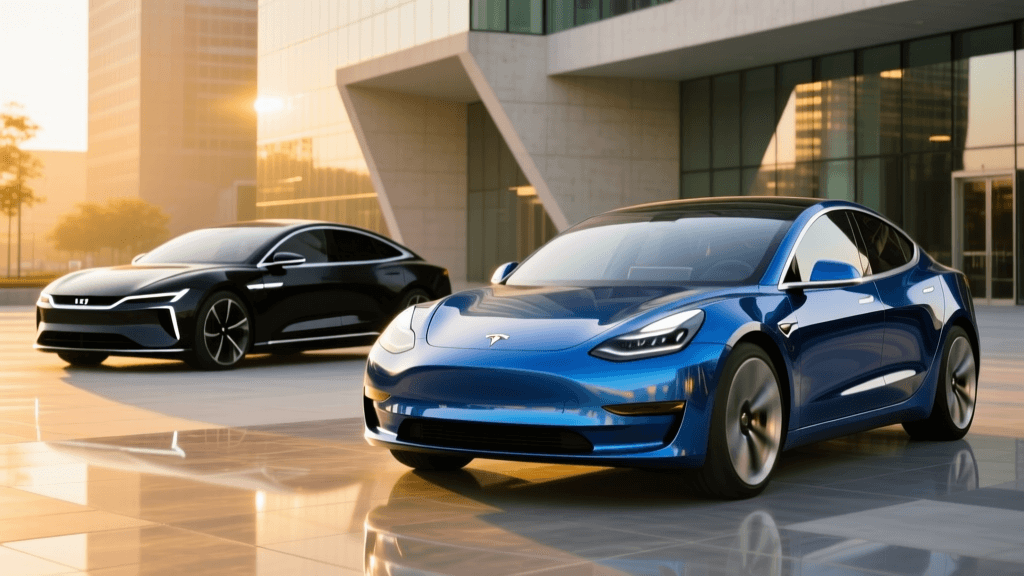
The luxury electric vehicle sedan segment is undergoing a massive paradigm shift. For years, the Tesla Model S was the undisputed king of the hill, defining what an electric luxury car could be. However, the arrival of the Lucid Air has fundamentally disrupted the status quo, introducing next-generation powertrain efficiency and a new philosophy of interior space. As we look toward the future of the automotive industry, comparing the Lucid Air and the Tesla Model S is no longer just about 0-60 mph times or leather stitching. It is about evaluating which vehicle is better future-proofed against rapidly evolving battery chemistries, autonomous driving regulations, and charging infrastructure overhauls.
In this head-to-head comparison, we analyze the Lucid Air and Tesla Model S through the lens of future industry trends, providing actionable advice for buyers looking to invest in a luxury EV that will retain its technological edge and value over the next decade.
Powertrain & Battery Architecture: The 900V Revolution
One of the most critical future trends in EV engineering is the transition from 400-volt to 800-volt and 900-volt electrical architectures. Higher voltage systems allow for thinner, lighter wiring harnesses and significantly faster DC fast-charging capabilities without overheating the battery cells.
The Lucid Air is built on a proprietary 900V+ architecture, which the company refers to as the Wunderbox. This miniaturized, highly efficient drivetrain allows the Lucid Air Grand Touring to achieve an EPA-estimated range of over 500 miles while maintaining a relatively compact battery pack size. According to Car and Driver's extensive testing of the Lucid Air, this efficiency translates to real-world highway range that currently outpaces almost every other production EV on the market.
Conversely, the Tesla Model S relies on a highly optimized 400-volt architecture paired with industry-leading thermal management and heat pump systems. While Tesla achieves miraculous efficiency through software and aerodynamics, the physical limitations of a 400V system mean that peak charging speeds are capped lower than what the Lucid can theoretically accept. As public charging networks upgrade to 350kW and 400kW dispensers over the next five years, the Lucid Air’s 900V architecture will allow it to take full advantage of these ultra-fast chargers, making it the more future-proof choice for long-distance travelers.
Autonomous Driving: Sensor Fusion vs. Pure Vision
The trajectory of autonomous driving is a major point of divergence between these two luxury titans. Tesla continues to double down on its "Tesla Vision" approach, relying entirely on cameras and neural networks to power its Full Self-Driving (Supervised) software. Tesla’s approach is highly scalable and benefits from billions of miles of real-world fleet data, but it faces ongoing scrutiny from global regulators regarding safety and edge-case handling.
Lucid, on the other hand, has embraced a sensor fusion approach for its DreamDrive Pro system. By utilizing a combination of high-definition cameras, radar, and solid-state LiDAR, the Lucid Air creates a redundant, multi-layered map of its surroundings. From an industry outlook perspective, as the European Union and US federal agencies draft stricter safety mandates for Level 3 and Level 4 autonomous systems, LiDAR and sensor fusion are widely expected to become mandatory for true hands-off luxury driving. Buyers who prioritize a future-proofed, regulation-compliant safety suite may find the Lucid Air’s hardware stack to be the wiser long-term investment.
Charging Ecosystems: The NACS Unification
For the past decade, Tesla’s Supercharger network has been an impenetrable moat, offering Model S owners a seamless, plug-and-charge experience that early adopters of other brands could only dream of. However, the industry is rapidly consolidating around Tesla’s North American Charging Standard (NACS).
Tesla Model S owners will continue to enjoy native, hassle-free access to the most reliable charging network in the world. Lucid currently utilizes the CCS standard and relies heavily on the Electrify America network, which has historically suffered from lower uptime and fragmented payment systems. However, Lucid has committed to adopting NACS. Current Lucid owners can use adapters, and future iterations of the Air will feature native NACS ports. While Tesla wins the charging war today, the gap will effectively close to near-zero within the next two to three years as NACS becomes the universal standard, neutralizing one of Tesla's biggest historical advantages.
Head-to-Head Specifications & Future Outlook
Below is a structured comparison of the top-tier luxury trims for both vehicles, highlighting how their hardware positions them for the future.
| Feature | Lucid Air Grand Touring | Tesla Model S Long Range |
|---|---|---|
| Electrical Architecture | 900V+ (Future-proofed for 350kW+) | 400V (Optimized for 250kW) |
| EPA Estimated Range | 516 Miles | 402 Miles |
| Peak DC Fast Charge Rate | ~300 kW | ~250 kW |
| Autonomous Hardware | LiDAR, Radar, Cameras (Sensor Fusion) | Cameras Only (Tesla Vision) |
| Charging Port Standard | CCS (NACS via adapter/upcoming) | Native NACS |
| Software Update Frequency | Quarterly / Periodic | Monthly / Highly Iterative |
Data sourced from manufacturer specifications and the EPA Fuel Economy Comparison Tool.
Interior Space Efficiency: The Skateboard Evolution
As EV platforms mature, the industry is moving away from simply dropping electric motors into modified gas-car chassis. Lucid’s miniaturized drivetrain technology allows the Air to offer the exterior footprint of a mid-size sedan with the interior volume of a full-size luxury barge. The "Space Concept" interior features a curved glass canopy display and a retractable steering wheel (in future autonomous modes), pointing toward a future where the car serves as a mobile lounge.
The Tesla Model S interior, while minimalist and featuring a brilliant yoke steering option and rear passenger screen, is fundamentally constrained by its older chassis architecture. The massive frunk and cavernous rear storage are practical, but the cabin lacks the bespoke, lounge-like luxury execution found in the Lucid. For buyers viewing their vehicle as a future mobile office or relaxation space, Lucid’s packaging is a generation ahead.
Total Cost of Ownership & Depreciation Outlook
When forecasting the total cost of ownership (TCO) over a 5-to-7-year horizon, depreciation is the largest variable. Tesla has historically faced steep depreciation curves as the company aggressively cuts MSRP prices on new models, instantly devaluing used inventory. Furthermore, the rapid iteration of Tesla's hardware (such as the transition to the Highland/Project Juniper architectures) can make older Model S variants feel obsolete faster.
Lucid, as a lower-volume luxury startup, also faces depreciation risks, but its positioning as a bespoke, high-end luxury brand (akin to Porsche or Mercedes-Benz) offers a slightly different trajectory. The Lucid Air Sapphire, for instance, is a limited-production hypercar that may hold collector value. However, for standard Grand Touring models, buyers should anticipate steeper initial depreciation compared to legacy luxury brands, though potentially less volatile than Tesla's price-war-driven drops. To mitigate this, actionable advice for buyers is to lease the Lucid Air or purchase a Certified Pre-Owned model that has already taken the initial depreciation hit.
The Verdict: Which Luxury EV Wins the Future?
The choice between the Lucid Air and the Tesla Model S ultimately depends on how you weigh immediate software gratification against long-term hardware superiority.
Choose the Tesla Model S if: You prioritize a mature, seamless charging experience today, highly iterative over-the-air software updates, and the lowest possible entry price into the luxury EV sedan segment. The Model S Plaid remains an engineering marvel and a benchmark for straight-line performance that will remain relevant for years.
Choose the Lucid Air if: You are buying with a 5-to-10-year horizon and want hardware that aligns with the future of public charging infrastructure. The 900V architecture, superior real-world range, LiDAR-equipped safety suite, and unparalleled interior space efficiency make the Lucid Air the more future-proofed luxury vehicle. As public 350kW chargers become the norm, the Lucid Air will age like a fine wine, while 400V competitors may struggle to keep pace.
For a deeper dive into how these vehicles perform on the road, we recommend reviewing the Tesla Model S buyer's guide on Car and Driver to compare their track-test data and real-world observations against Lucid's emerging legacy.