The Electric Truck Revolution: Hype vs. Reality
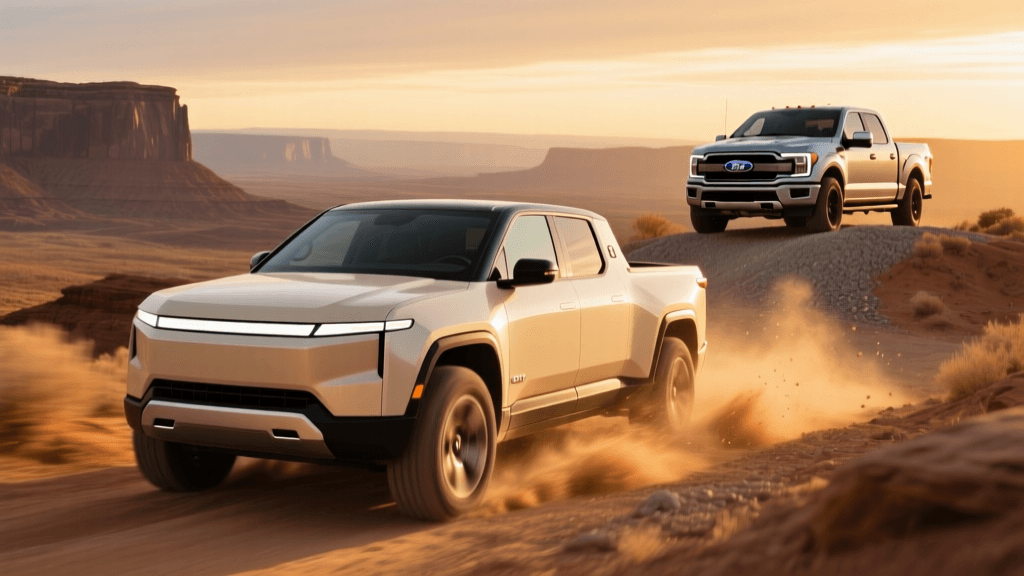
The electric vehicle truck market has exploded, and at the forefront of this revolution are two wildly different but equally capable machines: the Rivian R1T and the Ford F-150 Lightning. As with any new automotive technology, misinformation spreads just as fast as the vehicles themselves. Buyers are frequently bombarded with conflicting advice regarding towing capabilities, off-road durability, and charging logistics. According to the Environmental Protection Agency (EPA), separating fact from fiction is crucial for consumers transitioning from internal combustion engines to electric powertrains.
In this head-to-head comparison, we are cutting through the noise. We will bust the most pervasive myths surrounding the Rivian R1T and the Ford F-150 Lightning, highlight the most common mistakes buyers make when configuring these trucks, and help you decide which electric hauler actually fits your lifestyle.
Myth #1: The F-150 Lightning is Just a Gas Truck with Batteries
The Myth: Because Ford adapted the F-150 Lightning from its gas-powered counterpart, it lacks the 'true EV' engineering purity of the Rivian R1T's bespoke skateboard architecture.
The Reality: While it is true that the Rivian R1T was built from the ground up on a dedicated EV skateboard platform—allowing for innovative features like the transverse Gear Tunnel and quad-motor setups—the F-150 Lightning's adapted body-on-frame design is a masterclass in practical engineering. Ford's decision to retain the traditional truck architecture means the Lightning shares many suspension and body components with the gas F-150, drastically simplifying repairs and lowering insurance costs in many regions.
Furthermore, Ford used the space liberated by removing the gas engine to create the 'Mega Power Frunk,' a massive 14.1-cubic-foot lockable front trunk with 400 pounds of payload capacity and built-in drainage. While Rivian's skateboard allows for a lower center of gravity and superior handling dynamics on paved roads, the Lightning's traditional layout offers unmatched familiarity and utilitarian workspace for contractors who need a mobile office. Neither approach is inherently 'wrong'; they simply serve different philosophies of truck design.
Myth #2: The Rivian R1T Can't Tow as Well as the Lightning
The Myth: The Rivian R1T is a 'lifestyle' truck meant for light camping, while the F-150 Lightning is the only one that can handle real, heavy-duty towing.
The Reality: This is one of the most persistent falsehoods in the EV space. When properly equipped, the Rivian R1T actually boasts a higher maximum towing capacity than the standard F-150 Lightning. The R1T is rated to tow up to 11,000 pounds. The F-150 Lightning, when equipped with the Extended Range battery and the Max Trailer Tow Package, maxes out at 10,000 pounds (standard range models are capped at 7,700 pounds).
However, the real myth to bust here is about real-world towing range. As highlighted by the U.S. Department of Energy's Fuel Economy Guide, towing heavy loads drastically increases aerodynamic drag and rolling resistance, which impacts all EVs severely. Both trucks will see their range cut by roughly 40% to 50% when towing near their maximum capacities. The Lightning's advantage isn't raw towing capacity, but rather its available 80-amp Pro Power Onboard system, which can turn the truck into a massive mobile generator for welders and heavy power tools at a job site—a feature the Rivian currently lacks.
Myth #3: Off-Roading Will Destroy the Battery Pack
The Myth: Taking an electric truck on rocky, uneven trails is a guaranteed way to puncture the battery skid plate and total the vehicle.
The Reality: Both manufacturers anticipated the rugged use cases of truck buyers and engineered robust underbody protection. The Rivian R1T features a sophisticated electro-hydraulic roll control system and an available air suspension that can raise the vehicle to an impressive 14.9 inches of ground clearance in 'Off-Road' mode. Its underbody is shielded by thick steel and composite skid plates designed to deflect sharp rocks.
The F-150 Lightning, specifically in the FX4 Off-Road Package, utilizes heavy-duty steel skid plates to protect the battery and front motors, along with specialized off-road dampers and an electronic locking rear differential. While the Lightning's maximum ground clearance is a more modest 8.9 inches, making it better suited for dirt roads and light trails rather than extreme rock crawling, the fear of immediate battery destruction on standard trails is entirely unfounded. According to the Alternative Fuels Data Center, EV battery enclosures are subjected to rigorous crush, puncture, and vibration testing that far exceeds standard automotive safety requirements.
Head-to-Head Spec & Reality Table
| Feature / Spec | Rivian R1T (Dual-Motor Max Pack) | Ford F-150 Lightning (Extended Range) | The Reality / Myth Busted |
|---|---|---|---|
| Max Towing | 11,000 lbs | 10,000 lbs | Rivian wins on paper, but both lose ~50% range when maxed out. |
| Max Payload | ~1,760 lbs | ~2,235 lbs | Lightning is better for heavy bed loads (gravel, mulch). |
| EPA Range | Up to 410 miles | Up to 320 miles | Rivian's 149 kWh Max Pack offers superior road-trip range. |
| Ground Clearance | 14.9 inches (Air Suspension) | 8.9 inches (FX4 Package) | Rivian is the clear winner for serious rock crawling. |
| Unique Storage | Gear Tunnel (11.7 cu ft) | Frunk (14.1 cu ft) | Frunk is better for groceries/tools; Gear Tunnel is better for long gear. |
| Charging Standard | NACS (via adapter) | NACS (via adapter) | Both now have access to the Tesla Supercharger network. |
Common Buyer Mistakes to Avoid
When configuring and purchasing either of these electric trucks, buyers frequently fall into a few expensive traps. Here is how to avoid them:
Mistake 1: Confusing Towing Capacity with Payload Capacity
Many buyers see '11,000 lbs towing' and assume the truck can handle any job. However, payload (the weight you can put inside the cab and the bed) is the true limiting factor for contractors. If you buy a Rivian R1T to haul heavy pallets of concrete or stone in the bed, you will quickly exceed its ~1,760-pound payload limit. The F-150 Lightning offers over 2,200 pounds of payload capacity, making it the vastly superior choice for heavy bed loads, even if the Rivian can pull a slightly heavier trailer.
Mistake 2: Ignoring the Home Charging Infrastructure
A common mistake is purchasing an Extended Range Lightning or a Large Pack R1T without upgrading the home electrical panel. To charge these massive batteries overnight (from 10% to 80%), you need a hardwired Level 2 charger capable of delivering at least 48 to 80 amps. Plugging into a standard 120V wall outlet (Level 1) will add roughly 2 to 3 miles of range per hour—meaning a full charge could take over a week. Budget at least $1,500 to $2,500 for a professional electrician to install a NEMA 14-50 outlet or hardwire a ChargePoint or Ford Connected Charge Station before your truck arrives.
Mistake 3: Overlooking the NACS Adapter Transition
Both Ford and Rivian have adopted the North American Charging Standard (NACS), granting access to Tesla's Supercharger network. However, early buyers of both trucks were equipped with CCS (Combined Charging System) ports. A critical mistake is embarking on a road trip without securing the official NACS adapter from Ford or Rivian. Furthermore, buyers must ensure they are using the adapter correctly; relying on third-party, uncertified adapters can void warranty claims related to the high-voltage battery system if a charging fault occurs.
Mistake 4: Buying the Max Tow Package for a 4,000 lb Boat
Ford's Max Trailer Tow Package on the Lightning requires the Extended Range battery and specific wheel configurations, which adds significant weight and cost. If you are only towing a 4,000-pound ski boat or a pair of jet skis, the standard towing package (and even the Standard Range battery) is more than sufficient. Over-configuring the truck for a towing scenario that only happens twice a year is a waste of capital and reduces the truck's daily efficiency due to the heavier drivetrain components.
The Final Verdict: Which Truck is Right for You?
The Rivian R1T and Ford F-150 Lightning are both triumphs of modern engineering, but they are built for entirely different demographics.
Choose the Rivian R1T if you are an outdoor enthusiast who prioritizes cutting-edge technology, superior on-road handling, extreme off-road capability via air suspension, and maximum road-trip range. It is the ultimate 'adventure lifestyle' vehicle, perfectly suited for towing an Airstream into the mountains and navigating tight, rocky trails.
Choose the Ford F-150 Lightning if you are a contractor, a traditional truck buyer, or someone who values utilitarian workspace. With its massive Frunk, Pro Power Onboard generator capabilities, higher payload limits, and familiar F-150 ergonomics, the Lightning remains the undisputed king of the digital job site. By busting the myths and understanding your actual daily needs, you can confidently choose the electric truck that will serve you best for the next decade.