The Electric Truck Showdown: Separating Fact from Fiction
The electric vehicle market has expanded rapidly into the pickup truck segment, with the Rivian R1T and the Ford F-150 Lightning leading the charge. However, as with any disruptive technology, a thick fog of misinformation, internet myths, and common buyer mistakes has followed in their wake. Whether you are a contractor looking for a daily workhorse, an outdoor enthusiast planning weekend overlanding trips, or a suburban commuter wanting a greener garage, choosing between these two heavyweights requires looking past the hype.
In this head-to-head comparison, we are putting on our myth-busting hats. We will dismantle the most pervasive falsehoods surrounding the R1T and the Lightning, highlight the critical mistakes buyers make when configuring their trucks, and provide actionable advice to help you choose the right EV truck for your specific needs.
Myth 1: The F-150 Lightning is Just a Commuter, Not a Real Off-Roader
The Myth: Because the F-150 Lightning uses an independent rear suspension and is built on a modified version of Ford's traditional aluminum body frame, internet forums often dismiss it as a 'mall crawler' that will fall apart on rugged trails.
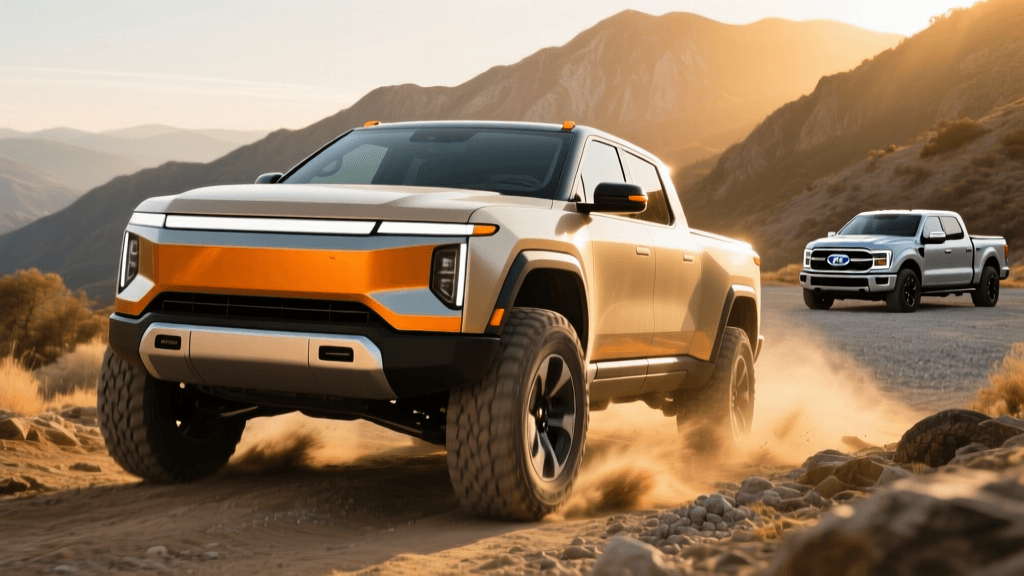
The Reality: While it is true that the Rivian R1T is the superior rock crawler—thanks to its available quad-motor setup, hydraulic roll control, and air suspension that lifts the truck to an impressive 14.9 inches of ground clearance—the Lightning is far more capable than the rumors suggest. The Lightning features 8.9 inches of ground clearance, robust underbody skid plates protecting the battery, and a low center of gravity that makes it incredibly stable on dirt, gravel, and snow. Unless you are actively navigating Moab-style boulder fields or deep ruts, the Lightning's Pro Power Onboard system and decent approach/departure angles make it a highly competent companion for 95% of forest service roads and camping trails.
Myth 2: The Rivian R1T is a 'Lifestyle Toy' That Can't Do Real Work
The Myth: The R1T's sleek design, focus on adventure accessories, and premium price tag lead many traditional truck buyers to assume it lacks the grit and capability for actual job-site work or heavy towing.
The Reality: This is a massive misconception. The Rivian R1T is built on a robust skateboard platform that boasts a maximum towing capacity of 11,000 pounds. Its bed may be shorter than the Lightning's at 4.5 feet, but it is constructed from durable composites and features integrated tie-downs and a heavy-duty tonneau cover. Furthermore, the R1T's gear tunnel and reinforced bed floor can handle heavy construction materials, and its dual-motor or quad-motor powertrains provide instantaneous torque that makes hauling heavy payloads up steep grades remarkably effortless. It is a premium truck, yes, but it is undeniably a capable workhorse.
Common Mistake 1: Failing to Calculate the 'Towing Range Tax'
One of the most frequent and painful mistakes new EV truck owners make is assuming the EPA-estimated range applies when towing a trailer. According to the U.S. Department of Energy's Alternative Fuels Data Center, vehicle efficiency drops significantly when hauling heavy loads due to aerodynamic drag and increased rolling resistance.
The Actionable Advice: When towing a 5,000-pound camper or a heavy equipment trailer, expect your range to drop by 40% to 50% in both the R1T and the Lightning. If your Lightning Extended Range has an EPA estimate of 320 miles, plan your charging stops based on a real-world towing range of roughly 160 to 180 miles. Always use EV-specific routing apps like A Better Routeplanner (ABRP) that allow you to input your exact trailer weight and aerodynamic profile to generate realistic charging itineraries.
Common Mistake 2: Ignoring the Storage Architecture (Gear Tunnel vs. Frunk)
Buyers often focus entirely on bed length and battery size, completely overlooking how the unique storage solutions of each truck will impact their daily lives.
- The Rivian R1T Gear Tunnel: Rivian utilizes the space between the cabin and the bed to create a massive, lockable, climate-adjacent cross-cab tunnel. It is perfect for storing skis, fishing rods, camping chairs, or muddy boots. It keeps your main bed clear for larger items like dirt bikes or plywood.
- The Ford F-150 Lightning Mega Power Frunk: Ford ditched the engine and replaced it with a 400-pound payload front trunk. It features a drain plug, power outlets, and weatherproofing. It is the ultimate mobile office, grocery hauler, or tailgating cooler. However, it does not accommodate long, slender items the way the Rivian's Gear Tunnel does.
The Fix: Map out what you actually carry. If you haul long tools or outdoor gear, the R1T's tunnel is revolutionary. If you need secure, easily accessible, weatherproof storage for job-site tools or groceries, the Lightning's Frunk is unmatched.
Myth 3: Charging Network Access Gives One Truck a Permanent Advantage
The Myth: For a long time, buyers believed that one brand would have a permanent stranglehold on the best charging infrastructure, leading to range anxiety for the other.
The Reality: The North American Charging Standard (NACS) has leveled the playing field. Both Ford and Rivian have officially adopted the Tesla Supercharger network. According to the official Rivian charging network resources, Rivian owners can now access Tesla Superchargers using an approved adapter, with future vehicles featuring native NACS ports. Similarly, Ford's F-150 Lightning owners have been granted access to the Supercharger network via adapters. The mistake here is assuming you are locked out of the best DC fast-charging network; today, both trucks offer exceptional cross-country travel capabilities, provided you have the correct NACS adapter in your glovebox.
Head-to-Head Specification & Reality Check
Below is a data table comparing the core specifications that matter most to truck buyers, stripped of marketing fluff.
| Feature | Rivian R1T (Dual-Motor Max Pack) | Ford F-150 Lightning (Extended Range) |
|---|---|---|
| EPA Estimated Range | ~410 miles | ~320 miles |
| Max Towing Capacity | 11,000 lbs | 10,000 lbs |
| Ground Clearance | Up to 14.9 inches (Air Suspension) | 8.9 inches |
| Unique Storage | Cross-Cab Gear Tunnel | Mega Power Frunk (400 lb payload) |
| Bed Length | 4.5 feet (54 inches) | 5.5 feet (67 inches) |
| V2L / Power Export | Camp Kitchen / Bed Outlets | Pro Power Onboard (Up to 9.6 kW) |
Common Mistake 3: Overbuying on Battery Capacity
It is tempting to check the box for the largest, most expensive battery pack available to eliminate range anxiety. However, this is a costly mistake if your use case does not demand it.
If you primarily use your truck for daily commuting, home-improvement store runs, and weekend trips within a 150-mile radius of your home, the Standard or Extended battery packs are more than sufficient. The larger battery packs add significant weight, which slightly reduces payload capacity and increases the upfront cost by thousands of dollars. Furthermore, larger batteries take longer to charge from 10% to 80% on a DC fast charger. Only opt for the Rivian Max Pack or the Lightning's top-tier Extended Range configurations if you frequently drive through the American West, regularly tow heavy loads over long distances, or lack reliable home charging and rely entirely on public infrastructure.
The Verdict: Which Truck Should You Buy?
Busting the myths reveals that both the Rivian R1T and the Ford F-150 Lightning are extraordinary feats of engineering, but they serve distinctly different buyer personas.
Choose the Rivian R1T if: You are an outdoor enthusiast, skier, or overlander who prioritizes cutting-edge technology, superior off-road geometry, and the brilliant utility of the Gear Tunnel. It is the premium, adventure-focused choice that feels like a luxury SUV masquerading as a highly capable truck.
Choose the Ford F-150 Lightning if: You need a traditional truck experience, value the massive utility of the Mega Power Frunk, require a longer 5.5-foot bed for job-site materials, and want the ability to power your home or job site tools using the Pro Power Onboard system. It is the ultimate pragmatic workhorse that seamlessly integrates into a traditional truck buyer's lifestyle.
By ignoring the internet myths and focusing on your actual storage, towing, and terrain needs, you will find that the 'best' electric truck is simply the one that solves your specific daily challenges.