Introduction: The Battle of the Tech-Forward Family SUVs
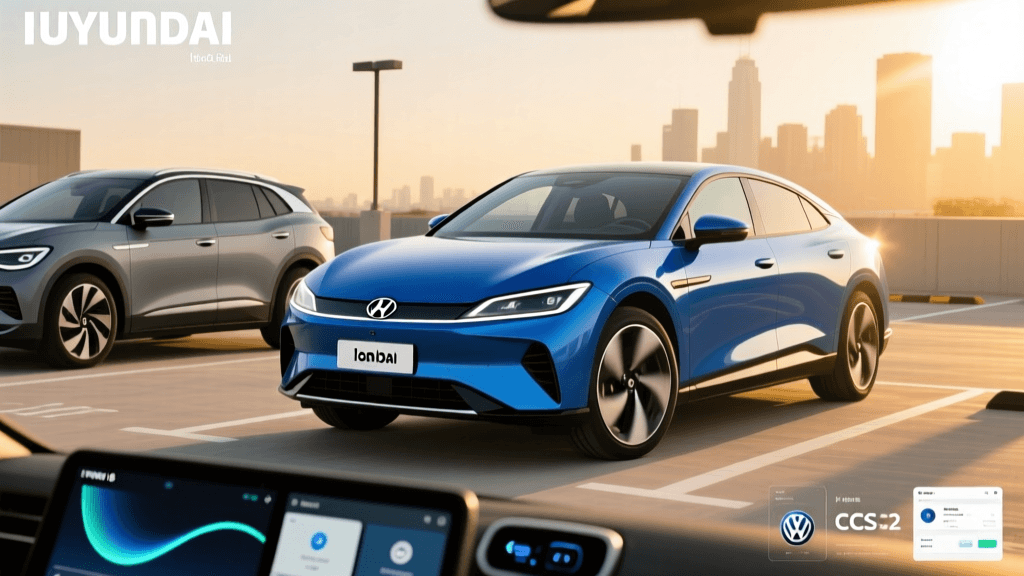
When shopping for a family electric vehicle, range and cargo space often dominate the conversation. However, as the EV market matures, the underlying technology, software architecture, and digital user experience have become just as critical. The Volkswagen ID.4 and the Hyundai Ioniq 5 are two of the most popular midsize electric SUVs on the market, yet they approach vehicular technology from fundamentally different philosophies. Volkswagen leans into a minimalist, software-defined European approach, while Hyundai embraces a hardware-rich, feature-dense Korean tech strategy. In this deep dive, we strip away the sheet metal and examine the infotainment, charging architecture, advanced driver assistance systems (ADAS), and bidirectional capabilities of these two EV heavyweights to help you decide which tech suite best fits your digital lifestyle.
Platform Architecture: E-GMP 800V vs. MEB 400V
The most profound technological difference between these two SUVs lies beneath the floorboards. The Hyundai Ioniq 5 is built on the Electric-Global Modular Platform (E-GMP), which utilizes an 800-volt electrical architecture. The VW ID.4, conversely, is built on the Modular Electric Drive Matrix (MEB) platform, which operates on a more traditional 400-volt system. According to the U.S. Department of Energy, higher voltage architectures allow for more efficient power delivery and significantly faster charging times without requiring excessively thick, heavy wiring harnesses.
What does this mean for the end user? The Ioniq 5's 800V system allows it to accept up to 233 kW of peak DC fast charging power. Under optimal conditions, it can charge from 10% to 80% in roughly 18 minutes. The ID.4's 400V system peaks at around 170 kW on newer models (and 125 kW on older ones), taking closer to 28-35 minutes to achieve the same 10-80% state of charge. Furthermore, the Ioniq 5's system natively supports ultra-fast 350 kW chargers, whereas the ID.4 will be bottlenecked by its 400V limitations, making the Hyundai the clear winner for frequent road-trippers who prioritize minimal charging downtime.
Infotainment and User Experience: Touch vs. Tactile
Inside the cabin, the technological divergence is immediately apparent. The VW ID.4 features a 12-inch central touchscreen running Volkswagen's ID.Software. The interface is heavily reliant on touch-capacitive sliders for volume and temperature control. While the minimalist aesthetic is clean, many users find the lack of haptic feedback and the absence of backlighting on the temperature sliders frustrating, especially during nighttime driving. The processing speed on earlier ID.4 models was notably sluggish, though recent over-the-air (OTA) updates and the introduction of Software 3.0 and 4.0 have improved responsiveness and menu logic.
The Hyundai Ioniq 5 takes a different route, utilizing a dual 12.3-inch panoramic display setup. The infotainment system is powered by Hyundai's robust ccNC (Connected Car Navigation Cockpit) or legacy Gen5 system, depending on the model year. Crucially, Hyundai retains physical toggle switches and a dedicated climate control panel. The system is widely praised for its rapid boot times, intuitive menu structures, and reliable voice recognition. For families who prioritize ease of use and minimal distraction while driving, the Ioniq 5's blend of high-resolution screens and tactile buttons offers a superior user experience.
Advanced Driver Assistance Systems (ADAS)
Both vehicles are equipped with top-tier safety technology, a critical factor for family haulers. The Insurance Institute for Highway Safety (IIHS) notes that modern EVs often feature some of the most advanced ADAS suites due to their drive-by-wire capabilities. The VW ID.4 utilizes IQ.DRIVE, which includes Travel Assist—a system that combines adaptive cruise control and lane centering. It is highly effective on highways, though lane-change assistance usually requires manual turn-signal activation.
Hyundai's Highway Driving Assist 2 (HDA2) is arguably a step ahead in semi-autonomous convenience. HDA2 not only maintains speed and lane position but also features an automated lane-change assist function. By tapping the turn signal stalk on the highway, the Ioniq 5 will verify surrounding traffic and execute the lane change autonomously. Additionally, HDA2 uses GPS data to automatically adjust vehicle speed for upcoming highway curves, a predictive feature that the ID.4's Travel Assist currently lacks in the North American market.
Augmented Reality and Heads-Up Displays
The Ioniq 5 offers an available Augmented Reality Head-Up Display (AR HUD). This system projects navigation instructions, speed, and ADAS warnings directly onto the windshield, aligning them with the physical road ahead. For example, a blue arrow will appear to float directly over the intersection where you need to turn. The VW ID.4 also offers an advanced AR HUD on higher trims, utilizing a similar projection technique. However, reviewers and users frequently note that the Ioniq 5's AR HUD offers a wider field of view and slightly crisper graphics, giving it a marginal edge in daily usability and futuristic appeal.
Vehicle-to-Load (V2L) and Bidirectional Charging
One of the most innovative tech features exclusive to the Ioniq 5 in this comparison is Vehicle-to-Load (V2L) capability. Using a standard adapter plugged into the exterior charging port (or the dedicated interior 120V outlet), the Ioniq 5 can output up to 3.6 kW of continuous AC power. This transforms the SUV into a mobile power bank capable of running camping equipment, tailgating appliances, or even essential home circuits during a power outage. The VW ID.4, unfortunately, does not currently support V2L functionality in the United States market, limiting its utility as an off-grid or emergency power source.
Head-to-Head Technology Specification Table
| Technology Feature | Volkswagen ID.4 (AWD Pro S) | Hyundai Ioniq 5 (Limited AWD) |
|---|---|---|
| Electrical Architecture | 400-Volt (MEB Platform) | 800-Volt (E-GMP Platform) |
| Peak DC Fast Charge Rate | 170 kW | 233 kW (up to 350 kW capable) |
| 10-80% DC Charge Time | ~28-35 Minutes | ~18 Minutes |
| Infotainment Display | 12.0-inch Touchscreen | Dual 12.3-inch Panoramic Screens |
| Climate Controls | Capacitive Touch Sliders | Physical Buttons & Toggles |
| Highway Lane Change Assist | Manual Stalk Activation | Semi-Autonomous (HDA2) |
| Vehicle-to-Load (V2L) | Not Available | Up to 3.6 kW Output |
| Over-The-Air (OTA) Updates | Limited (Infotainment/Maps) | Comprehensive (ADAS, BMS, Nav) |
Practical Dealership Testing Advice
Reading about software is one thing; experiencing it is another. When you visit the dealership, take these actionable steps to test the technology:
- The Night Test: If possible, test drive the ID.4 at dusk or in a dark parking garage. Try adjusting the climate control and radio volume using the touch sliders to see if the lack of backlighting is a dealbreaker for your daily routine.
- The Boot-Up Test: Turn the Ioniq 5 completely off, exit, lock it, wait two minutes, and get back in. Time how long the dual screens take to boot up and connect to Apple CarPlay or Android Auto. This simulates real-world usability.
- V2L Demonstration: Ask the Hyundai dealer to show you the V2L adapter and the interior V2L outlet. Verify that the vehicle's battery management system allows you to set a 'discharge limit' so you don't accidentally drain the battery below your required driving range.
- ADAS Calibration: On a marked highway, test the HDA2 and IQ.DRIVE systems. Pay attention to how aggressively each system steers in curves and how smoothly the regenerative braking integrates with the adaptive cruise control when a car cuts in front of you.
Final Verdict: Which Tech Suite Wins?
According to data from the Environmental Protection Agency (EPA), both vehicles offer excellent efficiency and range, but their technological execution serves different buyer profiles. The Volkswagen ID.4 appeals to traditionalists who want a quiet, comfortable, and spacious family SUV where the technology stays largely in the background. Its 400V architecture is perfectly adequate for daily commuting and overnight home charging, and its minimalist interior offers a serene, uncluttered environment.
However, the Hyundai Ioniq 5 is the undisputed champion for tech enthusiasts and road-trippers. The 800V E-GMP platform future-proofs the vehicle for the next generation of ultra-fast chargers, drastically reducing highway downtime. The retention of physical buttons, the inclusion of semi-autonomous lane changes via HDA2, and the game-changing 3.6 kW V2L capability make it a more versatile, modern, and user-friendly digital companion. If technology, charging speed, and software features are high on your priority list, the Ioniq 5 secures the victory in this head-to-head comparison.