The Electric Work Truck Paradigm Shift
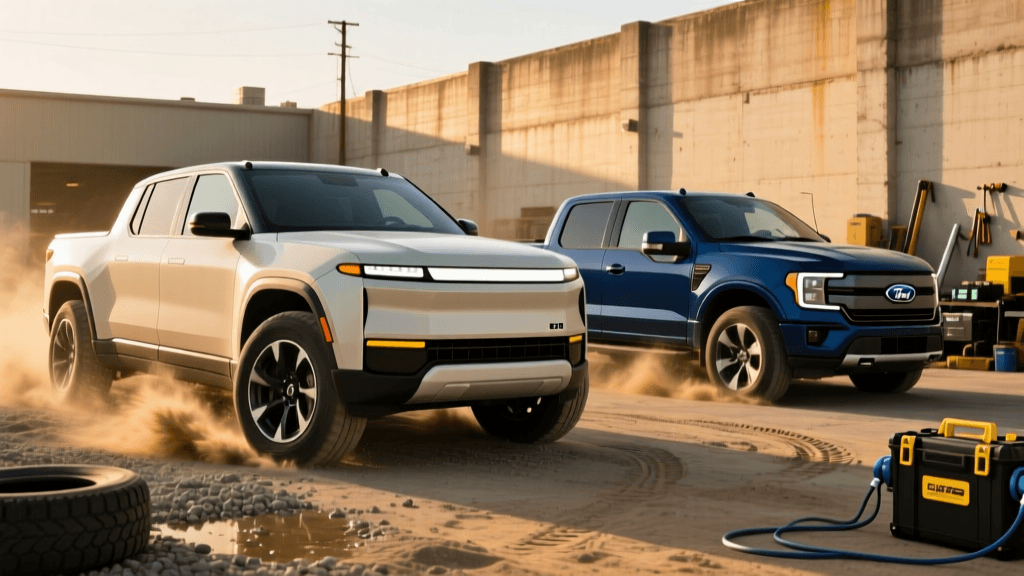
The transition from internal combustion to electric powertrains in the commercial and contractor space is no longer a futuristic concept; it is a data-driven reality. When evaluating the mid-size and full-size electric pickup market, two dominant platforms emerge with vastly different engineering philosophies: the Ford F-150 Lightning and the Rivian R1T. While both vehicles offer instantaneous torque and zero tailpipe emissions, their utility profiles diverge significantly when subjected to rigorous job-site demands.
For fleet managers, independent contractors, and outdoor professionals, choosing between these two platforms requires looking past the marketing gloss and diving deep into the hard numbers. This head-to-head comparison analyzes towing capacities, payload limits, cargo management systems, mobile power generation, and total cost of ownership (TCO) to determine which electric truck truly earns the title of the ultimate workhorse.
Head-to-Head Data Table: Lightning vs. R1T
Below is a side-by-side breakdown of the core work metrics for the most capable configurations of both vehicles: the Ford F-150 Lightning (Extended Range, Max Trailer Tow Package) and the Rivian R1T (Dual-Motor Max Pack).
| Metric | Ford F-150 Lightning (Extended Range) | Rivian R1T (Dual-Motor Max Pack) |
|---|---|---|
| Horsepower | 580 hp | 665 hp |
| Torque | 775 lb-ft | 829 lb-ft |
| Max Towing Capacity | 10,000 lbs | 11,000 lbs |
| Max Payload Capacity | 2,235 lbs | 1,764 lbs |
| Battery Capacity | 131 kWh (NMC) | 149 kWh (NMC) |
| EPA Estimated Range | 320 miles | 352 miles |
| Bed Length | 5.5 feet | 4.5 feet (plus Gear Tunnel) |
| Front Trunk (Frunk) Volume | 400 Liters | 311 Liters |
| Max Power Export | 9.6 kW (Pro Power Onboard) | 9.6 kW (Bed/Camp Outlets) |
Towing and Payload: The Core Work Metrics
Towing Capacity and Range Degradation
On paper, the Rivian R1T edges out the Ford F-150 Lightning in maximum towing capacity, rated at 11,000 pounds compared to the Lightning's 10,000 pounds (when properly equipped with the Max Trailer Tow Package). However, raw towing numbers only tell half the story. The critical data point for electric work trucks is range degradation under load. According to extensive real-world testing documented by MotorTrend's F-150 Lightning coverage, towing a 5,000-pound trailer at highway speeds can reduce the Lightning's range by up to 50%. The Rivian R1T experiences similar aerodynamic and weight-related range penalties, meaning neither truck is currently viable for long-haul, heavy-duty towing without meticulous route planning around DC fast chargers.
Payload and Suspension Dynamics
Where the Ford F-150 Lightning decisively beats the Rivian R1T is in payload capacity and traditional bed utility. The Lightning's traditional steel frame and rear leaf-spring suspension (on most trims) allow it to haul up to 2,235 pounds of dirt, lumber, or equipment. The R1T, utilizing an independent rear suspension and a skateboard chassis designed more for performance and off-road articulation, maxes out at a relatively modest 1,764 pounds. For contractors who regularly max out their beds with heavy aggregate or dense materials, the Lightning is the mathematically superior choice.
Bed Utility, Frunk, and Cargo Management
The Battle of the Beds
The Ford F-150 Lightning features a traditional 5.5-foot bed. It is wide, deep, and compatible with decades of aftermarket accessories, bed liners, and ladder racks. The Rivian R1T, classified as a mid-size truck, offers a shorter 4.5-foot bed. However, Rivian compensates with the innovative 'Gear Tunnel'—a massive 11.6-cubic-foot pass-through compartment located behind the rear seats. While the Gear Tunnel is phenomenal for securing long, narrow items like ladders, PVC pipes, or camping gear, it lacks the vertical clearance and top-down accessibility required for standard palletized cargo or heavy equipment loading via forklift.
Front Trunk (Frunk) Utility
Both trucks utilize the space formerly occupied by an engine block for secure, lockable storage. The Lightning's Mega Power Frunk boasts 400 liters of volume, featuring a drain plug and 400 watts of dedicated power, making it an excellent mobile workstation or secure lockbox for expensive power tools. The R1T's frunk is slightly smaller at 311 liters but includes clever organizational dividers. For pure volume and job-site utility, the Ford's frunk is the more practical asset.
Mobile Power: Pro Power Onboard vs. Rivian's Ecosystem
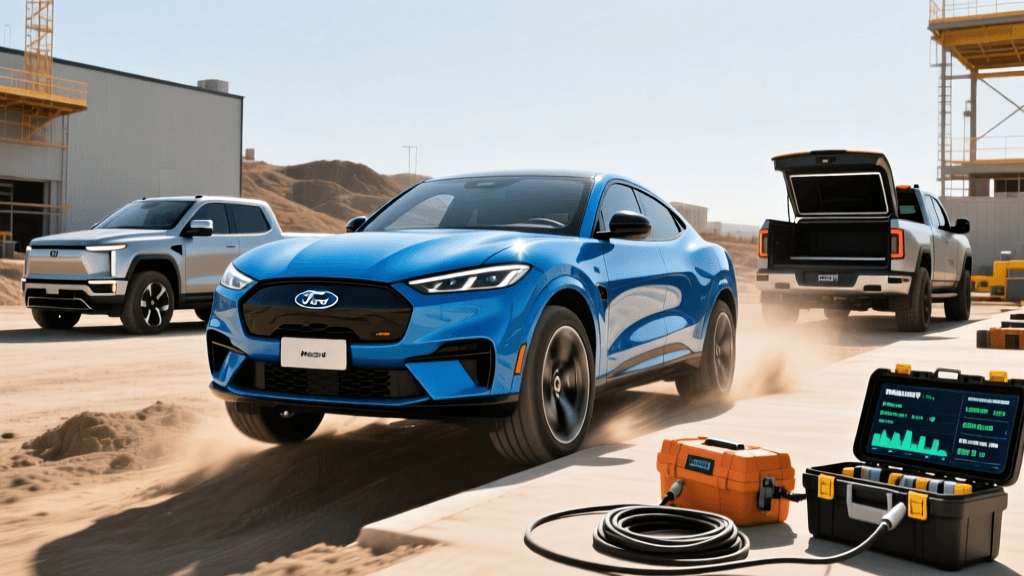
One of the most transformative features of electric work trucks is Vehicle-to-Load (V2L) capability, effectively turning the truck's massive battery into a mobile generator.
- Ford Pro Power Onboard: The Lightning offers up to 9.6 kW of exportable power. This is distributed through multiple 120V outlets in the bed, cabin, and frunk, and even a 240V outlet for heavy-duty equipment. This is enough juice to simultaneously run a chop saw, a job-site radio, and battery chargers for an entire crew without breaking a sweat.
- Rivian R1T Power System: The R1T also offers robust power export capabilities, including 120V outlets in the bed and the Gear Tunnel. While it can handle standard job-site tools, Rivian's ecosystem is heavily skewed toward lifestyle and overlanding (e.g., the Slide-Out Camp Kitchen) rather than raw, continuous industrial power delivery.
For commercial fleets, Ford's integration of Pro Power Onboard with their commercial telematics allows fleet managers to monitor power usage and ensure crews aren't draining the battery to the point of being unable to return to the depot.
Fleet Charging, Downtime, and TCO
Depot Charging and Infrastructure
According to the U.S. Department of Energy's Alternative Fuels Data Center, transitioning a fleet to electric requires careful analysis of depot charging infrastructure. Ford has a distinct advantage here through the 'Ford Pro' division, which offers end-to-end commercial charging solutions, including hardware, software, and installation services tailored for fleet depots. The Lightning supports up to 150 kW DC fast charging, allowing a 15-80% charge in roughly 45 minutes.
Rivian's commercial portal is growing, and the R1T supports slightly faster peak charging speeds (up to 200+ kW on newer Max Pack configurations), but Rivian's service network and commercial hardware integration are still maturing compared to Ford's century-old commercial footprint. For a business where vehicle downtime equals lost revenue, Ford's established commercial support network is a massive risk-mitigation factor.
Total Cost of Ownership (TCO)
When calculating TCO, buyers must factor in the initial MSRP, available tax incentives, and long-term maintenance. The Rivian R1T starts at a premium price point, positioning it as a luxury-lifestyle truck that happens to be capable of work. Conversely, the Ford F-150 Lightning offers a much wider spread of trims, including the commercial-focused Pro trim, which can be configured with a Lithium-Iron Phosphate (LFP) battery. LFP batteries are not only more affordable but offer superior longevity and resistance to degradation when subjected to the daily 100% charging cycles required by commercial fleets.
Furthermore, as noted in Car and Driver's Rivian R1T hub, the R1T's complex quad-motor or dual-motor setups and advanced air suspension systems present higher long-term out-of-warranty repair risks compared to the Lightning's more traditional, albeit electrified, suspension and drivetrain layout.
The Final Verdict: Which Truck Fits Your Business?
The data clearly delineates the target audience for each vehicle:
- Choose the Ford F-150 Lightning if: Your work requires maximum payload capacity, traditional bed dimensions for pallets and lumber, robust mobile power generation via Pro Power Onboard, and the backing of an established commercial fleet service network. It is the undisputed champion for traditional contractors, landscapers, and commercial fleets.
- Choose the Rivian R1T if: Your 'work' leans heavily toward outdoor recreation, trail guiding, or specialized light-duty contracting where the Gear Tunnel provides superior secure storage. It is ideal for the tech-forward professional who prioritizes driving dynamics, off-road capability, and luxury over raw payload metrics.
Ultimately, while the Rivian R1T is an engineering marvel, the Ford F-150 Lightning's adherence to traditional truck proportions, superior payload data, and commercial-grade power export make it the definitively better tool for the traditional job site.