The Aerodynamic Titans: Setting the Baseline
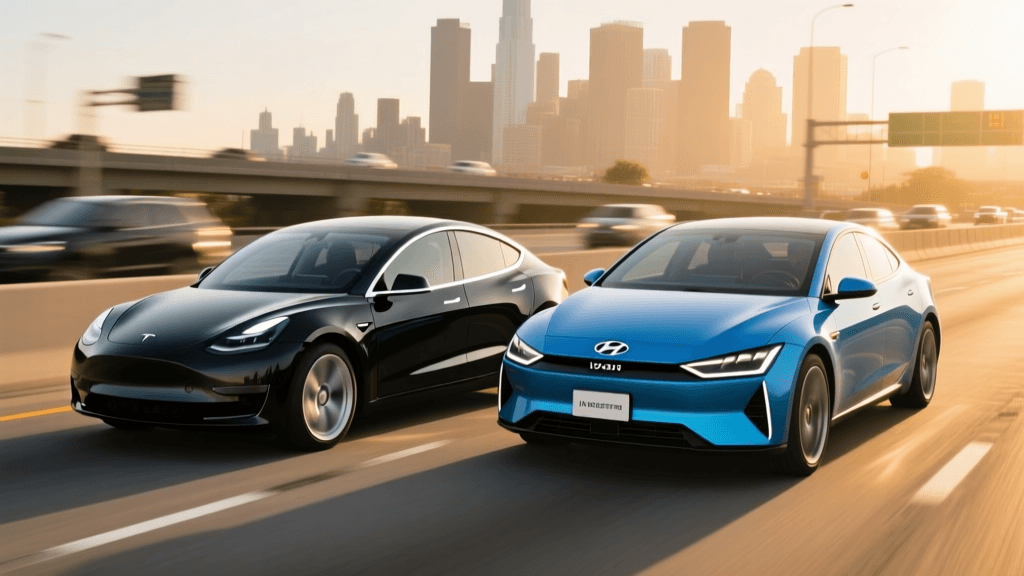
When discussing electric vehicle efficiency, two nameplates consistently dominate the conversation: the Tesla Model 3 and the Hyundai Ioniq 6. Both vehicles feature teardrop silhouettes, flush door handles, and meticulously engineered underbellies designed to slice through the air. But how do you extract every last mile from these efficiency kings in the real world? This comprehensive how-to guide will walk you through measuring, optimizing, and comparing the real-world efficiency of the Tesla Model 3 (Rear-Wheel Drive) and the Hyundai Ioniq 6 (SE Long Range RWD).
Before diving into the optimization steps, we must establish the baseline specifications. According to the U.S. Department of Energy's EV technology database, aerodynamic drag accounts for over 60% of an EV's energy consumption at highway speeds. Both cars mitigate this brilliantly, but their approaches to battery management and powertrain efficiency differ.
| Specification | Tesla Model 3 RWD (2024) | Hyundai Ioniq 6 SE LR RWD (2024) |
|---|---|---|
| Battery Capacity (Usable) | ~60 kWh (LFP) | 77.4 kWh (NMC) |
| EPA Estimated Range | 272 Miles | 361 Miles |
| EPA Combined MPGe | 132 MPGe | 140 MPGe |
| EPA Efficiency (Wh/mile) | 255 Wh/mile | 240 Wh/mile |
| Drag Coefficient (Cd) | 0.219 | 0.21 |
| Architecture | 400-Volt | 800-Volt |
How to Accurately Measure Your Own Real-World Efficiency
EPA estimates are a great starting point, but your driving route, local climate, and elevation changes dictate your actual energy consumption. To properly compare your Model 3 and Ioniq 6, you need to measure them using a standardized methodology. We recommend adapting the testing criteria used in Edmunds' standardized real-world EV range tests, which prioritize mixed driving and climate control usage.
Step 1: Reset the Trip Computers
In the Tesla Model 3, navigate to Controls > Trips, and reset 'Trip B'. In the Hyundai Ioniq 6, use the steering wheel controls to navigate to the digital cluster's trip info screen and hold the OK button to reset Trip 1. This ensures you are measuring a specific journey rather than lifetime averages.
Step 2: The 100-Mile Mixed Loop Test
Drive a 100-mile loop that includes 40 miles of city driving (under 45 mph) and 60 miles of highway driving (65-70 mph). Keep the cabin temperature set to 72°F with the fan on auto. At the end of the loop, note the Wh/mile (Tesla) or kWh/100km (Hyundai, which you can convert to Wh/mile by multiplying by 1.609).
Step-by-Step: Optimizing the Tesla Model 3 for Maximum Range
The refreshed 'Highland' Model 3 is incredibly efficient, but its software-heavy interface requires specific configurations to minimize energy waste.
1. Tire Pressure Calibration
Tesla recommends a cold tire pressure of 42 PSI for the 18-inch Photon wheels. Under-inflated tires increase rolling resistance drastically. Check your pressures early in the morning before driving. If you are embarking on a long highway road trip, bumping the pressure to 44 PSI can yield a 2-3% efficiency gain at the cost of a slightly firmer ride.
2. Regenerative Braking and Acceleration Settings
Ensure Regenerative Braking is set to 'Standard' (or 'Hold' if available on your firmware). This allows for one-pedal driving, capturing kinetic energy that would otherwise be lost to friction brakes. Next, set your Acceleration mode to 'Chill'. This limits the initial torque request, preventing the inverter from dumping excessive current into the motor during stop-and-go traffic.
3. Strategic HVAC and Preconditioning
The Model 3 uses a highly efficient heat pump. However, heating the cabin from 40°F to 72°F while driving requires massive energy. Use the Tesla app to 'Schedule Departure' or manually turn on the climate control 20 minutes before leaving while the car is still plugged in. This uses grid electricity to warm the battery and cabin, preserving your onboard kWh for propulsion.
Step-by-Step: Optimizing the Hyundai Ioniq 6 for Maximum Range
The Ioniq 6's E-GMP platform is a masterclass in electrical engineering, offering unique hardware features that the Tesla lacks.
1. Mastering the Paddle Shifters and i-Pedal
Unlike Tesla's fixed regen, Hyundai gives you steering wheel paddle shifters to adjust regenerative braking from Level 0 to Level 3 on the fly. For city driving, pull the left paddle until the dash indicates 'i-Pedal' (Level 3+), allowing you to come to a complete stop using only the motor. On the highway, drop it to Level 1 or 2 to allow for smoother coasting, which is actually more efficient than accelerating and braking repeatedly.
2. Utilizing 'Driver Only' Climate Mode
If you are commuting alone, press the 'Driver Only' button on the Ioniq 6's climate control panel. This shuts off the HVAC vents to the passenger side and rear of the cabin, significantly reducing the load on the heat pump and blower motor. Combine this with the standard heated seats and heated steering wheel to lower the ambient cabin target temperature to 68°F, saving up to 10% in winter energy consumption.
3. Monitoring the Active Air Flaps
The Ioniq 6 features Active Air Flaps in the front grille that close at highway speeds to reduce drag. Occasionally check the front bumper to ensure debris or winter ice hasn't jammed them open. If they are stuck open at 70 mph, your drag coefficient increases, directly hurting your Wh/mile consumption.
Highway Charging Efficiency: 400V vs. 800V Architecture
Efficiency isn't just about how far you can drive on a single charge; it is also about how much energy is lost during the charging process. According to extensive testing by Car and Driver's real-world EV range and charging evaluations, thermal management during DC fast charging plays a massive role in total energy loss.
The Hyundai Ioniq 6 utilizes an 800-volt architecture. This allows it to push electrons into the battery at lower amperage, which generates significantly less heat. Less heat means the car's thermal management system doesn't have to work as hard to cool the battery during a fast-charge session. The Ioniq 6 can charge from 10% to 80% in about 18 minutes, with minimal energy lost to cooling pumps.
The Tesla Model 3 relies on a traditional 400-volt architecture. To achieve fast charging speeds, it must push higher amperage, generating more heat. While Tesla's Octovalve thermal management system is industry-leading, the physics of 400V means slightly more energy is drawn from the Supercharger pedestal than actually makes it into the battery cells compared to the 800V Hyundai.
Calculating Your Total Energy Cost
To truly understand efficiency, translate Wh/mile into dollars. Assume an average home electricity rate of $0.16 per kWh.
- Tesla Model 3 (255 Wh/mile): Consumes 25.5 kWh per 100 miles. Cost: $4.08 per 100 miles.
- Hyundai Ioniq 6 (240 Wh/mile): Consumes 24.0 kWh per 100 miles. Cost: $3.84 per 100 miles.
While the difference of $0.24 per 100 miles seems negligible, over 15,000 miles of annual driving, the Ioniq 6 saves you roughly $36 a year in home charging costs. However, if you rely heavily on public DC Fast Chargers (averaging $0.40/kWh), the Ioniq 6's superior charging efficiency and lower consumption can save you upwards of $100 annually.
Final Verdict: Which Efficiency King Wins?
If your primary goal is achieving the absolute lowest Wh/mile consumption and maximizing highway range, the Hyundai Ioniq 6 SE Long Range RWD is the winner. Its 0.21 drag coefficient, 800V charging architecture, and granular regen controls give it a slight but measurable edge in pure electrical efficiency.
However, the Tesla Model 3 RWD remains the champion of practical efficiency. Its smaller, lighter LFP battery means you are carrying less dead weight, and the seamless integration of the Supercharger network eliminates the routing inefficiencies often found in third-party charging apps. By following the optimization steps outlined above, owners of either vehicle can easily beat EPA estimates in temperate climates and minimize the dreaded winter range drop.