Introduction: The E-GMP Platform Sibling Rivalry
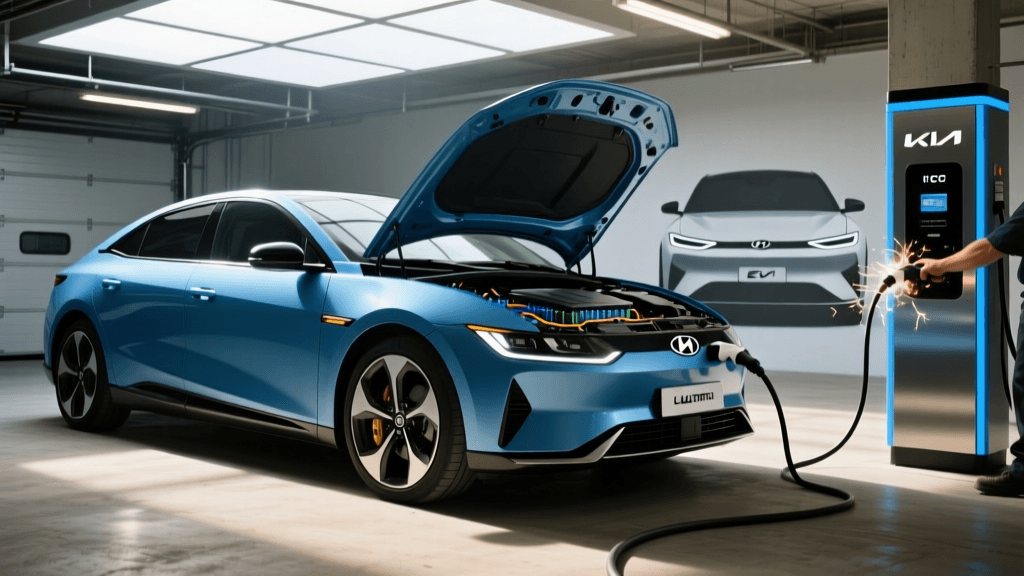
The Kia EV6 and Hyundai Ioniq 5 are mechanical twins, both built on the Hyundai Motor Group’s highly acclaimed Electric-Global Modular Platform (E-GMP). They share the same 800-volt architecture, battery packs, and powertrains. However, when things go wrong, the troubleshooting experience can differ due to distinct software tuning, interior layouts, and brand-specific Technical Service Bulletins (TSBs). For EV owners and prospective buyers, understanding how to diagnose and solve common E-GMP issues is critical for minimizing downtime and maximizing vehicle longevity.
This guide dives deep into the most frequent troubleshooting scenarios for both the EV6 and Ioniq 5, providing actionable steps to resolve platform-specific quirks, electrical gremlins, and charging anomalies.
1. The ICCU Failure: Diagnosing the 'Check Electric Vehicle System' Error
The Integrated Charging Control Unit (ICCU) is the heart of the E-GMP’s charging system. It manages AC Level 2 charging, DC fast charging, and crucially, steps down high-voltage power to keep the 12V auxiliary battery charged while driving. Early production models (2022-2023) of both the EV6 and Ioniq 5 experienced a higher-than-average rate of ICCU failures.
Symptoms and Diagnosis
- Dashboard Warning: The dreaded 'Check Electric Vehicle System' or 'Check High Voltage Battery System' alert appears.
- Charging Failure: The vehicle refuses to accept AC or DC charge.
- 12V Battery Drain: Because the ICCU fails to charge the 12V battery while driving, the car may eventually fail to start or 'brick' entirely once the 12V battery depletes.
Troubleshooting Steps
If you encounter this error, first perform a hard reboot of the vehicle's systems by locking the car, walking away with the key fob for 15 minutes to allow the modules to sleep, and then restarting. If the error persists, the ICCU likely requires a software update or hardware replacement. Both Kia and Hyundai have issued TSBs and extended warranty coverage for the ICCU on affected vehicles. You must visit a dealership to have the diagnostic trouble codes (DTCs) read. If the vehicle is undrivable due to a dead 12V battery caused by the ICCU, utilize the 12V reset button (detailed below) to get enough power to shift into neutral for a flatbed tow.
2. 12V Battery Drain and the 'Dark Screen' Brick
Despite having a massive high-voltage traction battery, E-GMP vehicles rely on a traditional 12V lead-acid battery to power the computers, door handles, and screens before the main contactors close. If the 12V battery dies, the car is completely unresponsive—a scenario known as the 'Dark Screen' brick.
According to the U.S. Department of Energy's Alternative Fuels Data Center, auxiliary battery management is a critical component of overall EV battery health and vehicle reliability. To combat parasitic drain, Hyundai and Kia implemented a '12V Battery Reset' feature.
How to Use the 12V Reset Button
- Locate the Button: On both the Ioniq 5 and EV6, look on the lower left side of the dashboard, near the hood release latch. You will see a small button labeled '12V RESET' or a battery icon.
- Engage the Reset: Press and hold the button for about 3 to 5 seconds. You will hear a loud 'clunk' from the rear or under the hood. This is the high-voltage contactor closing, temporarily bridging power from the main battery to the 12V system.
- Start the Vehicle: Immediately press the brake and push the 'START' button within 10 seconds of the clunk. The car should boot up normally.
Pro-Tip: Go into your infotainment settings and ensure the '12V Battery Saver' or 'Auxiliary Battery Saver' mode is toggled ON. This forces the car to periodically wake up and top off the 12V battery if it detects voltage dropping while parked.
3. DC Fast Charging Handshake and Preconditioning Glitches
The E-GMP platform is famous for its ultra-fast 800V charging capabilities, but owners occasionally experience 'handshake' failures at public CCS chargers, or frustratingly slow charging speeds in cold weather.
Troubleshooting Slow Cold-Weather Charging
If your EV6 or Ioniq 5 is charging at a painfully slow rate (e.g., 30kW instead of 200kW+) in cold weather, the battery preconditioning system likely did not activate. The Fix: E-GMP vehicles will only precondition the battery for DC fast charging if the charger is set as the destination in the native vehicle navigation system. If you use Apple CarPlay or Android Auto to route to a charger, the car's thermal management system remains blind to your destination. Always input the charger into the car's native nav to trigger the battery heating cycle.
Troubleshooting Handshake Failures
If you plug in and the charger fails to initiate (handshake failure): 1. Unplug the vehicle. 2. Lock the car, then unlock it. 3. Open the charge port door manually using the release button inside the cabin, rather than pushing on the door itself. 4. Plug the charger in firmly until you hear the secondary latch click, then initiate the charge on the station screen.
4. Infotainment Freezes and OTA Update Troubleshooting
Both vehicles feature complex, dual-screen infotainment setups that occasionally freeze, drop Bluetooth connections, or fail to complete Over-The-Air (OTA) updates.
The Hard Reset Procedure
If your screen is frozen or audio is glitching, you can force a reboot of the head unit without turning off the car. For the Ioniq 5 and EV6: Press and hold the physical 'Power/Volume' knob and the physical 'Navigation/Setup' button (or the physical 'Home' button depending on the model year and trim) simultaneously for 10 to 15 seconds. The screen will go black, display the Hyundai or Kia logo, and reboot the operating system. This clears the RAM and resolves 90% of minor software bugs without requiring a dealership visit.
E-GMP Troubleshooting Comparison Matrix
| Issue / Symptom | Kia EV6 Specifics | Hyundai Ioniq 5 Specifics | Universal E-GMP Fix |
|---|---|---|---|
| 12V Reset Button Location | Lower left dash, near hood release. Labeled with a battery icon. | Lower left dash, near hood release. Labeled '12V RESET'. | Press and hold for 3-5s, then immediately press Brake + Start. |
| Infotainment Hard Reset | Hold Volume Knob + Physical 'Setup' or 'Nav' button for 15s. | Hold Volume Knob + Physical 'Home' or 'Nav' button for 15s. | Reboots head unit OS; clears cache and Bluetooth memory. |
| ICCU Failure Warning | 'Check Electric Vehicle System' + Turtle Mode (reduced power). | 'Check High Voltage Battery System' + Limp Mode. | Requires OBD2 scan; TSB software update or ICCU replacement under warranty. |
| Phantom Drain / 12V Death | Often triggered by 'Kia Connect' remote polling or valet mode. | Often triggered by 'Bluelink' remote polling or digital key NFC bugs. | Enable '12V Battery Saver' in Settings > Vehicle > Power Management. |
Warranty Nuances and Dealership TSBs
When troubleshooting fails and hardware replacement is necessary, understanding your warranty coverage is vital. Both brands offer industry-leading protection, but the claims process and TSB rollouts can vary.
According to Kia's warranty guidelines and Hyundai's official warranty coverage, both vehicles are protected by a 10-year/100,000-mile powertrain warranty, which encompasses the high-voltage battery, electric motors, and the ICCU. However, Hyundai has historically been slightly faster in issuing nationwide TSBs for E-GMP software logic, while Kia dealerships sometimes require owners to leave the vehicle overnight to 'replicate' the 12V drain issue before authorizing an ICCU replacement. Always bring printed copies of relevant TSBs from EV owner forums to your service advisor to expedite the diagnostic process.
Final Verdict: Which Sibling is Easier to Troubleshoot?
From a pure troubleshooting perspective, the Hyundai Ioniq 5 holds a slight edge for DIY diagnostics. Its infotainment menu structure is generally more intuitive for locating hidden power management settings, and Hyundai's Bluelink app tends to provide more granular error codes when a system fault occurs compared to the Kia Connect app. However, the Kia EV6 benefits from a slightly more robust physical button layout for climate controls (in models equipped with the haptic feedback panel), meaning fewer 'frozen screen' scenarios leave drivers unable to defrost their windshields. Ultimately, because they share the exact same E-GMP bones, mastering the 12V reset procedure, understanding native-nav preconditioning, and keeping up with OTA updates will keep both of these exceptional EVs on the road and out of the service bay.