The Minivan Evolution: Electric vs. Plug-In Hybrid
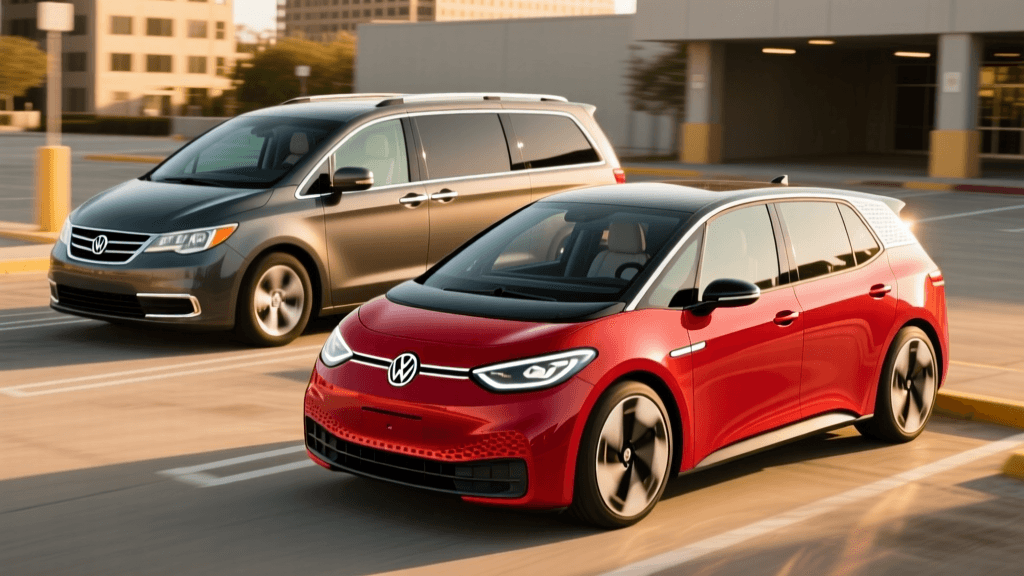
The family minivan segment is undergoing a massive transformation. For decades, the Chrysler Pacifica and its predecessors have dominated the school run and the family road trip. Now, the fully electric Volkswagen ID.Buzz has entered the chat, bringing retro charm and zero-emission driving to the school drop-off line. But when comparing the all-electric VW ID.Buzz against the plug-in hybrid (PHEV) Chrysler Pacifica Hybrid, the internet is flooded with misinformation, outdated assumptions, and costly buyer mistakes.
As a senior automotive reviewer, I see families make thousands of dollars in mistakes or end up deeply disappointed because they believed a myth about cargo space, tax credits, or daily utility. Today, we are separating fact from fiction. Let us bust the most common myths and highlight the critical mistakes buyers make when cross-shopping the VW ID.Buzz and the Chrysler Pacifica Hybrid.
Myth #1: The Pacifica Hybrid Has the Famous 'Stow ’n Go' Seating
The Myth: Buyers assume that because the gas-powered Chrysler Pacifica features the brilliant Stow ’n Go second-row seats that fold completely flat into the floor, the Pacifica Hybrid offers the exact same trick.
The Reality: This is arguably the most costly myth in the minivan world. The Pacifica Hybrid does not have Stow ’n Go seating for the second row. Why? Because the 16-kWh high-voltage battery pack is mounted directly under the floor where those storage bins would normally go. While the third row still folds flat into the rear well, the second-row captain’s chairs must be physically removed from the van and stored in your garage if you want a flat cargo floor. If your primary reason for buying a minivan is the ability to quickly fold the seats away for a trip to the furniture store, the Pacifica Hybrid will frustrate you. The ID.Buzz also lacks fold-into-the-floor seating, relying on traditional folding and tumbling mechanisms, but at least you are not paying for a feature you mistakenly thought was included.
Myth #2: The ID.Buzz is a Massive, Spacious Bus Like the Classic Microbus
The Myth: The retro styling and upright windshield of the VW ID.Buzz trick buyers into believing it offers cavernous, bus-like interior volume that dwarfs traditional minivans.
The Reality: While the US-spec Long Wheelbase (LWB) ID.Buzz is larger than the European short-wheelbase version, it still falls short of the Chrysler Pacifica in sheer cargo utility. According to official Volkswagen specifications, the ID.Buzz offers 18.6 cubic feet of cargo space behind the third row, and a maximum of 75.5 cubic feet with the rear seats folded. By contrast, the Pacifica Hybrid offers a vastly superior 32.3 cubic feet behind the third row, and a massive 140.5 cubic feet max. The Pacifica is longer, wider, and fundamentally designed to swallow 4x8 sheets of plywood (with front seats folded). The ID.Buzz is a phenomenal passenger hauler with great headroom, but if maximum cargo volume is your priority, the PHEV wins on pure measurements.
Myth #3: The Pacifica Hybrid is a 'True EV' for Daily Commutes
The Myth: Because it has a charging port and an EV mode badge, many families believe the Pacifica Hybrid will handle all their daily driving on electricity alone, saving them from ever buying gas for local trips.
The Reality: The EPA rates the Pacifica Hybrid at just 32 miles of all-electric range. If your round-trip commute, plus school drop-offs and grocery runs, exceeds 32 miles, the gas engine will turn on. Furthermore, once that 16-kWh battery is depleted, you are lugging around a heavy minivan with a 3.6-liter V6 engine, achieving an estimated 30 MPG combined. The ID.Buzz, however, offers an EPA-estimated 234 miles of range on a full charge. For the vast majority of American families, the ID.Buzz is the true daily electric commuter, while the Pacifica Hybrid requires religious, daily plugging-in just to keep you in EV mode. For a deeper understanding of how PHEV batteries deplete and revert to gas power, the U.S. Department of Energy’s Fuel Economy guide provides excellent breakdowns on PHEV operational modes.
Head-to-Head Spec Comparison
| Feature | VW ID.Buzz (LWB Pro S) | Chrysler Pacifica Hybrid |
|---|---|---|
| Powertrain | Full Electric (RWD or AWD) | Plug-In Hybrid (V6 + Electric Motors) |
| EPA Electric Range | 234 Miles | 32 Miles |
| Total Range | 234 Miles | ~520 Miles |
| Max Cargo Volume | 75.5 cu-ft | 140.5 cu-ft |
| DC Fast Charging | 200 kW (10-80% in ~26 mins) | N/A (Level 2 AC only) |
| 2nd Row Seat Folding | Fold and Tumble | Removable (No Stow 'n Go) |
Myth #4: Road Trips in the ID.Buzz are a Nightmare Compared to the PHEV
The Myth: The Pacifica Hybrid is the undisputed king of the family road trip because you can just fill up with gas in five minutes, whereas the ID.Buzz will leave you stranded at broken chargers for hours.
The Reality: While the Pacifica Hybrid undeniably wins on pure point-A-to-point-B range without stopping (520 miles), the road trip gap is narrowing faster than critics admit. The ID.Buzz features a peak DC fast-charging rate of 200 kW. Under ideal conditions, it can charge from 10% to 80% in about 26 minutes. If you map your road trips around reliable Electrify America or Tesla Supercharger networks (using the included adapter), a 30-minute stop every two hours is actually a great excuse to stretch your legs, feed the kids, and use the restroom. The mistake buyers make is failing to plan. If you buy an ID.Buzz without downloading route-planning apps like PlugShare or A Better Routeplanner, you will have a bad time. If you plan ahead, the EV road trip is highly manageable.
Myth #5: PHEVs are Cheaper to Maintain than Full EVs
The Myth: Because the Pacifica Hybrid has a traditional gas engine, buyers assume it is safer, cheaper, and easier to maintain over a 10-year ownership period compared to a high-tech electric van.
The Reality: A PHEV is essentially two cars crammed into one chassis. You have an internal combustion engine, an exhaust system, a multi-speed transmission, spark plugs, and oil filters, plus an electric motor, inverter, and high-voltage battery. According to the Alternative Fuels Data Center (AFDC), fully electric vehicles generally require significantly less maintenance than conventional vehicles and PHEVs because they have far fewer moving parts and no fluid changes related to an engine. With the ID.Buzz, there are no oil changes, no transmission fluid flushes, and regenerative braking saves wear on your brake pads. Over a 150,000-mile lifespan, the ID.Buzz will likely cost substantially less in routine maintenance than the complex Pacifica Hybrid.
Common Buyer Mistakes to Avoid
Mistake #1: Ignoring the Federal Tax Credit Rules
One of the most painful financial mistakes buyers make is assuming both vans qualify for the $7,500 Federal Clean Vehicle Tax Credit. Under the Inflation Reduction Act, a vehicle must undergo final assembly in North America to qualify for the purchase credit. The Chrysler Pacifica Hybrid is assembled in Windsor, Ontario, Canada, which qualifies under USMCA trade rules, making it eligible for the $7,500 credit (subject to MSRP and income limits). The VW ID.Buzz, however, is built in Hannover, Germany. If you purchase an ID.Buzz outright, you get $0 in federal tax credits. The only workaround is leasing the ID.Buzz, as commercial lease loophole rules often allow the dealer to pass a $7,500 lease credit on to the consumer as a capitalized cost reduction. Always verify current IRS guidelines before signing paperwork.
Mistake #2: Underestimating Home Charging Setup Costs
Buyers often look at the ID.Buzz's MSRP and forget to budget for a Level 2 home charger. To wake up to 234 miles of range every morning, you need a 240-volt home charging station. If your electrical panel requires an upgrade to 200 amps to support a 48-amp hardwired charger, you could easily spend $1,500 to $2,500 on electrical work before you even buy the charger. The Pacifica Hybrid can technically survive on a standard 120-volt wall outlet (Level 1) because the battery is so small (16 kWh), taking about 12-14 hours to charge overnight. If you live in an older home and cannot install a Level 2 charger, the Pacifica Hybrid is the safer, more practical choice.
The Verdict: Which Minivan Fits Your Family?
Busting these myths reveals that neither van is universally superior; they simply serve different family profiles. Choose the Chrysler Pacifica Hybrid if you frequently take 600-mile road trips into rural areas, absolutely require maximum cargo volume for large gear, or cannot install a Level 2 charger at home. It is the ultimate compromise vehicle for those not ready to fully commit to electric infrastructure.
Choose the VW ID.Buzz if you want a true zero-emission daily commuter with enough range to handle 95% of your family’s driving, lower long-term maintenance costs, and a head-turning design that kids and adults alike adore. Just be prepared to plan your road trips, budget for home charging installation, and navigate the tax credit leasing loopholes. By avoiding these common myths and mistakes, you will drive away in the minivan that actually fits your lifestyle.