How to Choose Between the Tesla Model Y and Hyundai Ioniq 5
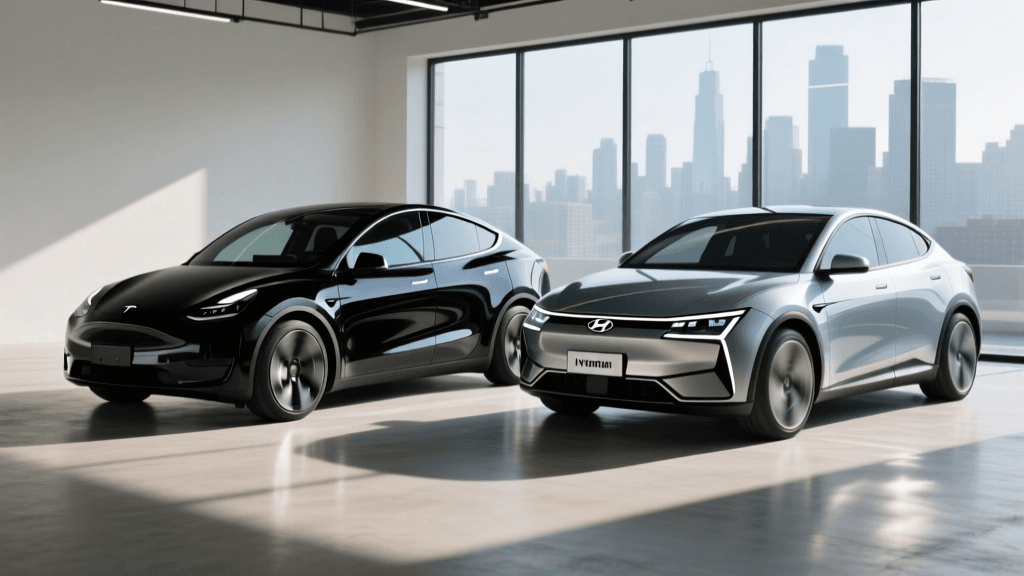
The midsize electric crossover segment is currently dominated by two distinct heavyweights: the Tesla Model Y and the Hyundai Ioniq 5. While both vehicles offer exceptional efficiency, cutting-edge technology, and spacious cabins, they approach the EV experience from entirely different philosophies. The Model Y leans into minimalist software integration and the unmatched Tesla Supercharger network, whereas the Ioniq 5 boasts retro-futuristic styling, ultra-fast 800-volt charging architecture, and superior rear-seat comfort. If you are torn between these two segment leaders, this comprehensive guide will walk you through a step-by-step comparison of their range, charging capabilities, and overall value to help you make the right purchase decision.
Step 1: Calculate Your Real-World Range Requirements
When comparing the Tesla Model Y and Hyundai Ioniq 5, the first step is to look past the EPA estimates and calculate your real-world needs. The Tesla Model Y Long Range AWD boasts an impressive EPA-estimated range of 330 miles, thanks to its highly efficient powertrain and aerodynamic teardrop shape. On the other hand, the Hyundai Ioniq 5 offers up to 305 miles of EPA range in its RWD configuration, and 290 miles for the AWD SEL and Limited trims.
Actionable Advice: The 80% Rule and Winter Degradation
To accurately gauge which EV fits your lifestyle, apply the 80% rule. For optimal battery longevity, it is recommended to charge your daily driving battery to 80%. This means your practical daily range in the Model Y is roughly 264 miles, while the Ioniq 5 AWD gives you about 232 miles. Furthermore, if you live in a cold climate, you must factor in winter range degradation. Both vehicles come equipped with highly efficient heat pumps, which mitigate cold-weather range loss compared to older EVs using resistive heating. However, you should still expect a 15% to 25% drop in range when temperatures dip below freezing. If your daily winter commute exceeds 180 miles round-trip, the Model Y's larger battery buffer provides an extra layer of security.
Step 2: Map Out Your Charging Infrastructure and Road Trips
Range is only half the equation; how quickly you can replenish that range dictates your road trip experience. This is where the engineering philosophies of Tesla and Hyundai drastically diverge.
The 800-Volt Advantage vs. The Supercharger Network
The Hyundai Ioniq 5 utilizes an advanced 800-volt electrical architecture. When paired with a 350-kW DC fast charger, the Ioniq 5 can charge from 10% to 80% in just 18 minutes. This ultra-fast charging curve is a game-changer for highway road trips, significantly reducing the time you spend idling at rest stops. The Tesla Model Y operates on a traditional 400-volt architecture, peaking at around 250 kW on V3 Superchargers. A 10% to 80% charge typically takes 25 to 30 minutes.
However, charging speed is useless without available infrastructure. According to the Department of Energy's Alternative Fuels Data Center, the Tesla Supercharger network remains the most reliable and ubiquitous fast-charging ecosystem in North America. While Hyundai relies on third-party networks like Electrify America—which can occasionally suffer from downtime or broken stalls—Tesla owners enjoy a seamless plug-and-charge experience. Note that Hyundai is adopting the NACS (North American Charging Standard) port for future models, and current Ioniq 5 owners will eventually gain access to Superchargers via adapters, but native Tesla integration still holds a distinct edge today.
Step 3: Analyze Total Cost of Ownership (TCO) and Incentives
Value extends far beyond the initial sticker price. To truly compare the Model Y and Ioniq 5, you must evaluate the Total Cost of Ownership (TCO), which includes purchase price, tax incentives, insurance, and depreciation.
Both the Tesla Model Y (built in Texas and California) and the Hyundai Ioniq 5 (now built at the Metaplant in Georgia) generally qualify for the $7,500 Federal EV Tax Credit, provided you meet the income caps and purchase the vehicle new. This incentive dramatically levels the playing field regarding initial capital outlay. However, when it comes to insurance premiums, Tesla owners often face higher rates due to the brand's historical collision repair costs and specialized parts. Hyundai's more traditional body shop network can sometimes result in marginally lower insurance quotes, though this varies heavily by zip code and driver profile.
Regarding depreciation, the Model Y has historically held its value exceptionally well, though recent price cuts by Tesla have caused some short-term fluctuations in the used market. The Ioniq 5, backed by Hyundai's industry-leading 10-year/100,000-mile powertrain warranty, offers incredible long-term peace of mind, making it a highly rational financial choice for buyers who plan to hold onto the vehicle for a decade or more.
Step 4: Measure Interior Space, Cargo, and Daily Livability
The interior dimensions of these two crossovers cater to slightly different buyer priorities. The Tesla Model Y is the undisputed champion of cargo capacity. With up to 76 cubic feet of space with the rear seats folded, plus a deep front trunk (frunk) and a rear sub-trunk, the Model Y can easily swallow family luggage, camping gear, or a week's worth of groceries without breaking a sweat.
Conversely, the Hyundai Ioniq 5 prioritizes passenger comfort, specifically in the second row. Thanks to its dedicated E-GMP skateboard platform, the Ioniq 5 features a remarkably long 118.1-inch wheelbase—actually longer than the Model Y. This translates to class-leading rear legroom and a completely flat floor. The Ioniq 5 also features a sliding center console and physical buttons for climate controls, which many drivers find more intuitive and safer to use while driving compared to the Model Y's screen-centric, minimalist dashboard where even the windshield wipers are controlled via the touchscreen.
Head-to-Head Specification Table
| Feature | Tesla Model Y (Long Range AWD) | Hyundai Ioniq 5 (Limited AWD) |
|---|---|---|
| Base MSRP (Approx.) | $48,990 | $54,500 |
| EPA Range | 330 miles | 290 miles |
| Fast Charging (10-80%) | ~27 minutes (250 kW peak) | ~18 minutes (350 kW peak) |
| Cargo Volume (Max) | 76.0 cu ft | 59.3 cu ft |
| Wheelbase | 113.8 inches | 118.1 inches |
| Warranty | 4 yr / 50,000 mi (8 yr Battery) | 5 yr / 60,000 mi (10 yr Battery) |
Final Verdict: Which EV Fits Your Lifestyle?
Choosing between the Tesla Model Y and the Hyundai Ioniq 5 ultimately comes down to how you plan to use the vehicle. Choose the Tesla Model Y if maximum cargo space, long-distance road trip convenience via the Supercharger network, and over-the-air software updates are your top priorities. It remains the most practical, do-it-all family hauler in the EV space.
Choose the Hyundai Ioniq 5 if you prioritize ultra-fast charging speeds, superior rear-seat passenger comfort, physical cabin controls, and a standout retro-futuristic design. With its incredible 10-year warranty and 800-volt architecture, the Ioniq 5 represents a masterclass in modern EV engineering and offers phenomenal long-term value for those who want a premium, comfortable daily driver.