The Battle of Architectures: Dedicated EV vs. Adapted ICE
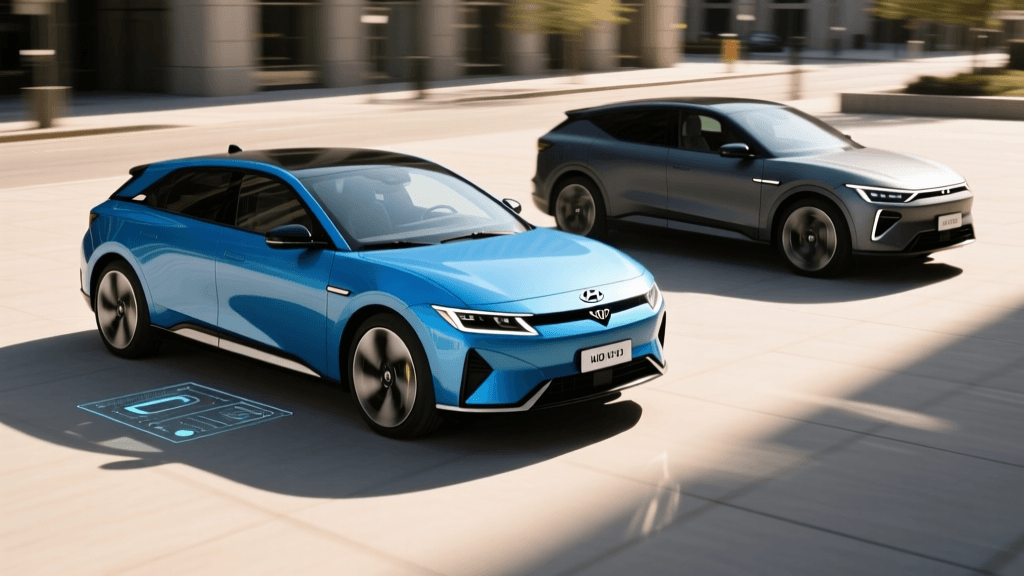
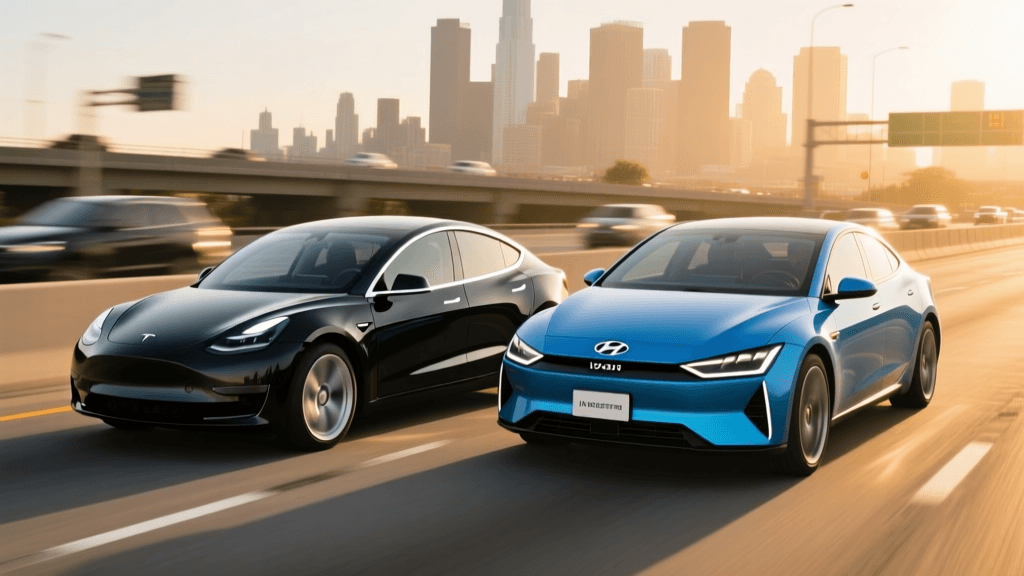
When evaluating luxury compact electric vehicles, the underlying platform dictates the technological ceiling of the entire machine. The Genesis GV60 and the BMW i4 represent two fundamentally different engineering philosophies. The GV60 is built on Hyundai Motor Group’s dedicated Electric-Global Modular Platform (E-GMP), engineered from the ground up for battery propulsion. In contrast, the BMW i4 utilizes the brand’s flexible CLAR architecture, which was originally designed to accommodate internal combustion engines before being adapted for electrification. This divergence in foundational technology creates a fascinating head-to-head comparison, particularly when we dive deep into charging hardware, thermal management, and software ecosystems.
High-Voltage Hardware: 800-Volt vs. 400-Volt Charging
The most significant technological differentiator between these two luxury EVs lies in their electrical architecture. The Genesis GV60 utilizes a native 800-volt electrical system. This high-voltage architecture allows the GV60 to accept peak charging rates of up to 350 kW at compatible DC fast-charging stations. In real-world testing, this translates to a blistering 10% to 80% state-of-charge replenishment in approximately 18 minutes, provided the battery is properly preconditioned. Furthermore, the 800-volt system allows for thinner, lighter wiring harnesses throughout the vehicle, reducing overall weight and improving efficiency.
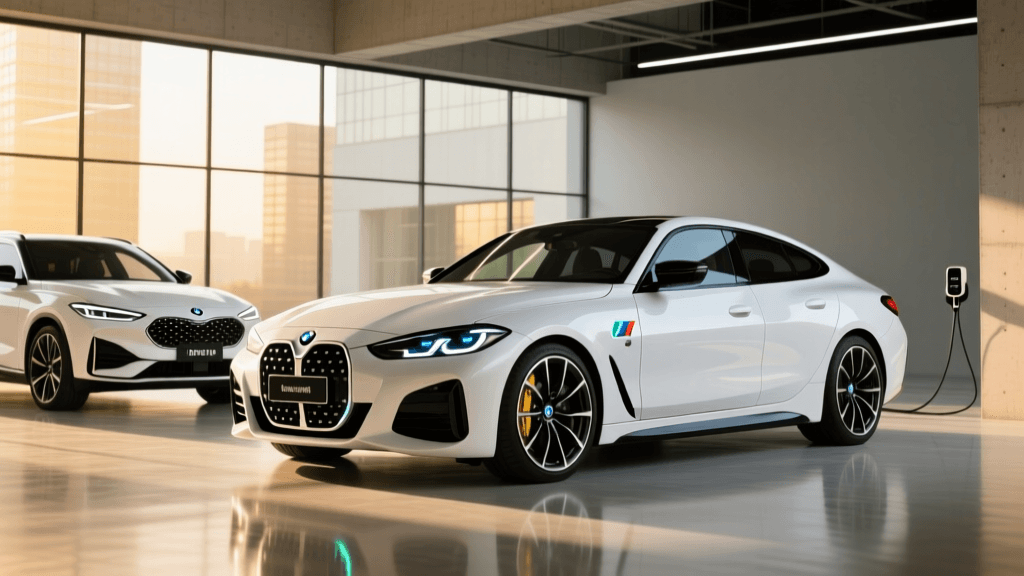
The BMW i4, constrained by its 400-volt CLAR architecture, peaks at around 205 kW on a DC fast charger. While BMW’s battery management system and thermal preconditioning are exceptionally well-tuned, the physical limits of 400 volts mean a 10% to 80% charge takes roughly 31 minutes. For buyers who frequently embark on long-distance road trips, the GV60’s ability to cut charging downtime nearly in half is a massive technological advantage. However, the i4’s thermal management system does feature a clever tech trick: it uses the stators of the electric motors to help heat or cool the battery pack, reducing the need for heavy, complex secondary heating loops.
Digital Cockpit and Infotainment UX
Stepping inside the cabin reveals another stark contrast in technology execution. The BMW i4 features the BMW Curved Display, which seamlessly merges a 12.3-inch digital instrument cluster with a 14.9-inch central touchscreen. Running BMW’s iDrive 8 operating system, the interface is visually stunning, highly responsive, and features the QuickSelect menu layer that drastically reduces the number of taps needed to adjust climate or media settings. According to BMW’s official iDrive innovation documentation, the system relies heavily on natural language voice processing and deep smartphone integration, making it feel like a high-end tablet grafted into a luxury sedan.
The Genesis GV60 takes a more theatrical, hardware-focused approach. It utilizes a dual 12.3-inch panoramic display setup, but the true technological showpiece is the Crystal Sphere shifter. When the vehicle is turned off, the sphere displays ambient lighting; when the car starts, it physically rotates to reveal a haptic, jewel-like rotary gear selector. Beyond aesthetics, the GV60 incorporates advanced biometric technology. The Face Connect system uses a near-infrared camera mounted on the B-pillar to recognize the driver’s face, automatically unlocking the car and adjusting the seat, steering wheel, and infotainment profiles without needing a physical key. While the i4’s software is more polished and intuitive, the GV60’s hardware integration offers a unique, futuristic luxury experience.
ADAS and Sensor Suites: Genesis vs. BMW
Advanced Driver Assistance Systems (ADAS) are a critical pillar of modern EV technology. The Genesis GV60 is equipped with Highway Driving Assist 2 (HDA2), which combines adaptive cruise control, lane centering, and machine learning-based driving style adaptation. HDA2 also includes turn-signal-activated lane changes on divided highways, a feature that feels remarkably natural and builds driver trust. The GV60’s sensor suite, which includes a robust array of radar and cameras, has earned top marks for crash avoidance from the Insurance Institute for Highway Safety (IIHS).
BMW counters with the Driving Assistant Professional package. The i4’s Active Cruise Control with Stop & Go and the Steering and Lane Control Assistant are incredibly refined, offering smooth acceleration and braking inputs that mimic a seasoned human driver. In certain markets and under specific conditions, BMW’s Highway Assistant allows for hands-free driving at speeds up to 85 mph, provided the driver keeps their eyes on the road (monitored by an interior camera). The BMW i4's safety ratings from the IIHS reflect the efficacy of this sensor suite, particularly in pedestrian detection and automatic emergency braking scenarios. BMW’s ADAS feels slightly more conservative but immensely trustworthy at high speeds.
Technology Specifications Comparison
| Tech Feature | Genesis GV60 (Advanced/AWD) | BMW i4 (eDrive40) |
|---|---|---|
| Platform Architecture | Dedicated E-GMP (800-Volt) | Adapted CLAR (400-Volt) |
| Max DC Fast Charging | ~350 kW (18 mins 10-80%) | ~205 kW (31 mins 10-80%) |
| Infotainment OS | Genesis Connected Services | BMW iDrive 8 |
| Biometric Access | Face Connect & Fingerprint | None (Relies on Digital Key) |
| Highway Assist Tech | HDA2 (Signal-activated lane change) | Driving Assistant Pro (Hands-free capable) |
| Digital Key Standard | Digital Key 2 (BLE/NFC) | Digital Key Plus (UWB/BLE) |
| OTA Update Depth | Infotainment, Navigation, BMS | Deep Module (Chassis, Powertrain, UI) |
Connectivity, Digital Keys, and Over-the-Air (OTA) Updates
Both vehicles excel in smartphone integration, but their approach to the 'Digital Key' varies. The BMW i4 utilizes Digital Key Plus, which relies on Ultra-Wideband (UWB) technology. UWB is vastly superior to standard Bluetooth or NFC because it prevents relay attacks (car theft via signal amplification) and offers pinpoint spatial awareness. The i4 knows exactly how far away you are, unlocking the flush door handles and illuminating the welcome carpet lights precisely as you approach, without ever taking your phone out of your pocket.
The Genesis GV60 uses a combination of Bluetooth Low Energy (BLE) and NFC. While highly functional, BLE lacks the precise spatial awareness and security of UWB, meaning you sometimes have to tug the door handle or hold your phone closer to the B-pillar to trigger the unlock sequence. However, Genesis makes up for this with its Remote Smart Parking Assist (RSPA), allowing the SUV to autonomously park itself in tight garages via the key fob—a party trick the i4 sedan lacks due to its CLAR platform constraints.
Regarding Over-the-Air (OTA) updates, BMW holds the edge in depth. While Genesis can update the infotainment, navigation maps, and battery management parameters, BMW’s OTA capabilities can reach deeper into the vehicle’s chassis and powertrain control modules, effectively allowing the i4 to download new driving dynamics or suspension tuning profiles post-purchase.
The Verdict: Which Tech Suite Wins?
Choosing between the Genesis GV60 and the BMW i4 ultimately depends on which definition of 'technology' you value most. If your priority is cutting-edge electrical hardware, the Genesis GV60 is the undisputed winner. Its 800-volt E-GMP architecture future-proofs the vehicle for the next generation of ultra-fast charging infrastructure, and features like the Crystal Sphere shifter and Face Connect biometrics offer a uniquely futuristic luxury experience that stands out in a crowded valet line.
Conversely, if you define technology by software polish, ecosystem integration, and driving refinement, the BMW i4 takes the crown. The iDrive 8 interface remains the gold standard for automotive UX, and the UWB Digital Key Plus offers a frictionless, highly secure entry experience. Furthermore, BMW’s deep-module OTA capabilities ensure the i4 will continue to evolve on a fundamental level long after it leaves the dealership. For daily commuters who rarely use DC fast chargers and prioritize a flawless digital interface, the i4 is the superior tech-luxury choice.