Redefining 'Value' Through the Lens of EV Technology
When shopping for an electric vehicle under $40,000, the sticker price is only the beginning of the financial equation. In the rapidly evolving EV landscape, true value is not merely defined by the lowest MSRP or the longest EPA-estimated range. Instead, it is dictated by the underlying technology that governs battery longevity, charging efficiency, thermal resilience, and software adaptability. A budget-friendly EV equipped with passive air cooling and outdated software architecture may seem like a bargain on the showroom floor, but it will suffer from accelerated battery degradation and missed over-the-air (OTA) feature updates, ultimately costing you more in total ownership.
At AutoEdgeView, our 'Best EV Rankings' methodology prioritizes the technology deep dive. We evaluate how engineering decisions made in the R&D lab translate to real-world utility and long-term financial savings. By analyzing battery chemistry, thermal management systems, and powertrain efficiency, we can determine which sub-$40,000 EVs offer the highest total tech value.
The Tech-Value Ranking Methodology
To rank these vehicles, we look past the infotainment screen size and focus on the foundational hardware and software architectures. Our scoring criteria include:
- Battery Chemistry & Packaging: Evaluating the trade-offs between Nickel Manganese Cobalt (NMC), Nickel Cobalt Manganese Aluminum (NCMA), and Lithium Iron Phosphate (LFP) regarding energy density, thermal stability, and cycle life.
- Active Thermal Management: According to the National Renewable Energy Laboratory (NREL), maintaining optimal battery temperatures is critical for preventing lithium plating during fast charging and preserving long-term capacity. Vehicles with advanced liquid cooling and heat pump systems score highest.
- Charging Architecture: Peak charge rates are misleading without analyzing the charging curve. We value platforms that can sustain high kW inputs past the 80% state-of-charge (SoC) threshold.
- Software-Defined Capability: The presence of advanced Battery Management Systems (BMS), OTA update pipelines, and vehicle-to-grid (V2G) or vehicle-to-load (V2L) bidirectional capabilities.
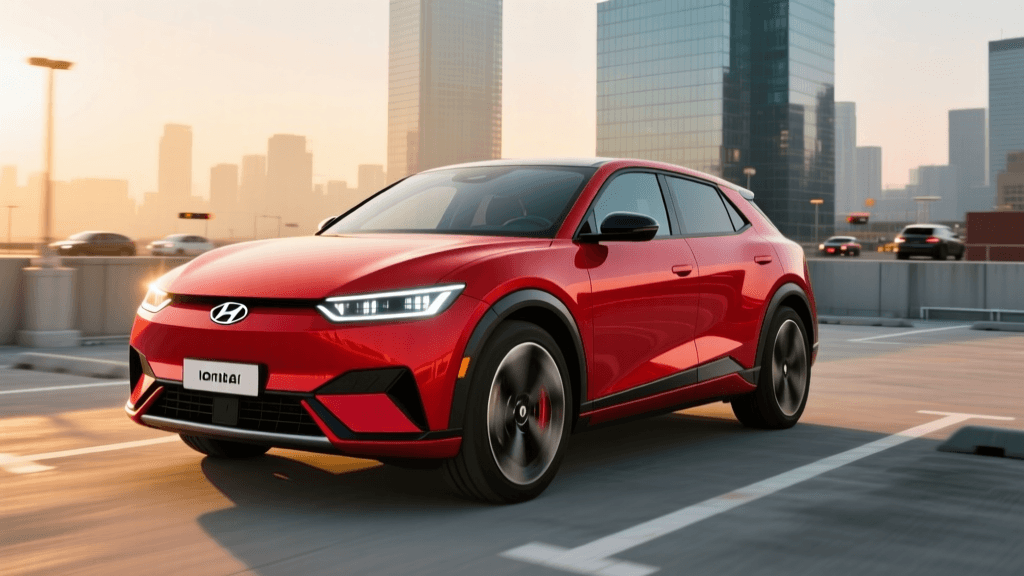
1. Hyundai Kona Electric: The Efficiency & Thermal Champion
Starting well under the $40,000 threshold, the Hyundai Kona Electric secures the top spot for total tech value, largely due to its highly sophisticated thermal management and powertrain efficiency. While many budget EVs compromise on cold-weather hardware, Hyundai has integrated a comprehensive heat pump system that fundamentally changes the vehicle's winter usability.
The Kona's heat pump does not merely generate heat; it scavenges waste thermal energy from the Power Electric (PE) system, including the electric motor and the onboard charger. By utilizing a multi-way valve and refrigerant cycle, the system redirects this otherwise lost heat to warm the cabin. This thermodynamic efficiency means the Kona relies significantly less on its high-voltage battery for resistive heating, preserving range in freezing temperatures. Furthermore, the Kona Electric features a highly effective battery preconditioning algorithm. When the navigation system is set to a DC fast charger, the thermal management system proactively warms the battery cells to the optimal temperature window (typically between 30°C and 35°C), ensuring the vehicle hits its peak charging curve immediately upon plugging in.
Additionally, the inclusion of Vehicle-to-Load (V2L) capability transforms the Kona from a mere mode of transport into a mobile 120-volt power bank, adding immense practical value for outdoor enthusiasts or as a backup power source during grid outages.
2. Chevrolet Equinox EV: The Ultium Architecture Advantage
The Chevrolet Equinox EV brings General Motors' Ultium platform to the mass market, offering a masterclass in scalable battery engineering. The tech value here lies in the physical chemistry and the wireless communication architecture of the battery pack.
GM utilizes an NCMA (Nickel Cobalt Manganese Aluminum) chemistry for its Ultium pouch cells. By introducing aluminum into the cathode and utilizing a proprietary synthetic graphite anode, GM has reduced the reliance on expensive and ethically contentious cobalt while increasing thermal stability. As noted by the Alternative Fuels Data Center, advancements in cathode chemistry are the primary drivers of modern EV longevity and safety. The NCMA formulation provides excellent energy density while maintaining a high threshold for thermal runaway.
However, the true technological marvel of the Equinox EV is its wireless Battery Management System (wBMS). Traditional EV battery packs require massive, heavy, and complex wiring harnesses to monitor the voltage and temperature of hundreds of individual cell modules. GM's wBMS uses a secure, proprietary mesh network to communicate with the cell modules wirelessly. This reduces the wiring harness weight by up to 90%, frees up physical space for more energy-dense cell packing, and significantly reduces the number of potential failure points (such as corroded connectors). From a long-term value perspective, the wBMS makes out-of-warranty modular battery repairs vastly cheaper and easier, as technicians do not need to navigate a labyrinth of high-voltage sense wires to replace a single faulty module.
3. Nissan Ariya Engage: CMF-EV Platform & Liquid Cooling Redemption
Nissan faced heavy criticism in the past for relying on passive air cooling in the original Leaf, which led to rapid battery degradation in hot climates and during repeated fast-charging sessions. The Nissan Ariya Engage, which frequently falls under the $40,000 mark after federal and state incentives, represents a complete technological redemption through the CMF-EV platform.
The Ariya features an advanced active liquid thermal management system that continuously circulates coolant through micro-channels integrated directly into the battery module casing. This ensures that the battery remains within its optimal operating window regardless of external ambient temperatures or the high C-rates experienced during DC fast charging. This technological pivot guarantees a vastly superior battery lifespan and resale value compared to Nissan's earlier generations.
Furthermore, the Ariya's powertrain utilizes a highly integrated e-Axle design, combining the motor, inverter, and reducer into a single, compact housing. This integration reduces parasitic losses and improves overall powertrain efficiency, allowing the Ariya to extract more miles per kWh than many of its heavier competitors. The U.S. Department of Energy's Fuel Economy Guide highlights how drivetrain integration and aerodynamic optimization are key factors in achieving high MPGe ratings, and the Ariya's sleek, flat-floor architecture maximizes both interior volume and electrical efficiency.
Comparative Tech Data Table
| Vehicle Model | Battery Chemistry | Thermal Management | Peak DC Charge Rate | Key Tech Value Feature |
|---|---|---|---|---|
| Hyundai Kona Electric | NMC (Nickel Manganese Cobalt) | Active Liquid + Heat Pump | ~105 kW | Waste-heat scavenging & V2L |
| Chevrolet Equinox EV | NCMA (Ultium Pouch Cells) | Active Liquid Cooling | ~150 kW | Wireless BMS (wBMS) |
| Nissan Ariya Engage | NMC (Laminate Cells) | Active Liquid Cooling | ~130 kW | Integrated e-Axle & CMF-EV |
How Software Architecture Impacts Long-Term Value
Hardware only tells half the story. The software architecture of an EV dictates how well the hardware ages and adapts. The Hyundai Kona and Chevrolet Equinox both utilize advanced, domain-controller-based software architectures. This allows for granular Over-The-Air (OTA) updates that can optimize battery preconditioning algorithms based on real-world fleet data, effectively improving the vehicle's efficiency and charging speed years after it was purchased.
An EV with a robust OTA pipeline is a depreciating asset that can suddenly gain new features, improved range estimates, or enhanced regenerative braking profiles. When evaluating total tech value, buyers must prioritize vehicles from manufacturers with a proven track record of deploying meaningful, system-level firmware updates rather than mere infotainment bug fixes.
Actionable Advice: Maximizing Your Sub-$40K EV's Tech Value
To ensure you extract the maximum financial and technological value from your sub-$40,000 EV, follow these engineering-backed best practices:
- Leverage the Heat Pump: If you own the Kona Electric, always use the automated climate control rather than manual resistive seat heaters. The heat pump is vastly more efficient at warming the cabin air than drawing raw DC power from the battery for localized heating.
- Respect the Chemistry Limits: The NMC and NCMA batteries in these three vehicles prefer to sit at a 20% to 80% State of Charge (SoC) during daily use. Utilize the vehicle's built-in software charge-limiters to prevent high-voltage stress on the cathode, which accelerates capacity fade.
- Always Precondition for DCFC: Never fast-charge a cold battery. Use the native navigation system to route to your charger; this triggers the thermal management system to pre-warm the battery, preventing the BMS from artificially throttling your charge speed to protect the cells.
- Utilize V2L for Peak Shaving: If your EV supports V2L, use it to power high-draw appliances (like space heaters or power tools) during peak grid-pricing hours, effectively using your EV's battery as an arbitrage tool to lower your household utility bills.
By prioritizing thermal management, advanced battery chemistry, and software adaptability, buyers can secure an EV under $40,000 that delivers premium technological value and minimizes total cost of ownership for years to come.