The Retail EV Charging Paradigm Shift
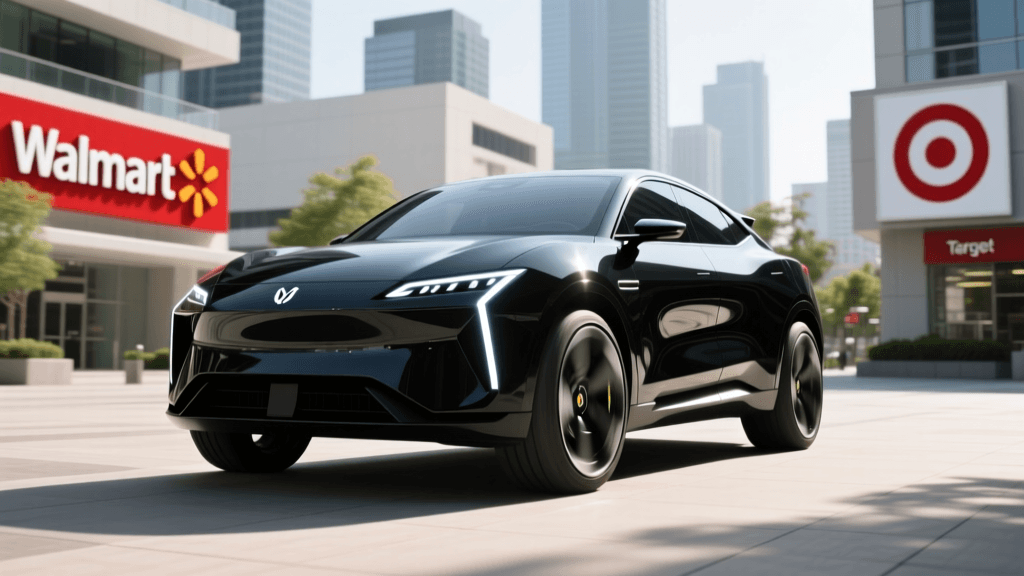
The electric vehicle revolution is not just changing what we drive; it is fundamentally altering where we stop, how we shop, and how retail giants view their sprawling parking lots. As the internal combustion engine era fades, the battleground for EV charging supremacy has shifted to the asphalt of America's biggest big-box retailers. In this head-to-head product showdown, we are putting the two undisputed kings of American retail in the ring: Walmart and Target. Both companies have aggressively rolled out EV charging stations, but their strategies, network partnerships, and target demographics differ wildly.
For EV owners planning cross-country road trips or optimizing their weekly grocery runs, understanding the nuances between the Walmart and Target EV charging ecosystems is critical. According to the U.S. Department of Energy's Alternative Fuels Data Center, retail locations have become some of the most vital nodes in the national charging network, offering safety, lighting, and amenities that standalone charging plazas often lack. Let us dive deep into the Walmart and Target EV charging station rollout tracker to see which retail titan truly offers the superior electron experience.
Tale of the Tape: Head-to-Head Comparison
Before we dissect the specific infrastructure and shopper experience, let us look at the raw data. Walmart and Target have taken distinctly different approaches to electrifying their parking lots. Walmart has leveraged its massive highway-adjacent real estate for high-power DC fast charging, while Target has focused on urban and suburban dwell times with a heavy emphasis on Level 2 infrastructure.
| Metric | Walmart EV Charging | Target EV Charging |
|---|---|---|
| Primary Network Partners | Electrify America, EVgo | ChargePoint, EVgo |
| Dominant Charger Type | DC Fast Chargers (150kW - 350kW) | Level 2 (7.2kW - 19.2kW) & Select DCFC |
| Typical Dwell Time | 20 - 45 Minutes | 1 - 2 Hours |
| Location Strategy | Highway corridors, Supercenters, Rural hubs | Urban centers, Suburban strip malls, Lifestyle centers |
| Best Use Case | Cross-country road trips, rapid top-ups | Weekly grocery shopping, dining, local errands |
Walmart’s Strategy: Highway Hubs and High-Power DC Fast Charging
Walmart’s approach to EV charging is a masterclass in leveraging geographical dominance. With thousands of Supercenters located within a few miles of major interstate highways, Walmart is uniquely positioned to capture the lucrative road-trip demographic. To execute this vision, Walmart has partnered heavily with Electrify America and EVgo to deploy high-power DC Fast Chargers (DCFC) capable of delivering anywhere from 50 kW up to an impressive 350 kW.
For drivers of modern EVs equipped with 800-volt architectures, such as the Hyundai Ioniq 5, Kia EV6, or Porsche Taycan, a Walmart Supercenter stop can add 150 miles of range in under 15 minutes. This rapid charging capability aligns perfectly with the typical Walmart shopper's behavior: grab a coffee, pick up a few household essentials, and return to a fully charged vehicle. Furthermore, Walmart's corporate commitments to sustainability, as detailed in their official Environmental, Social, and Governance (ESG) reporting, highlight a massive push toward renewable energy integration, meaning many of these high-power chargers are increasingly backed by solar canopies and on-site battery storage to reduce grid strain.
However, the Walmart experience is not without its friction points. Supercenter parking lots are notoriously massive. Navigating a 400,000-square-foot lot to find a charger tucked away in a far corner can be frustrating, especially in inclement weather. Additionally, the sheer volume of foot and vehicle traffic can lead to congestion around the charging islands during peak weekend hours.
Target’s Strategy: Urban Oases and Level 2 Dominance
Target, conversely, has curated an EV charging experience that mirrors its brand identity: clean, accessible, and integrated into a more relaxed shopping environment. Target entered the EV space early by partnering with ChargePoint to install thousands of Level 2 (L2) chargers across its urban and suburban footprint. While L2 chargers only deliver between 7.2 kW and 19.2 kW, they are perfectly suited for Target's core demographic.
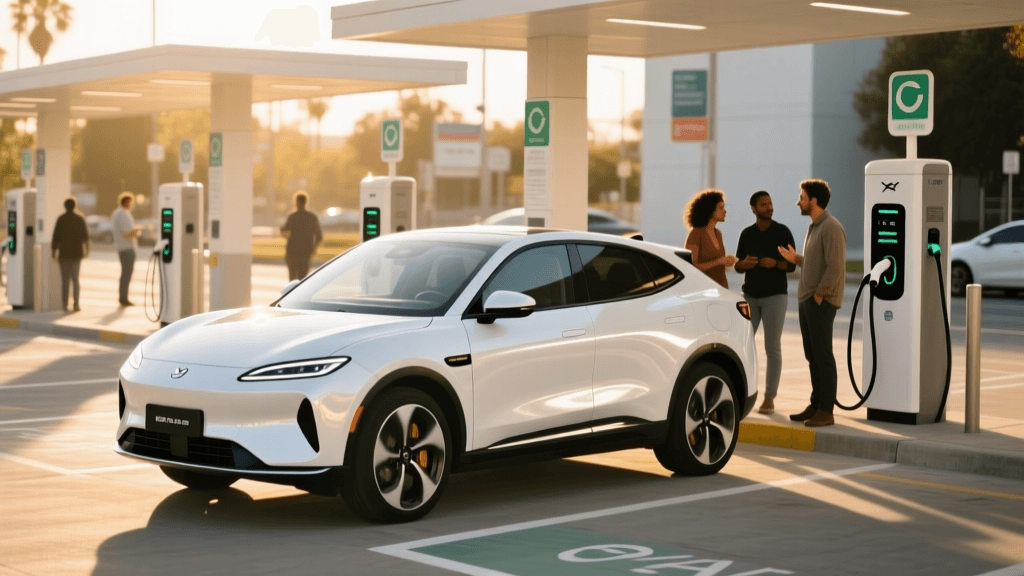
The average Target shopping trip, which often includes browsing home goods, picking up a prescription, and grabbing a Starbucks, takes between 60 and 90 minutes. This dwell time is the exact sweet spot for Level 2 charging, allowing an EV to replenish 30 to 50 miles of range while the driver shops. Target has also begun integrating EVgo DC fast chargers at select high-volume locations to cater to the growing demand for rapid charging, but the backbone of their network remains L2.
Target's climate and sustainability strategy emphasizes community integration and reducing local emissions, which is reflected in how their chargers are placed. Target chargers are often located closer to the store entrances, well-lit, and situated near their popular Drive Up grocery pickup zones. For the daily commuter or the suburban parent, Target offers a highly predictable and pleasant charging environment that feels less like a highway rest stop and more like a neighborhood amenity.
The Reliability Factor: Uptime and Network Partnerships
In any product showdown, reliability is the ultimate tiebreaker. An out-of-order charger can ruin a road trip or leave a commuter stranded. Here, the battle shifts from the retailers to their network partners: Electrify America and EVgo (at Walmart) versus ChargePoint and EVgo (at Target).
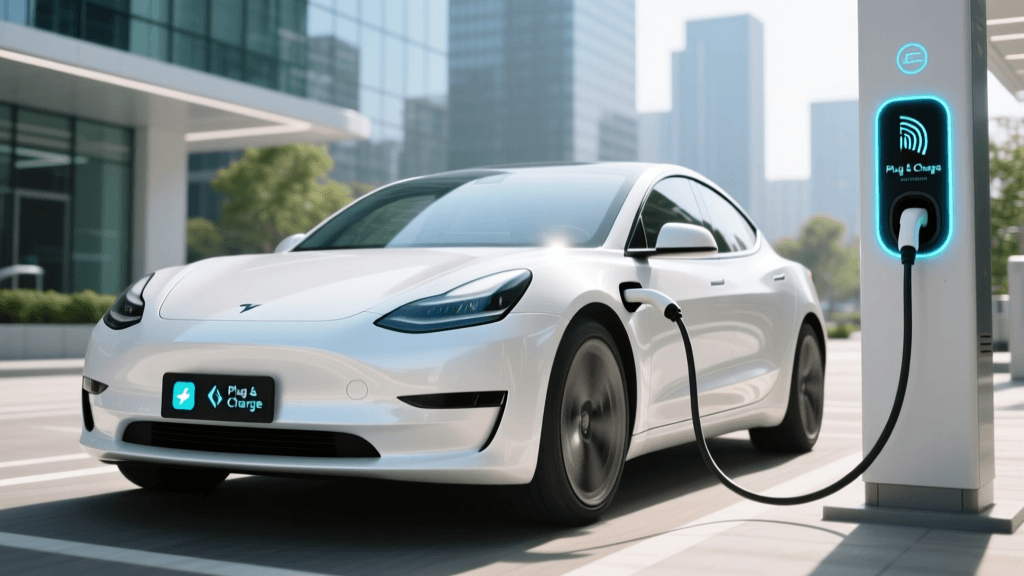
Electrify America's hardware at Walmart locations has historically faced criticism for software glitches and payment terminal failures, though recent hardware refreshes and the introduction of Plug&Charge capabilities have vastly improved the user experience. EVgo's stations, present at both retailers, generally boast strong uptime but often max out at 50 kW to 100 kW, which can feel sluggish for newer EVs capable of much faster acceptance rates.
ChargePoint's Level 2 network at Target is incredibly reliable, largely because L2 hardware has fewer moving parts and lower thermal stress than liquid-cooled DCFC cables. However, because Target's L2 chargers are often un-tethered (requiring the user to provide their own J1772 or NACS cable), drivers must remember to keep their mobile connectors in the trunk.
The ICEing Epidemic and Parking Lot Etiquette
Both retail giants face a common enemy: ICEing. This occurs when an Internal Combustion Engine vehicle parks in a designated EV charging spot, blocking access. Because Walmart and Target parking lots are privately owned, store management is responsible for policing these spots.
Pro-Tip: If you arrive at a Walmart or Target and find the chargers blocked by non-EVs, do not rely on the charging network's app to report it. Go directly into the store, speak to the customer service desk or the manager on duty, and politely request that they make a PA announcement or send security to move the vehicle. Most store managers are highly responsive to this if approached respectfully.
Walmart's larger lots tend to suffer more from accidental ICEing simply due to the sheer volume of customers and the lack of physical barriers around the charging islands. Target has been more proactive in some regions by installing bright green painted curbs, wheel stops, and prominent overhead signage to deter gas-powered vehicles from encroaching on EV infrastructure.
Actionable Advice for EV Drivers
To maximize your efficiency and minimize frustration when using the Walmart and Target EV charging networks, follow these practical guidelines:
- Pre-Condition Your Battery: Whether you are pulling into a Walmart Electrify America plaza or a Target EVgo hub, use your vehicle's navigation system to route to the charger. This will pre-condition the battery, ensuring you hit peak charging speeds the moment you plug in.
- Verify Before You Drive: Always check PlugShare or the native network app before diverting from your route. Retail chargers are subject to high turnover and occasional vandalism. Look at the 'Check-Ins' from the last 24 hours to confirm the station is operational.
- Master the Payment Ecosystem: Download the Electrify America, EVgo, and ChargePoint apps and link your payment methods before you arrive. Relying on credit card readers on the physical kiosks at retail locations can lead to errors due to cellular dead zones in massive parking lots.
- Utilize NACS Adapters Wisely: As the industry transitions to the North American Charging Standard (NACS), many Walmart Electrify America stations are retrofitting with native NACS cables. If you drive a Tesla, bring your CCS1 adapter just in case you arrive at an older Walmart installation that has not yet been upgraded.
- Respect the Dwell Time: At Target Level 2 chargers, it is acceptable to leave your car for a full shopping trip. At Walmart DC Fast Chargers, do not leave your vehicle unattended once it reaches 80% state of charge. The charging curve slows dramatically past 80%, and you will be unnecessarily blocking a high-speed asset from other road-trippers.
The Final Verdict: Who Wins the Retail EV Charging Showdown?
Declaring a definitive winner in the Walmart versus Target EV charging rollout depends entirely on your lifestyle and driving habits. If you are an EV road-tripper, a highway commuter, or a driver who relies on rapid DC fast charging to minimize downtime, Walmart is the undisputed champion. Their strategic placement along interstate corridors and partnerships with Electrify America provide the high-power infrastructure necessary to keep America moving.
However, if you are a local commuter, a suburban shopper, or an EV owner without access to home charging who needs a reliable, pleasant environment to top up your battery while running weekly errands, Target takes the crown. Their focus on Level 2 infrastructure, superior parking lot aesthetics, and integration with the modern shopping experience makes them the ideal destination for the everyday EV lifestyle.
Ultimately, the true victor is the EV driver. The aggressive competition between these two retail behemoths is rapidly expanding the national charging footprint, ensuring that whether you are crossing state lines or just picking up groceries, a reliable stream of electrons is never far away.