The Unwritten Rules of Public EV Charging Etiquette
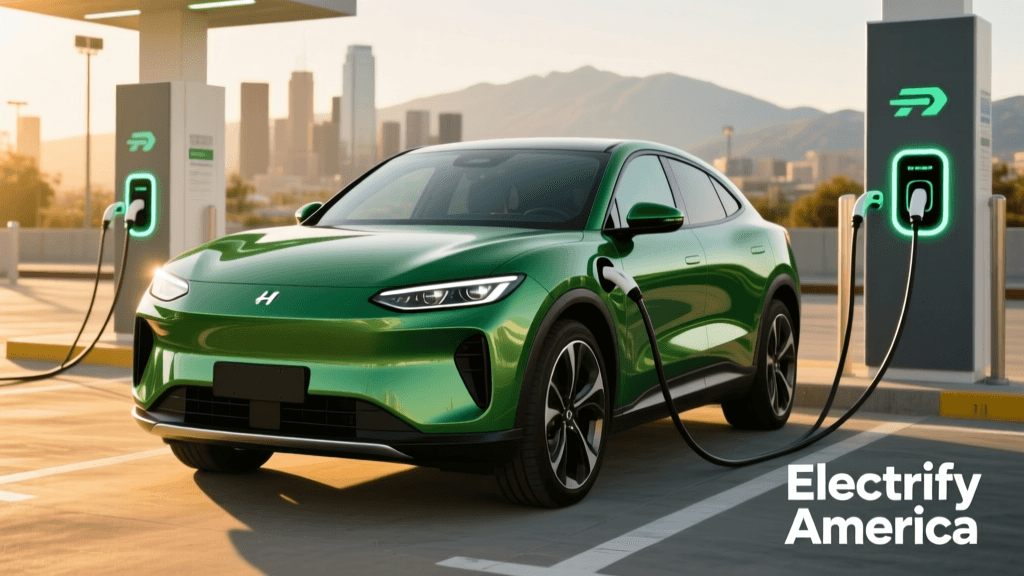
As the electric vehicle revolution accelerates, public charging infrastructure is expanding at a breakneck pace. Networks like Electrify America, EVgo, ChargePoint, and the Tesla Supercharger network are deploying thousands of new stalls annually. However, the sheer volume of new EV drivers hitting the road often outpaces the availability of fast chargers in high-traffic corridors. This supply and demand imbalance inevitably leads to friction. Whether you are driving a Rivian R1T on a cross-country adventure or commuting in a Hyundai Ioniq 5, understanding public EV charging etiquette is no longer optional—it is a critical skill for modern drivers.
At AutoEdgeView, we have compiled the definitive expert guide to EV charging etiquette and dispute resolution. This guide will help you navigate crowded charging plazas, avoid common pitfalls, and resolve conflicts gracefully, ensuring a seamless experience for the entire EV community.
The Golden Rules of Public EV Charging
1. The 80% Rule: Respect the Charging Curve
The most critical rule of DC Fast Charging (DCFC) is understanding the lithium-ion battery charging curve. When you plug into a 350 kW Electrify America stall, your vehicle will pull maximum power only until it reaches roughly 50% to 60% State of Charge (SOC). After 80%, the battery management system (BMS) drastically tapers the charging speed to protect the battery cells from overheating. Consequently, charging from 10% to 80% might take 18 minutes, but pushing from 80% to 100% can take an additional 30 minutes or more.
By "camping" at the charger to reach 100%, you are effectively bottlenecking the station and doubling your occupancy time for a marginal gain in range. Unless you are on the final leg of a cross-country trip and absolutely need 100% to reach your destination, unplug at 80% and free up the stall. To enforce this, many networks have implemented automated penalties. According to Tesla's official idle fee documentation, drivers can be charged up to $1.00 per minute if their vehicle remains plugged in after a charge session is complete and the station is at high capacity.
2. Defeating ICEing and EV-Blocking
"ICEing" occurs when an Internal Combustion Engine (ICE) vehicle parks in a designated EV charging spot. "EV-Blocking" happens when an electric vehicle parks in the spot but does not plug in, treating the charging stall as standard parking. Both practices are incredibly frustrating and can strand travelers in rural areas. According to the U.S. Department of Energy's Alternative Fuels Data Center, the availability of reliable public charging is paramount to consumer EV adoption, making blocked chargers a significant barrier to infrastructure trust.
Expert Tip: Never leave aggressive or threatening notes on windshields. Instead, use community-driven apps like PlugShare to leave a real-time review marking the station as "Blocked by ICE" or "EV Blocked." This allows approaching drivers to reroute to a nearby plaza before they run out of range. If you are at a retail location, politely inform the store manager, as many businesses now have towing policies for ICEing.
3. Cord Management and Station Cleanliness
Modern DCFC cables, especially liquid-cooled cables capable of delivering 500 amps, are heavy, expensive, and sensitive to physical damage. Never let the charging connector drop into mud, snow, or standing water. Dragging the cable across abrasive surfaces can compromise the internal shielding and lead to station downtime. Always re-holster the cable securely on the retractable spool or designated hook when finished. Additionally, take your trash with you; leaving coffee cups and snack wrappers at a charging plaza reflects poorly on the EV community and can result in site hosts removing chargers entirely.
Navigating Common Charging Disputes
Even the most courteous drivers will eventually encounter a charging dispute. Here is how to handle the most common scenarios with expert-level de-escalation tactics.
Scenario A: The Unresponsive Charge Hog
You arrive at a plaza, and a vehicle is sitting at 98% SOC, but the owner is nowhere to be found. Do not unplug their vehicle at a DCFC plaza. Unplugging an actively charging or recently charged vehicle at a high-voltage station can trigger safety lockouts or damage the vehicle's charging port. Instead, check the network's app to see if the session has stalled or completed. If completed, and the station is full, report the vehicle via the app's support feature so the network can issue idle fees. If you urgently need a charge, move to the next available stall or use an app like A Better Routeplanner (ABRP) to find an alternative nearby plaza.
Scenario B: The Hotel Level 2 Unplug
Overnight charging at hotels with Level 2 (240V) chargers operates under a different social contract. Because there are often only two or four chargers for dozens of EV-driving guests, it is generally accepted etiquette to unplug a vehicle that has reached 100% so others can charge overnight. The Protocol: Leave a polite note on your dashboard that reads: "I am plugged in at 8 PM. If I reach 100%, please feel free to unplug me and take the spot. My room number is 412." If you unplug someone else, always leave a note confirming their vehicle was fully charged and providing your contact information.
Scenario C: The Aggressive Unplugger
If you return to your vehicle and find it has been unplugged while still actively charging (e.g., at 40% SOC), this is considered vandalism and theft of service. Check your vehicle's dashcam footage if equipped. Note the license plate of the offending vehicle and report the incident to the charging network's customer support immediately. If the charging port cover was forced open or damaged, file a police report and contact your auto insurance provider.
Network Policies and Etiquette Matrix
Different networks enforce etiquette through varying software and hardware mechanisms. Below is a comparison of how major networks handle idle fees and charging limits.
| Network | Idle Fee Policy | Recommended Max SOC | Dispute Resolution Method |
|---|---|---|---|
| Tesla Supercharger | Up to $1.00/min if station is 100% full | 80% (Enforced via app limits on busy routes) | In-app support / Report stall feature |
| Electrify America | Varies by location, typically $0.40/min after grace period | 85% (App allows setting custom stop limits) | 1-800 support number / App feedback |
| EVgo | Idle fees at select high-demand urban locations | 80% | App support / Call station number |
| ChargePoint (DCFC) | Determined by site host, often $0.10-$1.00/min | 80% | App support / Call site host directly |
Regional Charging Infrastructure Analysis
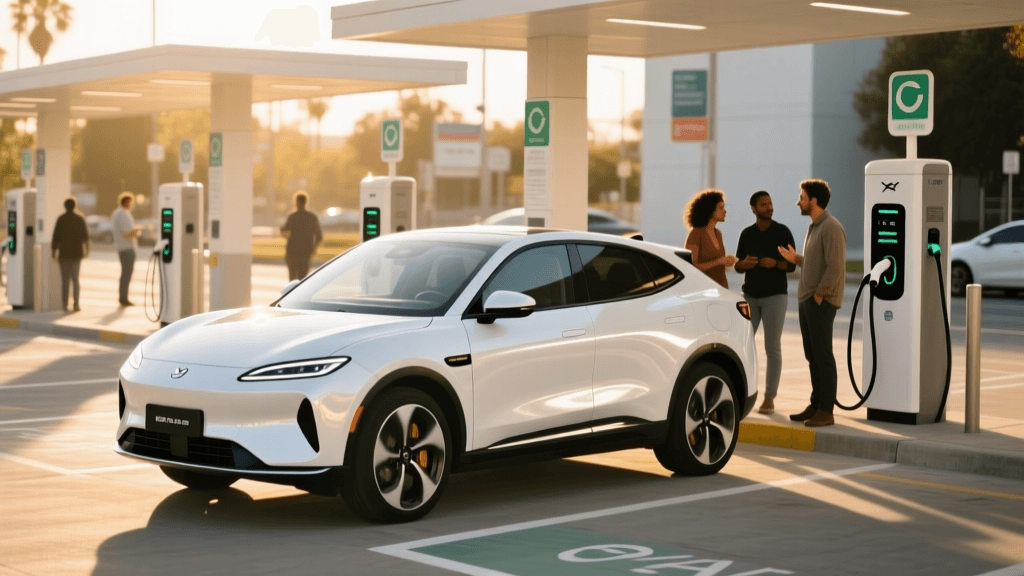
Etiquette norms often shift based on regional infrastructure density. In coastal tech hubs like California, a single Supercharger plaza might feature 40 to 50 stalls. In these high-density environments, blocking a single stall is less likely to strand a driver, but cord management and ICEing remain major issues due to the sheer volume of foot traffic.
Conversely, in the Midwest and rural mountain corridors, a charging location might consist of only two or four stalls. Here, the etiquette of the "Dash Note" is paramount. Leaving a phone number on your dashboard is not just polite; it is a critical safety net. If a charger faults or a driver desperately needs to plug in to make it over a mountain pass, the ability to text the vehicle owner can be the difference between a minor delay and a tow-truck rescue. As noted by the Department of Energy's Electric Vehicle Infrastructure page, equitable and reliable access across diverse geographic regions requires both robust hardware deployment and cooperative user behavior.
Expert Tips for Cross-Network Harmony
To elevate your status as a model EV citizen, adopt these advanced practices:
- Pre-condition Your Battery: Always use your vehicle's built-in navigation to route to the charger. This pre-conditions the battery, ensuring you pull maximum kW the moment you plug in, drastically reducing your time at the stall.
- Utilize App Filters: Before arriving, check PlugShare or the network's native app for recent user photos and comments. If a station is reported as having three broken stalls, reroute immediately rather than adding to the congestion at the single working stall.
- The "One Car, One Stall" Rule: Never park your EV across two spots to reach a charger with a short cable. If the cable does not reach, move to a different stall or use an adapter if your vehicle supports it. Stretching cables across parking spaces creates severe tripping hazards and damages the cable's internal wiring.
"The EV community is built on shared resources. When you treat a public charging plaza with the same respect you would your own garage, you directly contribute to the reliability and expansion of the network for everyone." — AutoEdgeView Senior EV Technician
By adhering to these expert guidelines, you ensure that public charging remains a efficient, stress-free experience, paving the way for a smoother transition to an electrified future.