The Evolution of the American Interstate EV Road Trip
The American road trip is undergoing a massive paradigm shift. For the past decade, electric vehicle (EV) owners venturing beyond their local communities have had to navigate a patchwork of unreliable public chargers, dreaded 'charging deserts,' and fragmented payment networks. However, as we look toward 2025 and beyond, the landscape of interstate highway EV charging corridors is transforming from a stressful gamble into a seamless, highly engineered transportation network. Driven by massive federal investments, the unification of charging standards, and rapid advancements in battery architecture, the future of cross-country EV travel is brighter than ever.
Historically, crossing state lines in an EV required meticulous spreadsheet planning and a reliance on a single proprietary network. Today, the convergence of government mandates and private sector innovation is creating robust, redundant charging corridors along major interstates like I-80, I-10, and I-95. This analysis breaks down the future trends shaping interstate EV charging coverage, the impact of federal funding, and how drivers can prepare for the next generation of highway fast-charging.
The NEVI Program: Reshaping Highway Fast-Charging
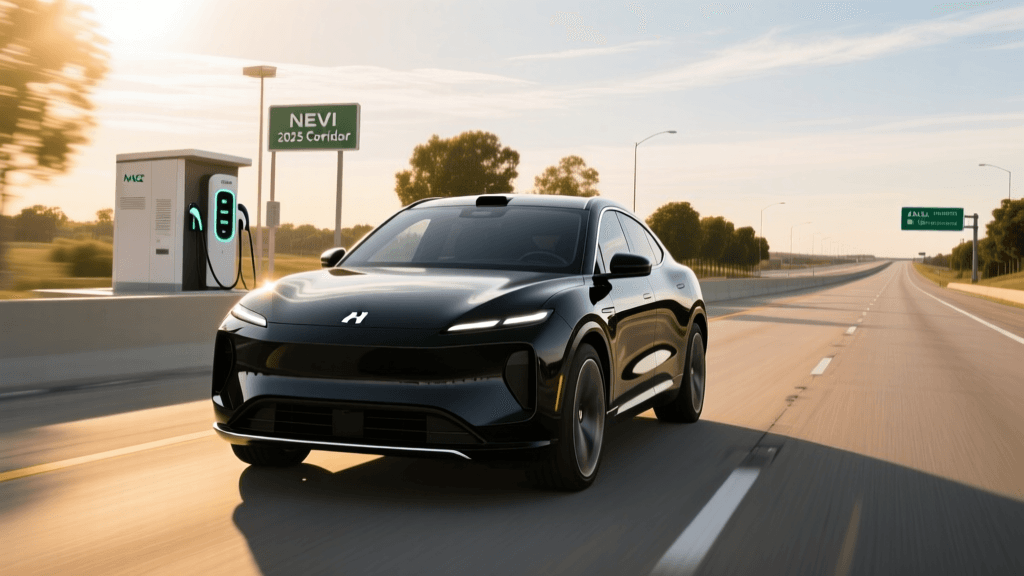
The cornerstone of the United States' highway charging expansion is the National Electric Vehicle Infrastructure (NEVI) Formula Program. Established under the Bipartisan Infrastructure Law, the NEVI program provides $5 billion in dedicated funding to states to build out a national network of EV chargers along designated Alternative Fuel Corridors. According to the Federal Highway Administration, these corridors encompass over 180,000 miles of the National Highway System, ensuring that the vast majority of Americans live within a short drive of a designated charging route.
The NEVI program enforces strict, forward-looking requirements that guarantee a high-quality user experience. To qualify for federal funds, charging stations must be located no more than 50 miles apart along designated interstate corridors and no more than one mile off the highway exit. Furthermore, each station must feature a minimum of four Direct Current Fast Charging (DCFC) ports capable of simultaneously delivering at least 150 kW each. This mandate effectively eliminates the bottlenecking issues that plague older, two-port legacy stations.
According to data tracked by the Joint Office of Energy and Transportation, states have already begun awarding contracts and breaking ground on these federally funded sites. By 2025, we will see the first major wave of NEVI-funded stations coming online, specifically targeting rural stretches of the Midwest and Mountain West that were previously ignored by private network operators due to lower profit margins. This will effectively close the notorious 'charging gaps' on routes like I-70 through Kansas and I-80 across Wyoming.
The NACS Shift: Tesla Superchargers Opening the Corridors
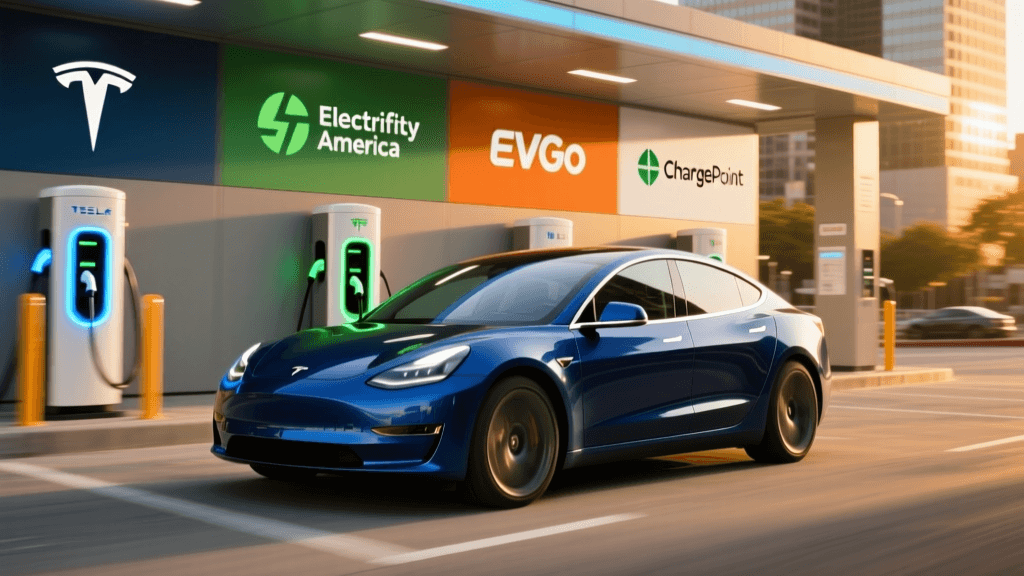
No discussion of future charging corridors is complete without addressing the industry-wide adoption of the North American Charging Standard (NACS). Tesla's decision to open its Supercharger network to non-Tesla vehicles has fundamentally altered the interstate charging map. Automakers including Ford, Rivian, General Motors, and Hyundai have committed to adopting the NACS port natively, while current CCS-equipped vehicles are utilizing adapters to access the network.
For interstate corridor planning, this integration is a game-changer. Tesla's Supercharger network has long been the gold standard for reliability, uptime, and strategic highway placement. By integrating Tesla locations into third-party route planners and native vehicle infotainment systems, the effective density of reliable fast chargers on major interstates has virtually doubled overnight. The deployment of Tesla's 'Magic Dock'—a built-in CCS adapter at select Supercharger stalls—has already begun bridging the gap for legacy EVs, though the long-term future relies on universal NACS adoption.
Looking ahead to 2025, the friction of using an adapter will begin to fade as new vehicle models roll off assembly lines with native NACS ports. This standardization will drastically reduce connector errors, hardware incompatibilities, and the physical bulk of carrying heavy adapters on road trips.
Electrify America and the Rise of Hyper-Hubs
While Tesla dominates in sheer numbers, Electrify America (EA) continues to be a vital pillar of the non-proprietary interstate corridor network. Moving away from the cramped, grocery-store-corner installations of the past, EA's future outlook focuses on 'Hyper-Hubs' and flagship travel centers. These next-generation corridor stations are designed specifically for the high-throughput demands of interstate travel.
Future EA corridor stations are being built with pull-through lanes to accommodate EVs towing trailers, such as the Ford F-150 Lightning or Rivian R1T. Additionally, these hubs feature massive solar canopies that provide weather protection—a crucial comfort factor during extreme summer heat or winter snowstorms. Coupled with on-site battery energy storage systems (BESS), these Hyper-Hubs can deliver consistent 350 kW charging speeds even during peak grid demand hours, ensuring that highway travelers are not subjected to throttled charging speeds during holiday travel rushes.
Future Trends: 800V Architectures and Megawatt Charging
The physical footprint of interstate charging stations will also evolve to accommodate faster-charging vehicle architectures. The proliferation of 800-volt battery systems, currently found in vehicles like the Hyundai Ioniq 5, Kia EV6, and Porsche Taycan, allows EVs to accept upward of 250 kW to 350 kW of power. This reduces highway dwell times from 40 minutes down to 15 or 18 minutes, fundamentally changing the economics and required footprint of corridor rest stops.
Furthermore, the development of the Megawatt Charging System (MCS) for commercial electric trucks will eventually bleed into passenger vehicle infrastructure. While MCS is designed for heavy-duty semi-trucks, the electrical grid upgrades required to support multi-megawatt truck stops along interstates like I-10 and I-40 will simultaneously future-proof passenger car charging hubs, ensuring that local transformers never bottleneck the speed of your road trip.
Projected Interstate Charging Network Growth (2023 vs 2025)
| Metric | 2023 Baseline | 2025 Projected Outlook |
|---|---|---|
| Average Corridor Spacing | 70 - 100+ miles (variable) | Strict 50-mile maximum (NEVI mandate) |
| Dominant Connector Standard | CCS1 (Fragmented) | NACS (Universal adoption phase) |
| Station Throughput Capacity | 150 kW (Average) | 350 kW + Liquid-Cooled Cables |
| Pull-Through Lane Availability | Rare (<5% of sites) | Standard at new Hyper-Hubs & NEVI sites |
| Payment Fragmentation | High (Multiple apps required) | Low (Plug & Charge / ISO 15118 standard) |
Actionable Advice: Navigating the 2024-2025 Transition
As the industry transitions toward this unified, high-speed future, EV drivers must adapt their road-tripping strategies to maximize efficiency and minimize frustration. Here is how you can navigate the evolving interstate corridor landscape:
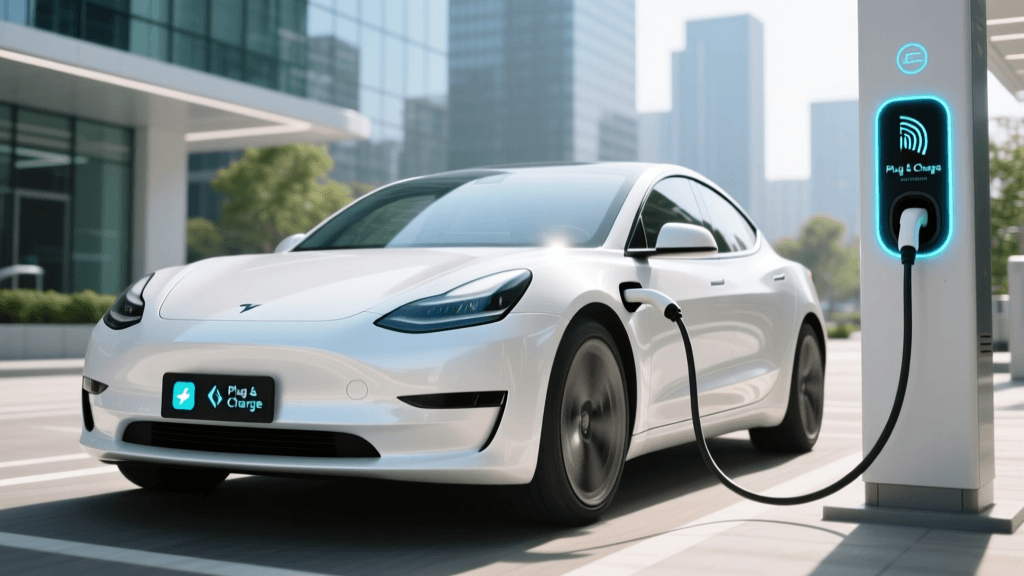
- Master Plug and Charge (ISO 15118): The days of swiping credit cards and fumbling with network-specific smartphone apps are ending. Ensure your vehicle's infotainment system is updated to support 'Plug and Charge' technology. Networks like Electrify America and EVgo now support automatic billing upon plugging in, mimicking the seamless Tesla Supercharger experience.
- Invest in a High-Quality NACS Adapter: If you drive a CCS-equipped vehicle (like a Hyundai, Ford, or Rivian), securing an official or certified CCS-to-NACS adapter is non-negotiable for interstate travel in 2024 and 2025. Always carry a heavy-duty, heat-resistant adapter bag, and inspect the adapter pins before every highway trip to prevent melting or connectivity faults.
- Utilize Advanced Routing Algorithms: Stop relying solely on native in-car navigation. Use advanced tools like A Better Routeplanner (ABRP) integrated with live telematics. ABRP factors in real-time charger availability, elevation changes, and current battery temperatures to route you to the most efficient corridor stops, actively avoiding known 'charging deserts' or offline stations.
- Time Your Charging Stops: Until the full wave of NEVI-funded stations comes online in late 2025, holiday corridor travel will still experience bottlenecks. Plan your interstate drives to arrive at major charging hubs between 10:00 AM and 2:00 PM, or after 8:00 PM, to avoid the 4:00 PM to 7:00 PM rush of commuters and road-trippers.
- Verify Upfront via the AFDC: Before embarking on a cross-country journey through rural corridors, consult the Alternative Fuels Data Center mapping tools. This government-backed database provides the most accurate, up-to-date status on public charger operability, helping you avoid routes where construction or grid upgrades have temporarily disabled vital highway charging nodes.
Conclusion
The future of interstate EV charging corridors is shifting from a fragmented, anxiety-inducing obstacle course to a streamlined, high-speed utility. With the aggressive rollout of NEVI-funded stations, the universal adoption of the NACS connector, and the deployment of 350 kW Hyper-Hubs, the cross-country EV road trip of 2025 will be faster, more reliable, and vastly more enjoyable. By staying informed on infrastructure trends and equipping yourself with the right adapters and routing tools, you can confidently conquer the American highway in any electric vehicle.