EVgo Network Coverage: Where Can You Charge?
When evaluating public charging networks, footprint and reliability are just as critical as the cost per kilowatt-hour. EVgo operates one of the largest and most established public DC fast-charging networks in the United States. According to the Alternative Fuels Data Center (AFDC), the U.S. charging infrastructure is heavily concentrated in specific corridors, and EVgo has strategically positioned its hardware to capture high-traffic urban and suburban markets.
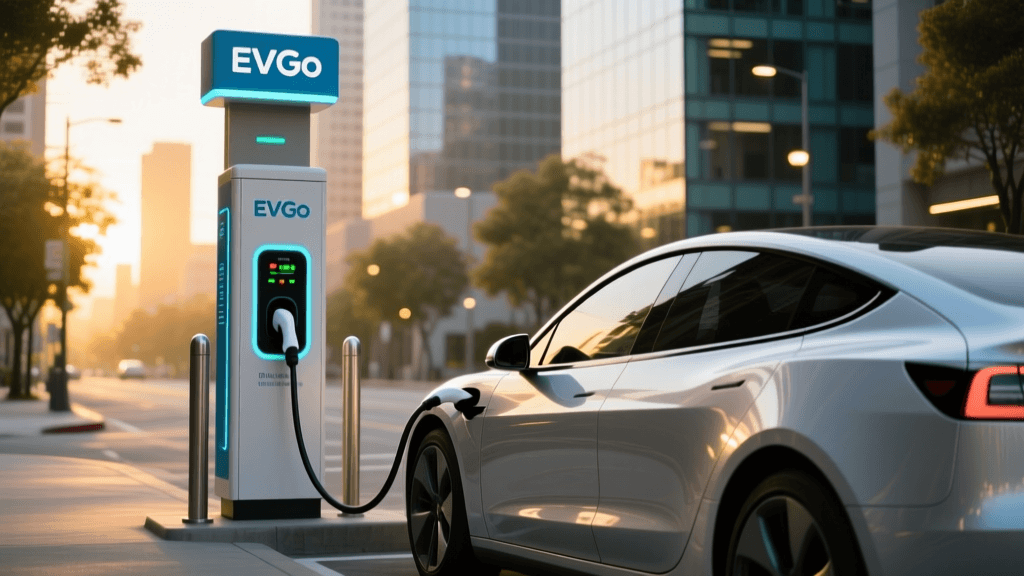
Currently, EVgo boasts over 1,100 public fast-charging stations and more than 2,700 individual DC fast-charging stalls nationwide. Unlike some competitors that focus exclusively on long-haul highway corridors, EVgo’s coverage map is heavily skewed toward metropolitan areas, shopping centers, grocery stores (like Whole Foods and Meijer), and dense urban environments. This makes it an exceptionally valuable network for apartment dwellers, rideshare drivers, and urbanites who rely on public fast chargers to supplement a lack of home charging infrastructure.
Furthermore, EVgo is rapidly expanding its footprint through strategic joint ventures. The "Pilot | EVgo" partnership aims to deploy over 2,000 DC fast-charging stalls across major highway travel centers, directly addressing the network's historical weakness in rural, cross-country routing. Additionally, their collaboration with General Motors to deploy "EVgo ReCharge" stations is bringing 350 kW ultra-fast chargers to high-visibility urban locations, significantly reducing the time spent plugged in for modern EVs equipped with 800-volt architectures.
Understanding the EVgo Pricing Structure
Before diving into specific membership tiers, it is vital to understand how EVgo bills its customers. Unlike home charging, where you always pay per kilowatt-hour (kWh), public charging billing is dictated by state-level Public Utility Commission (PUC) regulations. In states that allow non-utilities to resell electricity by the kWh, EVgo charges a flat rate per kWh consumed. However, in states where resale regulations are strict, EVgo is legally required to bill by the minute based on the time your vehicle is connected to the charger.
This per-minute billing can create value disparities. If you are charging a vehicle with a slower acceptance rate (or if you are charging past 80% state-of-charge where charging speeds taper off dramatically), per-minute billing will effectively cost you more per kWh than a vehicle that can sustain peak charging speeds. For a deep dive into how public charging economics compare to home setups, the U.S. Department of Energy provides excellent baseline data on public infrastructure costs and efficiency.
Pay-As-You-Go vs. EVgo Plus™ Plans
EVgo structures its pricing into a few distinct tiers, designed to cater to everyone from the occasional road-tripper to the daily rideshare driver. Navigating these tiers is the key to unlocking actual value from the network. Below is a breakdown of the current pricing architecture available on the official EVgo pricing portal.
1. Guest / Pay-As-You-Go (No Account Required)
If you pull up to an EVgo station and use a credit card tap-to-pay or an RFID card without an account, you are charged the premium "Guest" rate. This rate is the highest tier and offers no discounts. It is perfectly fine for a one-off emergency charge on a cross-country road trip, but it is financially punishing for regular use.
2. EVgo Plus™ (Free Basic Account)
By simply downloading the EVgo app and creating a free account, you unlock the base EVgo Plus™ tier. This gives you a slight discount off the Guest rate (usually around 5% to 10% depending on the station) and allows you to use the app to initiate sessions, monitor charging progress remotely, and track your spending.
3. EVgo Plus™ Pay As You Go
This is a unique middle-ground tier. You pay no monthly subscription fee, but you link a payment method and commit to using the network. In exchange, EVgo offers a more substantial discount off the Guest rate (typically 10% to 15%). This is the "sweet spot" for drivers who use public chargers a few times a month but cannot justify a recurring monthly subscription.
4. EVgo Plus™ Plans (Monthly Subscriptions)
For high-mileage drivers, EVgo offers monthly subscription plans (often ranging from $5 to $15 per month, depending on the region and current promotions). These plans slash the per-kWh or per-minute rate significantly, sometimes offering up to 25% or more off the standard Guest rates. Some premium tiers even include a small allotment of free charging credits each month.
Pricing Tier Comparison Chart
| Plan Tier | Monthly Fee | Discount Level | Best Suited For |
|---|---|---|---|
| Guest (Tap-to-Pay) | $0 | None (Base Rate) | One-off road trips, emergencies |
| EVgo Plus™ (Free) | $0 | Low (approx. 5-10%) | Infrequent users, app-reliant drivers |
| Plus™ Pay As You Go | $0 | Medium (approx. 10-15%) | Weekly chargers without subscription commitment |
| Plus™ Subscription | $5 - $15+ | High (15-25%+) | Rideshare, daily commuters, urban apartment dwellers |
Cost Breakdown: A Real-World Charging Scenario
To truly understand the value proposition, let us run a cost breakdown scenario. Assume you drive a Hyundai Ioniq 5 with a 77 kWh battery pack, and you arrive at an urban EVgo station with a 10% state-of-charge (SOC). You need to charge to 80% SOC, which requires roughly 54 kWh of energy. Let us assume this specific station charges $0.45 per kWh for Guest users.
- Guest Rate ($0.45/kWh): 54 kWh x $0.45 = $24.30
- EVgo Plus™ Pay As You Go (15% discount = $0.38/kWh): 54 kWh x $0.38 = $20.52
- Plus™ Subscription (25% discount = $0.33/kWh): 54 kWh x $0.33 = $17.82 (Plus a $10 monthly fee)
If you only make this charge once a month, the free "Pay As You Go" tier saves you nearly $4 per session, making it the undisputed winner. However, if you are an Uber driver or a daily commuter making this same charge eight times a month, the Subscription plan saves you over $52 per month, easily eclipsing the $10 monthly fee and proving its immense value.
Hidden Costs: Idle Fees and Etiquette
When analyzing the cost of any charging network, you must factor in the penalties. EVgo enforces a strict Idle Fee policy to maintain charger availability and enforce good EV etiquette. Once your vehicle reaches its charging limit (or the station's maximum session time), a grace period of typically 10 minutes is granted. After that, EVgo will bill you an idle fee—often around $0.10 to $0.20 per minute—until you unplug and move your vehicle.
These fees are not designed to be revenue generators; they are deterrents. To avoid these hidden costs, always monitor your charging session via the EVgo app, set an in-car charge limit to 80% (which also preserves long-term battery health), and return to your vehicle promptly when the session concludes.
Actionable Advice: Maximizing Your EVgo Value
If you decide that EVgo fits your charging lifestyle, here are three actionable strategies to stretch your dollar further:
- Enable Autocharge+: EVgo’s Autocharge+ feature allows your vehicle to authenticate and begin billing the moment you plug in, bypassing the need to swipe a card or use the app. More importantly, Autocharge+ sessions are sometimes eligible for exclusive promotional rates or loyalty points that standard sessions do not trigger.
- Leverage Partner Perks: Check if your vehicle manufacturer offers complimentary EVgo credits. Brands like Chevrolet, BMW, and Nissan frequently bundle $100 to $500 in EVgo charging credits with the purchase or lease of a new EV. Furthermore, shopping at partner locations like Meijer or Whole Foods can sometimes yield validation discounts or free parking while you charge.
- Time Your Sessions (Where Applicable): While EVgo's public fast-charging rates are generally static throughout the day, some specific utility-partnered locations may have time-of-use (TOU) pricing variations. Always check the station details in the app before navigating there to ensure you are not arriving during a peak pricing window.
The Final Verdict: Is EVgo Worth the Cost?
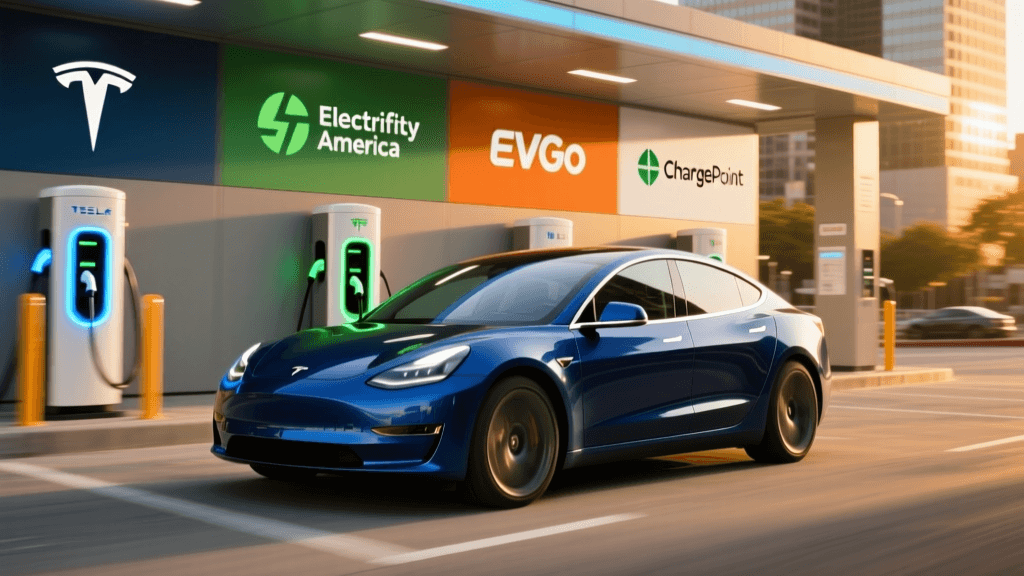
The value of the EVgo network depends entirely on your charging profile. For cross-country road trippers, EVgo's historical lack of deep rural highway coverage makes networks like Tesla or Electrify America slightly more convenient, though the new Pilot Flying J partnership is rapidly closing this gap. However, for urban dwellers, apartment renters, and gig-economy drivers who rely on public fast charging multiple times a week, EVgo is arguably the most cost-effective and reliable network on the market.
By avoiding the premium Guest rates and utilizing the free EVgo Plus™ Pay As You Go tier, you can secure consistent double-digit percentage discounts without locking yourself into a monthly subscription. When you combine these competitive rates with a growing footprint of 350 kW ultra-fast chargers in high-convenience retail locations, EVgo presents a compelling, high-value proposition for the modern EV owner.