The Scale and Scope of Electrify America
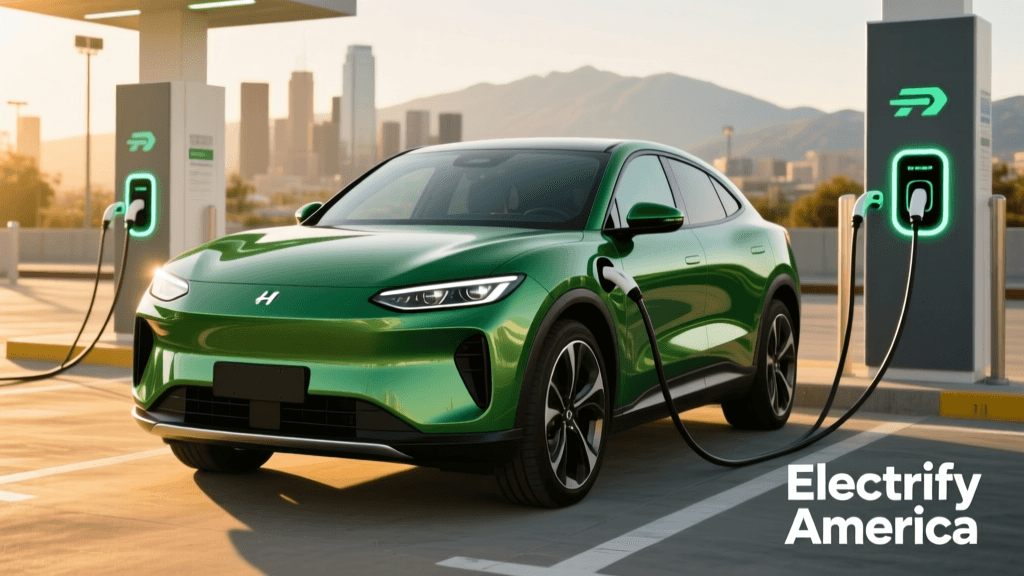
Electrify America (EA) has rapidly evolved from a mandated consequence of the Volkswagen diesel emissions settlement into the backbone of the United States' open DC fast-charging infrastructure. As the largest open hyper-fast charging network in the country outside of Tesla's proprietary ecosystem, EA plays a critical role in enabling cross-country EV travel. According to data tracked by the U.S. Department of Energy's Alternative Fuels Data Center, Electrify America operates thousands of fast-charging ports across hundreds of stations, strategically placed along major highway corridors and in dense metropolitan areas.
However, sheer scale and port count do not automatically translate to a seamless user experience. For EV owners, the most critical metric is not how many chargers exist on a map, but whether those chargers will successfully deliver electrons when needed. This data-driven analysis examines Electrify America's reliability, benchmarks its user experience against industry competitors, and provides actionable technical advice to maximize charging success rates.
Defining Reliability: Uptime vs. Session Success Rate
When analyzing EV charging networks, it is vital to distinguish between 'network uptime' and 'session success rate.' Network uptime refers to the percentage of time a charging station is powered on, connected to the internet, and reporting its status to the central server. Electrify America frequently reports network uptime figures exceeding 90%. However, real-world user experience often reflects a lower 'session success rate'—the percentage of times a driver plugs in and the charging session initiates without manual intervention or error codes.
Industry data suggests that while open networks have made massive strides in hardware durability, software communication bottlenecks remain a primary point of failure. A station may be technically 'online' (contributing to the 90%+ uptime metric), but if the payment gateway times out or the vehicle-to-charger handshake fails, the user experiences a 100% failure rate for that specific visit.
User Experience Benchmarking: How EA Compares
To contextualize Electrify America's user experience, we must look at industry benchmarking, most notably the J.D. Power U.S. Electric Vehicle Experience (EVX) Public Charging Study. This comprehensive study surveys thousands of EV owners, scoring networks on a 1,000-point scale across categories like ease of charging, speed, cost, and overall reliability.
While Tesla's Supercharger network consistently sets the gold standard for plug-and-play simplicity, open networks like Electrify America have been closing the gap, particularly in charging speed satisfaction. Below is a data-driven comparison of the major DC fast-charging networks based on aggregated industry performance metrics and user satisfaction trends.
| Metric | Tesla Supercharger | Electrify America | EVgo | ChargePoint |
|---|---|---|---|---|
| Overall Satisfaction (1000-pt Scale) | ~730 | ~650 | ~640 | ~610 |
| Charging Speed Satisfaction | High | Very High | Medium | Low/Medium |
| Estimated Real-World Session Success | ~95%+ | ~80-85% | ~80% | ~75% |
| Plug & Charge (ISO 15118) Support | Native / Proprietary | Wide OEM Support | Limited | Limited |
| Hardware Footprint & Cable Weight | Optimized | Improving (Gen 3.5/4) | Variable | Variable |
Note: Scores and percentages are representative of recent industry indexing trends and aggregated user reports.
The data reveals that Electrify America scores exceptionally well in charging speed satisfaction, largely due to its widespread deployment of 150 kW and 350 kW hyper-fast chargers. However, it loses points in the initial setup and payment phases, where screen lag and credit card reader failures occasionally frustrate users.
Technical Deep Dive: Why Do EA Sessions Fail?
To improve your personal success rate, it helps to understand the technical hurdles that cause session failures on the Electrify America network. The vast majority of non-hardware failures stem from the CCS (Combined Charging System) digital handshake.
The PLC Handshake Timeout
When you plug a CCS connector into your vehicle, the charger and the car's Battery Management System (BMS) must communicate via Power Line Communication (PLC). They negotiate the maximum voltage, current, and battery temperature limits. If the PLC module in the charger experiences firmware latency, or if the vehicle's BMS is slow to respond, the system will time out to prevent electrical arcing or battery damage. This results in the dreaded 'Communication Error' or 'Handshake Failed' message on the EA screen.
Payment Gateway and UI Latency
Unlike Tesla's seamless VIN-recognition billing, open networks rely on RFID tags, mobile app tokens, or physical credit card readers. Electrify America's Gen 2 charger touchscreens are notoriously sensitive to temperature extremes and glare, leading to UI lag. When a user taps 'Start Session' and the screen freezes, the backend server may still process the request, resulting in duplicate authorization holds on the user's credit card or a confused session state that requires a hard reboot of the dispenser.
Actionable Guide: Maximizing Your Electrify America Success Rate
Based on the data and technical architecture of the EA network, EV owners can adopt specific behaviors to drastically improve their session success rate and overall experience.
1. Activate and Rely on Plug & Charge (ISO 15118)
The single most effective way to bypass payment gateway errors and screen UI lag is to use Plug & Charge. This protocol allows the charger to read your vehicle's encrypted MAC address the moment you plug in, automatically linking the session to your EA account and billing method. Most modern EVs (including Ford, GM, Hyundai, Kia, and Volkswagen) support this. Ensure your vehicle's VIN is registered in the Electrify America app and that 'Plug & Charge' is toggled on in your car's infotainment settings before arriving at the station.
2. The 'EA Reset' Protocol
If you plug in and receive a handshake error, do not immediately unplug and try the same stall again. Follow this sequence:
- Unplug the vehicle and return the cable to the holster.
- Wait for the charger screen to completely time out and return to the default 'Welcome' or 'Plug In' screen (usually 15 to 30 seconds).
- If possible, move to a different dispenser on the same site to rule out a localized PLC module failure.
- Ensure your vehicle's charging port is free of debris or moisture, which can interfere with the CCS communication pins.
3. Use the App Over the Credit Card Reader
Data shows that physical credit card readers on public chargers have a disproportionately high failure rate due to vandalism, network dropouts, and hardware degradation. Always initiate your session via the Electrify America mobile app or an RFID tag linked to your account. This bypasses the physical card reader entirely and provides real-time session telemetry directly to your phone.
4. Precondition Your Battery
Electrify America's 350 kW chargers are capable of delivering massive amounts of current, but only if the vehicle's battery is at the optimal temperature. If you arrive at an EA station with a cold battery, the BMS will restrict the charging speed, and the sudden demand variance can sometimes cause the charger's internal contactors to trip. Always route your EV's navigation to the EA station to trigger automatic battery preconditioning.
Hardware Evolution: Gen 3.5 and Gen 4 Chargers
Electrify America is acutely aware of the user experience data and is actively overhauling its hardware. The network is currently transitioning from its bulky Gen 2 chargers to the much-improved Gen 3.5 and Gen 4 architectures.
Gen 3.5 chargers introduce liquid-cooled cables that are significantly thinner, lighter, and more manageable, addressing one of the most common physical complaints from users handling stiff, heavy Gen 2 cables. Furthermore, Gen 4 chargers feature a drastically reduced physical footprint, smaller and more responsive touchscreens, and advanced dynamic power sharing. This means a 600 kW power cabinet can intelligently distribute power across multiple stalls based on real-time vehicle demand, reducing the likelihood of a stalled session due to power allocation errors.
Initiatives supported by guidelines from the Joint Office of Energy and Transportation are pushing all networks toward higher reliability standards, and EA's hardware refresh is a direct response to the demand for a more premium, frictionless charging experience.
Conclusion
Electrify America remains a vital pillar of the North American EV charging ecosystem. While the data shows that it still trails Tesla's proprietary network in overall frictionless reliability, EA leads the open-network market in hyper-fast charging capabilities and Plug & Charge adoption. By understanding the technical nuances of the CCS handshake, leveraging ISO 15118 Plug & Charge technology, and utilizing the mobile app over physical payment terminals, drivers can transform their Electrify America experience from a potential point of friction into a reliable, high-speed pit stop.