The Costco EV Charging Mirage: Separating Fact from Fiction
For many electric vehicle (EV) owners, the idea of combining a weekly grocery haul with a free or convenient battery top-up sounds like the ultimate productivity hack. Costco, known for its bulk deals and member-first approach, has increasingly popped up on EV charging maps over the last few years. However, a dangerous trend of misinformation has spread across EV forums and social media groups regarding Costco EV charging station availability by location.
As a senior automotive analyst for AutoEdgeView, I frequently hear from frustrated drivers who pulled up to a Costco warehouse expecting a row of blazing-fast DC Fast Chargers, only to find a crowded parking lot, broken Level 2 pedestals, or zero charging infrastructure whatsoever. Today, we are diving deep into the "Myth Busting & Common Mistakes" surrounding Costco EV chargers. We will examine regional availability disparities, network realities, and the common errors drivers make when planning their shopping-and-charging trips.
Myth #1: Every Costco Warehouse Has EV Chargers
The Reality: Costco does not have a universal, company-wide mandate to install EV charging stations at every warehouse. Availability is highly fragmented and depends heavily on regional incentives, local government partnerships, and the specific layout of the warehouse parking lot.
If you live in California, Washington, or the Northeast corridor, you are significantly more likely to find EV chargers at your local Costco. This is largely due to state-funded incentive programs like the California Electric Vehicle Infrastructure Project (CALeVIP), which heavily subsidizes the installation of commercial charging equipment. According to the Alternative Fuels Data Center (AFDC) Station Locator, regional density of commercial Level 2 chargers correlates directly with state-level funding and mandates.
Conversely, if you are driving through the Midwest or the Deep South, finding a Costco with dedicated EV infrastructure is the exception, not the rule. Many older suburban warehouses simply lack the electrical capacity in their parking lot lighting grids to support multiple 240-volt Level 2 pedestals without undergoing massive, cost-prohibitive utility upgrades.
The Mistake: Assuming that because one Costco in your state has chargers, the next town over will have them too. Always verify the specific warehouse location before routing your trip.
Myth #2: Charging at Costco is Always Free
The Reality: The golden era of "free juice" at retail locations is rapidly coming to an end. While a handful of legacy chargers installed a decade ago might still offer complimentary electrons, the vast majority of Costco EV chargers are operated by third-party networks like Blink, ChargePoint, or EVgo, all of which require payment.
Blink Network is one of the most common partners for Costco's Level 2 installations. When you plug in, you are not billing Costco; you are billing through the Blink network. This means you will need the Blink mobile app, an RFID card, or a credit card inserted directly into the pedestal. Pricing is typically determined by the local franchisee or property management company, often ranging from $1.25 to $1.99 per hour, or a per-kWh rate where local laws permit.
The Mistake: Arriving with a low battery, no charging network apps installed on your phone, and no credit card handy, assuming the warehouse will just hand you free electricity. Always have your payment profiles set up in the major network apps before you leave home.
Myth #3: Costco Chargers Are DC Fast Chargers
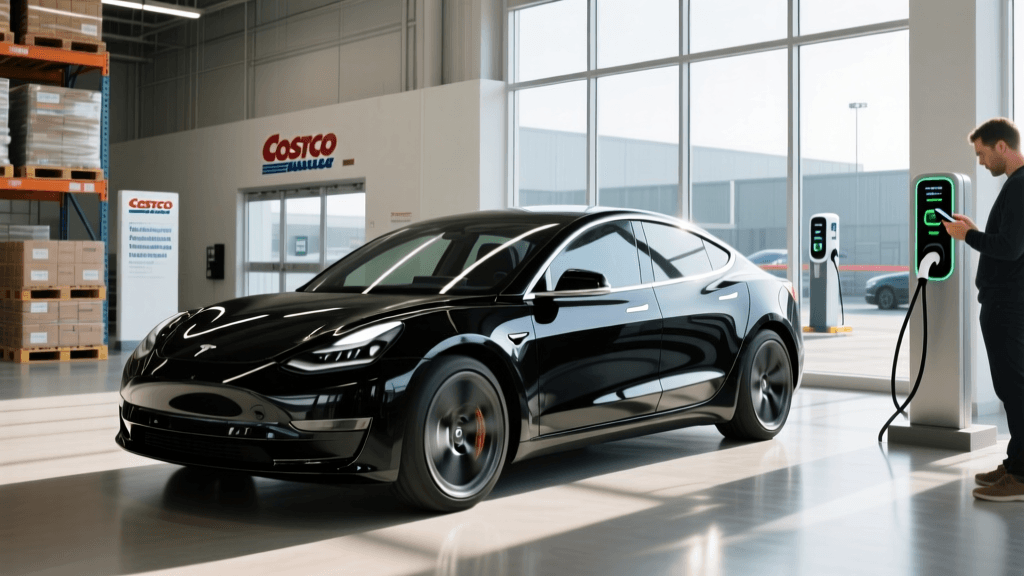
The Reality: This is perhaps the most detrimental myth for cross-country road trip planners. Almost all Costco EV charging stations are Level 2 AC chargers, typically delivering between 6.6 kW and 19.2 kW of power. They are designed for "destination charging"—meaning you plug in while you shop for 45 minutes to an hour, gaining perhaps 15 to 30 miles of range.
If you are on a multi-state road trip and your battery is at 10%, a Costco Level 2 charger will not save you. You need a DC Fast Charger (Level 3) capable of delivering 50 kW to 350 kW, which are typically found at dedicated travel plazas, Electrify America hubs, or Tesla Supercharger stations, not in the middle of a crowded Costco return lane.
For a comprehensive breakdown of how charging speeds affect your daily routine versus road trips, the AFDC Charging Infrastructure guidelines provide excellent data on the difference between Level 2 destination charging and Level 3 highway corridor charging.
Common Mistakes and Etiquette Failures at Costco
Beyond the myths of availability and speed, EV drivers frequently make critical errors in etiquette and planning when utilizing retail charging stations. Here are the most common pitfalls:
- The "ICEing" Blindspot: Because Costco parking lots are notoriously busy, EV spots are frequently blocked by internal combustion engine (ICE) vehicles. Relying on a single charger at a busy suburban Costco on a Saturday afternoon is a recipe for a wasted trip.
- Camping the Spot: Some drivers treat the EV spot as "premium parking" and leave their vehicle plugged in long after the session has ended. This prevents other shoppers from charging and often leads to confrontations or towing.
- Ignoring User Check-Ins: Failing to check real-time community data before driving to the location. A charger might show up on a map, but if the last three users reported it as "broken" or "screen unreadable," you need to know that before you arrive.
Data Table: Costco EV Charger Myths vs. Reality
| Common Myth | The Reality | Actionable Advice |
|---|---|---|
| Every Costco has chargers. | Availability is highly regional and dependent on local utility incentives. | Use the PlugShare app to filter specifically for Costco locations on your route. |
| Charging is free for members. | Most are operated by paid networks like Blink or ChargePoint. | Download network apps and link a credit card before arriving. |
| I can fast-charge my EV here. | 95%+ of Costco chargers are Level 2 (6.6kW - 19.2kW). | Use Costco for local top-ups, not highway road-trip routing. |
| Spots are reserved strictly for EVs. | ICEing is common; enforcement varies wildly by warehouse management. | Check recent user photos on charging apps to spot blocked pedestals. |
How to Successfully Plan a Costco Charging Trip
If you want to leverage your Costco membership to keep your EV battery topped up without the stress, follow this three-step verification process:
1. Verify via Community-Driven Apps
Do not rely solely on your vehicle's native infotainment map, which often pulls stale data from network APIs. Instead, open PlugShare or A Better Routeplanner (ABRP). Filter the map for your specific Costco warehouse and read the most recent "check-ins." If a user left a comment two days ago stating, "Blink pedestal screen is smashed," you know to skip it.
2. Time Your Shopping Trip Around Charging Speeds
Understand your vehicle's onboard charger limit. If your EV has an 11.5 kW onboard charger and the Costco Blink station is a 7.2 kW pedestal, you will only pull 7.2 kW. In a standard 45-minute Costco run, you will add roughly 20 to 25 miles of range. Plan your grocery list accordingly so you aren't rushing out to a half-charged car, but also aren't loitering in the food court just to get a full battery.
3. Leave a Note (and Unplug if Necessary)
If you finish shopping and your car is fully charged, but the lot is full, it is generally acceptable EV etiquette to leave a polite note on your dashboard with your phone number, and carefully unplug your vehicle to let the next waiting EV driver plug in. However, never do this if your vehicle is locked and actively pre-conditioning, as interrupting a high-voltage session can cause software faults in some older EV models.
Final Thoughts on Retail Charging Infrastructure
Costco EV charging stations are a fantastic supplementary resource for local drivers who live in well-equipped regions, but they are not a silver bullet for the nation's charging infrastructure gaps. By busting the myths surrounding universal availability, free electricity, and fast-charging capabilities, you can approach your next warehouse run with realistic expectations. Remember that retail charging is about convenience and destination pairing, not rapid highway transit. Equip yourself with the right apps, understand the regional disparities, and always practice good charging etiquette to ensure these valuable amenities remain available for the entire EV community.