The Allure of the Wholesale Charge: Separating Fact from Fiction
For electric vehicle (EV) owners, the idea of combining a necessary chore with vehicle charging is the holy grail of efficiency. Costco, with its massive parking lots, high traffic volume, and extended dwell times, seems like the perfect candidate for a nationwide EV charging utopia. However, the reality of Costco EV charging station availability is far more complex than a simple corporate mandate. As EV adoption accelerates, misinformation about where, how, and for how much you can charge at these wholesale club locations has spread across forums and social media.
At AutoEdgeView, we believe in data-driven driving. Below, we are busting the most persistent myths about Costco EV charging, highlighting the common mistakes drivers make, and providing a practical guide to finding reliable electrons while you stock up on bulk groceries.
Myth #1: Every Costco Has an EV Charging Station
The Myth: Costco has a universal, top-down corporate policy to install EV chargers at all of its 850+ North American warehouse locations.
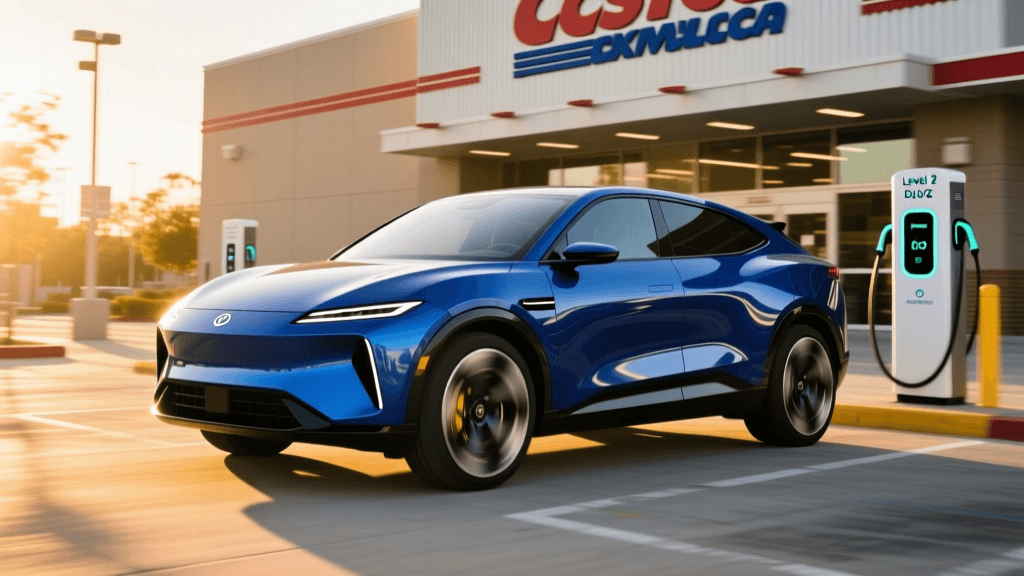
The Reality: There is no universal Costco corporate mandate for EV charging infrastructure. Instead, charging stations at Costco locations are almost entirely the result of local real estate developers, third-party charging networks, or regional sustainability initiatives.
When a new Costco is built, the developer of the shopping center may partner with networks like ChargePoint, Blink, or Electrify America to meet local municipal zoning requirements for EV readiness. In states with aggressive zero-emission vehicle (ZEV) mandates like California, Washington, and New York, you will find a high density of Costco locations with charging infrastructure. However, if you are driving through the Midwest or the Deep South, Costco locations with dedicated, operational EV chargers are significantly rarer. Assuming every Costco has a charger is a quick way to strand yourself with a low state of charge (SoC).
Myth #2: Costco Charging is Always Free
The Myth: Because Costco is known for member value, the EV chargers in their parking lots are complimentary perks.
The Reality: While a handful of older Level 2 installations may still be free, the vast majority of retail charging has transitioned to paid models.
Third-party networks that own and operate the chargers in Costco parking lots—such as Blink and ChargePoint—charge for electricity to recoup hardware, maintenance, and cellular connectivity costs. According to the J.D. Power U.S. Electric Vehicle Experience (EVX) Public Charging Study, the shift toward paid retail charging is an industry-wide standard as networks prioritize uptime and profitability over promotional freebies. Expect to pay either a per-kWh rate (often between $0.25 and $0.45 depending on the state) or an hourly idle fee if you leave your car plugged in after charging completes.
Myth #3: You Can Get a Meaningful Charge During a Quick Shopping Trip
The Myth: A 45-minute trip into Costco will add 100 miles of range to your EV.
The Reality: This is a dangerous misconception that stems from confusing Level 2 AC charging with DC Fast Charging (DCFC).
The chargers physically located in Costco parking lots are overwhelmingly Level 2 AC chargers, typically delivering between 7.2 kW and 19.2 kW. Let us look at the math for a typical 45-minute shopping trip:
- At a 7.2 kW Level 2 charger: You will add roughly 5.4 kWh of energy in 45 minutes. For an efficient EV like the Tesla Model Y or Hyundai Ioniq 5 (averaging 3 to 4 miles per kWh), this translates to a mere 16 to 21 miles of range.
- At a 19.2 kW AC charger (if your vehicle's onboard charger supports it): You will add roughly 14.4 kWh, yielding about 43 to 57 miles of range.
Level 2 chargers are excellent for topping off your battery while you run errands, but they are entirely useless as a primary road-trip charging strategy. If you see a DC Fast Charger (like a Tesla Supercharger or Electrify America station) near a Costco, it is almost certainly owned by the shopping center plaza or the charging network, not Costco itself.
Common Mistakes EV Drivers Make at Costco
1. Confusing 'Plaza Chargers' with 'Costco Chargers'
Many drivers use navigation systems that say 'Charger near Costco' and assume the chargers are owned by or dedicated to the warehouse. In reality, these chargers are often located on the opposite end of a massive retail plaza, sometimes a half-mile walk from the Costco entrance. Always check the specific pin location on your mapping app to see how far the walk actually is.
2. Blindly Trusting the Network App Without Checking Status
Retail locations experience high charger turnover and higher rates of vandalism or screen damage. The U.S. Department of Energy notes that public charging reliability remains a hurdle in high-traffic retail environments. Always check a crowdsourced app like PlugShare before diverting your route. If the last three user check-ins report a broken screen or a payment error, do not risk your low battery on a hopeful detour.
3. ICEing and Etiquette Violations
Because Costco lots are notoriously crowded, EV charging spots are frequently blocked by internal combustion engine (ICE) vehicles, or 'ICE'd'. Furthermore, EV drivers often make the mistake of parking in the spot to 'save' it while they wait for a charger to free up, creating unnecessary friction. Always have a backup plan if the 2 to 4 spots available are occupied or blocked.
Data Table: Typical Costco-Adjacent Charging Network Profiles
| Network | Typical Speed | Pricing Model | Reliability at Retail |
|---|---|---|---|
| Blink Network | 7.2 kW - 19.2 kW (Level 2) | Per kWh or Hourly | Moderate (Frequent screen issues) |
| ChargePoint | 7.2 kW - 19.2 kW (Level 2) | Per kWh (Varies by host) | High (Excellent app integration) |
| Electrify America | 150 kW - 350 kW (DCFC) | Per kWh + Idle Fees | Moderate to High (Plaza dependent) |
| Tesla Destination | 11.5 kW - 17 kW (Level 2) | Usually Free (Host subsidized) | High (Low maintenance hardware) |
Your Action Plan: How to Successfully Charge at Costco
To maximize your time and ensure you actually get the electrons you need, follow this actionable checklist before heading to the warehouse:
- Filter by Network, Not Brand: Use PlugShare or your vehicle's native route planner to filter for the specific networks you have accounts with (e.g., ChargePoint or EVgo). This prevents the frustration of arriving at a charger that requires a proprietary app you have not downloaded.
- Verify the Dwell Time Math: If you are below 20% SoC and need a fast charge to get home, skip the Costco Level 2 chargers. Look instead for a DC Fast Charging hub located in the same retail corridor.
- Download the Apps in Advance: Retail chargers often have poor cellular reception due to large metal warehouse roofs and concrete canopies. Create your accounts, link your credit card, and log into the Blink, ChargePoint, or EVgo apps before you pull into the parking lot.
- Bring Your J1772 Adapter: If you drive a Tesla, never assume the retail Level 2 chargers at a shopping plaza have Tesla Wall Connectors. Always keep your J1772 adapter in the frunk or trunk.
The Verdict on Costco EV Charging
Costco remains a fantastic destination for EV owners who live locally and want to combine a necessary 45-minute errand with a slight battery top-up. However, it is not a universal, free, or fast-charging utopia. By understanding the difference between corporate mandates and local developer installations, and by doing the math on Level 2 charging speeds, you can avoid the common pitfalls that plague unprepared EV drivers. Plan ahead, verify your charger status via crowdsourced apps, and enjoy your bulk purchases with the peace of mind that comes from smart, myth-free EV ownership.