The Urban EV Reality: Why Charging Density Matters
As electric vehicle adoption accelerates across the United States, the conversation around charging infrastructure is shifting. For early adopters, the primary concern was highway range anxiety. Today, for the millions of urban and suburban drivers transitioning to EVs, the challenge is hyper-local: public charging density. Understanding how many public chargers exist per capita in your city—and the ratio of Level 2 (L2) destination chargers to Direct Current Fast Chargers (DCFC)—is critical for seamless daily driving and long-term ownership satisfaction.
City-by-city public EV charging density comparisons reveal stark contrasts in infrastructure maturity. While some coastal tech hubs boast robust networks of retail and curbside chargers, other major metropolitan areas struggle with high ICEing (internal combustion engine vehicles blocking EV spots), broken equipment, and a severe lack of off-street charging options. In this expert guide, we break down the charging density of top US cities, analyze the data, and provide actionable best practices for navigating urban charging networks like a pro.
How We Measure EV Charging Density
To accurately compare cities, industry experts and organizations like the Alternative Fuels Data Center (AFDC) rely on specific metrics. Raw charger counts are misleading; a city with 5,000 chargers and 8 million residents faces vastly different infrastructure strain than a city with 2,000 chargers and 800,000 residents. Therefore, we evaluate density using the following benchmarks:
- Ports per 100,000 Residents: The great equalizer. This metric normalizes the data, showing how accessible public charging is relative to the local population.
- DCFC vs. L2 Ratio: Urban dwellers without home charging rely heavily on DCFC (50kW to 350kW) for quick top-ups, while L2 (7kW to 19kW) is better suited for destination charging (malls, workplaces, gyms).
- Network Reliability & Uptime: Density means nothing if the chargers are offline. High-density cities must maintain a 95%+ uptime to prevent localized bottlenecks.
Top US Cities Ranked by Public Charging Density
Below is a comparative analysis of public EV charging infrastructure across five major US cities. Data reflects recent metropolitan estimates and public port availability.
| City | Population (City Limits) | Est. Total Public Ports | Ports per 100k Residents | DCFC Percentage |
|---|---|---|---|---|
| San Francisco, CA | ~808,000 | ~2,900 | 358 | 24% |
| Los Angeles, CA | ~3.82 Million | ~8,800 | 230 | 19% |
| Austin, TX | ~965,000 | ~1,950 | 202 | 28% |
| Seattle, WA | ~737,000 | ~1,450 | 196 | 16% |
| New York, NY | ~8.33 Million | ~4,800 | 57 | 14% |
San Francisco & The Bay Area: The Density Leader
San Francisco consistently ranks at the top for EV charging density. With over 350 ports per 100,000 residents, the city benefits from a tech-forward demographic, aggressive municipal climate goals, and a high concentration of destination chargers at retail centers and parking garages. However, the hilly terrain and dense street parking mean that curbside Level 2 charging remains a highly sought-after commodity.
Los Angeles: The Sprawling DCFC Hub
Los Angeles presents a unique challenge. Its massive geographic sprawl requires drivers to cover more miles daily, increasing the demand for fast charging. While LA boasts a massive raw number of chargers, its per-capita density is moderate. The city relies heavily on retail-located DCFC hubs (like Electrify America and EVgo stations in shopping center parking lots) to serve its commuter-heavy population.
Austin: The Sunbelt Fast-Charging Pioneer
Austin’s infrastructure is heavily skewed toward DCFCs, reflecting the Texan preference for quick stops over long destination charging sessions. With a robust Tesla Supercharger presence (increasingly opening to NACS-adapted non-Tesla EVs) and a growing network of ChargePoint and Blink fast chargers, Austin offers excellent road-trip egress and urban top-up capabilities.
New York City: The Per-Capita Bottleneck
NYC has the lowest per-capita charging density on this list, largely due to its enormous population and the fact that the vast majority of residents rely on street parking. To combat this, the city and the Joint Office of Energy and Transportation have been pioneering curbside charging initiatives, integrating Level 2 chargers into existing lampposts and municipal parking infrastructure to serve apartment dwellers.
Expert Tips for Navigating Urban Charging Networks
Understanding your city's density is only the first step. To thrive as an urban EV owner, you must adopt strategic charging habits. Here are the best practices utilized by EV fleet managers and daily urban commuters.
1. Map 'Charging Oases' Over Single Plugs
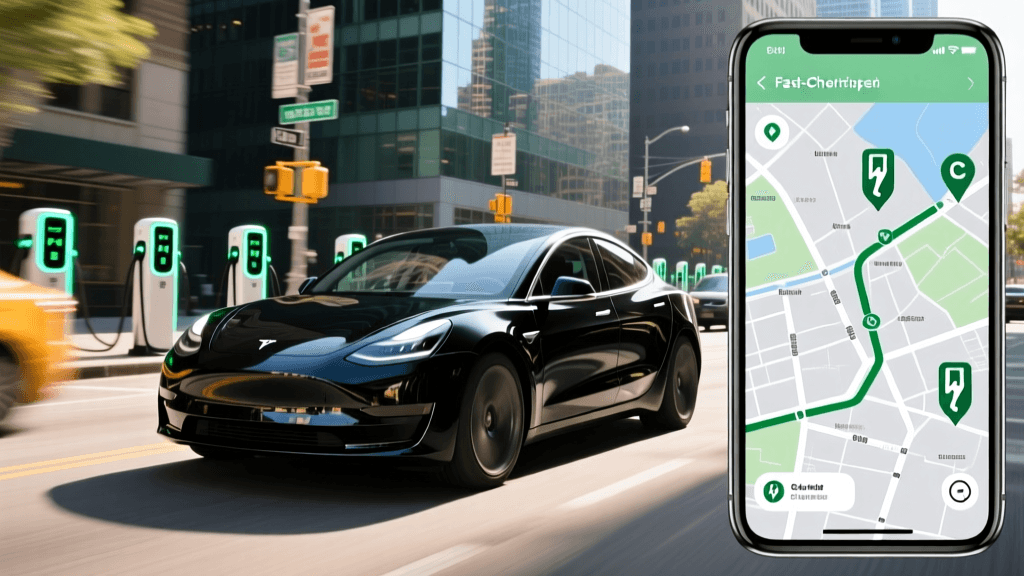
In high-density cities, single-plug street chargers are highly susceptible to ICEing, vandalism, or hardware failure. Expert drivers use apps like PlugShare or A Better Routeplanner (ABRP) to identify 'Charging Oases'—locations with 8 or more stalls, such as large grocery store parking lots, shopping malls, or dedicated EV hubs. If one stall is broken or blocked, a multi-stall oasis ensures your charging session isn't ruined. Always filter your map searches for '4+ plugs' when planning urban errands.
2. Master the Payment Fragmentation Landscape
Urban charging networks are notoriously fragmented. You might encounter a ChargePoint plug at your gym, an EVgo station at the grocery store, and a Blink charger on your street. Best Practice: Download and pre-register your payment info for the top three networks in your specific city. Better yet, utilize 'Autocharge' or 'Plug & Charge' features (available on networks like Electrify America and EVgo) where the charger automatically identifies your vehicle's VIN and initiates billing the moment you plug in, bypassing broken touchscreens and app errors.
3. Leverage Off-Peak Utility Rates and Curbside Tech
If you live in a dense city without a private garage, look into municipal curbside charging programs. Cities like NYC, London (via ubitricity), and Los Angeles (via BlueLA) are integrating slow L2 chargers into streetlights. While a 7kW streetlight charger won't give you 200 miles in 20 minutes, plugging in overnight while parked on your residential street can easily replenish your daily 40-mile commute at off-peak utility rates, saving you expensive DCFC fees.
4. The '1-Mile Backup' Rule
Urban infrastructure is dynamic. Construction, street sweeping, and temporary closures can wipe out your planned charging stop. When your battery state-of-charge (SoC) drops below 15% in a dense urban environment, never rely on a single station. Always identify a secondary backup station within a 1-mile radius before you initiate your navigation. This prevents the dreaded 'stranded' scenario caused by a surprise out-of-order kiosk.
5. Utilize Community-Driven Reliability Data
Official network apps often show a charger as 'Available' even if the cable is damaged or the screen is smashed. Before driving across town to a specific public plug, check the community comments on PlugShare. Urban EV drivers are highly diligent about reporting hardware issues, ICEing, and safety concerns in real-time. A station with a 90% reliability score on community apps is a safer bet than a brand-new station with zero user check-ins.
The Future of Urban Charging Infrastructure
The landscape of city charging is evolving rapidly, driven by federal and state funding. Programs supported by the US Department of Transportation and the National Electric Vehicle Infrastructure (NEVI) formula program are not only targeting highway corridors but are also pushing for equitable urban charging deployment in disadvantaged communities. Furthermore, the industry-wide shift toward the North American Charging Standard (NACS) will soon unify the hardware experience, reducing the adapter confusion that currently plagues urban public charging.
Conclusion
City-by-city EV charging density varies wildly, from the destination-heavy streets of San Francisco to the curbside initiatives of New York. As an urban EV owner, your success depends on looking beyond raw numbers and understanding the practical realities of your local network. By prioritizing multi-stall charging oases, mastering payment ecosystems, and utilizing community-driven data, you can bypass the friction of public charging and enjoy the full benefits of electric mobility in any metropolitan environment.