The Paradigm Shift: From Simple Cables to Smart Grid Nodes
When electric vehicles first entered the mainstream market, a home EV charger was essentially a heavy-duty cable with a relay. Its only job was to safely deliver alternating current (AC) from your electrical panel to your car's onboard charger. Today, the landscape has fractured into two distinct camps: WiFi-enabled 'smart' chargers and non-connected 'analog' chargers. As we look toward the future of electric mobility, the debate between these two technologies is no longer just about convenience; it is about grid integration, energy economics, and the impending arrival of bi-directional charging.
For consumers navigating the market, understanding the long-term trajectory of home charging infrastructure is critical. While a non-connected charger might seem appealing for its plug-and-play simplicity, the broader automotive and energy industries are aggressively pivoting toward connected ecosystems. In this analysis, we compare the current state of WiFi-enabled versus non-connected EV chargers and explore the industry trends that will ultimately dictate which technology survives the next decade.
WiFi-Enabled Chargers: The Smart Grid Nexus
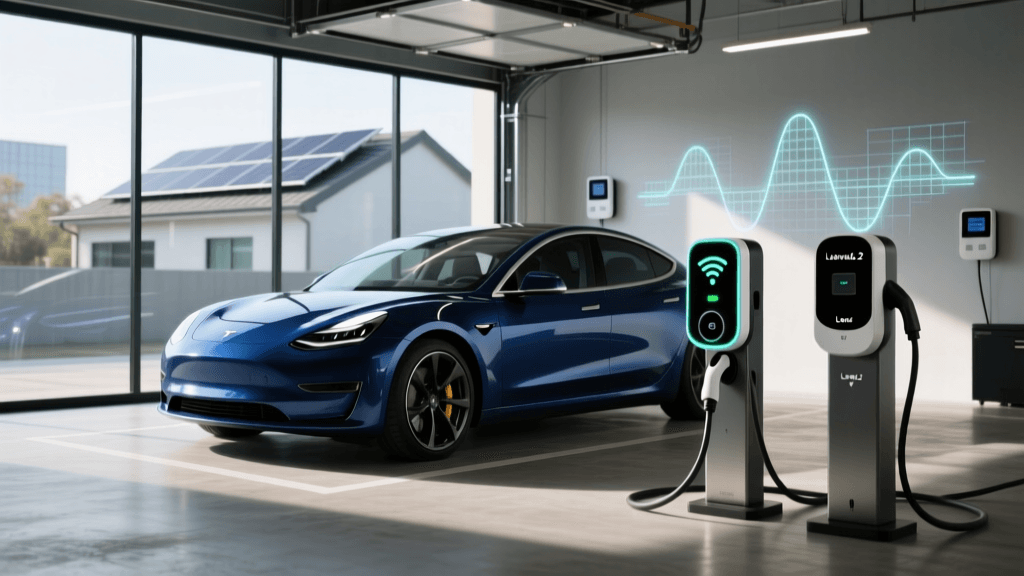
WiFi-enabled chargers, such as the ChargePoint Home Flex and the Wallbox Pulsar Plus, represent the current gold standard for residential EV charging. These devices connect to your local network, allowing for Over-The-Air (OTA) firmware updates, granular energy monitoring, and integration with smart home ecosystems like Amazon Alexa or Apple HomeKit.
From an industry perspective, the primary value of a WiFi charger lies in its ability to communicate with external networks. Utilities are increasingly rolling out Time-of-Use (TOU) rates and demand response programs. A smart charger can automatically pause charging during peak grid hours (e.g., 4:00 PM to 9:00 PM) when electricity rates spike, and resume during off-peak hours when renewable energy sources like wind and solar are abundant. This load-shifting capability is not just a money-saver for the consumer; it is a vital tool for utilities trying to prevent local transformer overloads as EV adoption scales.
Non-Connected Chargers: The Reliability Purists
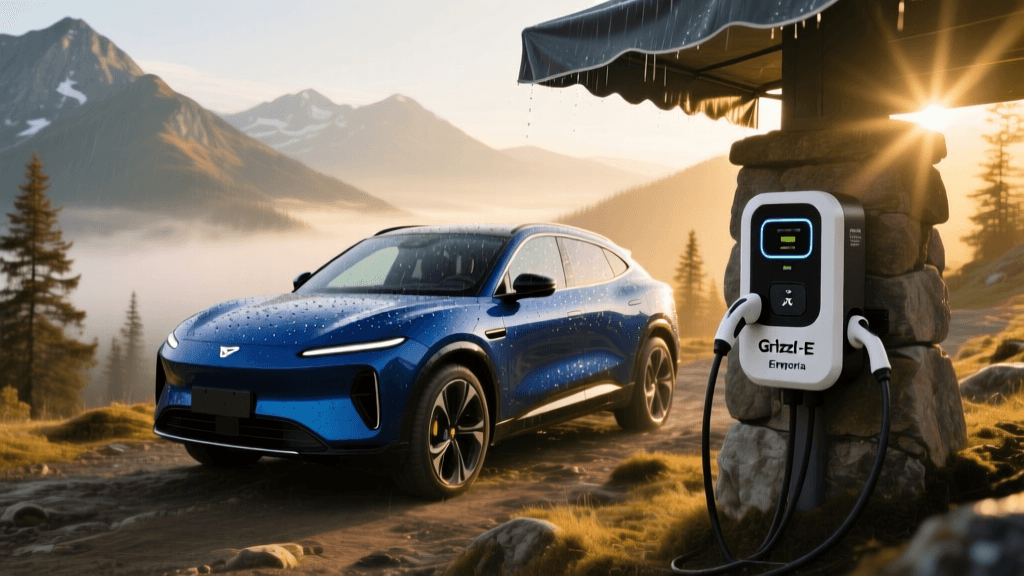
On the other side of the spectrum are non-connected, or 'dumb,' chargers. Models like the Grizzl-E Core and the Amazon Basics Level 2 Charger strip away the networking hardware, relying entirely on analog switches and physical DIP switches to set amperage limits.
The appeal of non-connected chargers is rooted in absolute reliability. They do not require a WiFi signal, which is notoriously difficult to maintain in detached garages or underground parking structures. They are immune to server outages, app crashes, or forced firmware updates that might temporarily brick a device. For rural EV owners, off-grid solar setups, or those who simply want to plug in and walk away without managing a smartphone app, analog chargers offer a rugged, fail-safe experience. However, their lack of connectivity leaves them entirely blind to the broader energy grid.
Head-to-Head Comparison: Smart vs. Analog
To understand the practical differences for today's buyer, here is a structured comparison of how WiFi-enabled and non-connected chargers stack up across critical metrics:
| Feature / Metric | WiFi-Enabled (e.g., ChargePoint, Wallbox) | Non-Connected (e.g., Grizzl-E Core) |
|---|---|---|
| Network Dependency | Requires stable 2.4GHz WiFi or Ethernet | Zero network required; fully offline |
| Amperage Adjustment | Dynamic via App (up to hardware max) | Manual via internal DIP switches |
| Energy Tracking | Real-time kWh tracking and cost analysis | None (requires external smart panel) |
| Utility Rebate Eligibility | High (often mandated for demand response) | Low (rarely qualifies for smart rebates) |
| V2G / V2H Readiness | Hardware and protocol ready (ISO 15118) | Not capable |
| Average Cost (48A) | $550 - $750 | $400 - $500 |
Future Industry Outlook: Why WiFi is Becoming Mandatory
While non-connected chargers hold a niche today, the future of the EV charging industry is undeniably connected. Several macro-trends are effectively forcing WiFi and smart communication protocols into the residential space.
1. The Rise of Bi-Directional Charging (V2G and V2H)
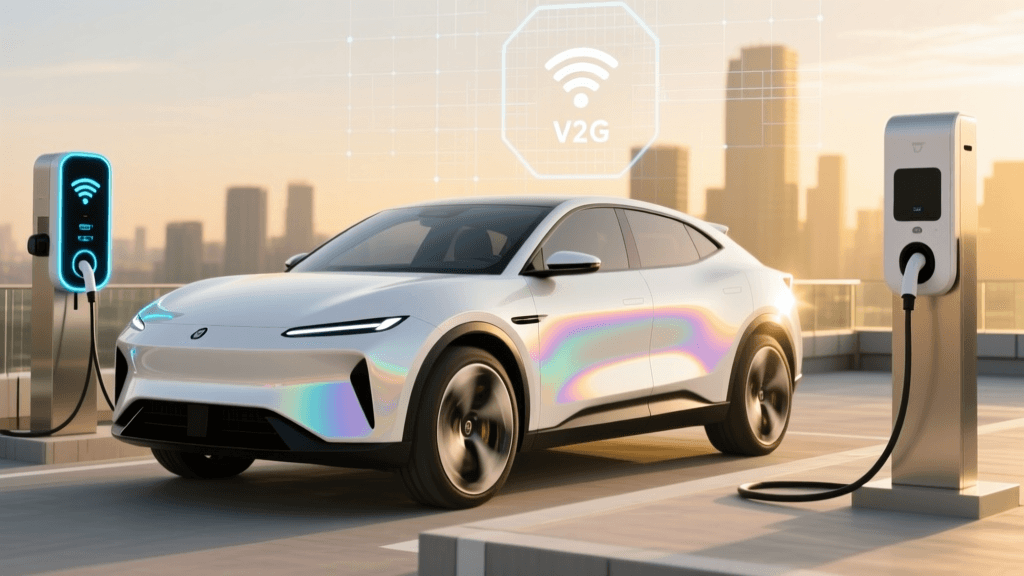
Vehicle-to-Grid (V2G) and Vehicle-to-Home (V2H) technologies are transitioning from concept to reality. Vehicles like the Ford F-150 Lightning and Hyundai Ioniq 5 can act as massive rolling batteries, capable of powering a home during a blackout or selling energy back to the grid during peak demand. According to research from the National Renewable Energy Laboratory (NREL), successful Vehicle-Grid Integration (VGI) requires continuous, secure communication between the vehicle, the charger, and the utility's distribution management system. A non-connected charger cannot facilitate the complex handshakes required by the ISO 15118 standard to safely reverse the flow of electricity. Therefore, if you want your EV to serve as a home backup generator in the future, a smart, connected charger is a prerequisite.
2. OCPP Adoption in Residential Spaces
Historically, the Open Charge Point Protocol (OCPP) was reserved for commercial DC fast-charging networks. Today, the Open Charge Alliance is pushing OCPP 2.0.1 into the residential sector. This universal language allows your home charger to communicate with any utility provider or third-party energy management software, preventing vendor lock-in. WiFi-enabled chargers are being built with OCPP compliance in mind, ensuring they remain compatible with future municipal and state-level energy programs. Analog chargers, by definition, cannot speak OCPP.
3. Grid Strain and Utility Mandates
The International Energy Agency (IEA) notes in its Global EV Outlook that uncoordinated residential charging poses a significant strain on local distribution grids, particularly during evening peaks when drivers return home and plug in simultaneously. To combat this, utilities in regions like California, Texas, and the UK are beginning to mandate smart chargers for new installations. In many jurisdictions, you can no longer claim government or utility rebates (which can offset up to $1,000 of installation costs) unless the charger is WiFi-enabled and enrolled in a demand response program.
Actionable Advice: Which Should You Install Today?
Given these future trends, how should you spend your money today?
- Choose a WiFi-Enabled Charger if: You live in an urban or suburban area with stable internet, you want to capitalize on local utility TOU rebates, you are installing a solar panel system with battery storage, or you plan to purchase a bi-directional capable EV (like a Ford, Hyundai, or Kia) in the next 5 years. The Wallbox Pulsar Plus is highly recommended for its compact size and robust app ecosystem.
- Choose a Non-Connected Charger if: You are installing a charger in a detached garage, a remote cabin, or an underground concrete bunker where WiFi signals cannot penetrate without expensive mesh extenders. If you prioritize ruggedness, extreme weather tolerance, and absolute simplicity over energy optimization, the Grizzl-E Core remains the undisputed king of analog reliability.
Ultimately, while the non-connected charger is a reliable stopgap for challenging environments, the WiFi-enabled smart charger is an investment in the future of the smart grid. As the automotive industry moves toward vehicles that interact seamlessly with our homes and power grids, the 'dumb' charger will slowly be relegated to the annals of EV history.